

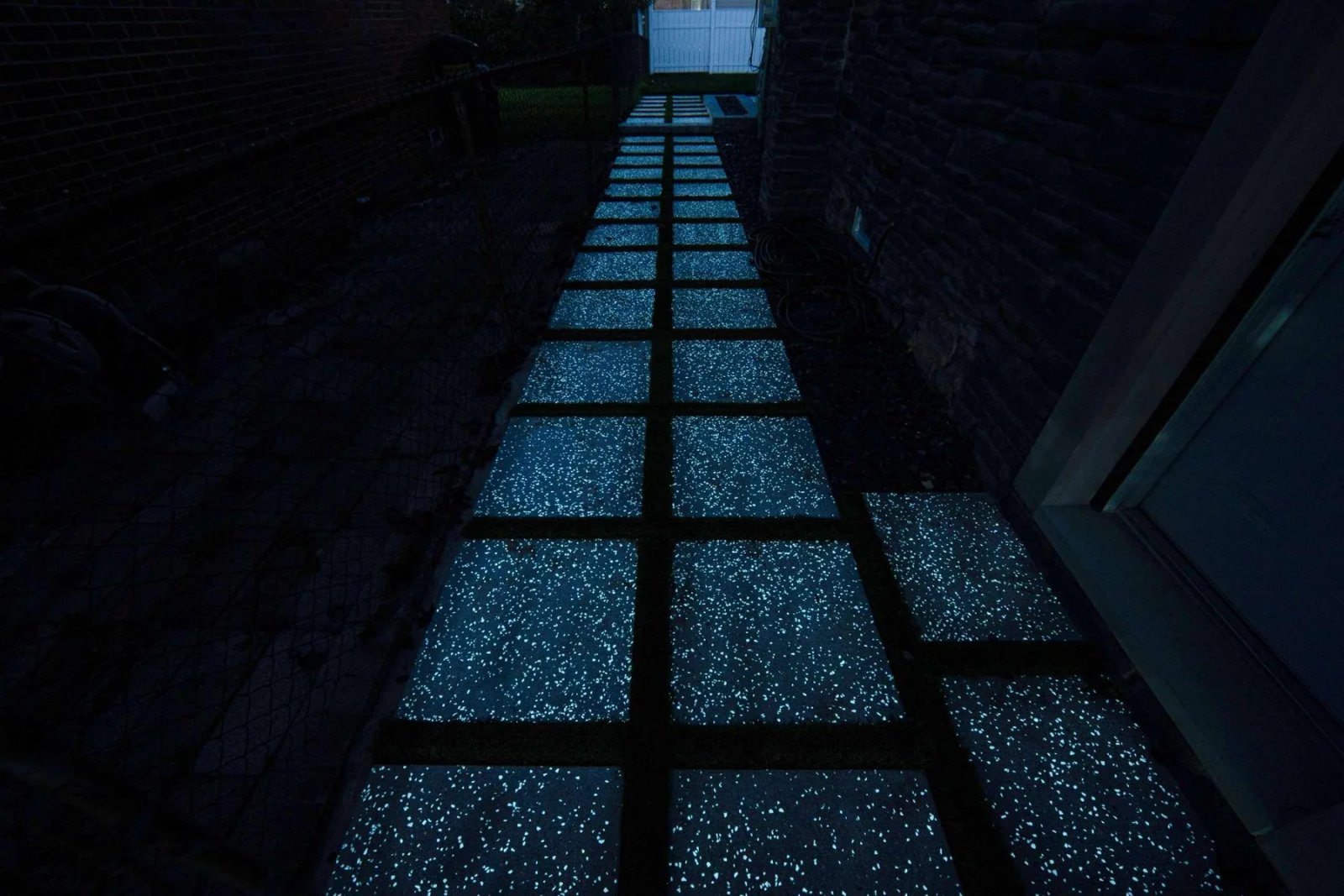
Photoluminescent pavement has become increasingly popular in landscape roads, bike paths, parks, garden walkways and urban decoration projects. By absorbing sunlight during the daytime and releasing light at night, glow aggregates create a unique visual effect while improving nighttime visibility.
However, not every photoluminescent pavement project achieves the expected result. In practical applications, many failures are not caused by the glow material itself, but by incorrect material selection, improper installation methods, or unsuitable project conditions.
Based on real project experience, this guide explains the seven most common mistakes and how professional contractors can avoid them.
Choosing the Wrong Photoluminescent Material for the Application
One of the biggest mistakes is selecting glow materials without considering the pavement structure.
Photoluminescent aggregates, glow powder, and resin systems have different application methods:
- Glow aggregates are suitable for exposed surfaces such as pathways, gardens, and decorative pavements.
- Glow powder is mainly used in resin coatings, paints, and transparent systems.
- Resin-bound glow stones require a compatible binder system to maintain durability.
For example, using ordinary glow powder directly in outdoor pavement without protection may lead to reduced performance due to abrasion and weather exposure.
The correct approach is to select the material based on:
- Traffic load
- Surface exposure
- Installation method
- Expected service life
Installing Glow Materials Too Deep Below the Surface
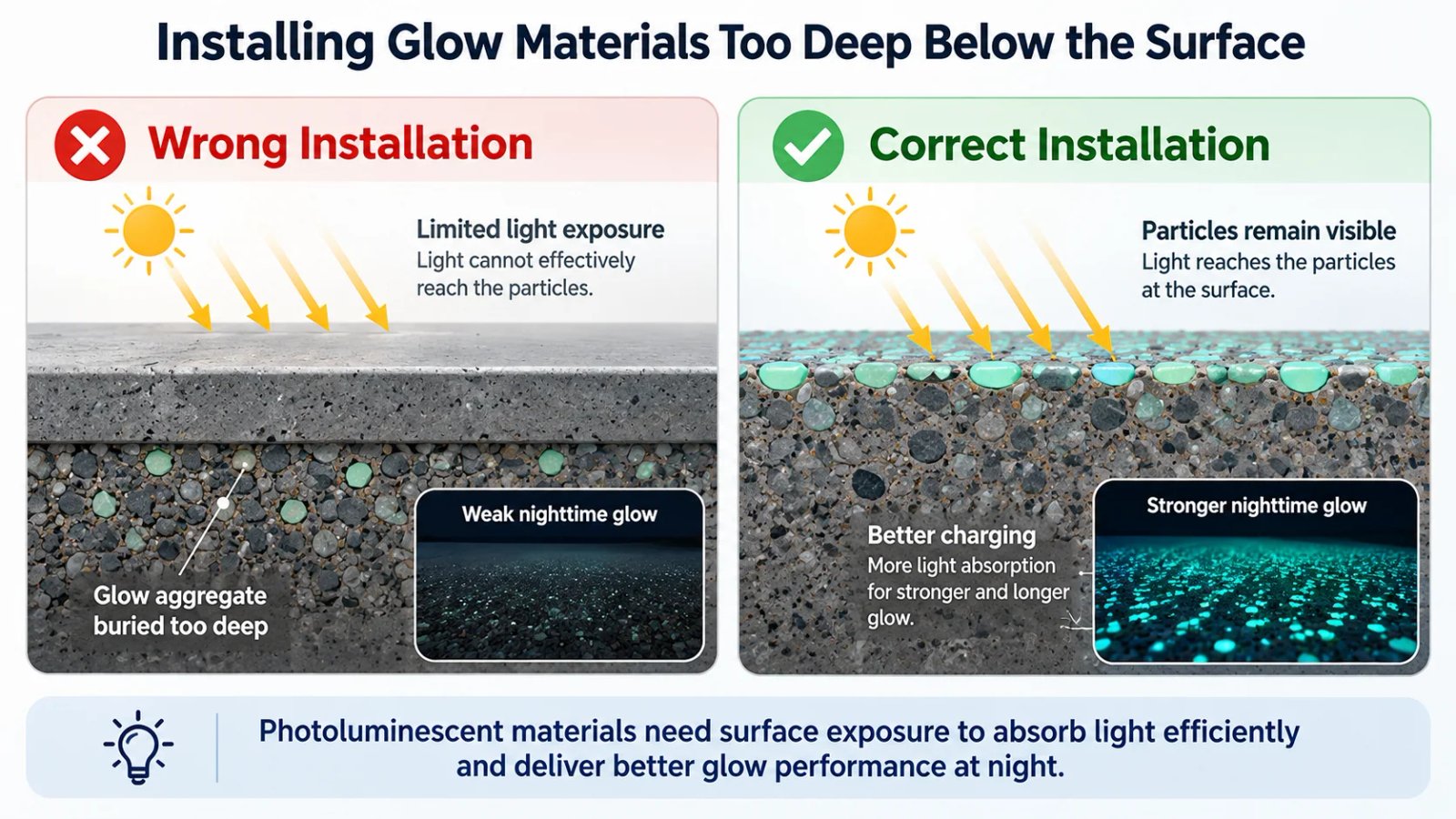
Photoluminescent materials need light exposure to charge.
A common installation mistake is embedding glow aggregates too deeply into concrete or resin.
When the particles are completely covered by binder, sunlight cannot effectively reach the surface, resulting in weak nighttime brightness.
For exposed aggregate pavement, the glow particles should remain visible after finishing.
Professional installation usually requires:
- Controlled surface exposure
- Proper finishing techniques
- Avoiding excessive coating thickness
Ignoring Surface Cleanliness Before Installation
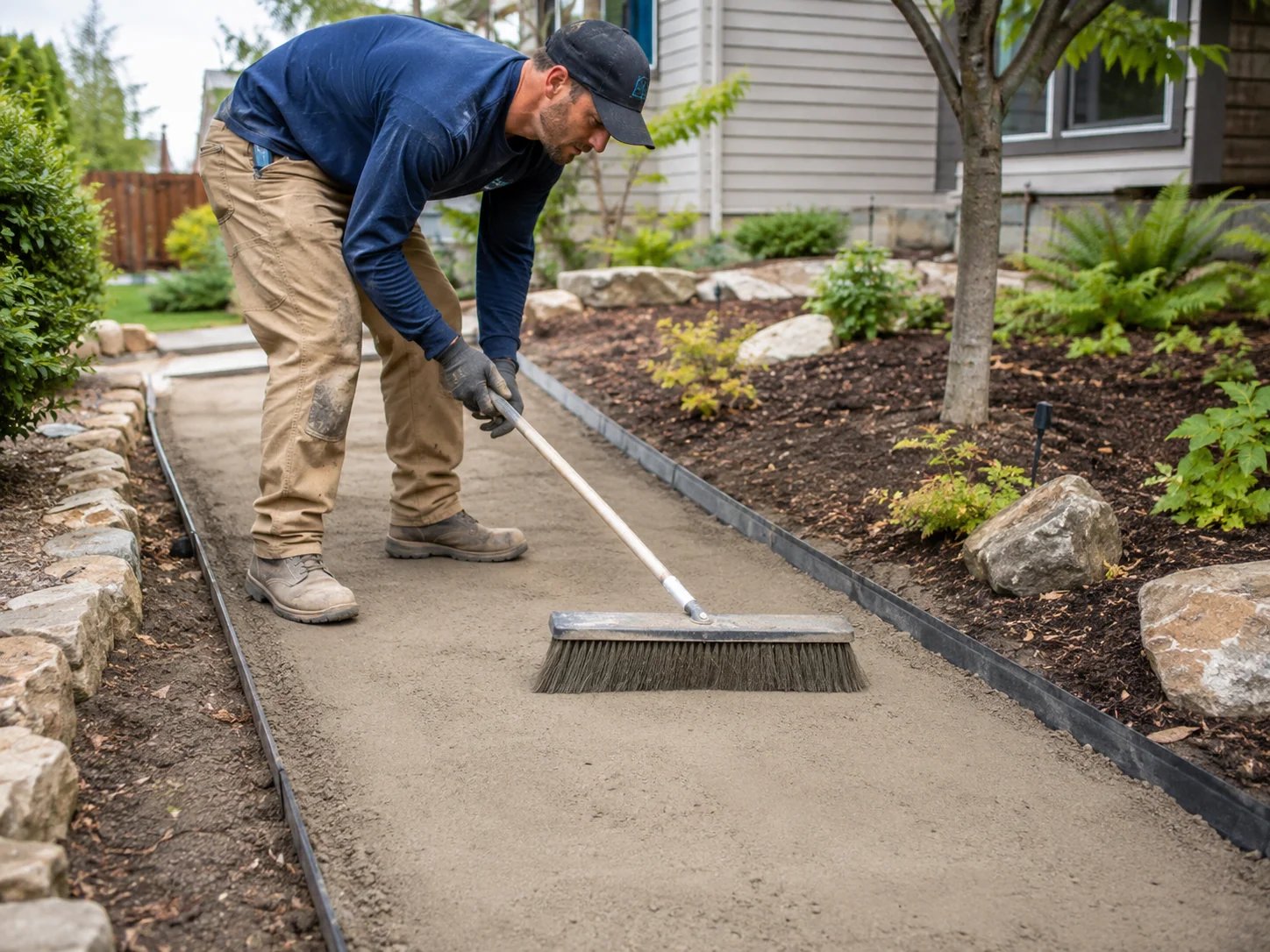
The charging performance of glow pavement depends heavily on surface conditions.
Dust, oil contamination, and loose particles can reduce bonding strength and shorten service life.
Before installation:
- Remove dust and debris.
- Clean oil or chemical contamination.
- Ensure the base surface is dry.
- Apply suitable primer if required.
Many pavement failures happen because contractors focus only on the glow effect and ignore the foundation preparation.
Using an Unsuitable Binder System
The binder is just as important as the photoluminescent aggregate.
Different environments require different solutions:
| Application | Recommended Binder |
|---|---|
| Garden pathway | Transparent resin system |
| Decorative concrete | Clear protective coating |
| High pedestrian traffic | High-strength resin binder |
| Outdoor landscape pavement | UV-resistant binder |
A low-quality binder may become yellow, crack, or lose transparency after outdoor exposure, reducing the glow effect.
Expecting Glow Performance Without Proper Daytime Charging
Some customers expect glow stones to remain bright all night regardless of conditions.
However, photoluminescent materials require energy from natural or artificial light sources.
Charging performance depends on:
- Sunlight intensity
- Charging time
- Weather conditions
- Material quality
A well-designed project should consider the local climate.
For example:
- Sunny regions usually provide stronger charging conditions.
- Areas with frequent cloudy weather may require higher-performance glow materials.
Applying Photoluminescent Pavement in Unsuitable Locations
Not every area is suitable for glow pavement.
Before starting a project, evaluate:
- Vehicle traffic level
- Surface wear
- Drainage conditions
- Maintenance requirements
Photoluminescent pavement is especially suitable for:
- Walking paths
- Bicycle lanes
- Parks
- Resort landscapes
- Garden roads
- Decorative urban spaces
For heavy vehicle roads, engineers should choose specialized pavement structures rather than simple decorative systems.
Focusing Only on Initial Appearance Instead of Long-Term Performance
A common mistake is choosing materials based only on the brightest short-term effect.
A professional project should consider:
- UV resistance
- Weather durability
- Abrasion resistance
- Color stability
- Maintenance requirements
A slightly higher-quality material often provides much better value over the entire project life cycle.
How to Make a Photoluminescent Pavement Project Successful?

A successful glow pavement project requires three elements:
1. Correct Material Selection
Choose the right combination of glow aggregate, powder, and binder according to the application.
2. Professional Installation
The surface preparation, mixing ratio, exposure level, and finishing process directly affect final performance.
3. Realistic Project Planning
Consider local weather, traffic conditions, and maintenance requirements before construction.
Conclusion
Photoluminescent pavement is not simply about adding glow materials to a surface. It is a complete system involving material selection, pavement design, installation technology, and environmental conditions.
Most project failures can be avoided by understanding the limitations of the materials and following professional installation methods.
With proper design and construction, glow pavement can provide years of decorative lighting effects for outdoor landscapes, pathways, and urban spaces.
Keywords: Photoluminescent Pavement, Glow Stone Installation, Photoluminescent Aggregate, Glow in the Dark Pavement, Outdoor Landscape Pavement