

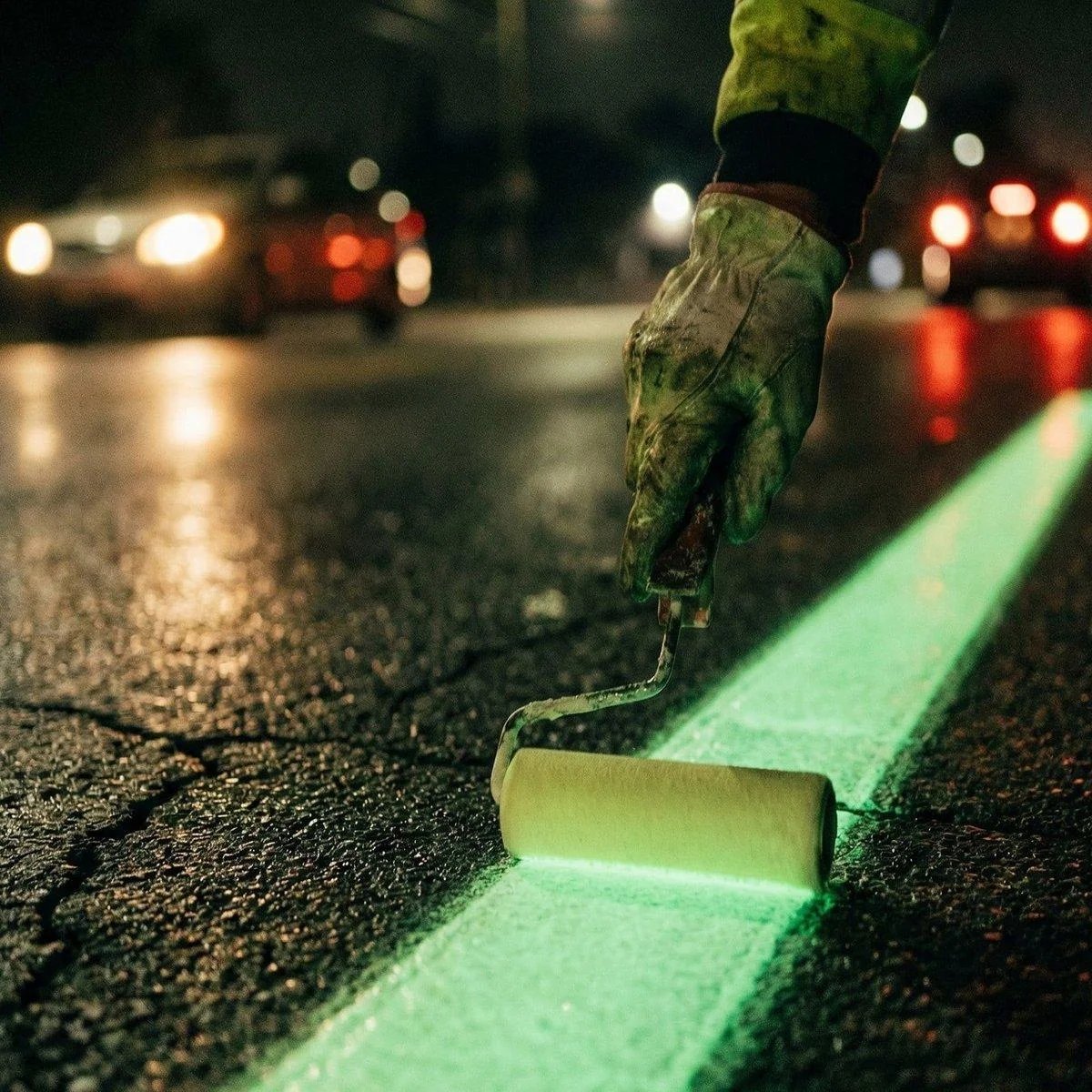
Choose a photoluminescent road marking supplier that can match the complete material system to your project. Stable quality, suitable packaging, technical information and reliable delivery matter alongside the glow effect. Performance depends on pigment, binder, primer, base coat, topcoat, pavement condition, traffic and charging light.
This checklist is for contractors, distributors, pavement companies, parking-facility operators and project owners comparing products and supply arrangements.
Clarify the product and application
A supplier may offer individual materials or a complete coating system: photoluminescent pigment, glow-in-the-dark road paint, luminous pavement coating, primer, white base coat, transparent topcoat, anti-slip aggregate or a full road-marking system. Buyers producing coatings locally may need only pigment; others prefer a complete ready-to-use system.
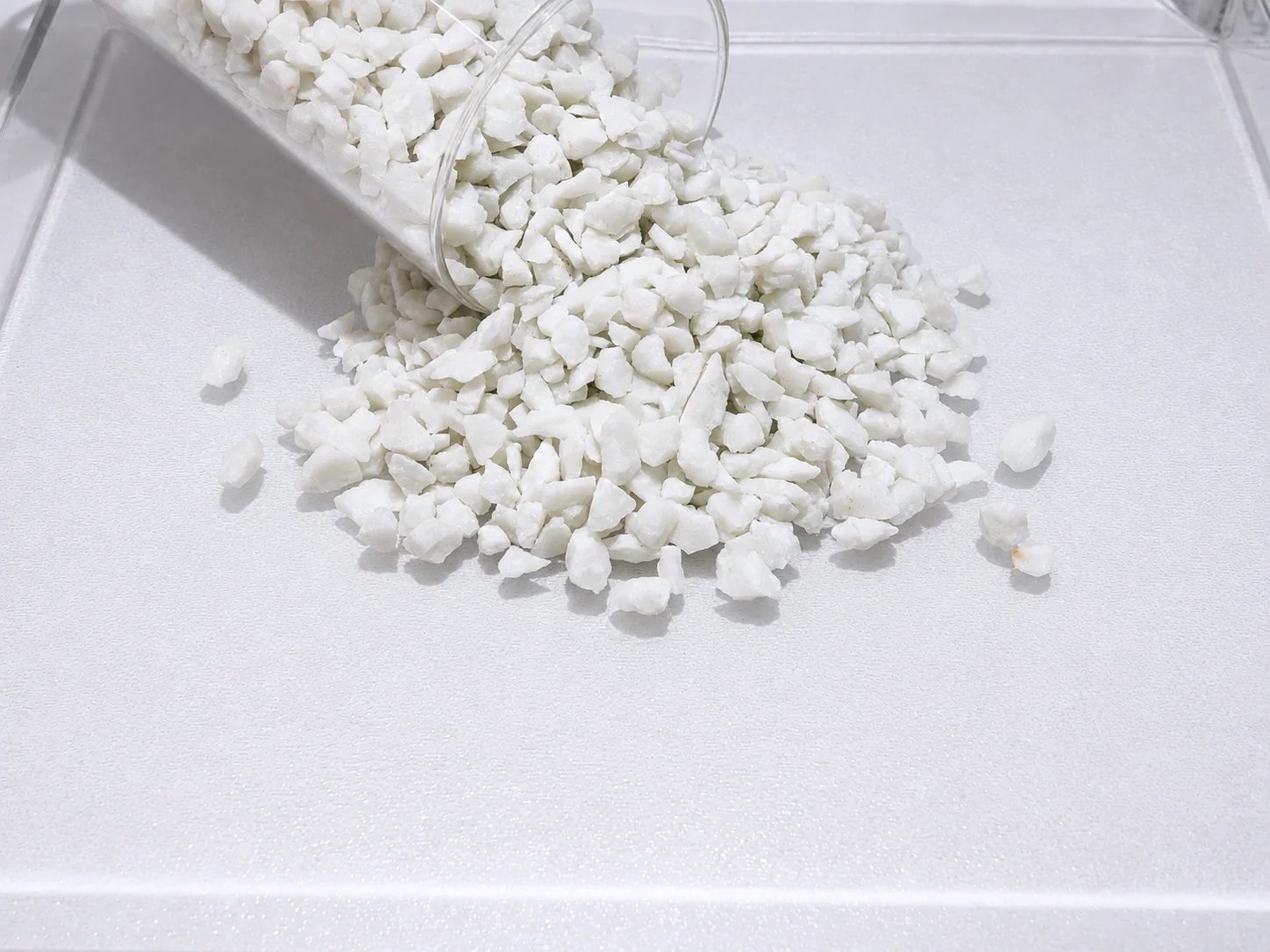
A broader range can usually support more project types, but recommendations should still match the application:
- Parking: parking lines, direction arrows, pedestrian routes and ramp markings.
- Bicycle paths: edge lines, center lines, symbols and skid resistance.
- Industrial floors: safety lines, emergency routes and higher wear resistance.
- Landscape pavement: greater emphasis on glow and appearance.
Explain the substrate, exposure and charging light
Identify asphalt, concrete, epoxy floor, resin pavement or colored pavement. Different surfaces may need different primers and preparation; a recommendation that ignores the substrate is incomplete.
Outdoor projects face UV radiation, rain, temperature changes, dust and traffic. Indoors, artificial-light charging, cleaning, floor compatibility and indoor traffic may matter more. An indoor decorative product may not suit outdoor pavement.
Photoluminescent materials need light before they glow. Sunlight is usually the main outdoor charging source, while underground garages and warehouses depend more on artificial lighting. Discuss intensity, exposure duration, distance from lamps and shaded locations, especially for indoor projects.
Check pigment, binder and layer compatibility
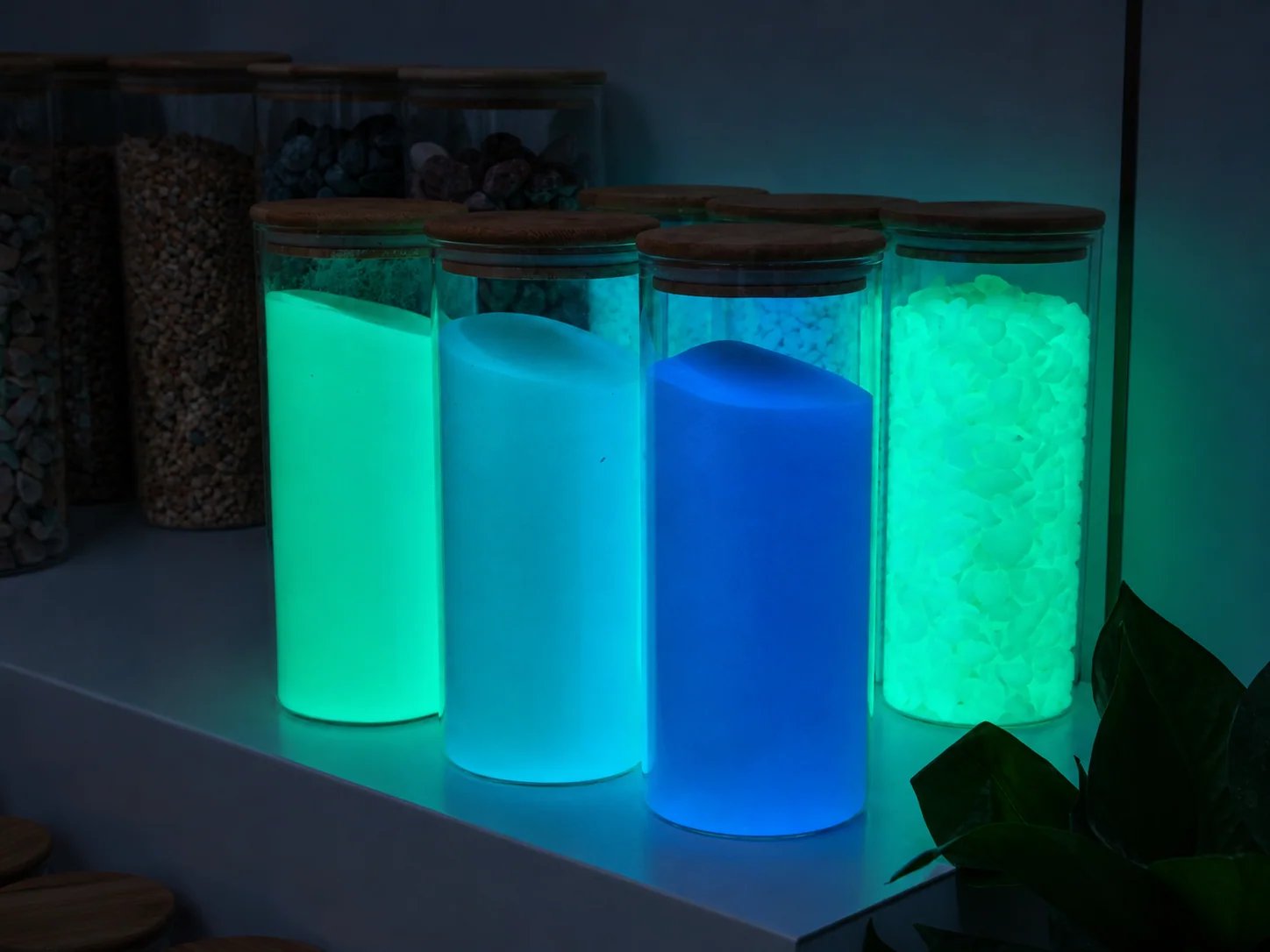
Ask about glow color, particle size, initial brightness, afterglow, binder compatibility and outdoor suitability. Yellow-green and blue-green are common colors. The brightest-looking sample is not necessarily the best pavement product.
The binder should provide good transparency, strong adhesion, water resistance, wear resistance and weather resistance. If it is too opaque, the pigment may receive less light and glow more weakly. Test pigment and binder together.
A light-colored base can improve glow. A typical system may be:
Pavement → Primer → White Base Coat → Photoluminescent Layer → Transparent Topcoat
Ask whether a white base is recommended for the specific project.
Match skid resistance and wear to the traffic
Road and pavement coatings should not become slippery, especially on bicycle paths, pedestrian crossings, parking ramps, curves and wet areas. Ask for compatible anti-slip aggregate where required.
Discuss traffic before ordering. Pedestrian paths and landscape pavement are lower-wear settings; bicycle paths and commercial walkways involve medium wear; parking areas, vehicle lanes and industrial traffic impose higher wear. The coating should suit the expected traffic level.
Test a sample and the complete system
Ask for a small quantity before a bulk order. Evaluate daytime appearance, glow brightness, afterglow, adhesion, surface texture and skid resistance. A physical sample is more useful than photos alone.
Test Primer + Base Coat + Luminous Layer + Topcoat, not only the pigment. Use actual artificial lighting indoors, and expose outdoor samples to real sunlight and weather. This helps establish how the complete system performs.
Request technical information and practical support
Useful information may include product specifications, application instructions, mixing guidance, recommended substrates, drying or curing conditions, storage information and packaging details. Clear documents help contractors prepare correctly.
Before ordering, seek clear answers about asphalt and outdoor suitability, primer and white-base requirements, topcoat requirements, compatible anti-slip aggregate, vehicle traffic and how to test the system. Good technical communication reduces project risk.
Confirm packaging and minimum quantities
Packaging may include pigment bags, paint buckets, multi-component kits or small sample packs. Export packaging should protect against moisture, leakage, contamination and transport damage.
For distributors and first-time buyers, ask about small samples, trial orders, standard bulk orders and distributor quantities. Confirm the minimum order quantity (MOQ) for both standard products and custom packaging.
Check production stability and lead time
For continuing supply, ask about production capacity, standard lead time, batch consistency, raw-material availability and repeat-order capability. The supplier should be able to provide consistent material for ongoing projects.
Lead time may include sample preparation, production, packaging and export preparation. Confirm these stages before making project commitments.
Clarify OEM, export and shipping arrangements
OEM or private-label services may include a customer logo, product labels, custom buckets, product names, technical sheets and packaging design. OEM minimum quantities may be higher than for standard products.
For international orders, ask about export packaging, shipping documents, product classification and transport requirements. The exact requirements depend on the formulation and destination.
Courier, air freight and sea freight may suit different orders. Samples often use express shipping, while bulk orders generally need larger freight arrangements. Confirm suitable packaging and shipping information.
Review real applications and total cost
Where available, request examples from roads, parking lots, bicycle paths, pedestrian routes, industrial floors or landscape pavement. Daytime and nighttime photos can help clarify the expected appearance.
Compare product concentration, coverage, required layers, adhesion, durability, skid resistance, packaging and technical support alongside unit price. A cheaper product may cost more if it needs frequent repair or more material per square meter.
Evaluate the supplier, whatever its business model
A supplier may be a direct manufacturer, distributor or trading company; each model can work. Check consistent quality, sample availability, technical information, repeat-order support and on-time delivery.
Different customers need different arrangements. Typical buyers include road-marking contractors, pavement-coating companies, construction-material distributors, parking contractors, landscape contractors, bicycle-path contractors, industrial-flooring companies and project owners.
Questions to settle before placing an order
- Which substrates, outdoor conditions and charging environments suit the product?
- Which glow colors are available, and is a white base coat required?
- Can compatible anti-slip aggregate be added, and can samples be supplied?
- What are the MOQ, lead time, OEM options and available packaging?
- What technical support is provided?
Compare Product Quality + Project Matching + Sample Testing + Supply Stability + Packaging + Technical Support. For B2B buyers, testing samples before bulk ordering is usually the safest approach.
Discuss your project or distribution requirements
FUXIN supplies Photoluminescent Pigments, Glow Road Marking Materials, Luminous Pavement Coatings, and Glow-in-the-Dark Traffic Marking Systems for parking areas, bicycle paths, pedestrian routes, industrial facilities and landscape pavement projects.
We support samples, trial orders, bulk supply, OEM packaging and project-based material recommendations. Contact us for quotations, samples, distributor cooperation or project requirements.