

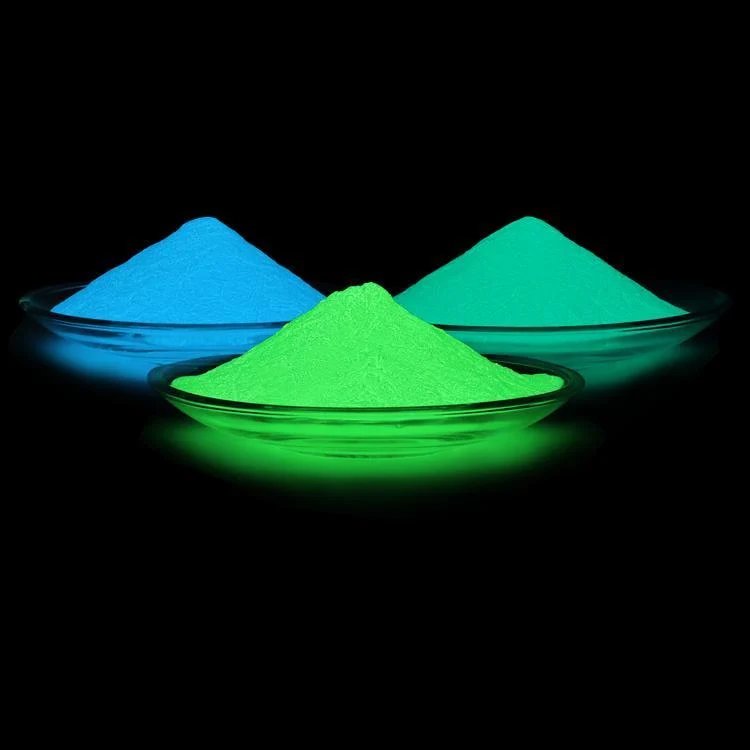
Purchasing photoluminescent road marking materials involves more than selecting a glow color or comparing prices per kilogram.
For contractors, distributors, and international buyers, the real challenge is finding a material system that matches the intended application, construction equipment, environmental conditions, and required performance.
Two photoluminescent products may look almost identical in promotional photographs but behave very differently during manufacturing, installation, and long-term use.
Differences in particle size, afterglow performance, heat resistance, binder compatibility, and packaging can significantly influence the success of a project.
This guide explains how to evaluate photoluminescent road marking materials before purchasing, what technical documents to request, and how to reduce the risks associated with international procurement.
Identify Exactly What You Are Buying
One of the most common purchasing mistakes is requesting a quotation for "glow road marking material" without specifying the product type.
This term can refer to several different materials.
Photoluminescent Powder
A concentrated pigment designed to be incorporated into a compatible marking or coating system.
The buyer may need to purchase binders, fillers, and other components separately.
Photoluminescent Thermoplastic Marking Material
A formulated marking compound intended for a specified thermoplastic application process.
The formulation must be suitable for the required heating, mixing, and installation conditions.
Photoluminescent Coating System
A cold-applied system containing luminous pigment and suitable binders.
Depending on the product, the system may require a primer, base coat, curing component, or protective layer.
Photoluminescent Aggregate
Luminous particles or stones that may be incorporated into selected decorative pavement surfaces.
These materials are not necessarily interchangeable with fine powders intended for marking formulations.
Procurement Tip: Always ask suppliers whether their quotation covers raw photoluminescent pigment, a formulated marking compound, or a complete application system.
Why the Lowest Price per Kilogram May Be Misleading
Price per kilogram is useful only when comparing materials with similar specifications.
Consider two hypothetical quotations:
| Item | Supplier A | Supplier B |
|---|---|---|
| Material | Photoluminescent powder | Photoluminescent powder |
| Quoted price | US$15/kg | US$28/kg |
| Particle size | Not specified | Specified |
| Afterglow data | Promotional photograph | Measured test report |
| Heat resistance | Not documented | Test data available |
| Batch traceability | Not stated | Batch identification provided |
| Sample testing | Not offered | Available |
Supplier A appears less expensive.
However, without comparable technical information, it is impossible to determine which material offers better value.
The more expensive product is not automatically better either.
A responsible purchasing decision should be based on verified performance and total application cost.
Request a Technical Data Sheet Before Ordering
A Technical Data Sheet, commonly called a TDS, is one of the most important documents in industrial material procurement.
A useful photoluminescent pigment TDS should identify the actual product grade and its relevant properties.
Important Technical Information
| Parameter | Why It Matters |
|---|---|
| Product grade | Identifies the specific formulation |
| Daytime appearance | Influences finished marking appearance |
| Emission color | Defines the nighttime glow color |
| Particle size distribution | Influences mixing, application, and surface appearance |
| Afterglow luminance | Provides quantitative brightness information |
| Charging conditions | Enables fair performance comparisons |
| Heat resistance | Important for heated application processes |
| Binder compatibility | Helps avoid formulation problems |
| Moisture sensitivity | Important for storage and outdoor use |
| Recommended applications | Defines the manufacturer's intended use |
For thermoplastic applications, a general claim of "high-temperature resistance" is not enough.
The supplier should provide evidence that the selected pigment maintains acceptable properties after exposure to the proposed processing temperatures and durations.
Compare Afterglow Performance Using Measured Data

Many suppliers advertise their materials as:
"Super Bright"
"Long Lasting"
"High Performance"
"Glows All Night"
These descriptions are not sufficient for engineering procurement.
Professional buyers should request quantitative test results.
Important Questions
-
What light source was used to charge the sample?
-
How long was the charging period?
-
What was the illumination intensity?
-
At what intervals was afterglow brightness measured?
-
Were samples tested under identical conditions?
-
What measurement method was used?
Photoluminescent brightness decreases after charging stops.
Therefore, an initial photograph cannot demonstrate the complete afterglow performance.
A Better Way to Compare Samples
Request measurements at defined intervals, such as:
-
1 minute
-
10 minutes
-
30 minutes
-
60 minutes
-
120 minutes
These intervals are examples for procurement comparison, not universal acceptance criteria.
The charging method, measurement instrument, and testing conditions should be consistent.
For larger projects, buyers may request testing according to an applicable recognized method or an agreed laboratory protocol.
Practical Insight: A reliable afterglow measurement report is more useful than a highly edited nighttime promotional image.
Check Particle Size Before Selecting the Material
Photoluminescent pigments are available in different particle sizes.
Particle size can affect:
-
Mixing uniformity
-
Coating smoothness
-
Sedimentation behavior
-
Application equipment compatibility
-
Visible surface texture
-
Optical performance
A fine powder may be suitable for certain coatings but behave differently from coarser material in a thick resin layer.
Similarly, a pigment suitable for a decorative casting may not be appropriate for spray equipment.
Before ordering, contractors should confirm the intended application equipment and acceptable particle size range.
For example, if a coating will be sprayed through a specific nozzle, the supplier should verify whether the selected pigment grade can be processed reliably.
Avoid choosing particle size based on glow brightness alone.
Confirm Compatibility With the Binder System
The binder determines how the photoluminescent material is incorporated into the finished surface.
Depending on the project, a buyer may encounter:
-
Water-based acrylic systems
-
Polyurethane coatings
-
Epoxy systems
-
Thermoplastic compounds
-
Other specialized road-marking formulations
Compatibility cannot be assumed.
A pigment may disperse adequately in one system but cause settling, poor appearance, or processing problems in another.
What Should Be Verified?
Dispersion: Does the powder distribute uniformly?
Adhesion: Does the finished marking bond properly to the substrate?
Transparency: Can sufficient light reach the pigment?
Curing: Does the pigment interfere with the binder's curing process?
Durability: Can the complete formulation withstand the expected service conditions?
The best approach is to test a small formulation using the exact binder and application conditions planned for the project.
Special Considerations for Thermoplastic Road Marking Materials
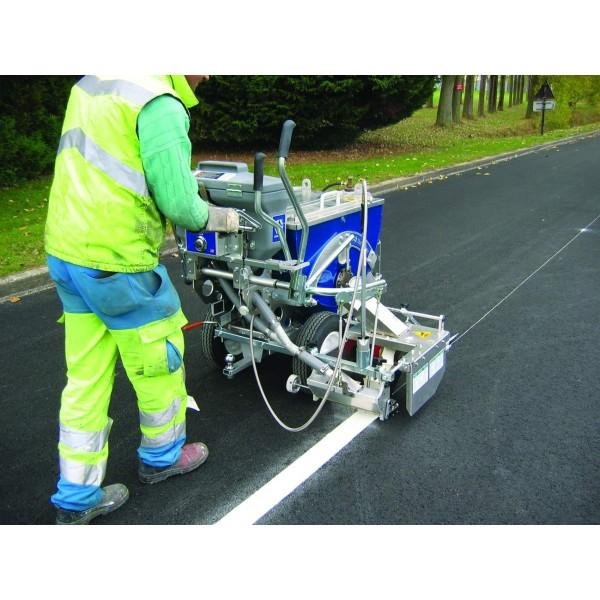
Thermoplastic road markings involve elevated processing temperatures.
This creates an additional requirement for photoluminescent pigments.
A material that performs well in a room-temperature resin sample may not retain the same properties after thermal processing.
For thermoplastic applications, verify:
-
The recommended processing temperature range.
-
The maximum permitted exposure temperature.
-
The recommended heating duration.
-
Compatibility with the thermoplastic binder.
-
Afterglow performance after processing.
-
Changes in pigment color or appearance.
-
Storage and moisture-control requirements.
The supplier should ideally provide test results using a representative marking formulation, not just the raw powder.
Do Not Confuse Glow Performance With Road-Marking Compliance
A luminous thermoplastic material should not be presumed suitable for regulated public-road traffic markings solely because it emits light.
Where retroreflectivity, color, skid resistance, and durability are specified, the complete marking system must meet the relevant requirements.
Glass-bead application and retroreflectivity should be evaluated separately from afterglow performance.
Why Sample Testing Is Important Before Bulk Purchasing
A small sample order is one of the most effective ways to reduce procurement risk.
For a large order, buyers should avoid relying entirely on product photographs or supplier statements.
A useful sample evaluation process can include several stages.
Stage 1: Visual Inspection
Check:
-
Powder color
-
Particle consistency
-
Packaging condition
-
Moisture or clumping
-
Visible impurities
Stage 2: Controlled Charging Test
Charge samples under consistent conditions.
Compare their appearance at defined intervals.
Stage 3: Binder Compatibility Test
Prepare small samples using the intended binder.
Record dispersion, curing, adhesion, and visible appearance.
Stage 4: Application Test
Apply the material with a representative process.
For heated systems, include the required thermal exposure.
Stage 5: Outdoor Trial
Where appropriate, install a small test section under representative environmental conditions.
Evaluate appearance, adhesion, wear, and luminous behavior.
A successful laboratory sample does not automatically guarantee successful field performance.
Calculate the Real Cost per Square Meter
A supplier's price per kilogram does not tell the buyer how much a completed marking will cost.
The actual material cost depends on the formulation and application rate.
For example, consider a hypothetical cold-applied marking system.
Assume:
-
Finished material consumption: 1.5 kg/m²
-
Photoluminescent pigment content: 20% by weight
-
Pigment purchase price: US$25/kg
The pigment required per square meter would be:
1.5 × 20% = 0.30 kg/m²
Pigment material cost:
0.30 × US$25 = US$7.50/m²
This calculation excludes binder, primer, preparation, labor, waste, freight, and other expenses.
It is only an illustrative costing method. The assumed 20% pigment loading is not a recommended universal formulation.
Actual loading must be determined through product-specific testing.
A Better Comparison Formula
Total Material Cost per m² = Pigment Cost + Binder Cost + Other Material Costs
Project owners should then add:
-
Surface preparation
-
Application labor
-
Equipment
-
Waste allowance
-
Shipping and import expenses
-
Maintenance and replacement costs
Comparing suppliers using this approach is more meaningful than comparing pigment prices alone.
Packaging and Storage Requirements

Photoluminescent materials should be packaged and stored according to their formulation and moisture sensitivity.
Before ordering, confirm:
-
Net weight per package
-
Packaging material
-
Moisture protection
-
Storage temperature requirements
-
Recommended storage conditions
-
Shelf-life documentation
-
Batch number and production date
For international sea freight, packaging should be suitable for the expected journey and handling conditions.
Customers in humid coastal regions should pay particular attention to moisture protection.
Damaged packaging or improper storage can create handling and processing problems before construction even begins.
Understand EXW, FOB and CIF Before Comparing Quotations
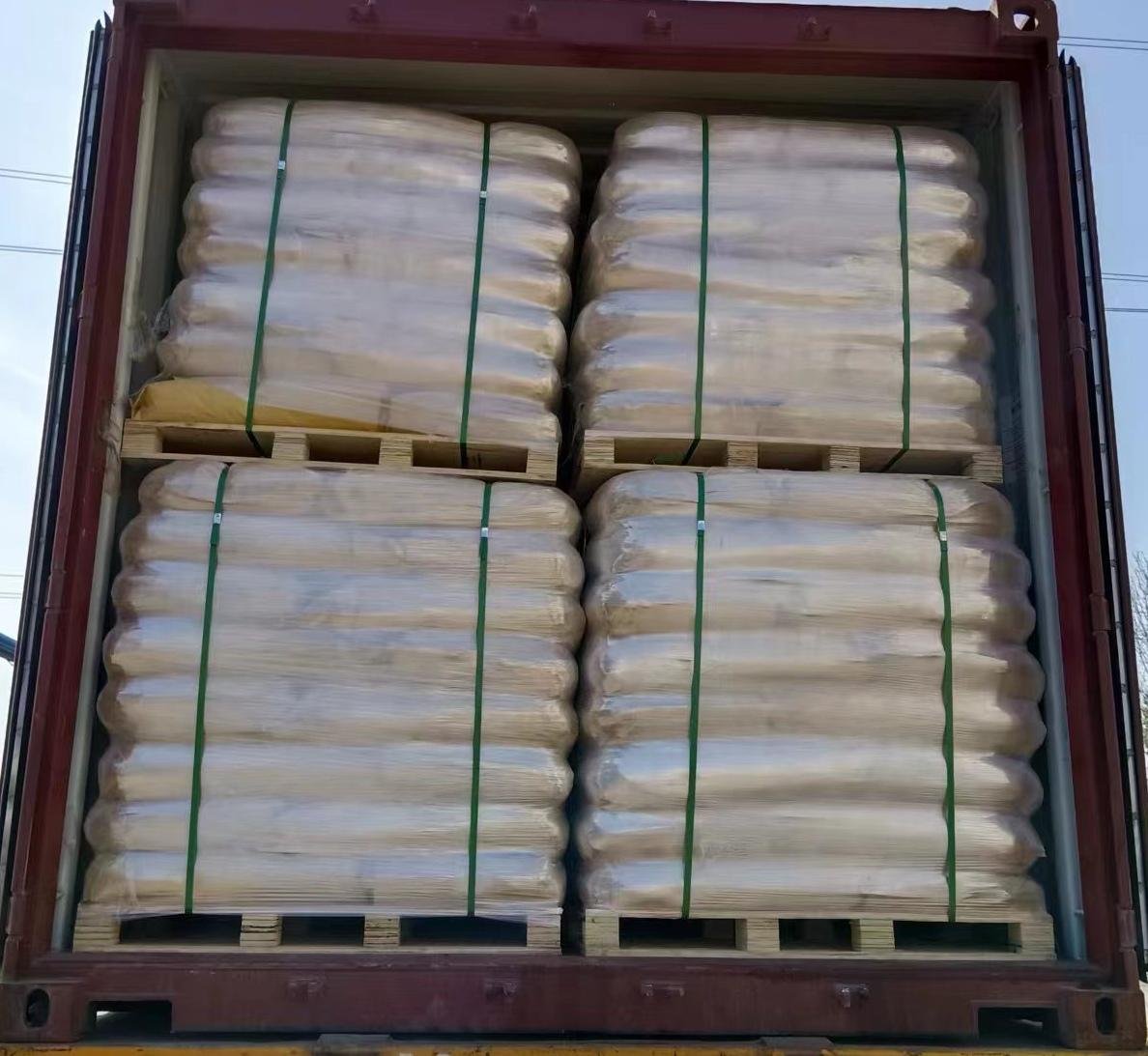
International buyers often receive quotations under different shipping terms.
These prices should not be compared directly without understanding what is included.
EXW — Ex Works
The seller makes the goods available at the agreed location.
The buyer normally takes responsibility for collection and most transportation arrangements.
FOB — Free on Board
For a named port of shipment, the seller handles the agreed export and loading obligations under the applicable Incoterms rules.
FOB is commonly used for suitable sea-freight transactions.
CIF — Cost, Insurance and Freight
The seller arranges freight and specified insurance to the named destination port, subject to the applicable Incoterms obligations.
CIF does not automatically include destination customs duties or all local delivery charges.
Compare the Complete Landed Cost
When assessing offers, consider:
-
Product value
-
Inland transportation
-
Export charges
-
Sea freight
-
Insurance
-
Import duties
-
Customs clearance
-
Destination handling
-
Local delivery
The cheapest factory quotation may not produce the lowest delivered cost.
Prevent Differences Between Samples and Bulk Orders
One concern for international purchasing managers is whether bulk production will match the approved sample.
Before confirming a large order, agree with the supplier on:
Product Grade
The grade supplied in bulk should match the approved specification.
Reference Sample
Both parties should retain an agreed reference sample where practical.
Batch Identification
Product packaging should identify the relevant manufacturing batch.
Inspection Requirements
Define which characteristics will be inspected before shipment.
Acceptance Criteria
Establish acceptable test results and agreed tolerances.
Documentation
Confirm which inspection or quality-control documents will accompany the shipment.
For repeat orders, consistent specifications are especially important.
Buyers should not assume that pigments with the same nominal glow color have identical particle sizes, afterglow behavior, or processing characteristics.
Questions to Ask a Photoluminescent Road Marking Supplier
Before requesting a formal quotation, send the supplier a clear technical inquiry.
A practical checklist includes:
| Question | Purpose |
|---|---|
| What is the exact product grade? | Prevents product confusion |
| Is this powder or a complete marking system? | Clarifies the supply scope |
| What is the particle size distribution? | Checks processing suitability |
| Can you provide TDS and SDS documents? | Supports technical and safety review |
| What afterglow test data are available? | Verifies performance |
| Has the product been tested in my binder? | Checks compatibility |
| Is it suitable for thermal processing? | Important for thermoplastic projects |
| What packaging options are available? | Supports logistics planning |
| What is the MOQ? | Establishes order feasibility |
| Can samples be supplied? | Enables pre-purchase testing |
| What are the EXW or FOB terms? | Supports freight comparison |
| What is the production lead time? | Supports project scheduling |
For a technical material purchase, clear answers to these questions are often more valuable than a small difference in unit price.
How FUXIN Supports International Material Buyers
FUXIN GROUP supplies photoluminescent materials and selected road-marking products for international customers.
Our product range includes long-afterglow pigments, luminous stones, photoluminescent aggregates, and materials for compatible pavement applications.
We encourage customers to share technical project information before confirming product specifications.
Useful information includes:
-
Country and destination port
-
Intended application
-
Pavement or marking type
-
Planned construction method
-
Required glow color
-
Approximate purchase quantity
-
Relevant technical specifications
For products requiring thermal processing or special binder compatibility, sample evaluation should be completed before large-scale application.
FUXIN can discuss available products, packaging, quotation terms, and suitable sample arrangements according to the customer's requirements.
Manufacturing Location: Xinxiang, Henan, China.
Conclusion

Purchasing photoluminescent road marking materials is a technical decision, not simply a price comparison.
The most important factors include verified afterglow performance, particle size, binder compatibility, processing conditions, packaging, and consistent bulk supply.
For international buyers, logistics terms and landed cost should also be considered before selecting a supplier.
A structured procurement process can reduce material mismatch, unnecessary expenses, and construction delays.
Before placing a large order, identify the exact material system, review its technical documents, test representative samples, and establish clear acceptance criteria.
The best purchasing decision is not necessarily the lowest price per kilogram. It is the material that meets the project's verified requirements at a reasonable total cost.
FUXIN GROUP — Photoluminescent Materials and Road-Marking Solutions for International Projects.