

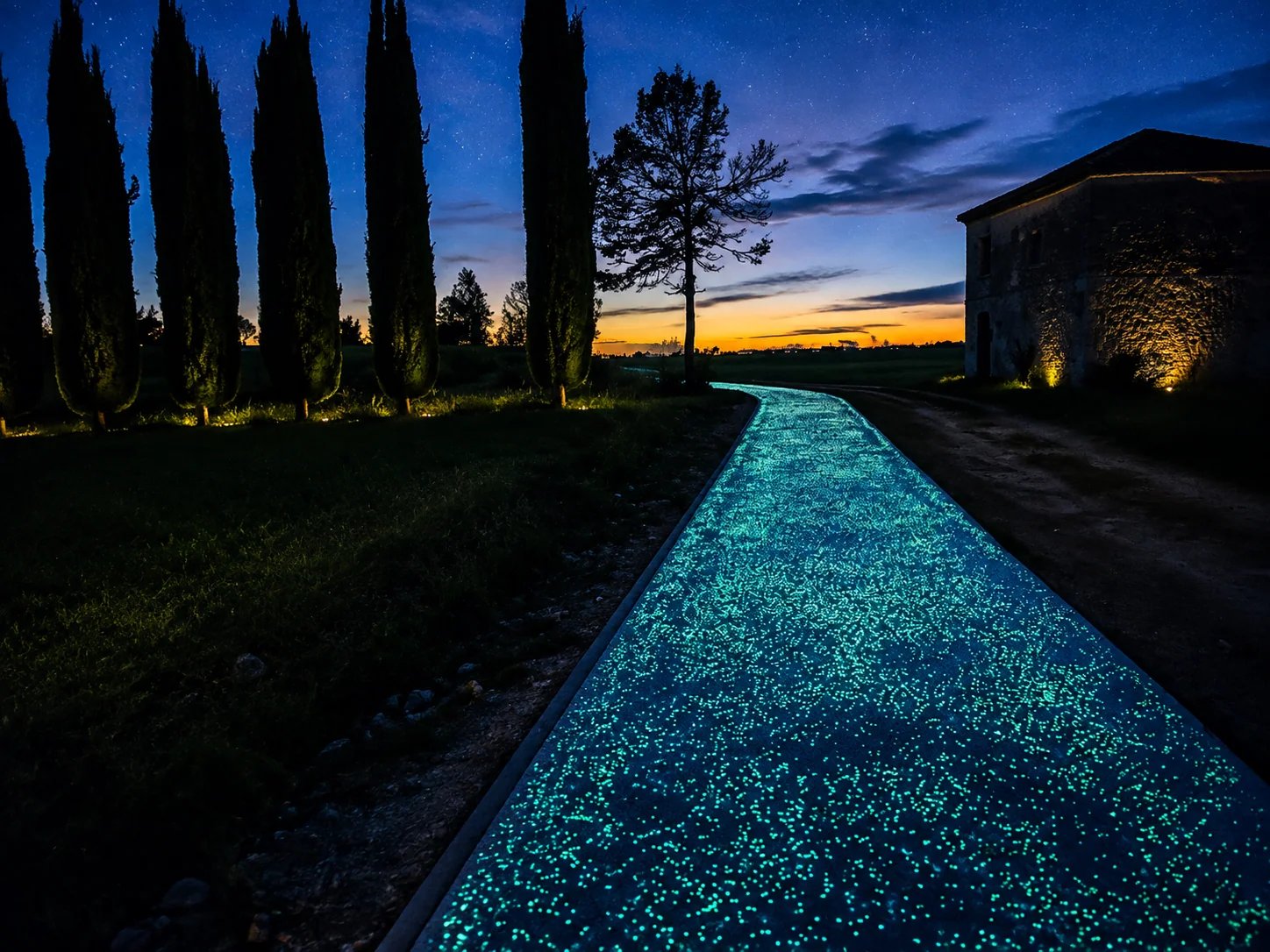
Photoluminescent resin for pavement is used for luminous pathways, decorative surfaces, resin-bound glow stone systems and selected nighttime markings. Photoluminescent pigment or glow aggregate is combined with a suitable transparent resin system: the luminous material stores energy from daylight or artificial light, then gradually releases visible afterglow after dark.
The resin has a major effect on the result. A resin that is too opaque, yellows outdoors or has poor adhesion can significantly reduce the appearance and durability of luminous pavement. Compare material options and site conditions before installation.
What Is Photoluminescent Resin?
Photoluminescent resin is a resin-based system incorporating light-storing materials such as:
- Photoluminescent pigment
- Glow powder
- Glow stones
- Photoluminescent aggregate
The luminous material absorbs light and releases a visible afterglow when the surrounding environment becomes darker.
The process can be summarized as:
Light Exposure → Energy Storage → Afterglow → Recharge
The resin acts as the binder that holds the luminous material together or bonds it to the pavement.
Why Resin Transparency Matters
Transparency is one of the most important factors in luminous pavement. Photoluminescent particles need light to enter the system during charging and leave the system during afterglow. If the resin is too opaque, light transmission can be reduced.
A suitable resin should balance:
Transparency + Adhesion + Strength + Water Resistance + Outdoor Durability
For exterior projects, UV stability is also particularly important.
Compare luminous resin systems and binder types
Several different systems can be created.
Photoluminescent Pigment Resin Coating
Glow powder is incorporated into a compatible transparent or translucent resin. This can create a more continuous luminous surface.
Suitable for:
- Path markings
- Decorative pavement
- Direction arrows
- Landscape designs
Resin Bound Glow Stones
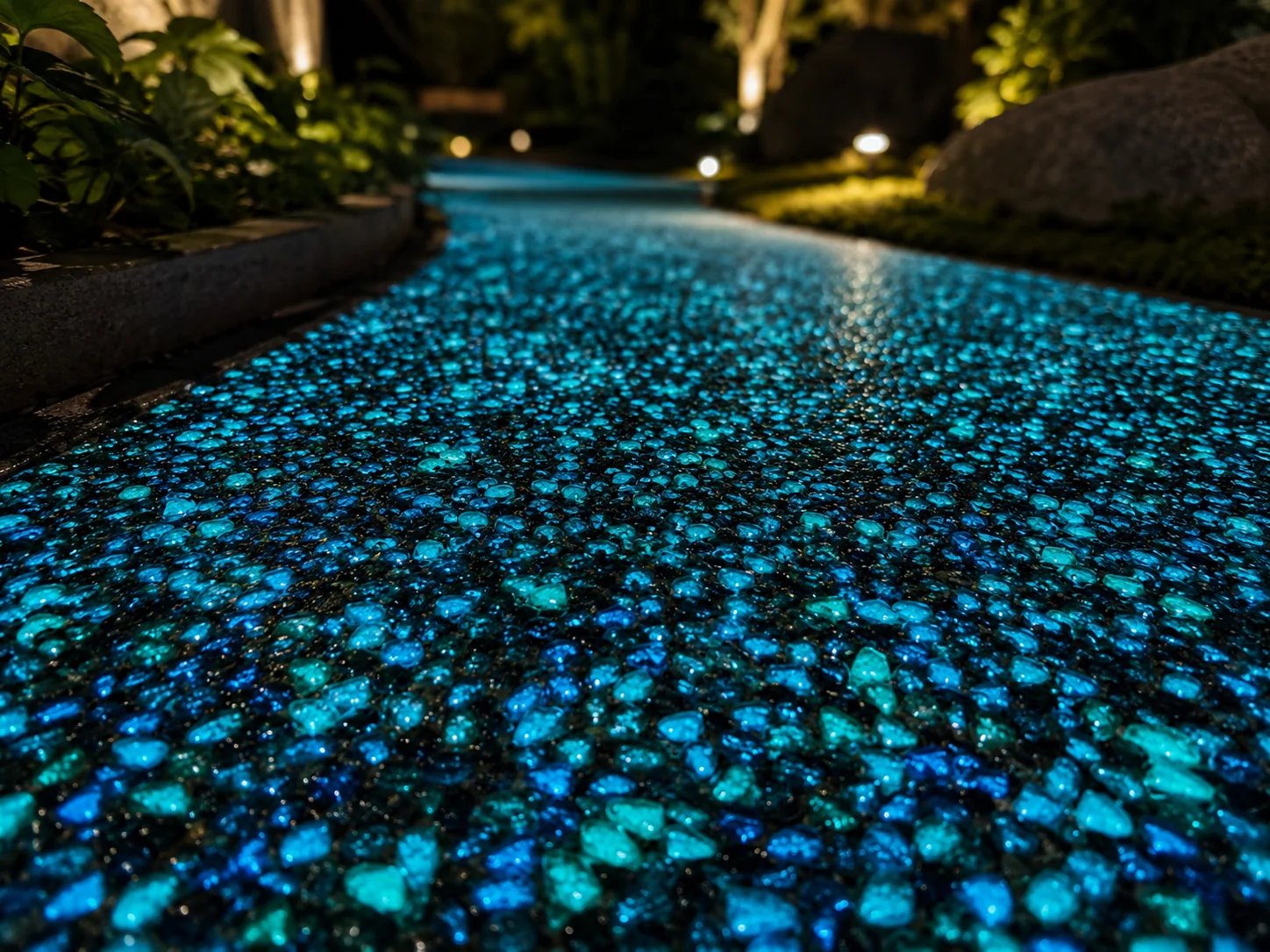
Glow stones are combined with transparent resin and aggregate. This creates a textured decorative surface with individual luminous points.
Suitable for:
- Garden paths
- Parks
- Resorts
- Residential landscapes
Photoluminescent Aggregate Resin
Smaller luminous aggregate can be combined with natural stone and resin. This creates a more distributed nighttime glow. It is particularly useful for landscape pavement.
Epoxy Resin Systems
Epoxy resin can provide:
- Strong adhesion
- Good mechanical strength
- Smooth finishes
It is commonly used for indoor flooring and selected decorative applications. For exterior pavement, however, UV stability should be carefully evaluated because some epoxy systems may change color or lose clarity after prolonged sunlight exposure.
Polyurethane Resin Systems
Suitable polyurethane systems can offer:
- Weather resistance
- Flexibility
- Water resistance
- Outdoor durability
For outdoor glow-stone and resin-bound pavement, the specific resin formulation should be selected according to the substrate and exposure conditions.
Match resin-bound systems to landscape applications
One of the most attractive applications is the luminous resin-bound pathway.
A typical system may contain:
Prepared Base
↓
Primer if Required
↓
Natural Aggregate + Glow Stones + Transparent Resin
↓
Finished Luminous Surface
During the day, the surface looks like decorative aggregate pavement. At night, the glow stones become visible.
Garden Applications
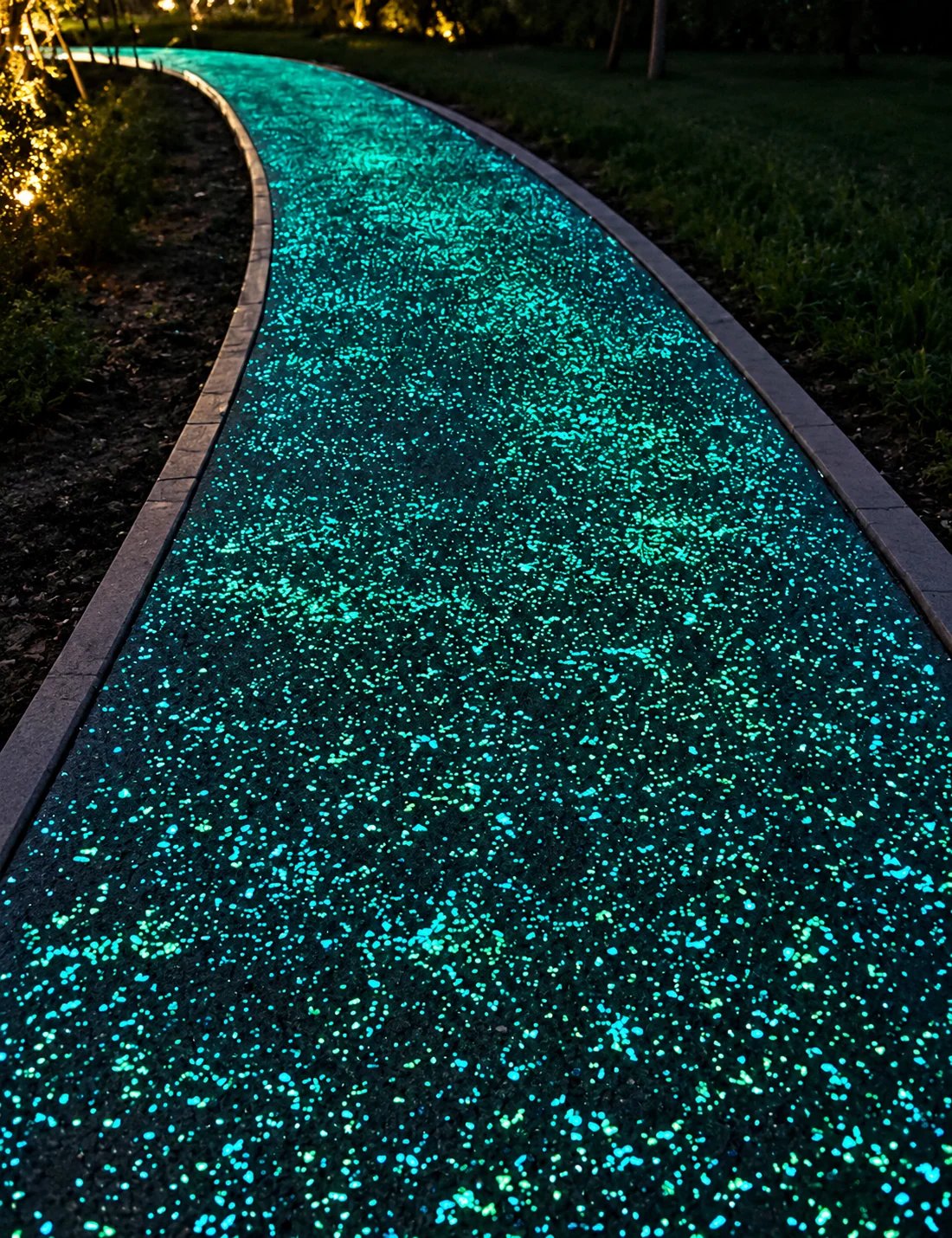
Photoluminescent resin pavement is suitable for:
- Garden paths
- Courtyard walkways
- Landscape borders
- Decorative patterns
Glow stones can be distributed randomly or arranged into specific designs.
Parks
Public parks can use luminous resin systems for:
- Walking paths
- Scenic routes
- Rest areas
- Landscape features
A moderate amount of luminous aggregate can create a subtle star-like appearance.
Resorts and Hotels
Resort landscapes can use glow resin pavement around:
- Villas
- Gardens
- Pool areas
- Outdoor restaurants
- Waterfront paths
Blue-green luminous aggregate is particularly suitable for decorative nighttime environments.
Residential Communities
Residential landscape projects can use resin-bound luminous pavement for:
- Courtyards
- Walking routes
- Recreation areas
- Community gardens
The glow effect can be adjusted by changing the amount and distribution of luminous aggregate.
Choose pigments, glow aggregate and natural stone
If glow powder is incorporated directly into resin, consider:
- Glow color
- Particle size
- Afterglow performance
- Resin compatibility
- Required concentration
Yellow-green and blue-green are commonly used photoluminescent colors.
Choosing Glow Aggregate
For resin-bound pavement, aggregate size affects both appearance and surface texture.
Fine Glow Aggregate
Creates a more uniform luminous distribution.
Larger Glow Stones
Creates stronger individual points of light. A mixture can be used to create different visual effects.
Combining Natural Stone and Glow Aggregate
Using only luminous aggregate is not always necessary.
A practical system can combine:
Natural Stone + Selected Glow Aggregate + Transparent Resin
Advantages include:
- Lower material consumption
- Natural daytime appearance
- Adjustable nighttime effect
Several sample ratios can be tested before construction.
Prepare the base for the resin system
The substrate should be:
- Stable
- Clean
- Dry
- Free from dust
- Free from oil
- Free from loose material
Poor surface preparation can cause loss of adhesion regardless of resin quality.
Concrete Base
Concrete is commonly used as the substrate.
Before installation, check for:
- Moisture
- Cracks
- Dust
- Weak surface layers
- Existing sealers
Mechanical preparation may be required.
Asphalt Base
Some resin-bound systems can be installed over suitable asphalt bases. The asphalt should be stable and compatible with the selected resin system. The complete pavement structure should be evaluated before installation.
Follow the installation sequence
Step 1: Inspect the Base
Check stability, moisture, cracks, and contamination.
Step 2: Prepare the Surface
Clean and repair the substrate.
Step 3: Prepare the Materials
Make sure aggregate is clean and dry.
Step 4: Mix Resin and Aggregate
Follow the correct resin-to-aggregate ratio.
Step 5: Add Photoluminescent Material
Introduce glow aggregate according to the selected design.
Step 6: Spread the Mixture
Apply the material evenly at the required thickness.
Step 7: Finish the Surface
Create a consistent texture.
Step 8: Allow Full Curing
Do not open the pavement to traffic prematurely.
Avoid Covering the Glow Stones
The luminous material needs exposure to light. If glow stones become completely covered by resin or other aggregate, charging performance may decrease. The luminous surfaces should remain sufficiently exposed.
Evaluate outdoor durability, drainage and traction
Outdoor resin pavement receives continuous sunlight.
An unsuitable resin may gradually:
- Yellow
- Become cloudy
- Lose transparency
- Degrade
This is especially important for photoluminescent systems because transparency directly affects charging and visible afterglow.
Water Resistance
Outdoor pathways must tolerate rain and moisture. The resin should provide suitable water resistance, but the pavement also needs good drainage. Standing water should not be ignored simply because the resin itself is water resistant.
Drainage
Proper drainage helps reduce:
- Standing water
- Dirt accumulation
- Slippery conditions
- Long-term pavement problems
The base structure should therefore be designed for the actual outdoor environment.
Skid Resistance
A resin pavement should provide suitable traction.
Surface texture depends on:
- Aggregate size
- Resin quantity
- Finishing method
- Anti-slip treatment
This is particularly important for:
- Pedestrian paths
- Bicycle routes
- Ramps
- Wet environments
Check charging and visible afterglow
Outdoor luminous resin pavement generally charges through daylight. Open locations normally provide better charging.
Performance can be weaker under:
- Trees
- Buildings
- Canopies
- Covered structures
For shaded projects, test samples under the actual conditions.
How Long Does the Glow Last?
Photoluminescent material is normally brightest shortly after the environment becomes dark. The brightness then gradually decreases.
Performance depends on:
- Material quality
- Charging intensity
- Charging duration
- Glow material concentration
- Resin transparency
- Ambient darkness
This fading is a normal characteristic of passive photoluminescent systems.
Clean and maintain the resin pavement
Surface contamination can reduce charging.
Common contaminants include:
- Dust
- Mud
- Leaves
- Oil
- Organic residue
Regular cleaning helps keep luminous particles exposed to light.
Maintenance
Inspect the pavement periodically for:
- Loose aggregate
- Resin wear
- Cracks
- Surface contamination
- Reduced glow
Small damaged areas should be repaired before they become larger.
Photoluminescent Resin vs. Glow Paint
These systems create different effects.
Glow Resin Pavement
Best for:
- Aggregate surfaces
- Landscape paths
- Decorative paving
- Glow-stone systems
Glow Pavement Paint
Best for:
- Lines
- Arrows
- Symbols
- Continuous colored surfaces
The two systems can also be combined in certain landscape projects.
Photoluminescent Resin vs. Loose Glow Stones
Loose glow stones are easy to install but may move over time. Resin-bound systems keep the aggregate fixed in place. This makes resin-bound glow pavement more suitable for permanent pedestrian surfaces.
Avoid resin price, quantity and aggregate-moisture mistakes
A low-cost resin may not provide the transparency or outdoor durability required for a luminous system.
Consider:
- Transparency
- UV stability
- Adhesion
- Water resistance
- Mechanical performance
The resin is a critical part of the complete pavement system.
Common Mistake: Using Too Much Resin
Excessive resin can cover the luminous aggregate and change the surface texture. The correct resin-to-aggregate ratio should be maintained.
Common Mistake: Using Wet Aggregate
Moisture can interfere with some resin systems. Aggregate should be prepared according to the resin manufacturer's requirements before mixing.
Test Before Large Installation
Prepare several samples before a large project.
For example:
Sample A
Natural aggregate + low glow-stone content
Sample B
Natural aggregate + medium glow-stone content
Sample C
Natural aggregate + high glow-stone content
Compare:
- Daytime appearance
- Nighttime glow
- Surface texture
- Material consumption
This makes it easier to select the final system.
Best Applications
Photoluminescent resin pavement is particularly suitable for:
Garden Paths
Decorative luminous walkways.
Parks
Landscape routes and scenic areas.
Resorts
Premium nighttime pavement designs.
Residential Communities
Courtyard and recreation paths.
Commercial Landscapes
Hotels, plazas, and outdoor dining areas.
Waterfront Paths
Decorative nighttime routes.
Select and test the complete luminous resin system
Photoluminescent resin for pavement provides a flexible way to combine transparent binders, natural aggregate, and luminous materials into decorative nighttime surfaces.
The most important factors are:
Transparent Resin + Quality Glow Material + Correct Aggregate Ratio + UV Resistance + Surface Exposure + Proper Drainage + Good Installation
For contractors, landscape designers, and distributors, testing the complete resin and glow-aggregate system before bulk installation is the best way to confirm both daytime appearance and nighttime performance.
FUXIN supplies Transparent Resin Binders, Photoluminescent Pigments, Glow Stones, Photoluminescent Aggregates, and Resin-Bound Luminous Pavement Materials for gardens, parks, resorts, pedestrian pathways, residential communities, and landscape projects.
For samples, quotations, or material recommendations, please contact us.