

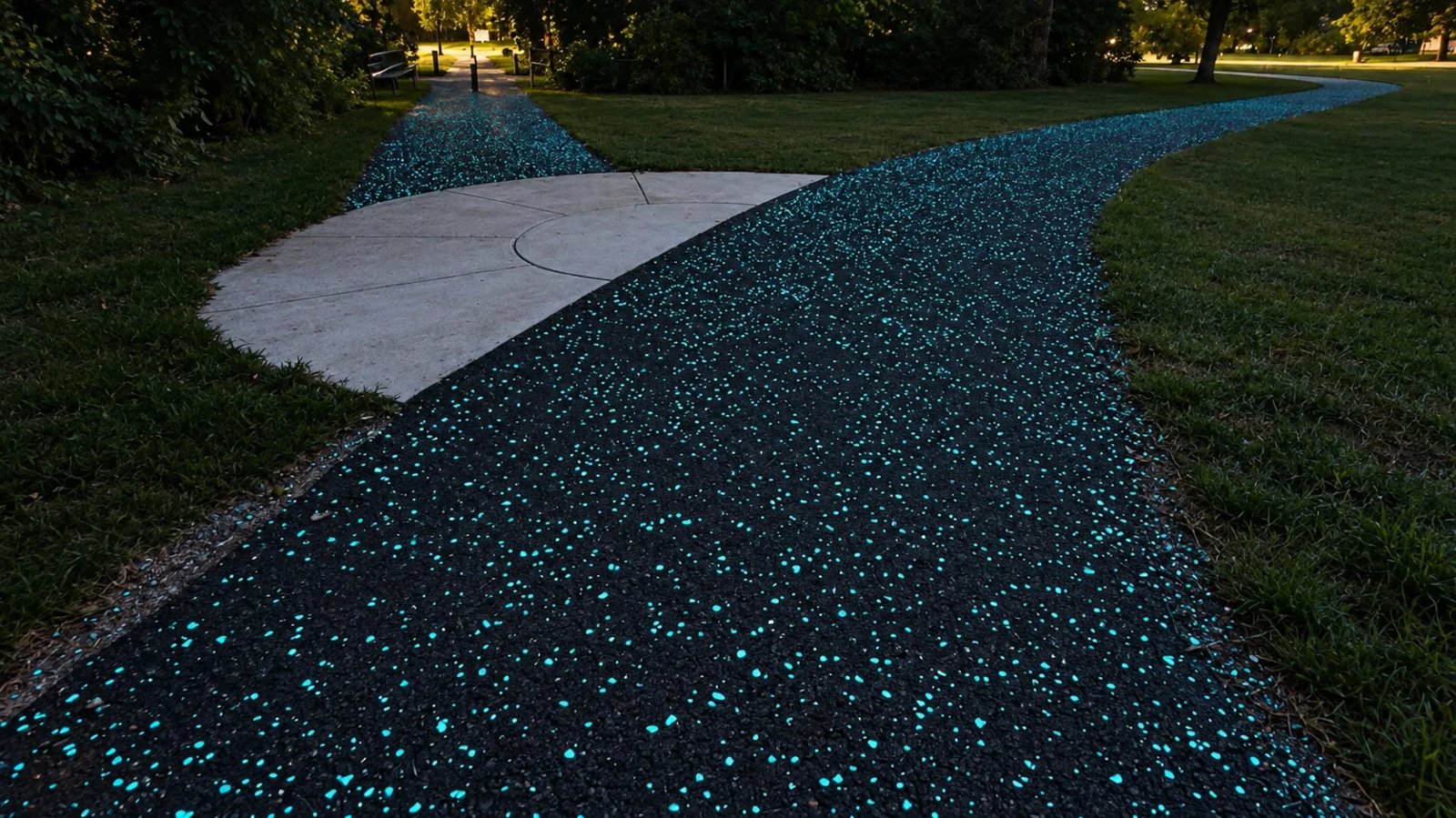
Modern landscape projects are no longer designed only for daytime viewing.
Parks, resorts, gardens and public spaces are increasingly expected to provide experiences throughout the entire day.
A successful outdoor pathway should offer:
- clear movement guidance
- attractive appearance
- comfortable walking experience
- nighttime visual identity
Photoluminescent pavement provides a new design approach by integrating luminous materials directly into the surface.
Instead of adding more lighting equipment, designers can transform the pavement itself into a nighttime landscape feature.
Start With the Project Purpose
Before selecting photoluminescent materials, define the design goal.
Different projects require different visual effects.
Functional Guidance
Examples:
- park pathways
- bicycle routes
- pedestrian areas
Focus:
- route recognition
- safety
- visibility
Decorative Landscape
Examples:
- resorts
- gardens
- scenic areas
Focus:
- atmosphere
- visual attraction
- visitor experience
Feature Areas
Examples:
- entrances
- artwork zones
- water features
Focus:
- strong visual impact
- memorable design
Choose the Right Particle Size
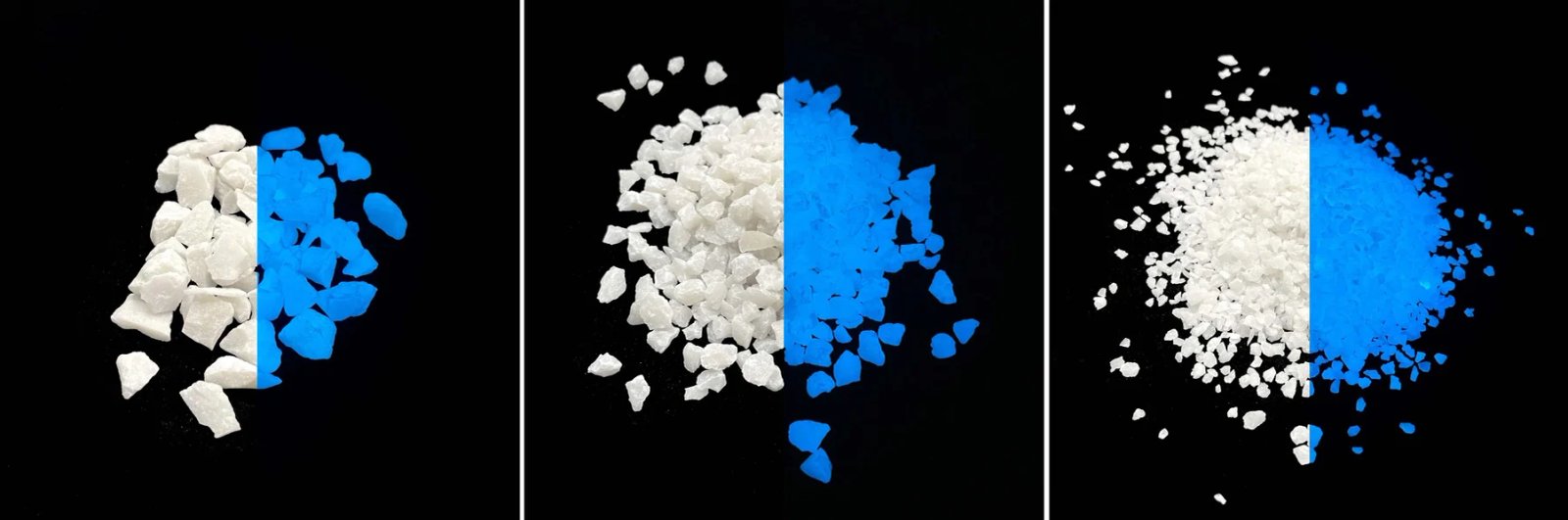
Particle size strongly affects the final appearance.
1–5 mm
Best for:
- pavement coatings
- resin systems
- fine patterns
Effect:
Creates many small glowing points.
5–10 mm
Best for:
- walking paths
- gardens
- parks
Effect:
Balanced visibility and natural stone appearance.
10–20 mm
Best for:
- landscape decoration
- borders
- feature zones
Effect:
Creates stronger individual glowing stones.
Design the Glow Density
More luminous material does not always mean better design.
A professional project usually considers three levels:
Light Coverage
Creates:
- subtle star effect
- natural atmosphere
Suitable for:
- gardens
- private landscapes
Medium Coverage
Creates:
- clear pathway guidance
- balanced appearance
Suitable for:
- parks
- resorts
High Coverage
Creates:
- strong nighttime attraction
Suitable for:
- tourism projects
- feature areas
Combine Daytime and Nighttime Design
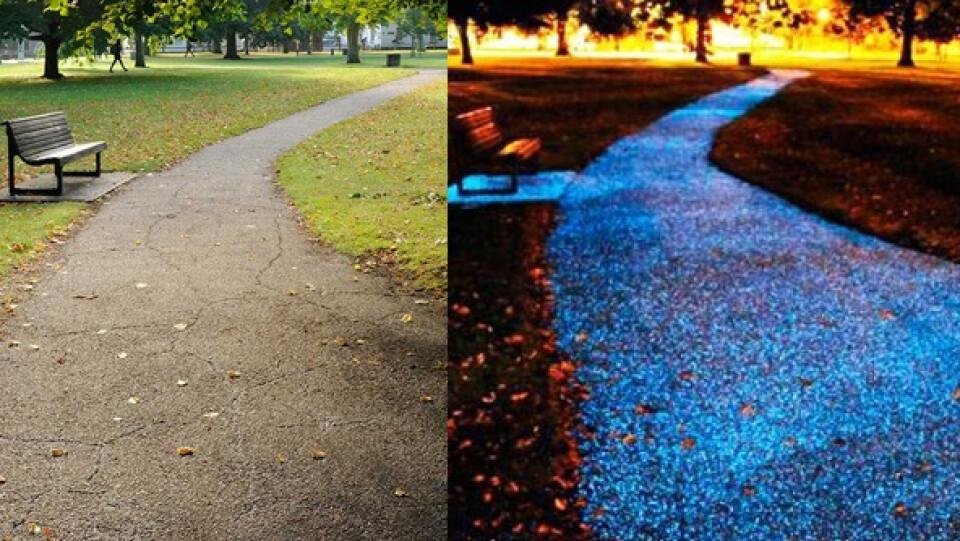
A good photoluminescent pavement should look attractive both day and night.
During daytime:
Consider:
- pavement color
- surrounding plants
- architectural style
At night:
Consider:
- glow intensity
- pattern
- route guidance
The best designs create a smooth transition from daytime landscape to nighttime experience.
Create Different Visual Effects
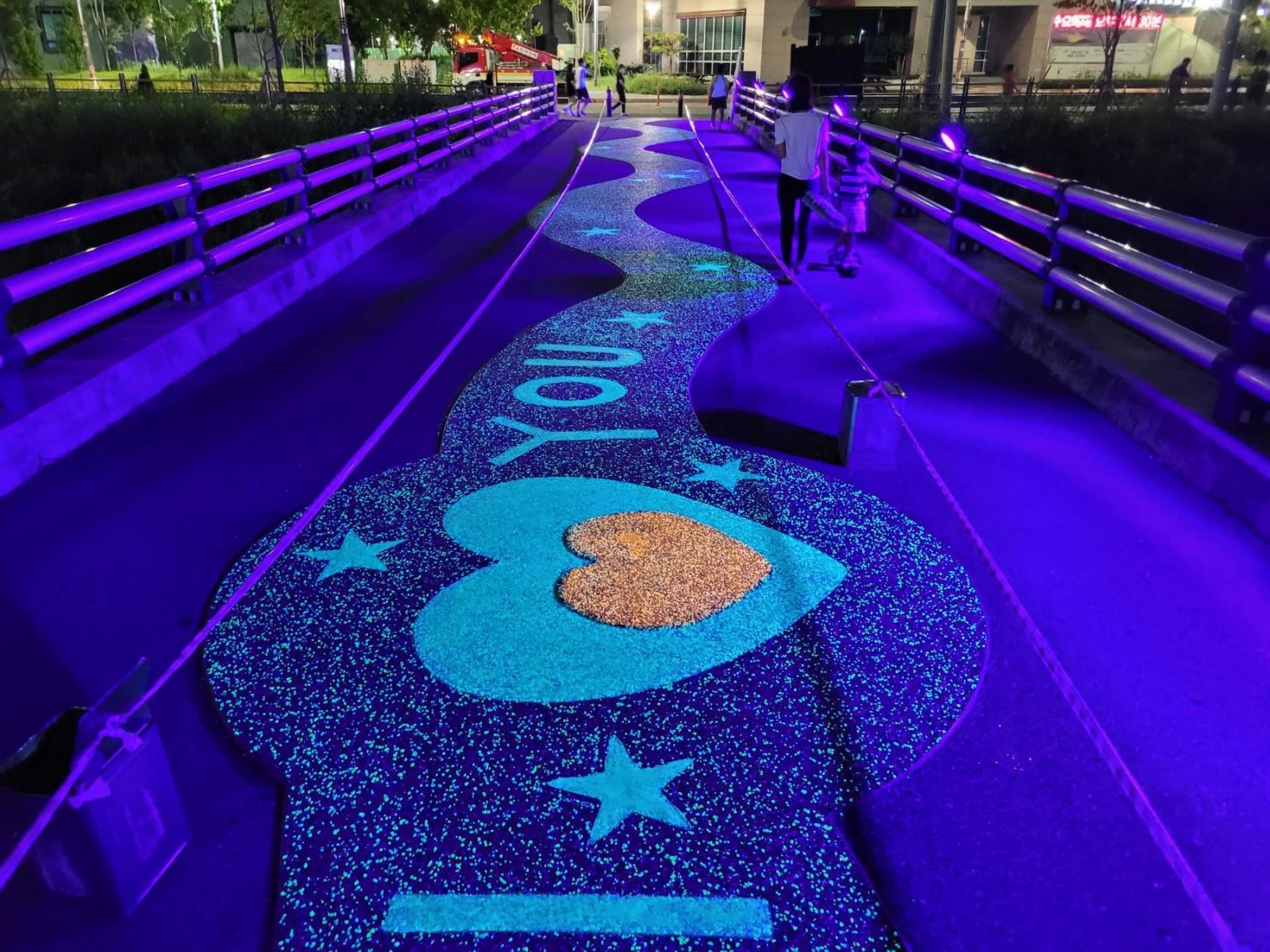
Photoluminescent aggregate can create various styles.
Starry Sky Effect
Using scattered particles.
Suitable for:
- parks
- gardens
- tourism routes
Continuous Glow Surface
Using higher density coverage.
Suitable for:
- entrances
- feature pathways
Decorative Patterns
Combining:
- different colors
- different particle sizes
- artistic layouts
Suitable for:
- resorts
- cultural projects
Design According to Environment
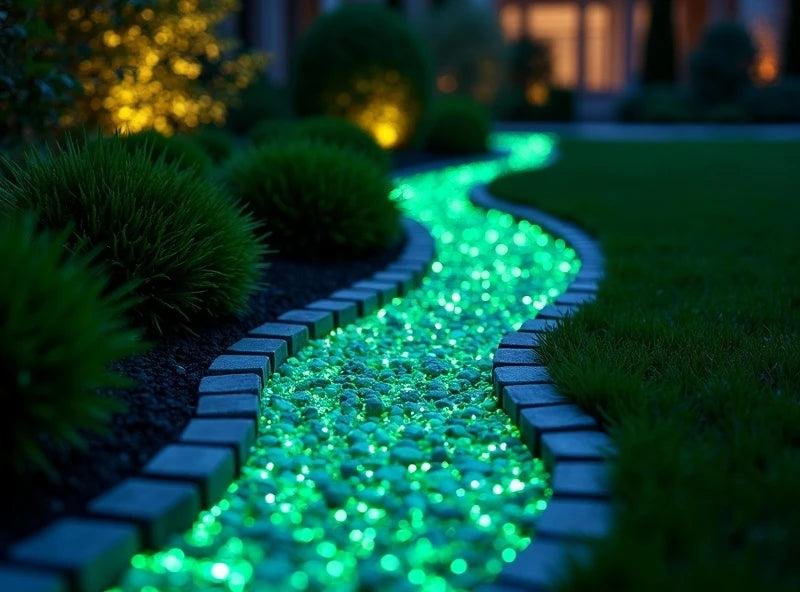
Forest Areas
Recommended:
- softer glow
- natural colors
- low visual disturbance
Waterfront Areas
Recommended:
- blue or blue-green tones
- reflective landscape concepts
Urban Parks
Recommended:
- clearer route definition
- higher visibility
Combine With Other Pavement Systems
Photoluminescent materials can work with:
Colored Pavement
Day:
Creates route organization.
Night:
Adds luminous identity.
Resin-Bound Pavement
Advantages:
- excellent particle visibility
- decorative appearance
Concrete Pavement
Advantages:
- durable structure
- suitable for public projects
Common Design Mistakes
Too Much Focus on Brightness
A pathway is not a lamp.
The goal is:
- atmosphere
- guidance
- experience
Ignoring Daytime Appearance
The pavement is visible most of the day.
The surface should match the landscape.
Using the Same Design Everywhere
Different environments require different solutions.
A resort pathway and a forest trail should not use identical designs.
Test Before Full Installation

Before large projects:
Create a sample area.
Evaluate:
- daytime appearance
- nighttime glow
- walking comfort
- particle distribution
Physical samples are more reliable than digital images.
Applications
Photoluminescent pavement can be used in:
- garden pathways
- park trails
- bike paths
- resort walkways
- scenic areas
- waterfront routes
- public landscapes
Photoluminescent pavement research has also explored applications in urban pavements, where luminous materials absorb solar energy during the day and emit light at night.MDPI
Final Thoughts
Nighttime landscape design is moving from traditional lighting toward smarter material solutions.
Photoluminescent pavement allows designers to create surfaces that are:
- functional
- attractive
- energy-independent
- memorable
The best projects are not simply brighter.
They are better designed.