

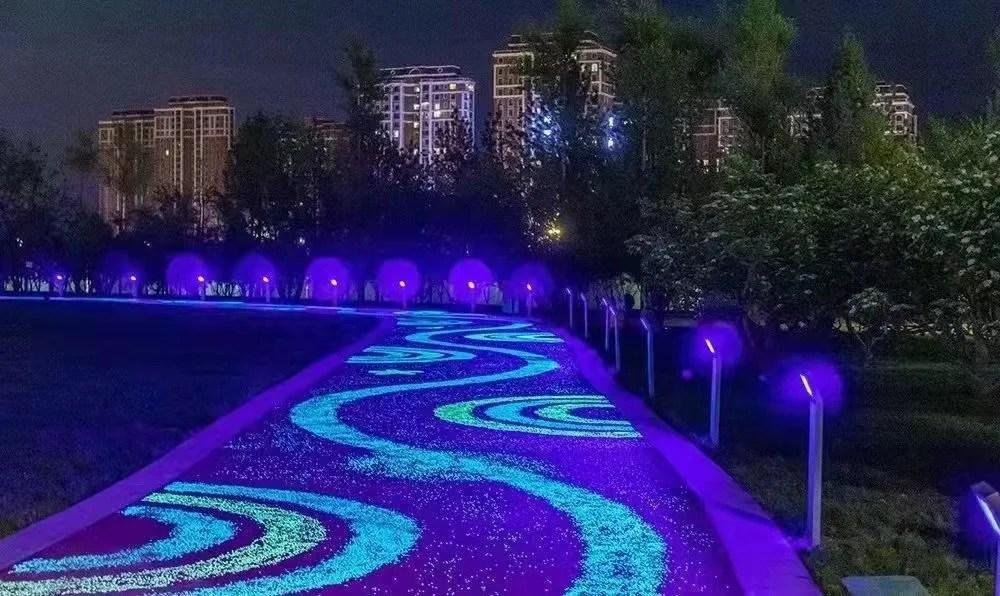
Photoluminescent pathways are becoming increasingly popular in parks, gardens, resorts, bike lanes, and urban landscape projects. By using glow stones or photoluminescent aggregates, these pathways can create a unique nighttime atmosphere while improving visibility without continuous electricity consumption.
However, a successful glowing pathway requires more than simply adding luminous materials to the surface. The final performance depends on design planning, material selection, pavement structure, and installation details.
This guide explains eight important factors that professional designers and contractors should consider before starting a photoluminescent pathway project.
Define the Purpose of the Pathway
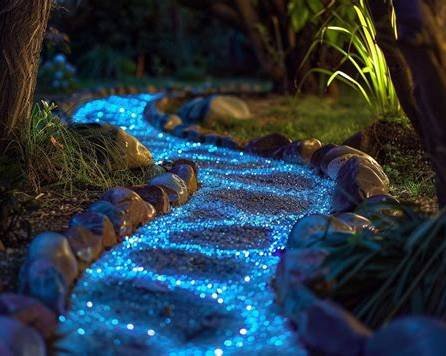
The first step is understanding how the pathway will be used.
Different applications require different designs:
- Garden decoration pathways
- Public park walkways
- Bicycle lanes
- Resort landscape roads
- Commercial outdoor spaces
A decorative garden path may focus on visual effects, while a public walkway requires higher durability and slip resistance.
The project purpose determines:
- Material type
- Particle size
- Surface structure
- Installation method
Choose the Right Photoluminescent Material
Not all glow materials are suitable for every project.
Common options include:
Photoluminescent Aggregate
Suitable for:
- Exposed aggregate pavement
- Resin-bound surfaces
- Decorative pathways
Photoluminescent Powder
Suitable for:
- Transparent coatings
- Resin systems
- Paint applications
Glow Stones
Suitable for:
- Landscape decoration
- Garden paths
- Pool surroundings
The correct material should be selected according to the expected environment and performance requirements.
Consider Daytime Appearance and Nighttime Effect
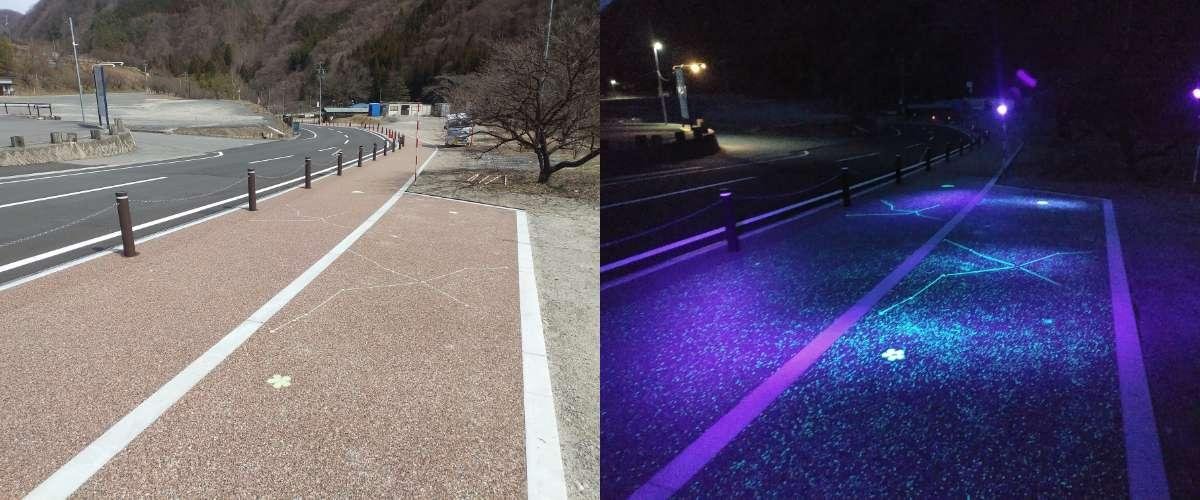
A good photoluminescent pathway should look attractive both day and night.
During the daytime:
- Color coordination with surroundings
- Surface texture
- Landscape integration
During nighttime:
- Glow intensity
- Color effect
- Visual guidance
Professional designs often combine different particle sizes and colors to create a more natural appearance.
Select the Proper Particle Size
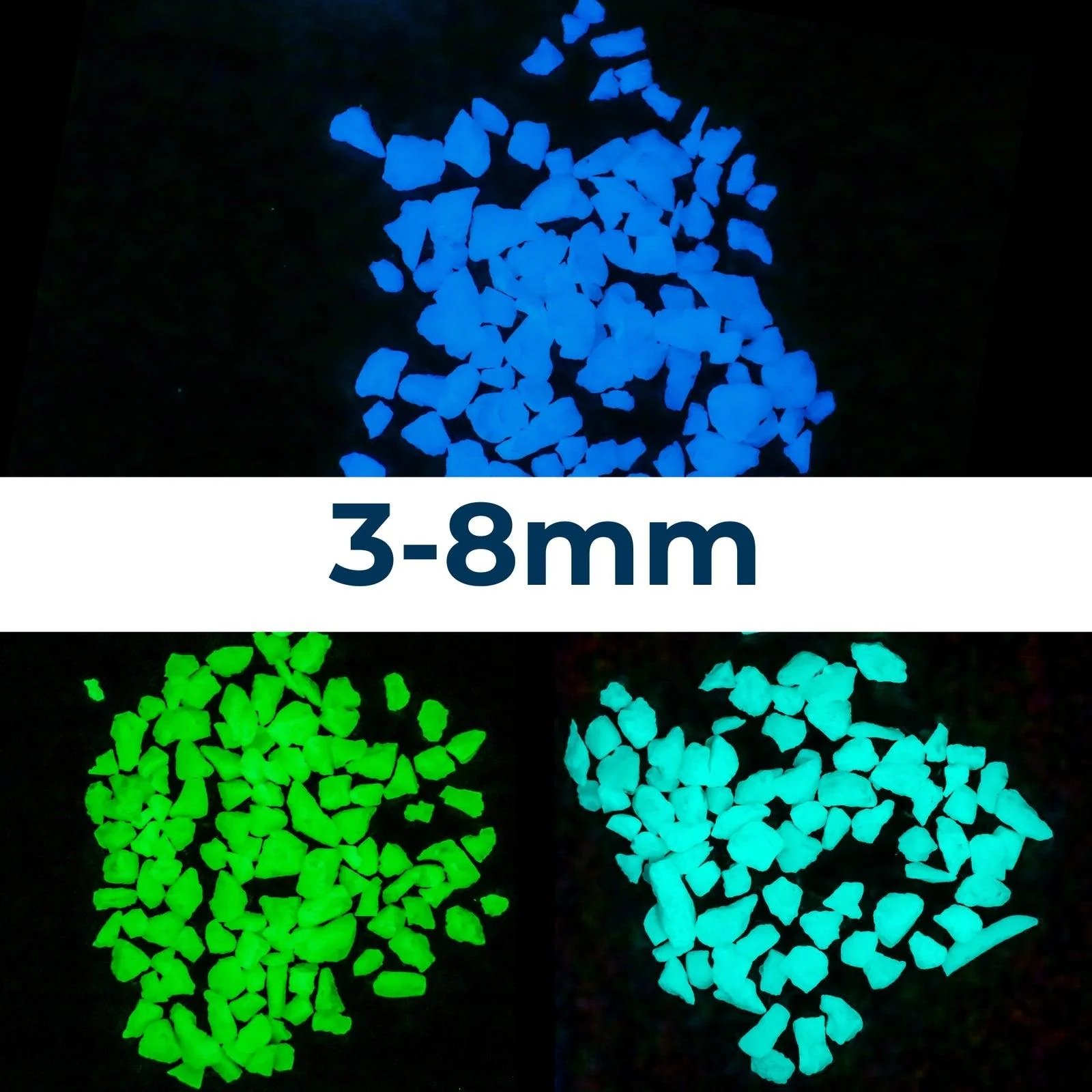
Particle size directly affects both appearance and performance.
Common sizes include:
- Small particles: smoother surface appearance
- Medium particles: balanced decorative effect
- Larger particles: stronger visual impact
For pedestrian pathways, designers often choose medium-size aggregates because they provide good visibility while maintaining walking comfort.
Plan the Surface Exposure
Photoluminescent materials need sufficient exposure to light.
A common design mistake is covering glow particles completely with opaque materials.
For better performance:
- Keep particles visible on the surface
- Avoid excessive coating thickness
- Use transparent protective layers
Proper exposure allows the material to absorb more energy during the day and provide longer glow at night.
Evaluate Environmental Conditions
Outdoor environments vary significantly.
Before design, consider:
- Annual sunlight hours
- Rainfall conditions
- Temperature changes
- Foot traffic levels
For example:
A sunny resort area may achieve excellent charging performance, while a cloudy region may require higher-performance photoluminescent materials.
Combine Safety with Aesthetic Design
A photoluminescent pathway should not only be beautiful but also practical.
Important safety factors include:
- Slip resistance
- Surface flatness
- Drainage performance
- Walking comfort
For public projects, the glowing effect should support safe movement rather than replace traditional lighting systems completely.
Plan Long-Term Maintenance
Although photoluminescent materials require no electrical power, proper maintenance improves service life.
Recommended practices:
- Keep the surface clean
- Remove dirt buildup
- Inspect damaged areas
- Repair cracks early
A well-designed pathway can maintain attractive nighttime effects for many years.
Professional Design Tips for Better Results

Based on practical outdoor applications, successful photoluminescent pathways usually follow three principles:
Material + Structure + Environment
The best glow effect comes from matching the right material with the correct pavement structure and local conditions.
Instead of choosing the brightest material only, professional projects should focus on:
- Long-term durability
- Safety performance
- Visual integration
- Maintenance requirements
Conclusion
A photoluminescent pathway is not simply a decorative surface. It is a complete landscape design system combining material technology, pavement engineering, and creative planning.
By considering application requirements, material selection, particle exposure, and environmental conditions, designers can create beautiful, durable, and functional glowing pathways for modern outdoor spaces.
Keywords: Photoluminescent Pathway, Glow Stone Pathway, Photoluminescent Aggregate, Glow in the Dark Pavement, Landscape Pathway Design