


Exposing photoluminescent aggregate in concrete means revealing enough luminous surface while keeping the stones mechanically anchored. Too much cement paste can block light absorption and nighttime visibility; removing too much can loosen stones, roughen the surface and reduce long-term durability.
The goal is controlled exposure, not the maximum amount of visible stone. Plan embedment, surface finishing and washing as one process, then use a realistic test panel to check the clean, cured surface in daylight and after dark before full construction.
Connect surface exposure with charging and nighttime visibility
Photoluminescent aggregate needs access to light.
During the day, the exposed surface absorbs energy from sunlight or artificial lighting.
After dark, that stored energy is gradually released as visible afterglow.
If a glow stone is covered by a thin layer of cement paste, its performance may already be reduced.
If it is completely buried, it contributes almost nothing to the visible luminous surface.
This is why the appearance of the finished concrete can matter more than the total amount of glow aggregate placed into the slab.
A project may contain a large quantity of luminous material and still look weak at night if most of it remains hidden.
Exposed Aggregate Concrete Has a Natural Advantage
Exposed aggregate concrete is particularly suitable for photoluminescent materials because the finishing process is already designed to reveal aggregate at the surface.
Instead of leaving a smooth cement-rich top layer, the surface paste is partially removed so decorative stones become visible.
For glow aggregate, this provides two benefits:
more surface area receives daylight
and
more luminous material remains visible after dark.
This makes exposed aggregate concrete suitable for projects such as:
-
pedestrian paths
-
landscape walkways
-
courtyards
-
parks
-
plazas
-
resorts
-
decorative outdoor paving
The challenge is controlling exactly how much of the luminous stone is exposed.
Start With the Right Embedment Depth

Before washing or exposing the surface, the glow aggregate needs to be embedded correctly.
If surface-seeded aggregate is simply left sitting on top of fresh concrete, bonding may be insufficient.
If it is pushed too deep, the luminous surface becomes hidden.
A practical target is to keep a meaningful part of each particle inside the concrete while leaving the upper portion available for later exposure.
Think of the stone in two zones:
Lower portion — anchoring
Upper portion — light exposure
Both are necessary.
Good glow performance without good anchoring is not a durable pavement.
Good anchoring without enough exposure is not an effective luminous surface.
Assess embedment after the complete finishing process
Fresh concrete can be misleading.
A stone may appear properly exposed immediately after placement, but cement paste can move across its surface during final finishing.
Likewise, a stone that initially looks slightly buried may become correctly exposed after the surface paste is removed.
This is why the final result should be evaluated after the complete exposed aggregate process, not only during placement.
The contractor should pay attention to:
-
aggregate position
-
cement paste thickness
-
finishing pressure
-
timing of exposure
-
washing method
All of these affect the final luminous area.
Surface Retarder Can Help Control Exposure

In exposed aggregate concrete systems, a surface retarder may be used to slow the setting of the upper cement paste while the underlying concrete continues to gain strength.
Later, the softened surface paste can be washed or brushed away.
For photoluminescent aggregate, this can help reveal the upper portion of the stone without aggressively cutting or grinding the surface.
However, the retarder should be treated as part of the overall concrete finishing system.
The correct product, application rate and removal timing depend on:
-
concrete mix design
-
cement content
-
weather
-
temperature
-
aggregate size
-
desired exposure depth
The same procedure should not automatically be copied from one project to another.
A test panel is the safest way to establish the correct exposure level.
Confirm washing time under actual site conditions
Washing too early can loosen aggregate.
Washing too late can make it difficult to remove enough cement paste.
This timing window is especially important with photoluminescent aggregate because the project needs both structural retention and visible luminous surface.
If the wash happens too early:
-
aggregate may move
-
stones may pull out
-
surface texture may become uneven
If the wash happens too late:
-
cement paste may remain over the particles
-
glow stones may appear dull
-
more aggressive cleaning may be required
The correct timing should be confirmed under actual site conditions whenever possible.
What Does Good Exposure Look Like?
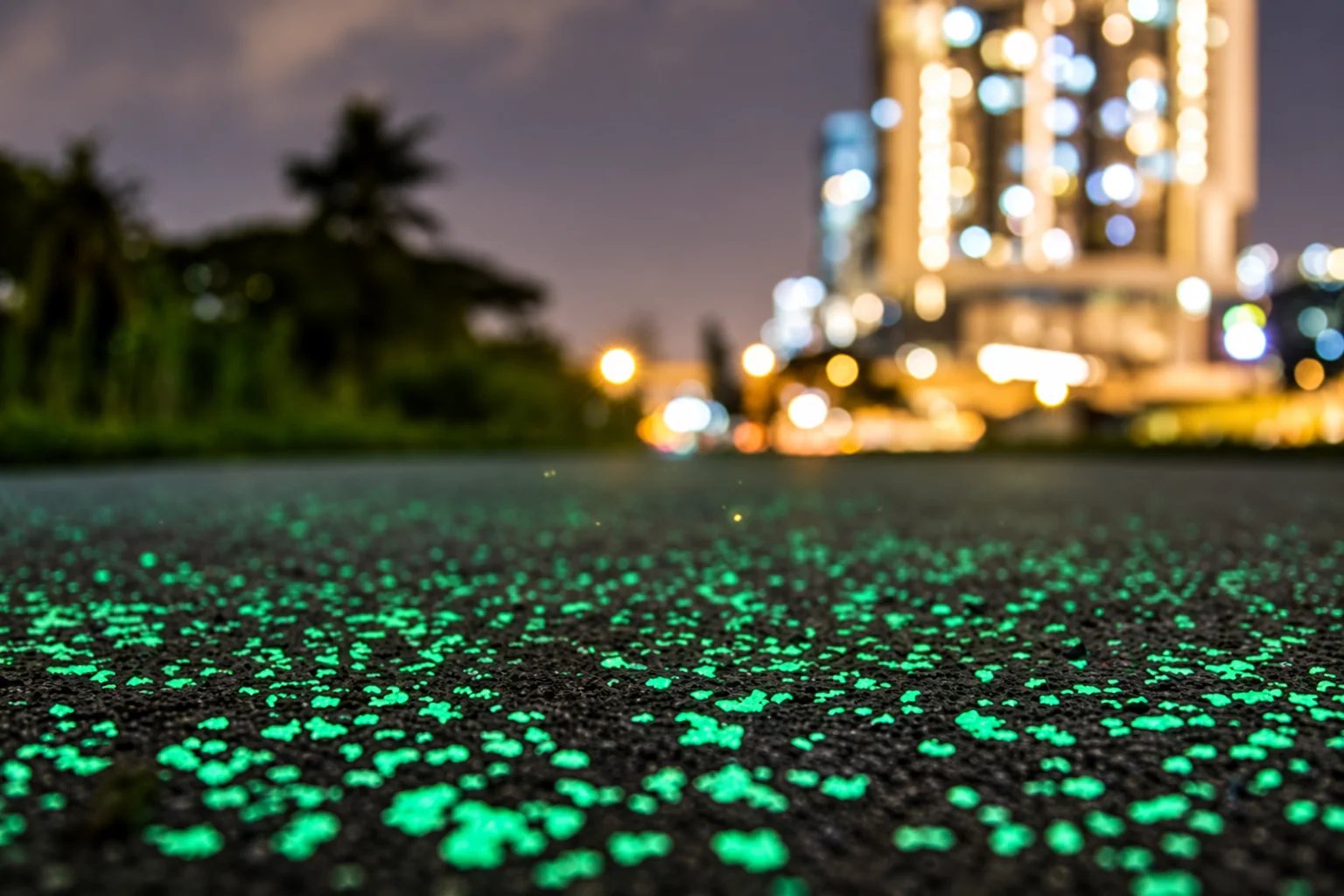
A properly exposed photoluminescent aggregate surface should not look as though loose stones were simply scattered on top.
The aggregate should appear integrated into the concrete.
The upper face of the particle should be visible, while the lower portion remains surrounded and supported by the concrete matrix.
From a contractor's point of view, the correct question is not:
“Can I see the whole stone?”
It is:
“Can I see enough of the luminous face while the stone remains securely anchored?”
That difference is important.
Avoid Over-Washing
Over-washing can create a visually dramatic exposed surface, but it can also reduce durability.
Too much paste removal can leave stones protruding excessively.
Possible problems include:
-
loose aggregate
-
uncomfortable walking texture
-
easier edge damage
-
more dirt accumulation
-
reduced surface uniformity
For pedestrian pathways, a luminous surface still needs to function as a pavement.
The glow effect should not come at the expense of surface quality.
Avoid Under-Washing
Under-washing creates the opposite problem.
The glow aggregate may remain partially covered by gray or colored cement film.
This can reduce:
-
daylight charging
-
visible color
-
nighttime contrast
-
overall luminous effect
A thin cement film may not look serious during the day, but it can make a noticeable difference after dark.
Smaller particles such as 1–5mm are especially easy to cover because the exposed luminous face is smaller.
This is one reason small aggregate requires careful finishing.
Particle Size Changes the Exposure Window
Different particle sizes behave differently during exposed aggregate finishing.
1–5mm
Fine particles can create a dense luminous effect, but they are easier to bury under surface paste.
This size benefits from careful washing and good control of the finishing layer.
5–10mm
Medium particles usually provide a larger visible face and are easier to recognize after exposure.
They can be practical for pathways and decorative concrete.
10–20mm
Large particles are easier to see individually, but excessive exposure can make the surface much rougher.
The larger the aggregate, the more important it becomes to maintain enough concrete support around the stone.
This is why particle size should be chosen together with the desired surface texture.
Cement Color Can Hide or Highlight the Glow Aggregate
Surface exposure is not only about physical depth.
Visual contrast matters too.
A light cement background can create a clean daytime appearance, while dark or colored concrete can make individual luminous particles more noticeable.
However, a strong contrast during the day does not automatically mean stronger glow at night.
For a realistic test, use the actual:
cement color + normal aggregate + glow aggregate
planned for the project.
Do not evaluate luminous aggregate only in a tray or sample bag.
Clean Residue Without Damaging the Surface
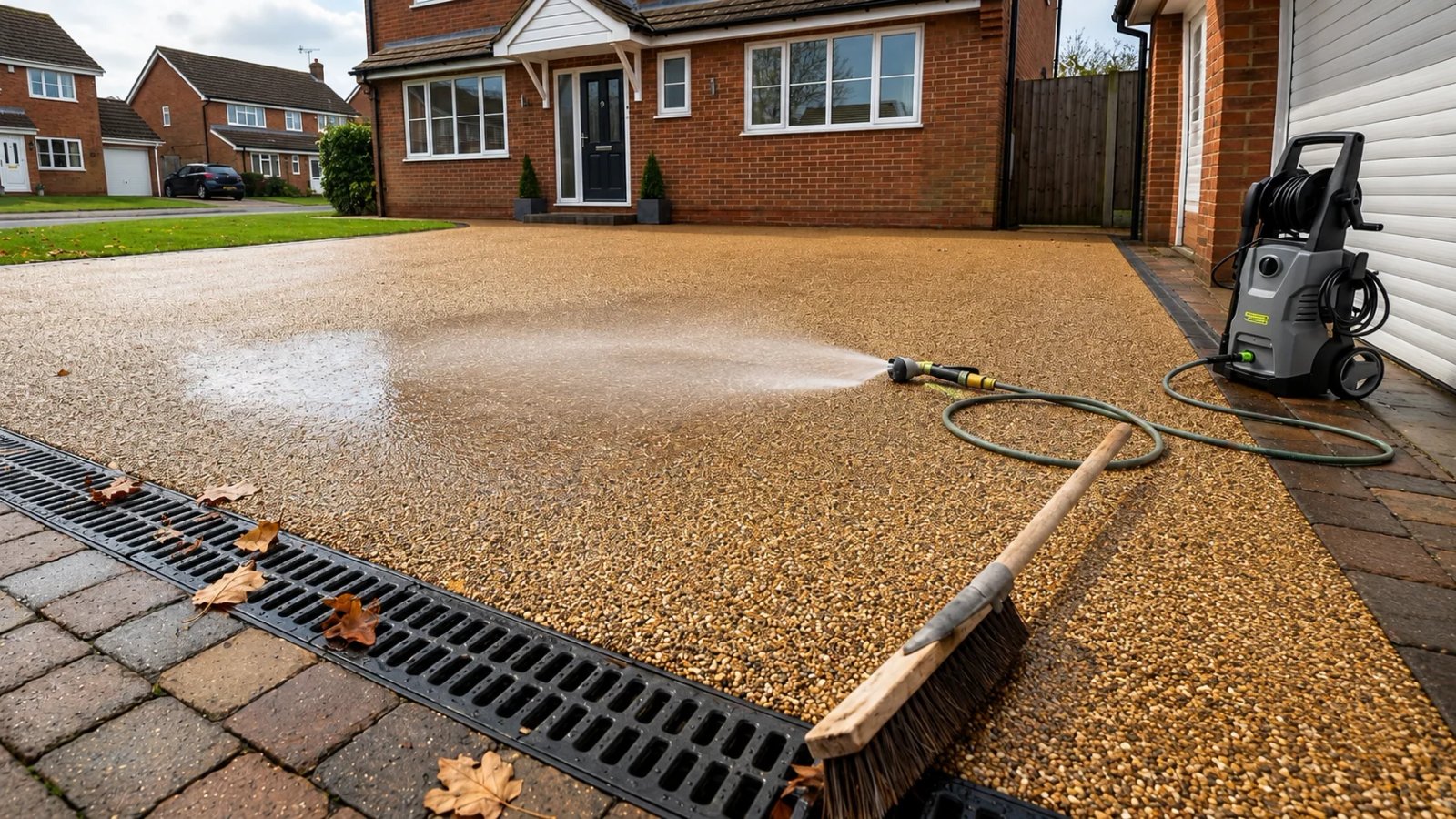
After exposure, the surface may still contain residual cement film or construction dust.
This can reduce the apparent brightness of the glow aggregate.
Final cleaning should remove loose residue without damaging the concrete or pulling out the exposed stones.
For a large project, contractors should follow the cleaning and curing requirements of the concrete system being used.
The goal is simple:
a clean luminous face with secure mechanical retention.
Compare sealed and unsealed test sections
Some exposed aggregate projects use a protective sealer.
That can improve appearance or help with maintenance, but the sealer should be tested with the photoluminescent system first.
A clear product may look transparent but still change:
-
surface gloss
-
optical contrast
-
charging conditions
-
nighttime appearance
-
slip resistance
Before sealing a large luminous surface, apply the intended sealer to part of a test panel and compare it with the unsealed section.
Check both during the day and at night.
A Test Panel Should Copy the Real Construction Method
A loose glow stone sample is useful for checking color and basic luminous behavior.
It is not enough for exposed aggregate concrete.
A proper test panel should use:
-
the actual concrete mix
-
the actual glow aggregate size
-
the intended normal aggregate
-
the planned seeding density
-
the real finishing method
-
the selected retarder if applicable
-
the same washing procedure
-
the intended sealer if one will be used
This gives the contractor and buyer a realistic preview of the final pavement.
Compare Different Exposure Depths
One useful test is to intentionally prepare several small areas with slightly different exposure levels.
For example:
Test Area A — light exposure
Only a limited upper face of the glow stone is visible.
Test Area B — medium exposure
More luminous surface is visible while the aggregate remains securely anchored.
Test Area C — heavy exposure
A large portion of the stone is visible, creating stronger texture.
Then compare:
-
daytime appearance
-
nighttime glow
-
aggregate stability
-
walking texture
-
cleaning behavior
This makes it much easier to decide what “correct exposure” means for that specific project.
Check for Loose Stones After Curing
A surface can look good immediately after washing but still have weakly bonded particles.
Once the test panel has cured sufficiently, inspect it again.
Look for:
-
loose particles
-
excessive protrusion
-
weak edges
-
surface voids
-
uneven exposure
A basic maintenance test can also be helpful.
Gentle brushing or normal cleaning can reveal whether the luminous aggregate is actually secure.
If stones begin to detach during routine cleaning, simply increasing the amount of glow aggregate will not fix the problem.
The embedment and exposure process needs adjustment.
Evaluate the Glow Only After the Surface Is Clean
Do not judge nighttime performance immediately after construction if the glow aggregate is still covered in cement residue or dust.
First allow the surface to reach the appropriate stage.
Then clean it.
Charge the test area under consistent lighting.
After that, evaluate the nighttime appearance.
This prevents contractors from incorrectly concluding that the glow material itself is weak when the real issue is simply surface contamination.
A Common Mistake: Exposing More to Get More Glow
It is easy to assume:
more exposed stone = more glow.
Up to a point, that is true.
But there is a practical limit.
Once the aggregate is sufficiently exposed to receive light and remain visible, removing more concrete around it may add little visual benefit while increasing surface risk.
The best exposure depth is therefore not the maximum possible exposure.
It is the point where:
luminous performance and pavement durability are both acceptable.
That is a much better project target.
Another Common Mistake: Adding More Aggregate Instead of Fixing the Finish
Imagine a pathway where the glow looks weak.
The contractor may decide to increase the aggregate loading.
But if the finishing process continues to cover most of the stones with cement paste, the additional material may also become hidden.
The project becomes more expensive without solving the main problem.
Before increasing material consumption, first check:
-
exposure depth
-
cement residue
-
distribution
-
charging conditions
-
surrounding nighttime light
Very often, better finishing provides more benefit than simply adding more aggregate.
What Project Buyers Should Inspect
When approving an exposed aggregate glow sample, do not inspect only the nighttime photograph.
Check the actual surface.
Ask:
Are the particles evenly distributed?
Is enough luminous surface exposed?
Are the stones firmly anchored?
Is the walking texture acceptable?
Does the surface look good during the day?
Does the glow remain visible under real site lighting?
A good project needs acceptable answers to all of these questions.
Frequently Asked Questions
How much of the glow stone should be exposed?
There is no universal percentage because particle size, concrete mix and surface requirements vary. The goal is to expose enough luminous face for charging and visibility while maintaining secure embedment.
Can I pressure wash exposed glow aggregate concrete?
Cleaning methods should match the concrete system and curing stage. Aggressive cleaning should not be used until the contractor confirms the surface has sufficient strength.
Does cement residue reduce glow?
Yes. Cement film covering the luminous face can reduce light exposure and nighttime visibility.
Is a surface retarder required?
Not always. Different exposed aggregate methods are available. If a retarder is used, its compatibility and timing should be tested with the actual concrete system.
Is 1–5mm harder to expose than larger glow aggregate?
Fine particles can be easier to cover with cement paste, so finishing control becomes particularly important.
Should I seal the finished surface?
A sealer may be used in some systems, but it should be tested first because it can change surface appearance, slip resistance and perceived glow.
Establish controlled exposure with a realistic test panel
With photoluminescent exposed aggregate concrete, the finishing process determines how much of the material's potential is actually visible.
The key is not maximum exposure.
It is controlled exposure.
The luminous aggregate needs to remain:
visible enough to charge and glow
while also being:
embedded enough to stay securely in the pavement.
For larger projects, use a real test panel to establish the correct embedment, washing time and exposure depth before full construction begins.
That small step can improve both luminous performance and long-term pavement quality.