

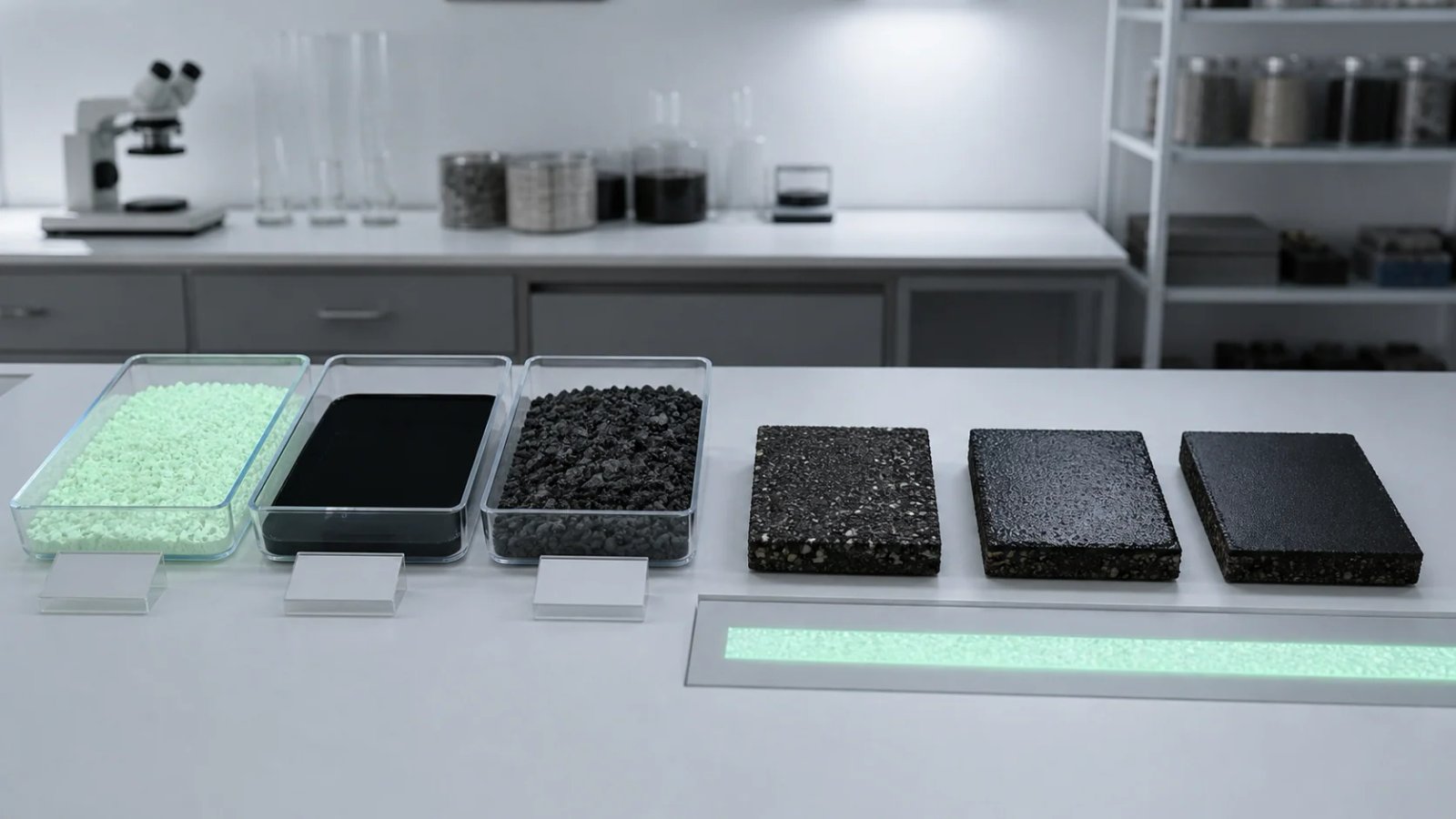
For active-transportation planners, specifying luminous center lines, edge lines, symbols, and transitions for cycle lanes starts with a site-specific brief rather than a generic product claim. A luminous marking is part of a complete pavement, lighting, wayfinding, and maintenance system.
The right result depends on how the route is used, how much charging light reaches the surface, and how the marking interacts with the existing pavement and safety controls. Treat the material choice, layout, and installation method as one decision.
What to evaluate
- rider speed and stopping distance
- intersection and merge behavior
- surface texture and wet-weather grip
- the relationship to conventional cycle-lane colors
A practical workflow
- segment the lane into straight runs and conflict zones
- select the marking system for the existing pavement
- test symbols at rider eye level and approach speed
- inspect the full line under daylight, dusk, and wet conditions
Questions to answer before approval
Luminous features should reinforce the lane's established traffic logic rather than introduce a new symbol language. Ask the project team to confirm the substrate, marked area, traffic or pedestrian loading, charging-light conditions, climate, installation window, and maintenance responsibility. These details make supplier quotes and field decisions comparable.
Plan the complete system
FUXIN Group supplies photoluminescent road marking materials and luminous aggregate systems for shared paths, crossings, cycle lanes, parking areas, landscape routes, and custom guidance projects. Share the site location, surface, area, target pattern, and nighttime objective to discuss samples and a suitable system.