

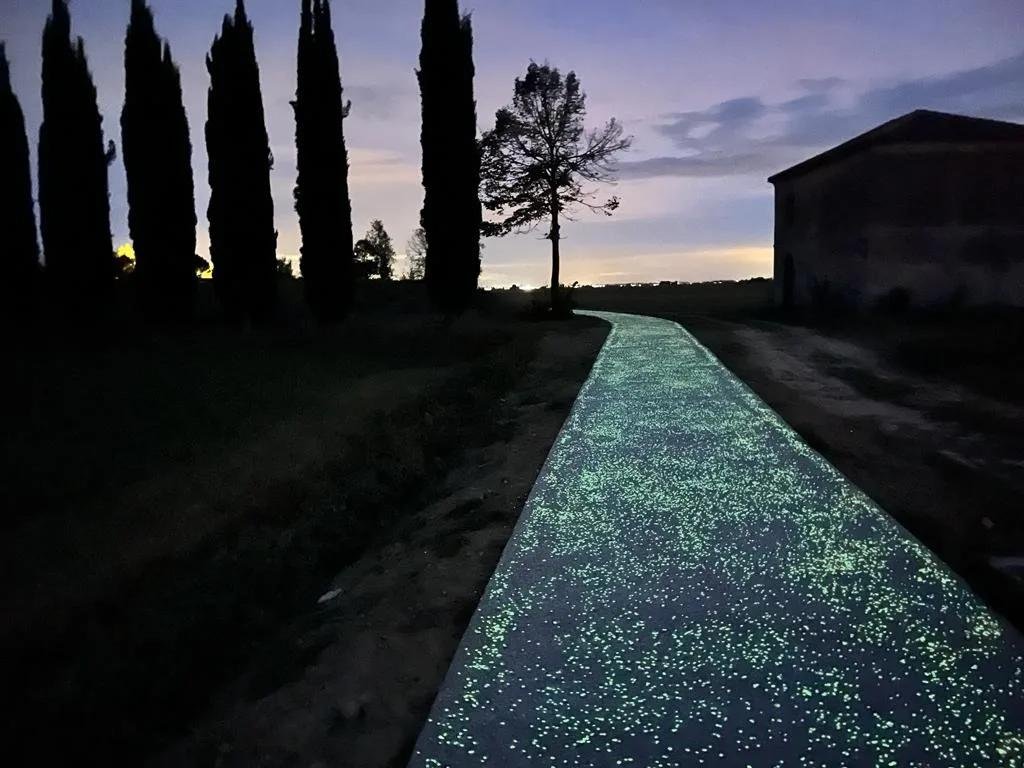
Photoluminescent concrete combines concrete construction with light-storing materials to create visible nighttime effects. Photoluminescent pigments, luminous aggregates or glow stones incorporated into the surface can absorb daytime light and release a soft afterglow after dark.
Applications include landscape pavement, garden pathways, parks, resorts, residential communities, pedestrian areas and decorative concrete projects. Because the afterglow needs no electrical wiring, the system can appeal to projects seeking visual interest and low-maintenance nighttime guidance.
What Is Photoluminescent Concrete?
Photoluminescent concrete is a concrete-based pavement system containing materials that store and release light energy. The working process is:
Light Exposure → Energy Absorption → Energy Storage → Nighttime Glow
During daylight or artificial lighting exposure, the luminous materials absorb energy. After the surrounding environment becomes darker, the stored energy is gradually released as visible light.
How Does Photoluminescent Concrete Work?
The luminous effect mainly depends on photoluminescent materials. Common components include:
- Photoluminescent pigment
- Glow aggregate
- Luminous stones
- Transparent resin systems
- Surface coatings
The luminous material needs to remain exposed near the surface so it can receive sufficient light. If the particles are completely buried inside concrete, the glow effect may be reduced.
Compare aggregate, embedded-stone and coating systems
Different construction methods can create different visual effects.
Photoluminescent Aggregate Concrete
This method incorporates luminous aggregate into the concrete surface. The aggregate can create:
- Natural stone appearance
- Decorative patterns
- Random glowing points
- Continuous luminous effects
It is commonly used for landscape pavement.
Glow Stone Embedded Concrete
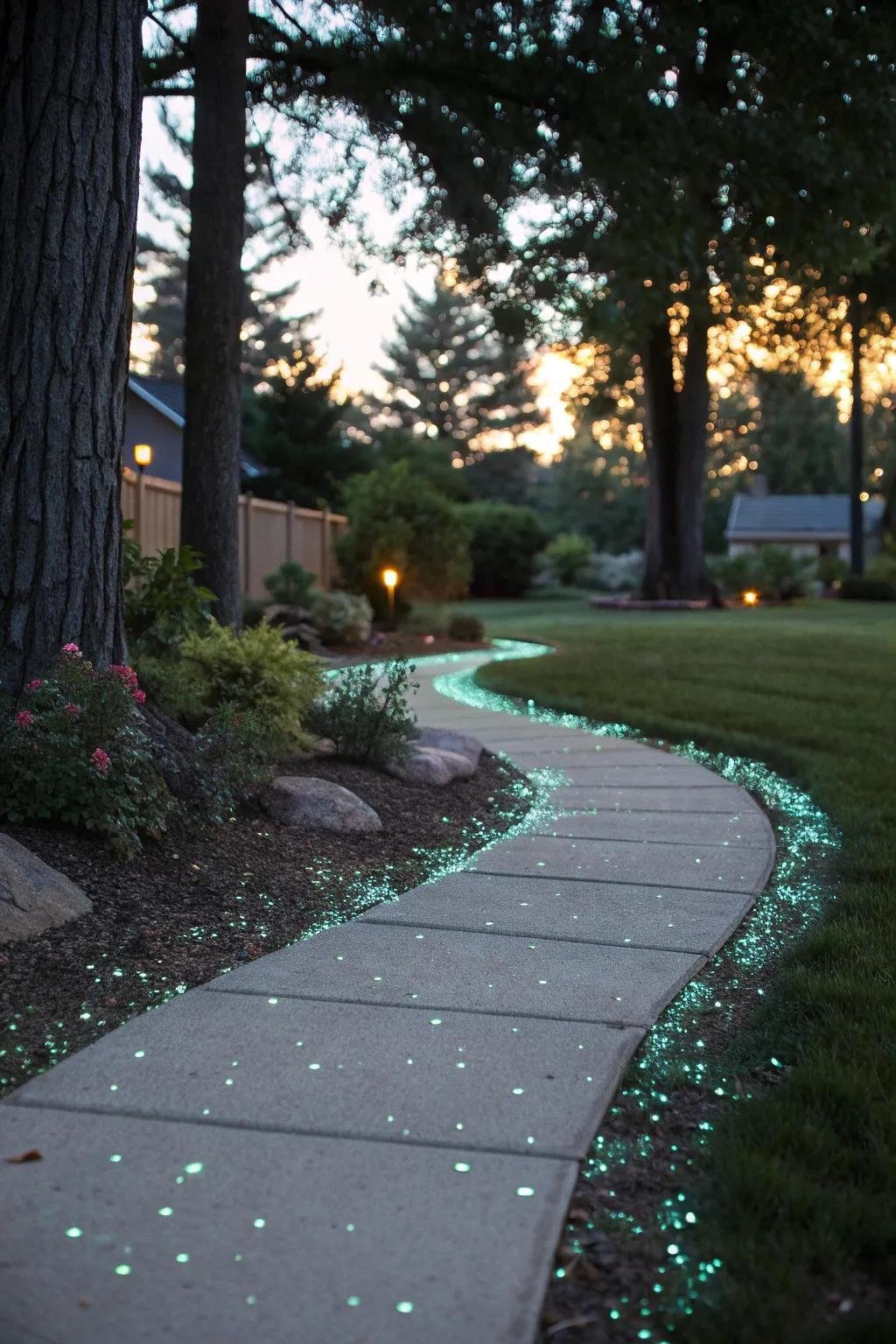
Glow stones can be placed into fresh concrete before curing. Applications include:
- Garden paths
- Courtyard pavement
- Park walkways
- Decorative sidewalks
This creates a natural scattered glow effect.
Photoluminescent Surface Coating
A luminous coating can be applied on cured concrete. A typical structure:
Concrete Base
↓
Primer
↓
White Base Coat
↓
Photoluminescent Layer
↓
Protective Topcoat
This method allows more control over patterns and brightness.
Benefits of Photoluminescent Concrete
Energy Saving
Photoluminescent concrete does not require continuous electrical power for its glow effect. It can use:
- Sunlight
- Natural daylight
- Existing artificial lighting
This reduces the need for additional lighting infrastructure.
Low Maintenance
Compared with powered lighting systems, photoluminescent concrete has fewer components. It does not require:
- Cables
- Lamps
- Electrical maintenance
The main maintenance requirement is keeping the surface clean.
Landscape Enhancement
Photoluminescent concrete can create unique nighttime environments. It is suitable for:
- Gardens
- Parks
- Resorts
- Outdoor entertainment areas
The glow effect can become part of the landscape design.
Improved Pathway Visibility
Although it does not replace lighting, photoluminescent concrete can help users recognize:
- Walking routes
- Path edges
- Direction changes
- Decorative zones
Match the system to the landscape application
Garden Pathways
Garden paths are one of the most common applications. Glow concrete can be used for:
- Walking trails
- Flower garden paths
- Landscape borders
- Courtyard walkways
The soft glow creates an attractive nighttime atmosphere.
Parks and Public Spaces
Public landscape projects can use luminous concrete for:
- Scenic paths
- Recreation areas
- Plaza pavement
- Outdoor seating areas
It can enhance the visitor experience after sunset.
Resorts and Hotels
Hospitality projects often use decorative pavement to create unique experiences. Applications include:
- Resort gardens
- Pool areas
- Villa walkways
- Outdoor dining areas
Residential Communities
Residential projects can use photoluminescent concrete for:
- Community pathways
- Courtyards
- Green spaces
- Walking routes
It provides decorative value while improving nighttime route recognition.
Bicycle Paths
Photoluminescent concrete can also be used for cycling routes. Possible applications:
- Edge lines
- Decorative sections
- Route indicators
- Bicycle symbols
Skid resistance is especially important for bicycle applications.
Select pigments, aggregates or glow stones
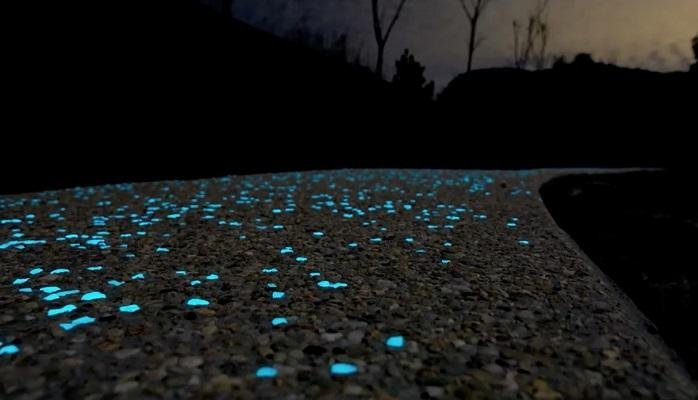
Photoluminescent Pigment
Pigment is the main luminous component. Important factors include:
- Glow brightness
- Afterglow duration
- Particle size
- Weather resistance
- Compatibility with concrete or resin
Glow Aggregate
Glow aggregate creates a more natural stone appearance. It is suitable for:
- Exposed aggregate concrete
- Resin-bound pavement
- Decorative walkways
Glow Stones
Glow stones are larger luminous particles. They are commonly used for:
- Garden paths
- Landscape borders
- Decorative pavement
Plan surface exposure, base color and binder transparency
Photoluminescent materials need light. The luminous particles should be visible or close to the surface. Common mistakes include:
- Covering stones too deeply
- Using opaque surface layers
- Applying thick dark coatings above luminous materials
These can reduce charging performance.
White Base Coat for Better Glow
A white base layer can improve visible brightness. Dark concrete surfaces absorb more light. A light-colored base can reflect light through the luminous layer. A common structure is:
Concrete
↓
White Reflective Base
↓
Photoluminescent Coating
↓
Clear Protection Layer
Transparent Binder Selection
For resin-based luminous concrete systems, binder transparency is important. The binder should allow light transmission while providing:
- Adhesion
- UV resistance
- Water resistance
- Durability
An opaque binder may reduce luminous performance.
Evaluate outdoor durability and skid resistance
Outdoor concrete surfaces experience:
- Sunlight
- Rain
- Temperature changes
- Dirt
- Foot traffic
The system should provide:
- Weather resistance
- Stable appearance
- Good adhesion
Skid Resistance
Safety is important for pedestrian pavement. The surface should provide good traction in:
- Dry conditions
- Wet conditions
- Sloped areas
Anti-slip aggregate may be added when necessary.
Follow the installation sequence
A typical photoluminescent concrete project may include:
Step 1: Prepare the Concrete Surface
Remove:
- Dust
- Oil
- Loose materials
- Contamination
Step 2: Apply Primer
Improve bonding between concrete and luminous materials.
Step 3: Install Luminous Material
Depending on the system:
- Mix aggregate
- Place glow stones
- Apply luminous coating
Step 4: Protect the Surface
Apply a suitable protective layer if required.
Step 5: Test Nighttime Performance
Evaluate:
- Glow effect
- Surface quality
- Walking comfort
- Durability
Diagnose weak glow, uneven appearance and durability issues
Weak Glow
Possible reasons:
- Insufficient charging light
- Low-quality luminous material
- Poor material exposure
- Dirty surface
Uneven Glow
Possible reasons:
- Uneven aggregate distribution
- Different coating thickness
- Poor mixing
Poor Durability
Possible reasons:
- Incorrect binder
- Poor surface preparation
- Unsuitable installation conditions
Clean and maintain the luminous surface
Photoluminescent concrete requires simple maintenance. Recommended actions:
- Regular cleaning
- Removing leaves and dirt
- Checking surface damage
A clean surface allows better charging.
Photoluminescent Concrete vs LED Lighting
Photoluminescent Concrete
Advantages:
- No wiring
- Low maintenance
- Integrated pavement design
- Decorative appearance
Limitations:
- Soft glow
- Requires charging light
- Does not provide full illumination
LED Lighting
Advantages:
- Strong illumination
- Adjustable brightness
- Active lighting control
Limitations:
- Requires electrical systems
- Higher installation complexity
Photoluminescent Concrete vs Traditional Concrete
Traditional concrete provides:
- Strength
- Durability
- Structural function
Photoluminescent concrete adds:
- Nighttime visual effects
- Landscape value
- Passive guidance
It combines structural pavement with decorative lighting features.
Test Before Large Projects
Before applying photoluminescent concrete on a large area, create a sample. Test:
- Daytime appearance
- Night glow
- Surface texture
- Weather resistance
- Walking comfort
A sample test helps determine the best material combination.
Best Applications
Photoluminescent concrete is suitable for:
Gardens
Decorative glowing paths.
Parks
Nighttime landscape routes.
Resorts
Premium outdoor designs.
Residential Communities
Courtyard and walking areas.
Commercial Landscapes
Outdoor decorative pavement.
Scenic Areas
Tourism and recreation routes.
Plan a complete photoluminescent concrete system
Photoluminescent concrete combines traditional pavement construction with modern luminous materials. It can create attractive nighttime surfaces without complex electrical systems. The best results depend on:
Quality Luminous Materials + Proper Surface Design + Good Light Exposure + Suitable Binder + Correct Installation
For landscape designers, contractors, and project owners, photoluminescent concrete provides a flexible solution for creating unique and functional outdoor spaces.
FUXIN supplies Photoluminescent Pigments, Glow Aggregates, Glow Stones, Luminous Pavement Materials, and Photoluminescent Concrete Solutions for gardens, parks, pathways, resorts, residential communities, and decorative pavement projects.
For samples, quotations, or project recommendations, please contact us.