

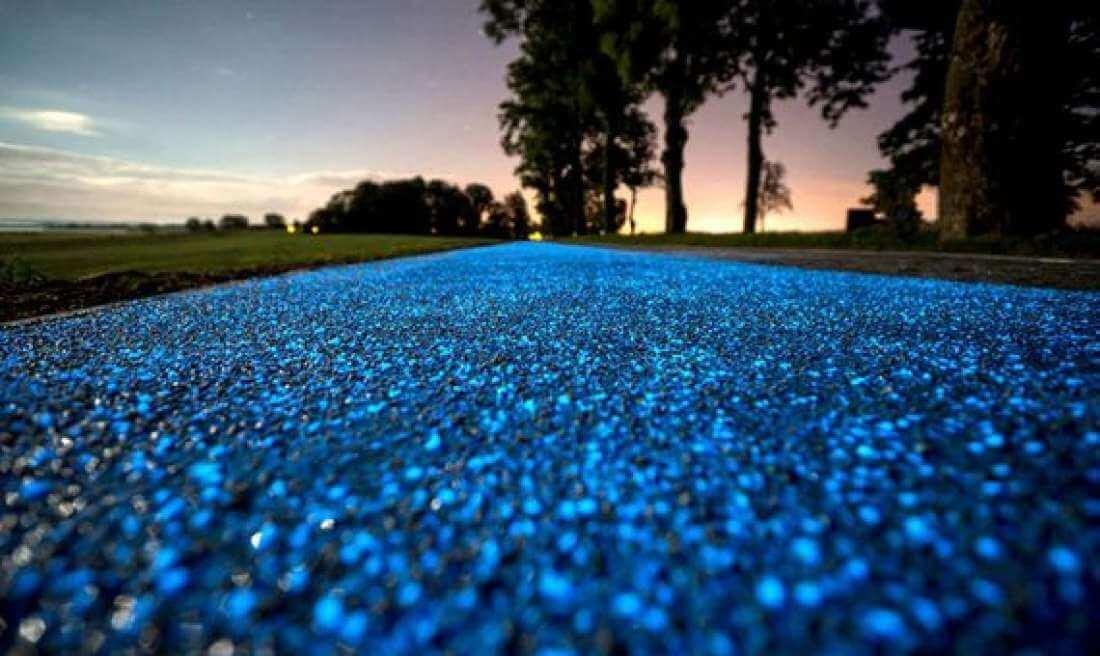
Asphalt pavement is one of the most widely used outdoor surfaces around the world.
It is commonly found in:
- roads
- bike paths
- parks
- pedestrian routes
- landscape pathways
With the development of smart materials, designers are exploring new ways to improve traditional asphalt surfaces.
One interesting approach is combining asphalt pavement with photoluminescent aggregate.
This creates a surface that remains functional during the day and produces a visible glow effect at night.
But many project owners have an important question:
Can photoluminescent aggregate really be used in asphalt?
The answer is yes, but the installation method and material selection are critical.
How Does Photoluminescent Aggregate Work in Asphalt?
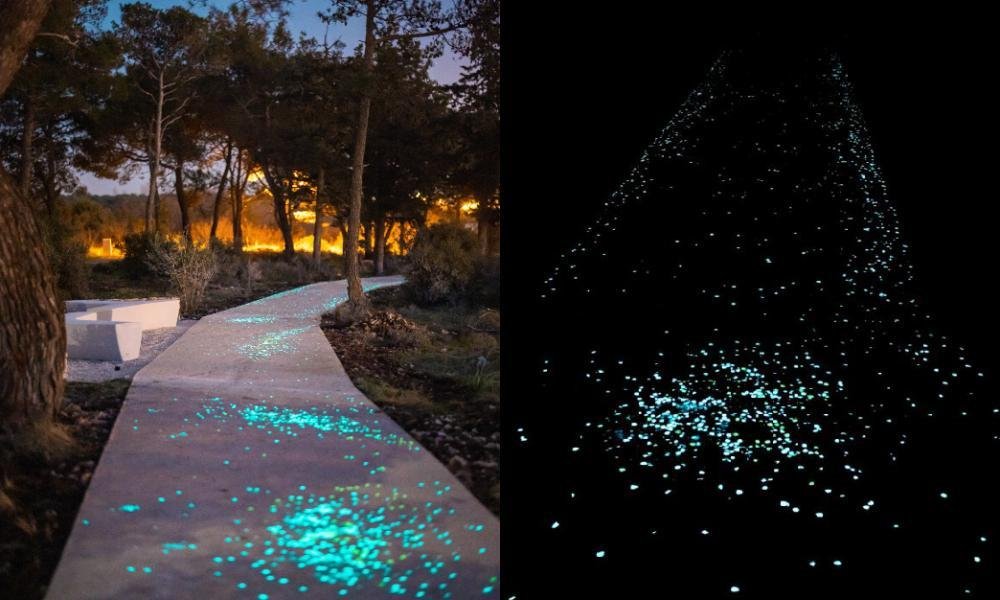
Photoluminescent aggregate works by absorbing light energy during the day.
Sources include:
- sunlight
- artificial lighting
- ambient outdoor light
After dark, the stored energy is gradually released as visible light.
When integrated into asphalt pavement, the luminous particles become part of the surface design.
The result is a pavement system that provides:
- nighttime visual guidance
- decorative effects
- landscape identity
Why Asphalt Is Suitable for Photoluminescent Aggregate
Asphalt provides several advantages.
Dark Background Creates Strong Contrast
One major advantage of asphalt is its dark surface color.
The contrast between:
- black asphalt
- blue-green luminous particles
can make the glow effect more visible.
This is why asphalt pathways are often considered suitable for luminous aggregate applications.
Suitable for Outdoor Environments
Asphalt is widely used outdoors.
Applications include:
- parks
- greenways
- bicycle paths
- recreational trails
These environments are also common applications for photoluminescent pavement.
Large Surface Area Possibilities
Unlike small decorative objects, asphalt pathways can create large continuous glowing surfaces.
This makes them attractive for:
- tourism projects
- public landscapes
- urban renewal projects
Installation Methods for Asphalt Pavement
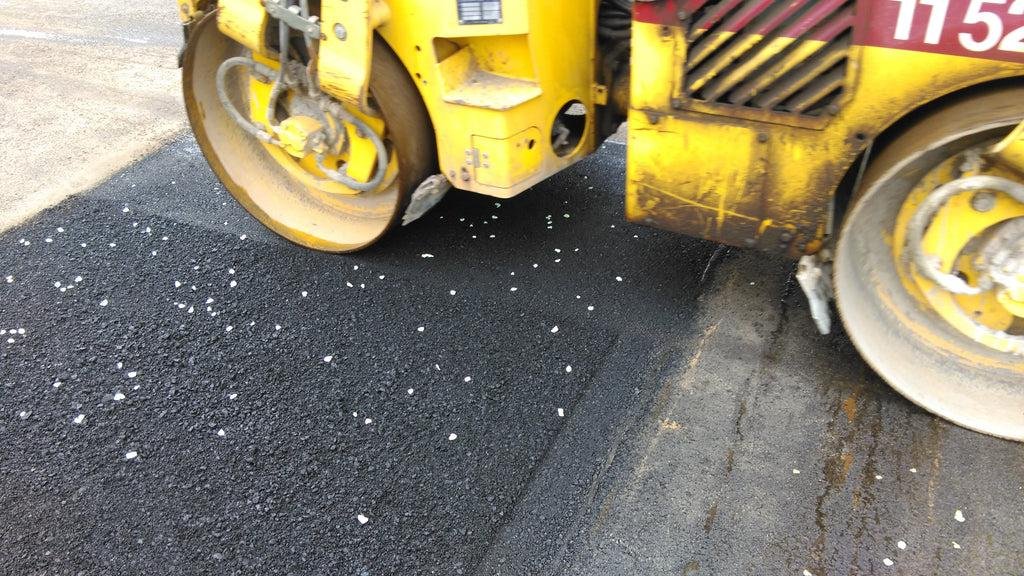
There are several possible approaches.
Method 1: Surface Broadcasting
This is one of the most common decorative methods.
Process:
-
Place fresh asphalt surface
-
Spread photoluminescent aggregate
-
Press particles into the surface
-
Complete finishing process
Advantages:
- strong visual effect
- visible particles
- flexible patterns
Method 2: Asphalt Mix Integration
Photoluminescent aggregate can also be considered as part of an asphalt mixture.
However, the key challenge is visibility.
If particles are completely surrounded by asphalt:
- less light reaches them
- less glow is visible
Therefore, surface exposure must be carefully controlled.
Method 3: Resin-Bound Surface Layer Over Asphalt
Another approach is applying a transparent resin-bound luminous layer over an existing asphalt surface.
Advantages:
- better particle visibility
- decorative appearance
- suitable for pedestrian areas
Applications:
- landscape paths
- parks
- resorts
Important Factors Affecting Glow Performance
Particle Exposure
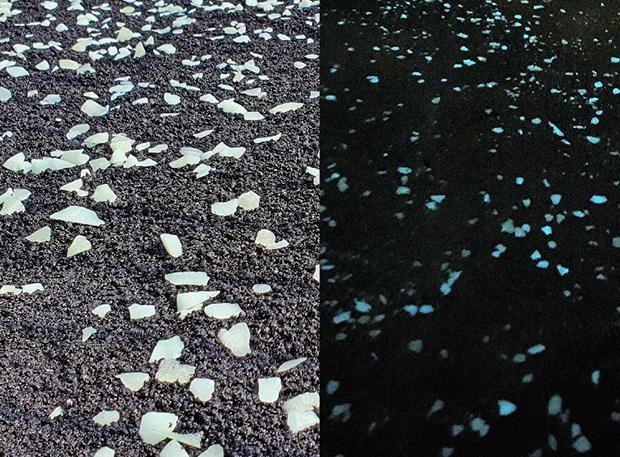
The luminous particles need enough exposed surface area.
Too deep:
- weaker glow
Correct exposure:
- better charging
- stronger nighttime visibility
Aggregate Size
Different sizes create different effects.
1–5 mm
Suitable for:
- fine surface effects
- coatings
- smooth pathways
5–10 mm
Suitable for:
- park paths
- landscape pavement
10–20 mm
Suitable for:
- decorative areas
Coverage Density
The amount of luminous aggregate changes the final appearance.
Low coverage:
- subtle star effect
Medium coverage:
- balanced pathway guidance
High coverage:
- stronger visual impact
Where Can Luminous Asphalt Be Used?
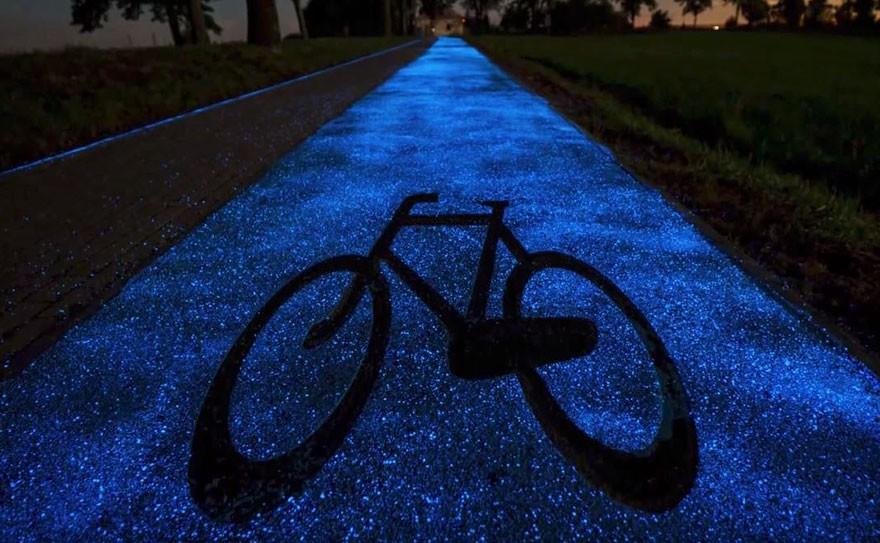
Bicycle Paths
Benefits:
- nighttime route recognition
- attractive design
- improved user experience
Park Walkways
Benefits:
- low visual disturbance
- landscape integration
Scenic Tourism Routes
Benefits:
- creates memorable visitor experiences
- supports night tourism
Waterfront Paths
Benefits:
- works well with blue-green luminous colors
- enhances landscape atmosphere
Can Photoluminescent Asphalt Replace Street Lighting?
No.
Photoluminescent pavement and traditional lighting serve different purposes.
Traditional lighting provides:
- strong illumination
- safety lighting
- visibility over large areas
Photoluminescent aggregate provides:
- surface guidance
- decorative effects
- visual identity
The two systems can work together.
Common Mistakes When Using Glow Aggregate in Asphalt
Choosing Material Only by Brightness
The strongest-looking sample may not always be the best solution.
Consider:
- durability
- installation
- project environment
Covering Particles Too Deeply
This reduces light absorption and visible glow.
Ignoring Daytime Appearance
The pavement must also look good during daylight.
Testing Only Loose Aggregate
Always test the finished asphalt system.
Testing Before Large Projects
A sample section should be created before full installation.
Evaluate:
- daytime appearance
- nighttime glow
- particle retention
- surface texture
- user experience
This helps confirm the expected result.
Combining Photoluminescent Aggregate With Colored Asphalt
A creative approach is combining:
Daytime
Colored asphalt creates:
- route identification
- landscape organization
Nighttime
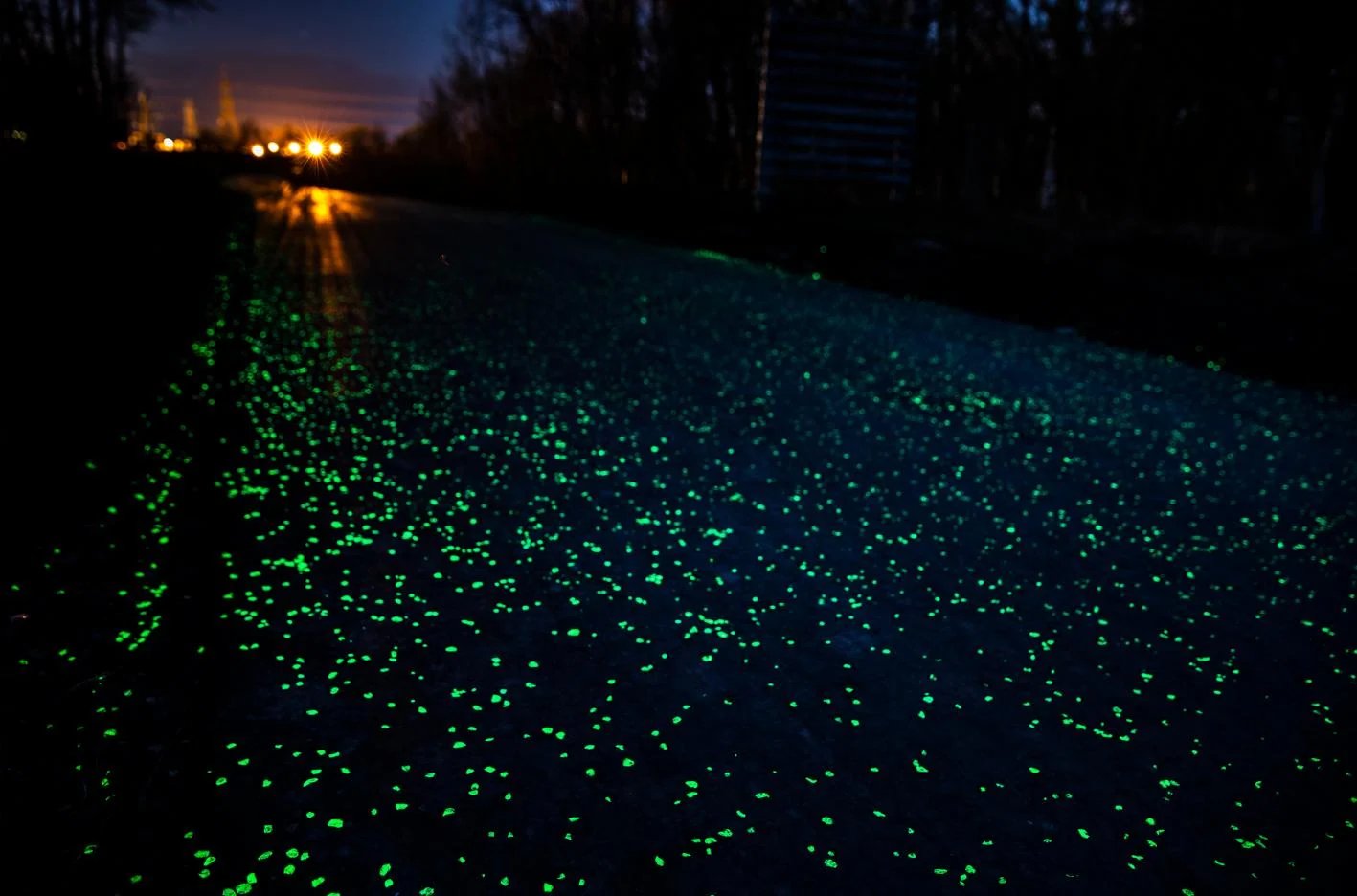
Photoluminescent aggregate creates:
- glowing visual effects
- nighttime identity
This creates a true day-and-night pavement system.
Frequently Asked Questions
Can glow stones stick to asphalt?
Yes, with suitable installation methods and proper surface preparation.
Does asphalt reduce glow performance?
Not necessarily. The dark background can actually improve visual contrast.
Which particle size is best for asphalt?
For pavement surfaces, smaller particles such as 1–5 mm are often easier to integrate, while larger sizes may be used for decorative applications.
Can it be used for bike lanes?
Yes. Bike paths and greenways are common applications.
Is it suitable for public projects?
Yes, especially landscape and recreational projects.
Final Thoughts
Photoluminescent aggregate provides a new way to enhance traditional asphalt pavement.
By combining:
asphalt durability + luminous material technology
designers can create surfaces that are:
- functional
- attractive
- memorable
For successful projects, the key is not only choosing the right material.
It is choosing the right installation method and pavement system.