
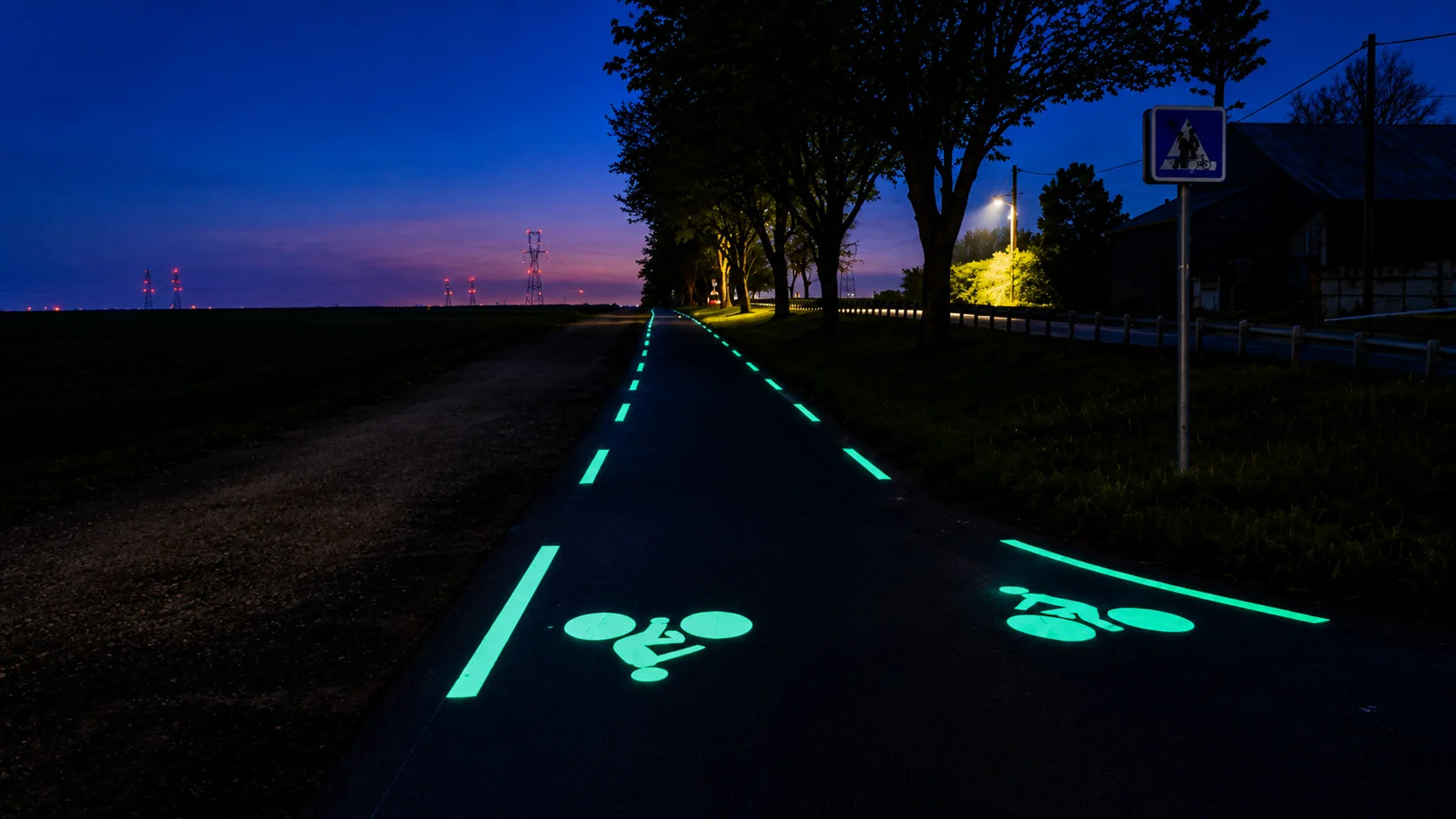
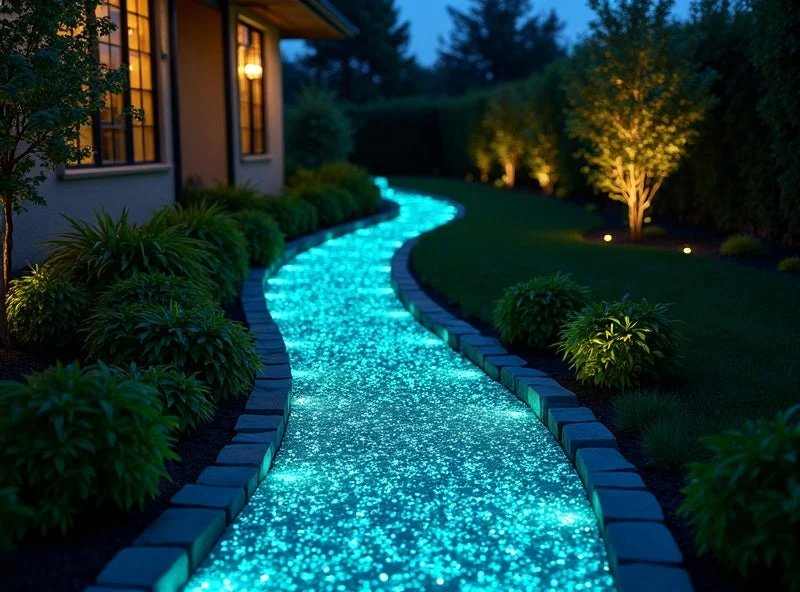
Photoluminescent aggregate for pavement contains light-storing material that absorbs energy during the day and releases visible glow after dark. Integrated into the pavement structure, it can create a natural, continuous nighttime effect without electrical power.
It is used in modern pavement design, garden pathways, parks, resorts, bicycle paths, landscape pavement, decorative concrete, resin-bound surfaces, pedestrian areas and other decorative outdoor projects. Compare material types, installation methods and site conditions before choosing an aggregate system.
What Is Photoluminescent Aggregate?
Photoluminescent aggregate is a type of luminous decorative material containing light-storing particles. During daylight or artificial light exposure, the particles absorb energy. When the surrounding environment becomes dark, the stored energy is slowly released as visible afterglow. The working process is:
Light Absorption → Energy Storage → Night Glow → Recharge
The material can repeat this cycle many times.
Why Use Photoluminescent Aggregate in Pavement?
Traditional pavement lighting often requires:
- Electrical cables
- Light fixtures
- Power supply
- Maintenance systems
Photoluminescent aggregate provides another design option. It can create:
- Nighttime pathway guidance
- Decorative pavement effects
- Landscape highlights
- Low-level visual guidance
It is especially suitable for outdoor areas where a natural glowing effect is desired.
Compare aggregate types and bound systems
Different aggregate systems can be selected according to the project.
Glow Stone Aggregate
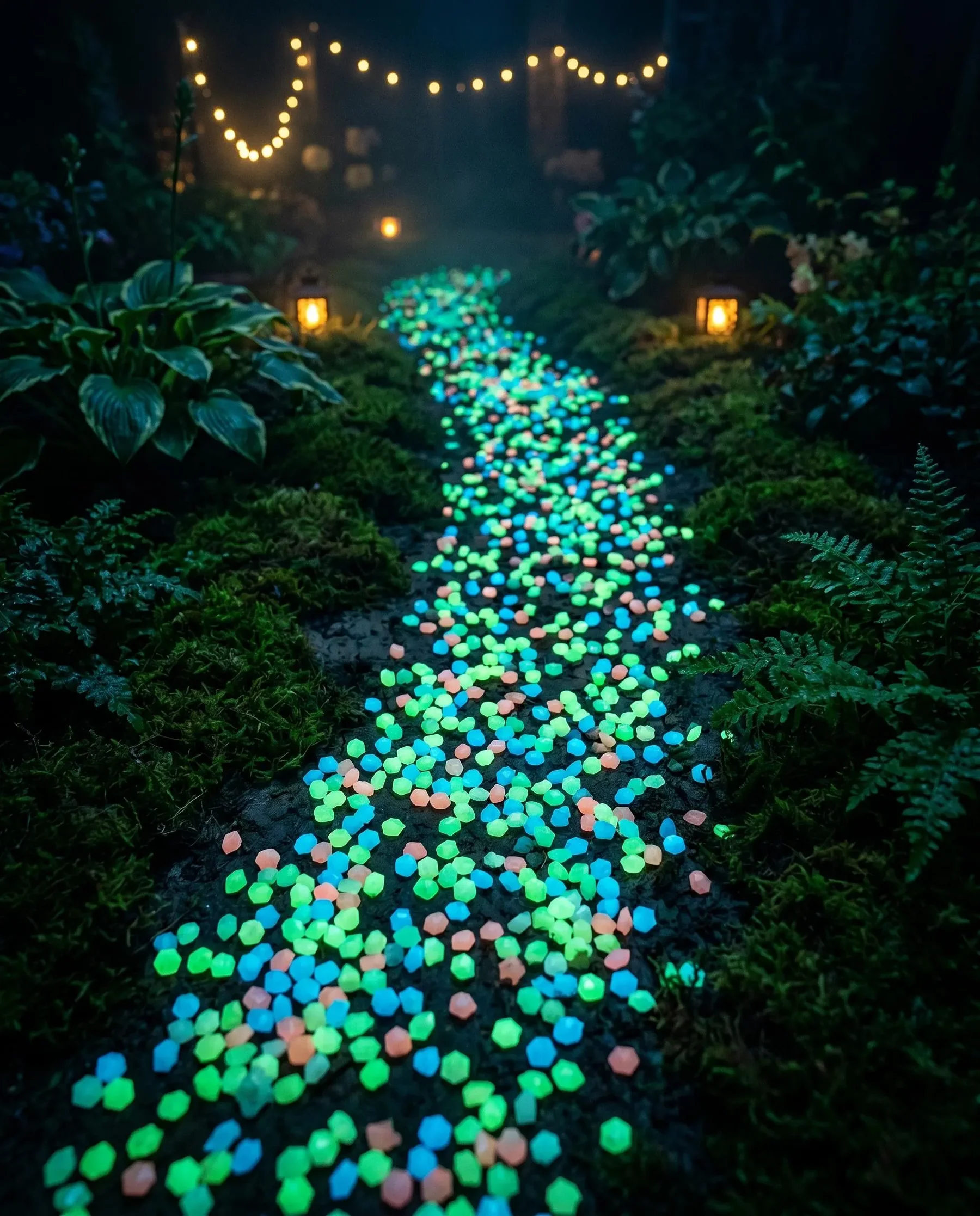
Glow stone aggregate consists of larger luminous particles. It is commonly used for:
- Garden paths
- Decorative borders
- Landscape pavement
- Resort walkways
Advantages:
- Strong visual effect
- Natural stone appearance
- Easy design flexibility
Fine Photoluminescent Aggregate
Fine luminous particles can create a more uniform glowing surface. Applications include:
- Resin-bound pavement
- Decorative concrete
- Surface coatings
Advantages:
- Smooth appearance
- Even distribution
- Suitable for patterns and designs
Resin Bound Photoluminescent Aggregate
This system combines luminous aggregate with transparent resin. A typical structure:
Prepared Base
↓
Transparent Resin Binder
↓
Photoluminescent Aggregate
↓
Finished Surface
Advantages:
- Smooth walking surface
- Good stone retention
- Custom designs
- Suitable for pedestrian areas
Match aggregate to paths, parks and resort settings
Photoluminescent Aggregate for Garden Paths
Garden pathways are one of the most popular applications. Glow aggregate can be used for:
- Path edges
- Full pathway surfaces
- Decorative patterns
- Landscape borders
During the day, the pathway looks like a normal decorative surface. At night, it becomes a glowing landscape feature.
Photoluminescent Aggregate for Parks
Public parks often require attractive nighttime landscapes. Applications include:
- Walking routes
- Scenic paths
- Rest areas
- Garden trails
Glow aggregate can improve route recognition while creating a unique visual experience.
Photoluminescent Aggregate for Resorts
Hotels and resorts often use special landscape materials to create memorable environments. Glow aggregate can be applied around:
- Swimming pools
- Villas
- Outdoor restaurants
- Garden areas
- Waterfront paths
Blue-green luminous materials are especially popular in modern landscape design.
Photoluminescent Aggregate for Bicycle Paths
Cycling paths can use luminous aggregate for:
- Edge guidance
- Center lines
- Decorative surfaces
- Route indicators
Outdoor bicycle paths have an advantage because they usually receive natural daylight charging. However, skid resistance remains an important consideration.
Understand aggregate exposure in concrete
Glow aggregate can be incorporated into concrete surfaces. Possible applications:
- Decorative concrete walkways
- Landscape plazas
- Courtyard pavement
- Outdoor seating areas
A common approach is exposing the upper surface so the luminous particles remain visible.
How Does Glow Aggregate Work in Concrete?
The luminous material must remain exposed to light. If the aggregate is buried too deeply inside concrete, charging performance may decrease. For better results:
- Keep particles near the surface
- Use suitable finishing methods
- Avoid covering them with opaque materials
Surface exposure is one of the most important factors.
Compare concrete, resin-bound and surface installations
Method 1: Embedded in Fresh Concrete

Glow aggregate can be placed into fresh concrete. Basic steps:
- Prepare concrete
- Place luminous aggregate
- Press particles into the surface
- Finish the pavement
- Allow curing
The luminous surface should remain visible.
Method 2: Resin Bound Pavement
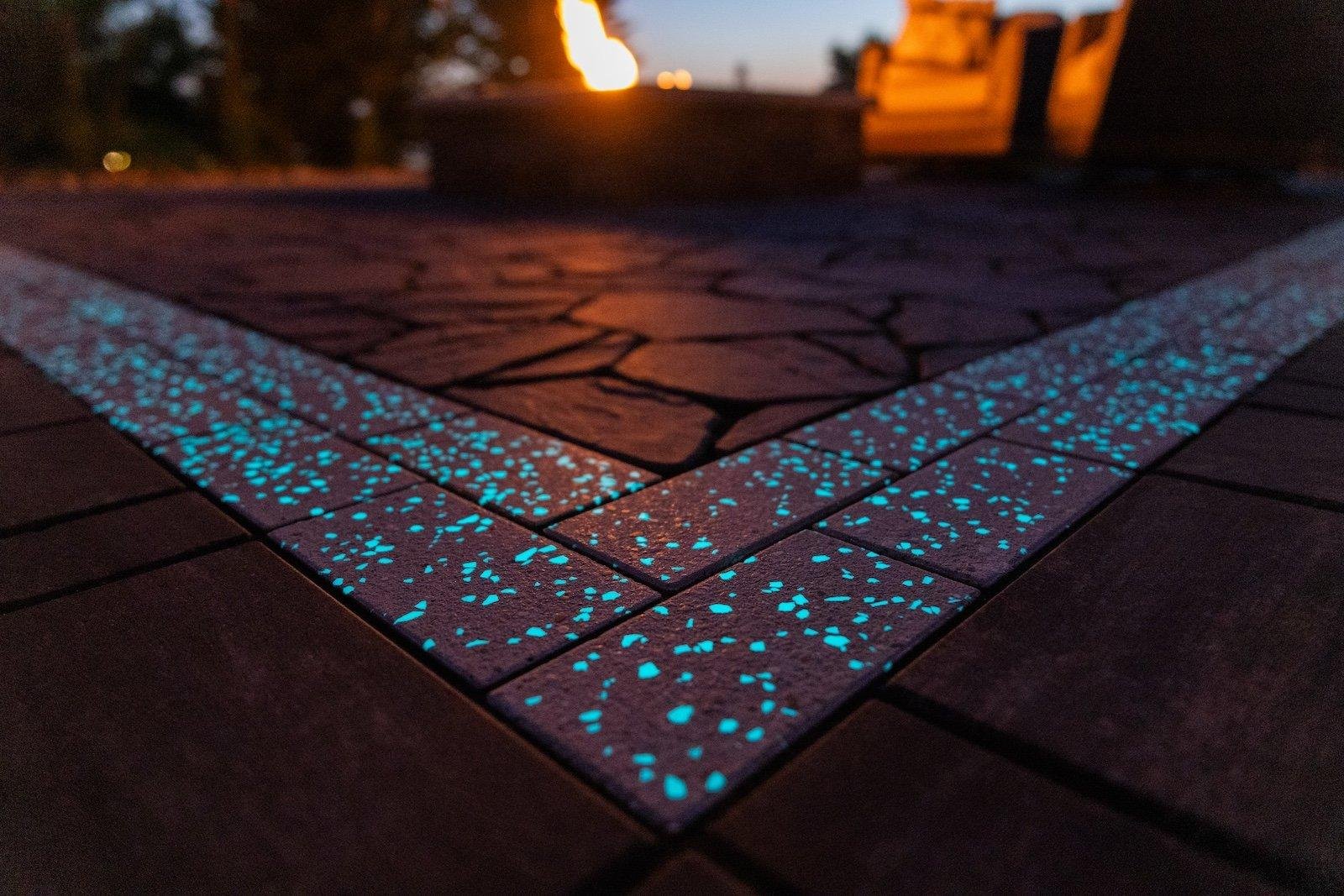
Transparent resin can hold luminous aggregate permanently. Advantages:
- Smooth finish
- Strong bonding
- Decorative appearance
- Good pedestrian comfort
This method is widely used for landscape pathways.
Method 3: Surface Decorative Layer
Photoluminescent aggregate can also be installed as a decorative top layer. This is suitable for:
- Garden paths
- Courtyards
- Small landscape projects
Choose the aggregate size
Aggregate size affects appearance and performance.
Small Aggregate
Advantages:
- More uniform glow
- Smooth surface
- Suitable for detailed designs
Large Aggregate
Advantages:
- Strong visual points
- Natural stone appearance
- Decorative effect
The correct size depends on:
- Application
- Surface finish
- Traffic level
- Design requirements
Select a glow color
Common colors include:
Yellow-Green
Advantages:
- Strong visible brightness
- Suitable for guidance applications
Blue-Green
Advantages:
- Modern appearance
- Popular for landscape projects
Blue
Advantages:
- Decorative atmosphere
- Suitable for creative designs
Color selection should consider both appearance and performance.
Select a transparent binder and assess outdoor performance
Transparent Binder Selection
For resin-bound systems, binder transparency is critical. The binder should allow light to reach the luminous particles. A suitable binder should provide:
- Transparency
- Adhesion
- UV resistance
- Water resistance
- Durability
An opaque binder may reduce charging efficiency.
Outdoor Performance
Outdoor pavement materials must withstand:
- Sunlight
- Rain
- Temperature changes
- Dust
- Foot traffic
A high-quality photoluminescent aggregate system should maintain:
- Stable appearance
- Good adhesion
- Weather resistance
- Long-term glow performance
Check charging conditions and afterglow
Photoluminescent aggregate requires light exposure. Outdoor charging mainly comes from:
- Sunlight
- Natural daylight
Performance may be affected by:
- Trees
- Buildings
- Shadows
- Covered areas
Open areas usually provide better charging conditions.
How Long Does Photoluminescent Aggregate Glow?
The glow is usually strongest shortly after darkness begins. Brightness gradually decreases. Performance depends on:
- Material quality
- Charging time
- Light intensity
- Aggregate concentration
- Surface cleanliness
This gradual fading is a normal characteristic of photoluminescent materials.
Skid Resistance
For pavement applications, safety is important. The surface should provide suitable traction. This is especially important for:
- Bicycle paths
- Walkways
- Ramps
- Outdoor areas
The system should balance:
Glow Effect + Surface Safety + Durability
Clean and maintain glow aggregate pavement
Regular maintenance helps maintain appearance. Recommended actions:
- Remove dust
- Clean leaves
- Remove dirt
- Inspect surface condition
A clean surface allows more light to reach the luminous particles.
Common Problems
Weak Glow
Possible causes:
- Poor charging conditions
- Low-quality material
- Covered particles
- Dirty surface
Uneven Appearance
Possible causes:
- Uneven distribution
- Incorrect installation
- Different aggregate concentration
Reduced Durability
Possible causes:
- Poor binder selection
- Weak substrate preparation
- Incorrect installation
Photoluminescent Aggregate vs. LED Lighting
Photoluminescent Aggregate
Advantages:
- No wiring
- Low maintenance
- Integrated into pavement
- Decorative effect
LED Lighting
Advantages:
- Strong illumination
- Adjustable brightness
- Active lighting control
For many landscape projects, photoluminescent materials can complement traditional lighting.
How to Select a Photoluminescent Aggregate Supplier
Before purchasing, consider:
- Glow performance
- Particle size options
- Color selection
- Outdoor durability
- Sample availability
- Technical support
- Packaging options
Testing samples before large projects is highly recommended.
Best Applications
Photoluminescent aggregate is suitable for:
Garden Paths
Decorative glowing walkways.
Parks
Nighttime landscape guidance.
Resorts
Premium outdoor design.
Residential Communities
Courtyard and recreation paths.
Bicycle Routes
Low-level route guidance.
Decorative Concrete
Unique luminous pavement effects.
Select a complete luminous aggregate system
Photoluminescent aggregate provides a creative way to combine pavement design with nighttime visibility. It can transform ordinary surfaces into luminous landscapes without complex electrical systems. The best results depend on:
High-Quality Aggregate + Proper Installation + Good Light Exposure + Suitable Binder + Regular Maintenance
For landscape designers, contractors, and project owners, photoluminescent aggregate offers a flexible solution for creating attractive and functional nighttime pavement.
FUXIN supplies Photoluminescent Aggregate, Glow Stones, Luminous Pavement Materials, Photoluminescent Pigments, and Resin Bound Glow Stone Systems for gardens, parks, pathways, resorts, decorative concrete, and outdoor landscape projects.
For samples, quotations, or project recommendations, please contact us.