

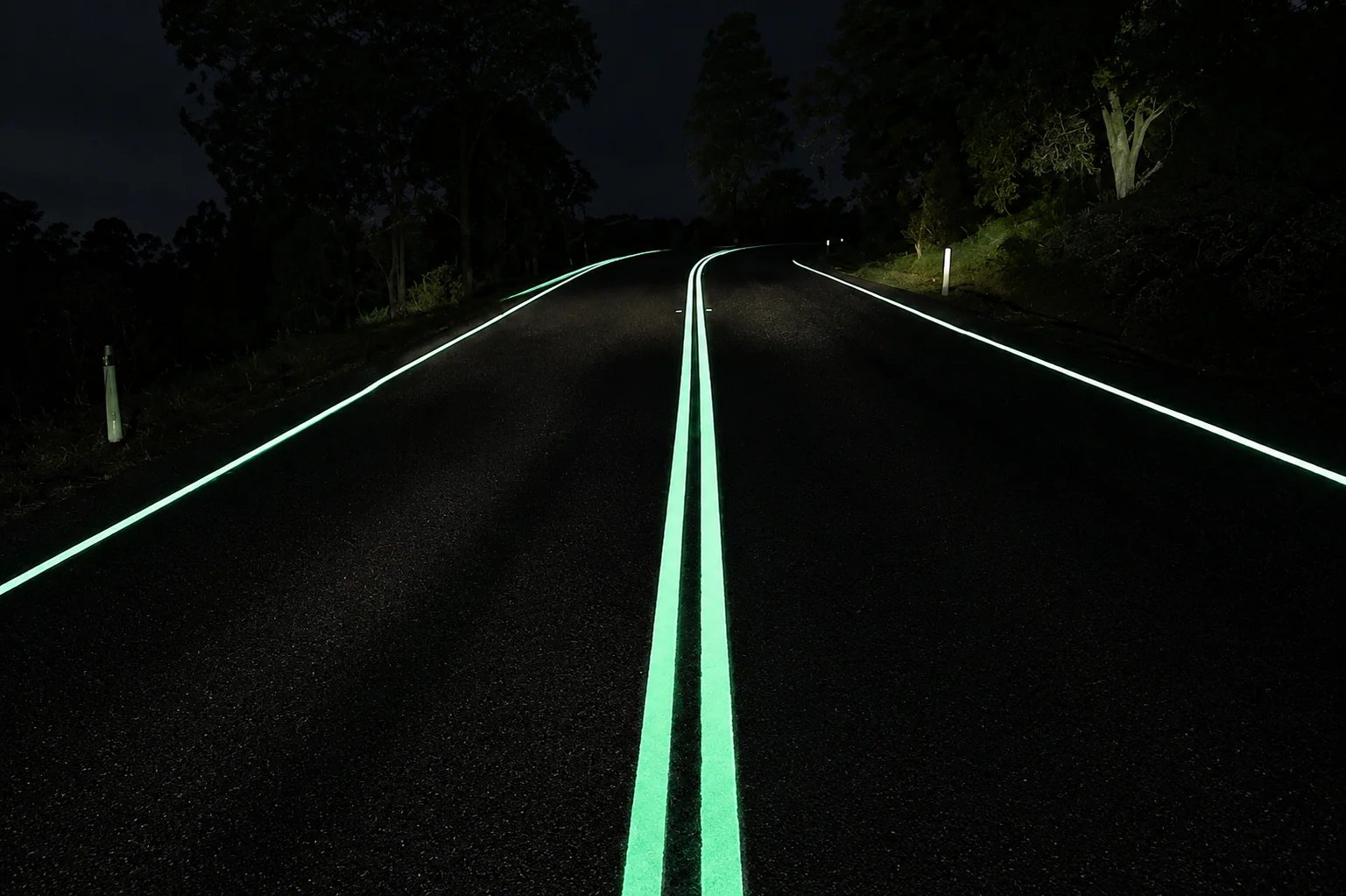
Night-visible road marking helps drivers and pedestrians recognize pavement guidance after dark. Lane lines, arrows, crossings and edge markings that are clear during the day can become harder to see in low lighting, rain, wet conditions, curves and dark surroundings, especially where headlights provide limited coverage.
These markings communicate lane direction, road edges, curves, parking spaces, crosswalks, bicycle lanes, exit routes and safety zones. The right system depends on the road type, traffic level, lighting conditions and project requirements.
Compare reflective, photoluminescent and LED systems
Night-visible road marking covers several technologies, including reflective road markings and glass bead systems, photoluminescent or glow-in-the-dark pavement markings, and LED road guidance.
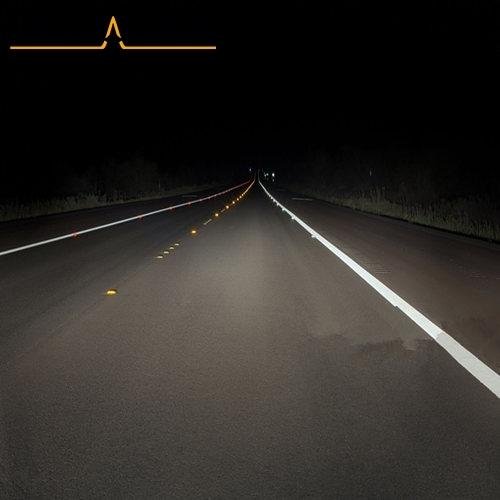
Reflective road marking
Reflective markings usually contain glass beads or similar materials that return part of a vehicle's headlight beam toward the driver, making the line appear brighter under direct illumination.
Headlight → Reflective material → Light returned to driver
They require an external light source and can provide strong visibility under headlights. Reflective systems are common on public roads and are used in high-speed traffic applications, with the system selected to meet the relevant road requirements.
Photoluminescent road marking
Photoluminescent markings absorb energy from sunlight or suitable artificial lighting, then release visible afterglow as the surroundings darken.
Light exposure → Energy storage → Afterglow
They charge before darkness and can remain visible for a period without direct headlight illumination. This passive afterglow can suit selected low-light, low-speed environments. Some projects combine reflective and photoluminescent technologies.
LED road guidance
Reflective and photoluminescent coatings are integrated into the pavement and use reflection or passive afterglow. They have lower system complexity than LED guidance, and photoluminescent afterglow itself needs no wiring.
LED systems use electrical or solar power to provide active illumination. They can offer stronger illumination and more consistent brightness, but installation is more complex. Each system serves different project requirements.
Choose the marking for its location and purpose
Center lines
A clear center line helps drivers understand lane direction and the route ahead. Potential settings include scenic, private, campus and industrial roads, as well as low-speed internal roads.
Edge lines and curves
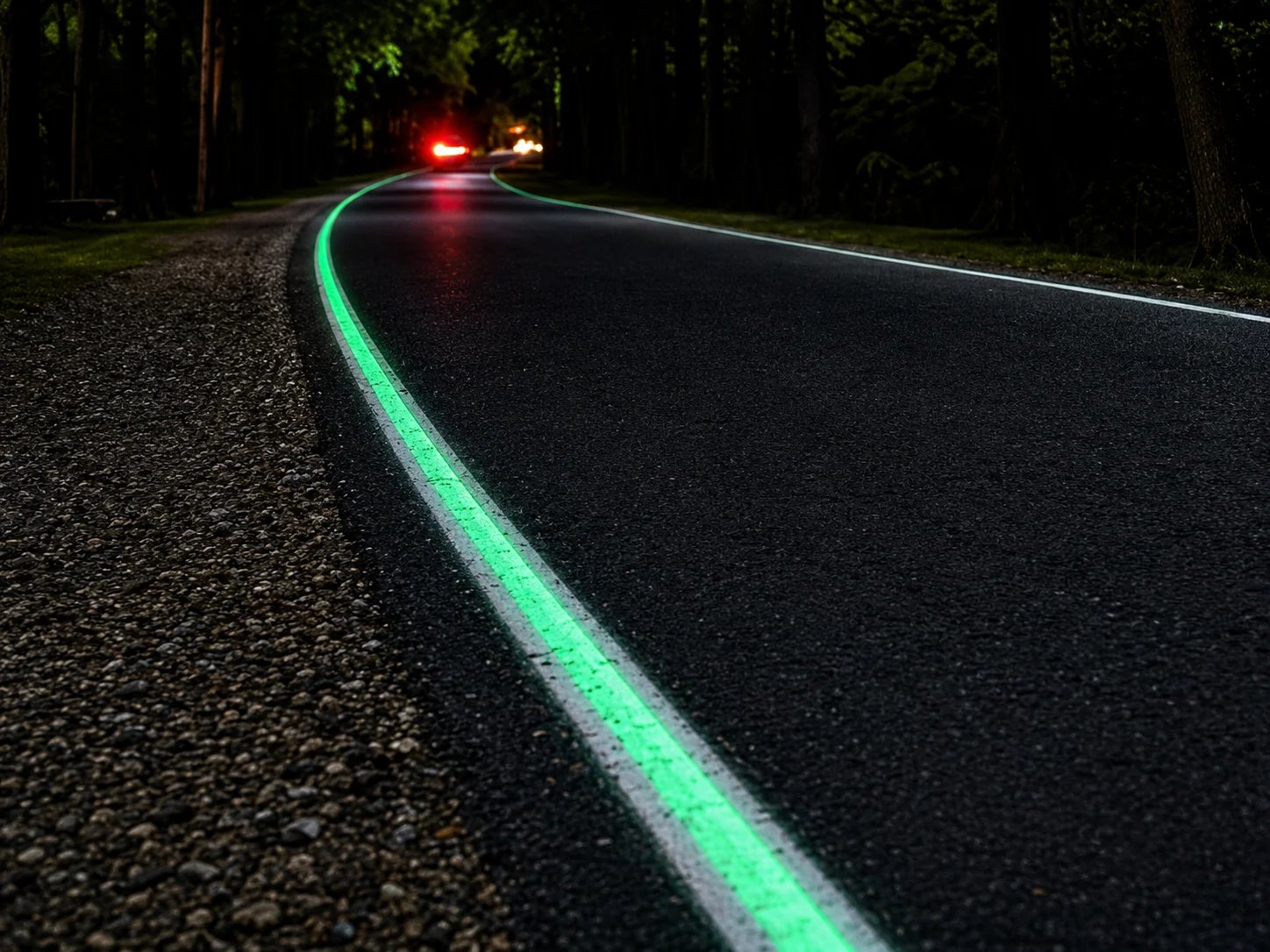
Edge lines show where the road surface ends and make its shape easier to follow. They are particularly useful on curves, rural and landscape roads, bicycle paths and narrow access roads.
A continuous visible edge or center line can show the direction of a curve before the driver reaches it. Applications include mountain, park and resort roads, scenic routes and internal access roads.
Direction arrows
Straight, left-turn, right-turn and exit arrows help organize traffic movement and parking guidance. Reflective or photoluminescent materials may be used according to the application.
Parking areas and underground garages
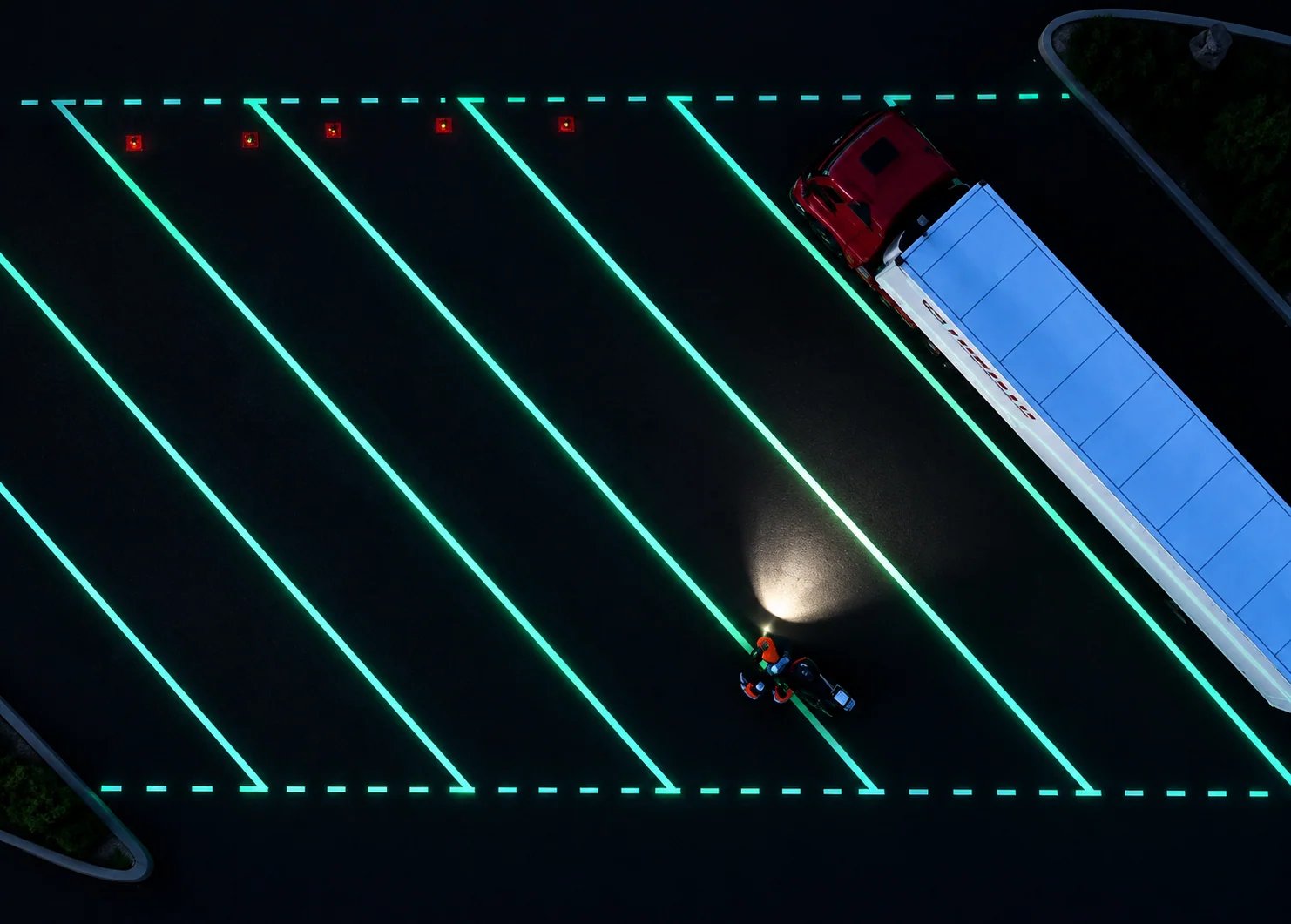
Parking areas often rely heavily on artificial lighting at night. Night-visible markings may define parking bay lines, entrance and exit arrows, pedestrian routes, ramp edges and direction guidance.
Underground garages have limited natural light, so photoluminescent systems need suitable indoor lighting for charging. Potential uses also include stair access and ramp boundaries. Test the system under the actual garage lights before full installation.
Bicycle paths and pedestrian routes
Bicycle paths through parks, campuses, scenic areas and other low-light environments may use night-visible center lines, edge lines, direction arrows, bicycle symbols and crossing points. Outdoor photoluminescent markings can benefit from daylight charging.
For pedestrians, continuous visible lines can make walkway borders, crossings, park paths, residential routes, campus paths and emergency routes easier to recognize.
Industrial areas
Factories, warehouses and industrial parks often combine vehicle traffic with pedestrian movement. Markings may define pedestrian lanes, forklift routes, loading areas, safety zones and emergency paths. Wear resistance is especially important in these settings.
Account for pavement, weather and traffic
Contrast and wet-road visibility
Dark asphalt usually provides strong contrast with white reflective markings, green photoluminescent markings, blue-green luminous markings and yellow warning lines. Higher contrast can make a marking easier to recognize, but evaluate its actual appearance under real nighttime conditions.
Wet pavement can reduce contrast, create glare, change reflective behavior and make markings harder to distinguish. For wet environments, consider water resistance, skid resistance, reflective performance and surface texture together.
Substrate and surface preparation
Depending on the system, suitable substrates may include asphalt, concrete, epoxy floors, resin pavement and colored pavement. Choose a primer and binder compatible with the substrate.
Good adhesion requires a clean, dry, stable surface free from oil, dust and loose material. Poor preparation can cause peeling or premature wear.
Skid resistance
Night-visible markings should not create a slippery surface. This is especially important on curves, ramps, crosswalks, bicycle lanes and parking entrances. Incorporate suitable anti-slip aggregate where needed, balancing visibility, adhesion, durability and skid resistance across the complete system.
Traffic wear
Traffic level affects marking life. Turning zones, parking entrances, intersections, heavy vehicle routes and braking areas experience high wear. Match the marking system to the expected traffic load.
Understand afterglow and maintenance
Photoluminescent markings are usually brightest shortly after light levels decrease, then gradually fade. This is normal. Glow performance depends on pigment quality, charging intensity and duration, coating thickness, ambient darkness and surface cleanliness.
Dust, mud, oil, tire marks and leaves can reduce nighttime visibility. Contamination can also block incoming light and make photoluminescent charging less effective. Regular cleaning and inspection help maintain performance.
Keep required lighting and traffic markings
Can night-visible markings replace road lighting?
No. They make pavement features easier to see but do not illuminate the whole road environment. They cannot replace lighting needed to see pedestrians, vehicles, obstacles, curbs and road hazards. Use them as supplementary visual guidance.
Can photoluminescent markings replace standard reflective markings?
Not automatically. Public roads may have specific requirements for reflectivity, line color, width, placement and skid resistance. Use photoluminescent markings only where they are compatible with local road requirements.
Test the complete system before full installation
Before applying a large area, make a sample section using the actual pavement, primer, marking material and protective layer. Evaluate:
- Daytime appearance and nighttime visibility
- Reflective performance and glow performance
- Skid resistance, adhesion and wear resistance
Real-site testing is especially important in low-light and wet-road environments.
Select materials for the project
Choose among reflective, photoluminescent and illuminated systems according to road type, lighting conditions, traffic level, weather, visibility requirements and maintenance. Photoluminescent materials can provide useful passive nighttime visibility on selected roads, parking areas, bicycle paths, campuses and industrial sites.
FUXIN supplies photoluminescent pigments, night-visible road marking materials, glow-in-the-dark traffic coatings and luminous pavement materials for roads, parking areas, bicycle paths, pedestrian routes and industrial applications.
Contact us for samples, quotations or project material recommendations.