

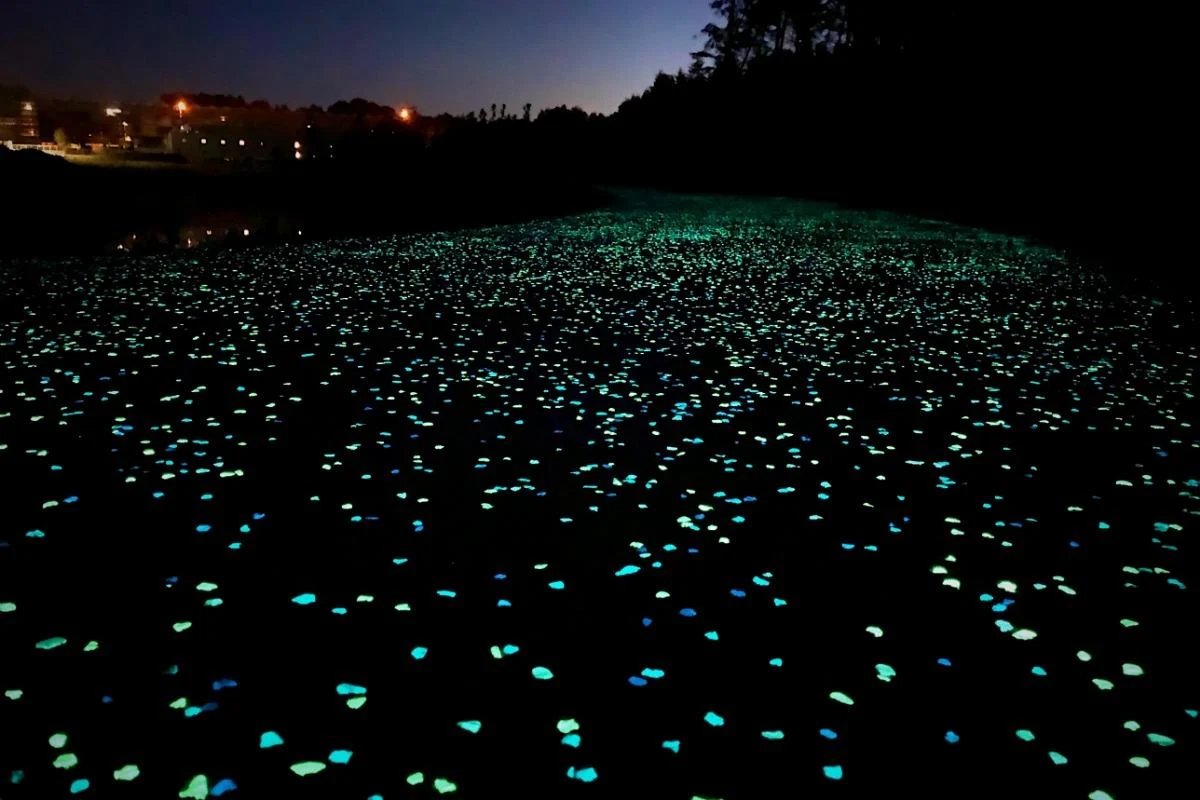
Photoluminescent pavement is increasingly used in parks, walkways, landscape paths, resorts and scenic areas. But one question often comes up before an outdoor project:
Will photoluminescent materials still work effectively after rain, high humidity, strong sunlight or temperature changes?
The answer depends not only on the photoluminescent material itself, but also on the binder, surface exposure, drainage and installation method.
For outdoor projects, understanding these environmental factors before construction can help contractors avoid premature fading, poor glow performance and surface damage.
Does Rain Stop Photoluminescent Materials From Glowing?
Rain itself does not normally prevent a photoluminescent material from storing light.
Photoluminescent materials absorb light energy and release it after the light source is removed. A wet surface can temporarily change the appearance of the pavement because water reflects ambient light and changes the surface conditions.
However, the bigger concern is water management.
If water remains on the pavement for long periods, it can contribute to:
- Surface contamination
- Binder deterioration
- Reduced surface visibility
- Freeze-thaw damage in cold climates
- Dirt accumulation
For outdoor applications, proper drainage is therefore just as important as selecting the glow material.
Humidity Can Affect the Overall Pavement System
High humidity is common in coastal and tropical regions.
The photoluminescent particles may still function, but the binder system must be selected for the environment.
A low-quality transparent resin may become cloudy, yellow or brittle after prolonged outdoor exposure.
Once the binder loses transparency, less light can reach the photoluminescent particles.
This creates an important distinction:
Poor nighttime brightness does not always mean the glow powder has failed.
Sometimes the real problem is the material surrounding it.
Strong Sunlight Is Not Necessarily a Problem
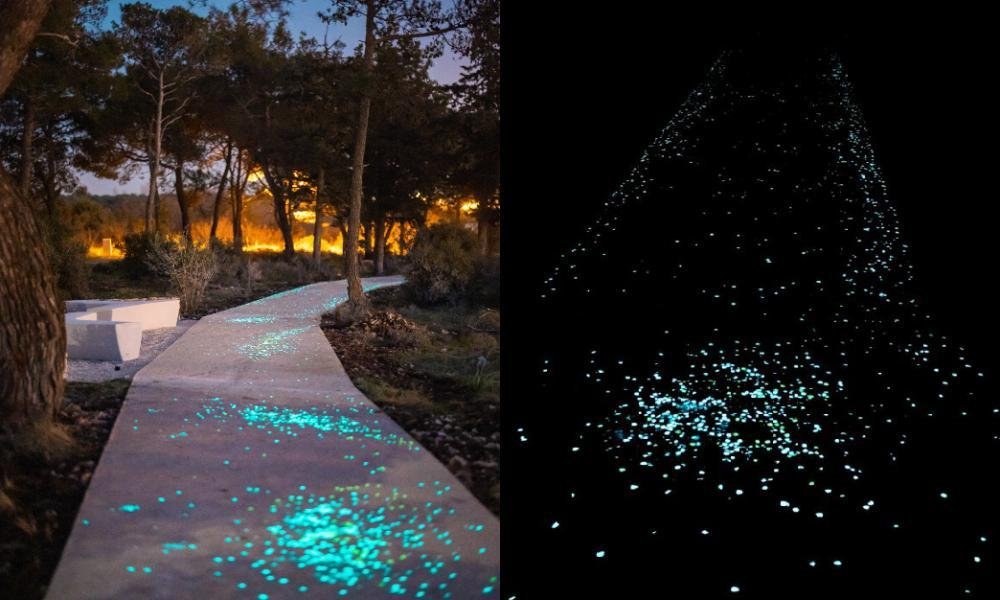
Sunlight is actually beneficial for photoluminescent pavement because it provides the energy needed to charge the material.
However, outdoor pavement is exposed to ultraviolet radiation for long periods.
The key consideration is therefore the complete surface system.
For outdoor projects, contractors should evaluate:
- UV resistance of the binder
- Transparency after aging
- Adhesion to the substrate
- Surface wear resistance
- Resistance to weathering
A suitable outdoor resin or coating can help maintain the appearance of the pavement over time.
What Happens in Very Hot Weather?
High temperatures can affect the binder more than the photoluminescent particles.
Depending on the formulation, excessive heat may accelerate:
- Yellowing
- Softening
- Aging
- Surface deformation
- Loss of adhesion
This is particularly important for pavement exposed to direct sunlight in hot climates.
Before selecting a binder, consider the actual project environment rather than choosing a system based only on its initial appearance.
Cold Weather and Freeze-Thaw Conditions
Cold climates create a different challenge.
When water enters small gaps or cracks and freezes, it expands. Repeated freeze-thaw cycles can gradually damage the pavement system.
For projects in cold regions, contractors should pay attention to:
Drainage + substrate condition + binder flexibility + surface durability
The photoluminescent aggregate should be considered part of the complete pavement system rather than treated as an independent material.
Dust and Dirt Can Reduce the Visible Glow
This is one of the most overlooked factors in outdoor projects.
Photoluminescent particles need sufficient exposure to light.
If the surface becomes covered with:
- Dust
- Soil
- Leaves
- Mud
- Oil
- Other contaminants
the amount of light reaching the material can decrease.
The result may be weaker nighttime brightness even though the photoluminescent material itself remains functional.
For this reason, cleaning and routine maintenance should be included in the project plan.
Surface Exposure Matters More Than Many Contractors Expect
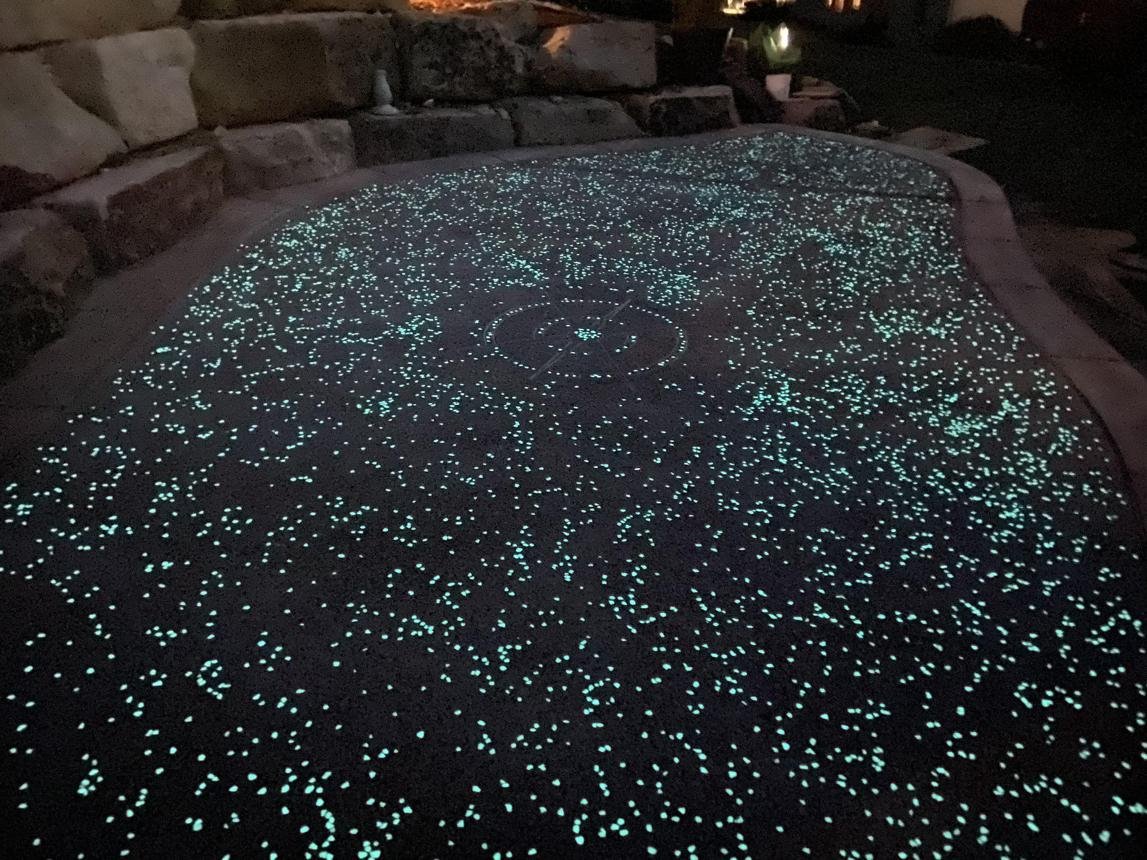
Imagine two pavements using the same photoluminescent aggregate.
One has particles clearly exposed at the surface.
The other has the particles buried under a thick transparent layer.
Even with the same material, the two surfaces may produce very different results.
This is why finishing must be controlled carefully.
For exposed aggregate applications, the particles should remain sufficiently visible after finishing so that they can receive light efficiently.
At the same time, the surface must be properly bonded and finished for pedestrian use.
Coastal and Tropical Projects Need Extra Attention
Projects in coastal and tropical environments often combine:
- Strong sunlight
- High humidity
- Heavy rainfall
- Biological growth
- Frequent surface contamination
These conditions make material selection particularly important.
For such projects, contractors should prioritize a weather-resistant binder and an installation method suitable for outdoor exposure.
A beautiful glow effect immediately after installation is not enough.
The real test is how the system performs after months of outdoor exposure.
How Should Contractors Test a Material Before a Large Project?
A small field test can reveal problems before they become expensive.
A practical testing process is:
Step 1: Prepare a Sample Panel
Use the same substrate and binder system planned for the actual project.
Step 2: Charge the Material
Expose the sample to sunlight or an appropriate artificial light source.
Step 3: Observe the Initial Glow
Record the appearance immediately after removing the light source.
Step 4: Test After Outdoor Exposure
Leave the sample outdoors and expose it to the actual local environment.
Step 5: Check the Surface
Look for:
- Cracking
- Yellowing
- Peeling
- Loss of transparency
- Particle loss
- Surface contamination
Step 6: Compare Nighttime Performance
Compare the sample before and after environmental exposure.
This provides much more useful information than judging a powder only from a laboratory photograph.
Choose the System for the Climate, Not Just the Glow Color
A common purchasing mistake is to focus entirely on brightness.
For outdoor pavement, contractors should evaluate at least four factors:
Glow performance
How effectively does the material charge and release light?
Binder durability
Can the binder remain transparent and bonded outdoors?
Surface durability
Can the pavement withstand pedestrian traffic and environmental exposure?
Maintenance requirements
Can the surface be cleaned and maintained easily?
The best product is not necessarily the one that looks brightest in a photograph.
It is the one that maintains a good balance between glow performance, durability and practical installation.
Practical Recommendation for Outdoor Projects
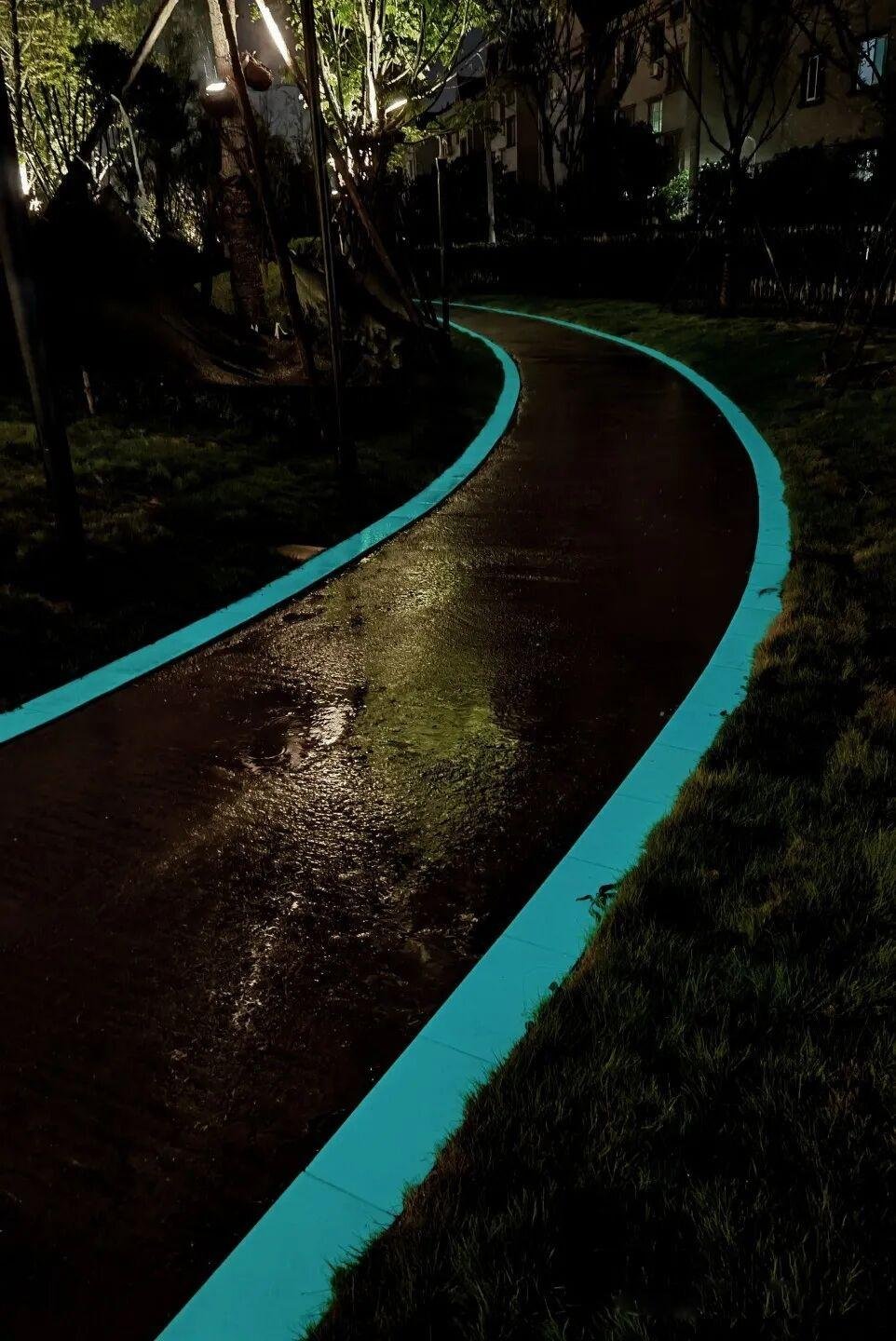
Before starting a large photoluminescent pavement project, prepare a small test area using the final materials.
Test it under the same conditions expected at the project site.
For example:
Hot and sunny region:
Focus on UV resistance and heat stability.
Rainy region:
Focus on drainage, adhesion and moisture resistance.
Coastal region:
Focus on humidity, UV exposure and long-term binder transparency.
Cold region:
Focus on water penetration and freeze-thaw durability.
High-traffic walkway:
Focus on surface wear and aggregate retention.
This approach gives contractors a much better basis for selecting the right system.
Final Thoughts
Outdoor photoluminescent pavement is not simply a question of how brightly a material glows in the dark.
Weather conditions, binder quality, surface exposure, drainage, maintenance and installation technique can all influence long-term performance.
The most reliable approach is to evaluate the complete pavement system under realistic environmental conditions before committing to a large project.
For contractors and landscape designers, a small field test can often prevent a much larger problem later.
Keywords: Photoluminescent Pavement, Outdoor Glow Material, Photoluminescent Aggregate, Glow in the Dark Pavement, Weather Resistant Glow Material, Outdoor Pathway, Glow Stone, Photoluminescent Pathway, Landscape Pavement, Long-Lasting Glow