

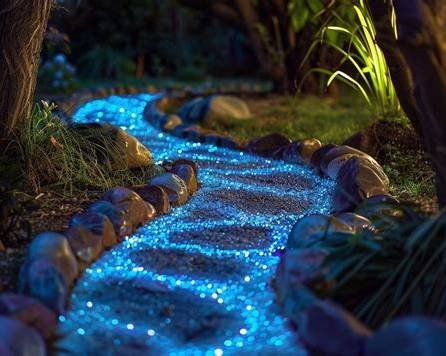
How long glow stones last outdoors has two answers: how long their afterglow remains visible after charging, and how long the installed material stays usable. Afterglow gradually becomes dimmer during the night. The physical material may remain in service much longer when it is properly selected and installed.
There is no single glow-time or service-life figure that describes every project. For garden paths, parks, resorts, concrete walkways, resin-bound pavement and other outdoor landscapes, light exposure, material quality, installation, weather, traffic and maintenance all matter. This guide separates afterglow from service life and explains how to test realistic performance.
Quick answer: afterglow duration vs. outdoor service life
Glow stones absorb energy from sunlight or suitable artificial light and release it gradually after dark.
Their visible afterglow is:
-
Strongest shortly after charging
-
Gradually weaker over time
-
Affected by charging conditions and ambient darkness
Their outdoor service life depends on:
-
Material quality
-
UV exposure
-
Water resistance
-
Installation method
-
Binder quality
-
Traffic
-
Surface wear
-
Maintenance
So there is no single number that accurately describes every glow-stone project.
How Do Glow Stones Work?
Glow stones contain photoluminescent materials capable of storing light energy.
The basic process is:
Light Exposure → Energy Absorption → Energy Storage → Afterglow → Recharge
During the day, outdoor glow stones can charge from natural daylight.
After sunset, they release the stored energy as visible afterglow.
The process can repeat when the material receives light again.
Nighttime afterglow: why brightness gradually decreases
The important thing to understand is that photoluminescent materials do not remain at the same brightness all night.
The afterglow follows a decay curve.
In simple terms:
Brightest at First → Gradually Dimmer → Very Low-Level Afterglow
This is normal.
It is different from an LED, which can maintain relatively constant brightness while powered.
Why the first minutes are usually the brightest
Immediately after the charging source is removed, glow stones normally appear at their strongest.
This is why photographs taken shortly after charging often look extremely bright.
After some time, the visible brightness decreases.
When comparing products, do not judge only by the first photograph.
Compare samples immediately and after 10, 30 and 60 minutes
For a more realistic comparison, observe samples at several intervals.
For example:
-
Immediately after charging
-
10 minutes later
-
30 minutes later
-
60 minutes later
-
Longer intervals if required
This gives a much better understanding of afterglow performance.
How charging conditions affect outdoor glow
Glow stones need sufficient light exposure.
A stone that receives strong daylight may perform differently from one installed under heavy shade.
Important factors include:
-
Light intensity
-
Charging duration
-
Weather
-
Location
-
Surrounding structures
This is why laboratory performance and actual outdoor performance can differ.
Sunlight vs. artificial light
Outdoor pathways usually receive natural daylight.
This can provide effective charging in open areas.
Artificial lighting can also charge photoluminescent materials, but performance depends on:
-
Lamp type
-
Intensity
-
Distance
-
Exposure duration
The actual installation environment should always be considered.
Charging on cloudy days
Glow stones can still receive ambient daylight under cloudy conditions, but the charging conditions are different from strong direct sunlight.
Nighttime brightness may therefore vary from day to day.
This is normal for passive photoluminescent systems.
Charging on shaded pathways
Shade is one of the most important factors for outdoor projects.
Glow performance can be weaker under:
-
Dense trees
-
Building shadows
-
Roofs
-
Bridges
-
Covered walkways
If a project contains both sunny and shaded areas, test samples in both locations.
Does Glow Color Affect Brightness?
Yes, perceived brightness can differ between glow colors.
Yellow-Green
Often appears relatively bright to the human eye.
It is commonly used where visibility is important.
Blue-Green
Provides a cooler appearance and is popular for:
-
Gardens
-
Resorts
-
Landscape paths
-
Decorative pavement
The best color depends on both performance and design requirements.
Outdoor service life: what affects long-term performance?
This is different from afterglow duration.
The physical service life of glow stones depends heavily on the material and installation system.
Outdoor stones may be exposed to:
-
Sunlight
-
Rain
-
Temperature changes
-
Foot traffic
-
Dirt
-
Cleaning
-
Surface abrasion
A protected landscape application will experience very different conditions from a vehicle traffic area.
UV exposure and resin transparency
UV exposure can affect the complete system.
For resin-bound glow stones, the resin is especially important.
An unsuitable resin may gradually:
-
Yellow
-
Become cloudy
-
Degrade
-
Lose transparency
If transparency decreases, less light may reach the luminous material.
That can reduce the apparent glow even if the photoluminescent material itself still functions.
Water resistance and drainage
Outdoor glow stones should be installed in a system suitable for wet conditions.
Water itself is not the only concern.
Poor drainage can lead to:
-
Dirt accumulation
-
Standing water
-
Surface contamination
-
Binder deterioration
A well-designed outdoor pavement needs both suitable materials and good drainage.
Surface exposure in concrete
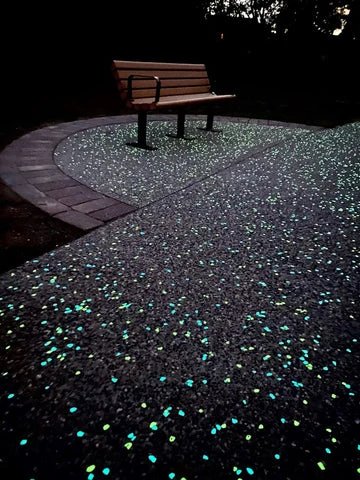
Concrete is one of the most common installation methods.
Glow stones can be embedded near the surface of fresh concrete.
The key phrase is:
Near the surface.
If the luminous material becomes completely covered by cement paste, it receives less light.
This reduces the visible effect.
Binder requirements for resin-bound pavement
Glow stones can also be mixed with natural aggregate and transparent resin.
A typical system is:
Natural Aggregate + Glow Stones + Transparent Resin
For outdoor use, the binder should provide appropriate:
-
Transparency
-
UV resistance
-
Water resistance
-
Adhesion
-
Wear resistance
The complete system determines long-term performance.
Particle size, surface exposure and abrasion
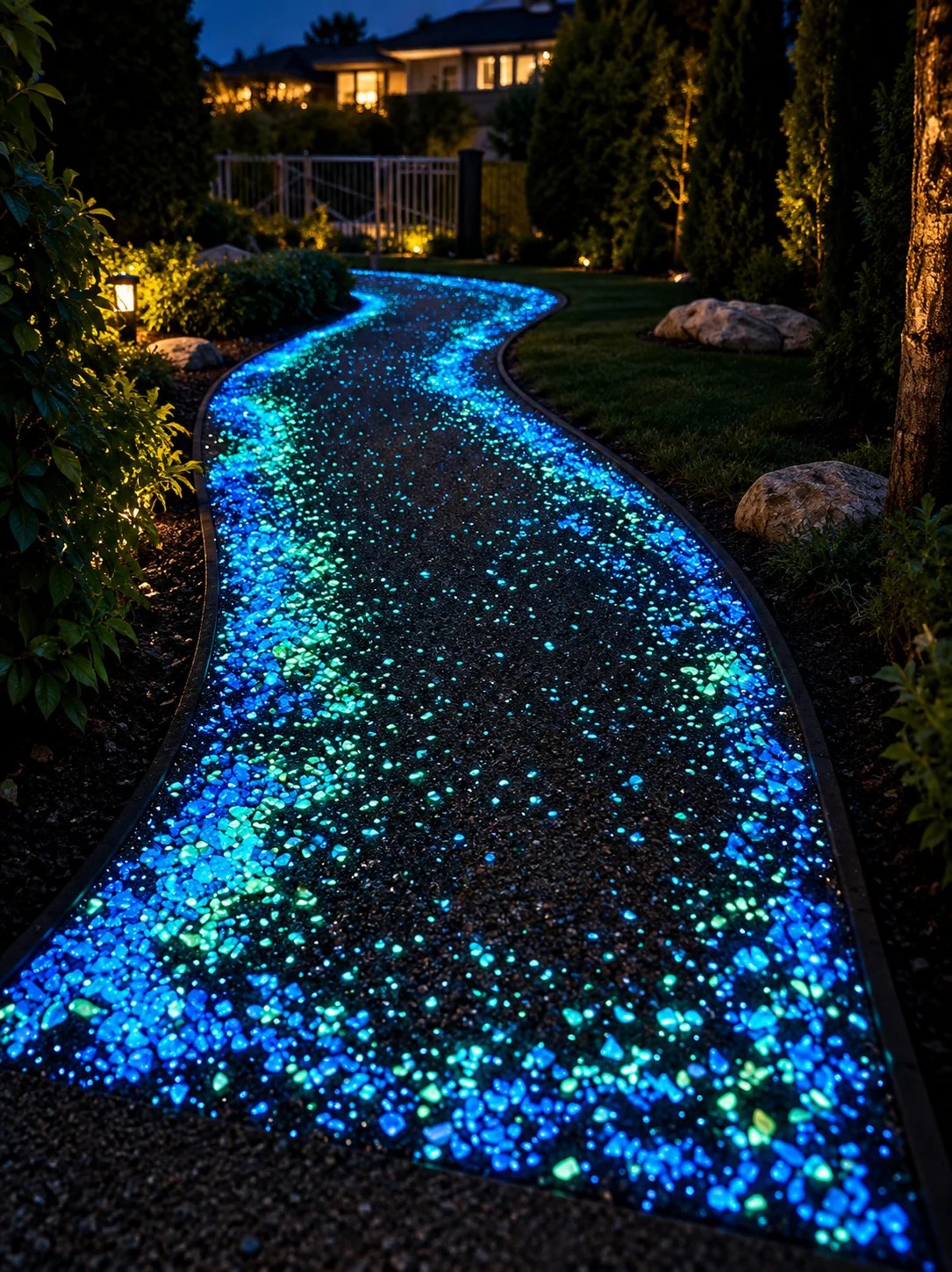
Particle size mainly affects:
-
Appearance
-
Distribution
-
Surface texture
-
Consumption
But it can also influence how much of the luminous stone is exposed to traffic and abrasion.
For example, larger exposed stones may experience different mechanical wear than fine aggregate integrated into a resin surface.
Installation design therefore matters as much as size.
Pedestrian, bicycle and vehicle traffic
A garden walkway and a driveway are very different environments.
Pedestrian pathways
Generally experiences relatively low abrasion.
Bicycle paths
Moderate wear may occur.
Vehicle areas
Can experience:
-
Tire abrasion
-
Turning forces
-
Higher loads
A material suitable for landscape walking paths should not automatically be assumed suitable for heavy vehicle traffic.
Why turning and braking areas need attention
Vehicle tires generate lateral shear when turning.
This can place significant stress on:
-
Resin surfaces
-
Coatings
-
Exposed aggregate
If glow materials are used in vehicle environments, turning and braking zones require particular attention.
Dirt can reduce apparent glow without material failure
Sometimes the photoluminescent material has not actually degraded.
The surface is simply dirty.
Outdoor pavement can accumulate:
-
Dust
-
Mud
-
Leaves
-
Tire residue
-
Organic material
These contaminants block incoming light.
Less charging light means weaker nighttime appearance.
Cleaning to keep the luminous surface exposed
Regular cleaning helps keep the luminous surface exposed.
For landscape pathways, maintenance may include:
-
Sweeping
-
Removing leaves
-
Washing dirt
-
Removing organic buildup
The cleaning method should be compatible with the pavement and binder.
Tree growth can reduce charging over time
This is easy to overlook.
A pathway may receive strong sunlight when first installed.
Several years later, surrounding trees and plants may create more shade.
The material may then receive less charging light.
This can make the pathway appear weaker even though the glow stones themselves have not changed significantly.
Clear topcoats: balance protection with transparency
A suitable transparent protective layer can sometimes improve:
-
Wear resistance
-
Cleaning resistance
-
Water resistance
But transparency is critical.
A topcoat that becomes:
-
Yellow
-
Cloudy
-
Dirty
can reduce light transmission.
More protection is not automatically better.
Do Glow Stones Need Electricity?
No electricity is required for the photoluminescent afterglow itself.
They recharge through suitable light exposure.
This is one reason they are attractive for:
-
Gardens
-
Parks
-
Landscape paths
-
Resorts
However, this also means brightness depends on charging conditions.
Can glow stones replace required outdoor lighting?
No.
Glow stones can help identify:
-
Path boundaries
-
Decorative surfaces
-
Route direction
But they do not provide enough illumination to reveal the entire surrounding environment.
They should not replace lighting required to see:
-
Obstacles
-
Steps
-
Pedestrians
-
Hazards
-
Changes in elevation
Glow stones vs. LED path lights
The two systems work very differently.
Glow stones
-
Passive afterglow
-
No wiring required for glow
-
Integrated into pavement
-
Brightness gradually decreases
LED lights
-
Require power
-
Provide active illumination
-
Can maintain controlled brightness
-
Require electrical components
For some landscape projects, combining both systems can work well.
Test outdoor glow stones in sun and shade
Before ordering a large quantity, prepare several samples.
Place them in the actual project environment.
For example:
Sample A
Full sunlight.
Sample B
Partial shade.
Sample C
Heavy shade.
Observe all samples after sunset.
This gives much more realistic information than testing only under a powerful indoor lamp.
Keep sample test conditions consistent
When comparing different products, use the same:
-
Charging duration
-
Light source
-
Observation time
-
Background
-
Camera settings
Otherwise, the comparison may be misleading.
Compare physical samples, not supplier photos alone
Night photographs can be dramatically affected by:
-
Exposure time
-
ISO
-
Aperture
-
Image editing
Two photographs cannot reliably prove which material performs better unless they were taken under controlled identical conditions.
Physical samples are much more useful.
Signs your glow stone pavement needs inspection
Inspect outdoor glow pavement if you notice:
-
Reduced apparent glow
-
Heavy dirt buildup
-
Loose aggregate
-
Resin yellowing
-
Surface wear
-
Cracks
-
Water accumulation
The cause should be identified before assuming the luminous material has failed.
How to Extend the Life of Glow Stone Pavement
A few practical steps can help:
-
Choose outdoor-grade materials.
-
Use a compatible UV-resistant binder where required.
-
Keep luminous surfaces exposed.
-
Provide adequate drainage.
-
Avoid unsuitable heavy traffic.
-
Clean the surface periodically.
-
Repair damaged areas early.
Good installation can be just as important as the glow stone itself.
Best Outdoor Applications
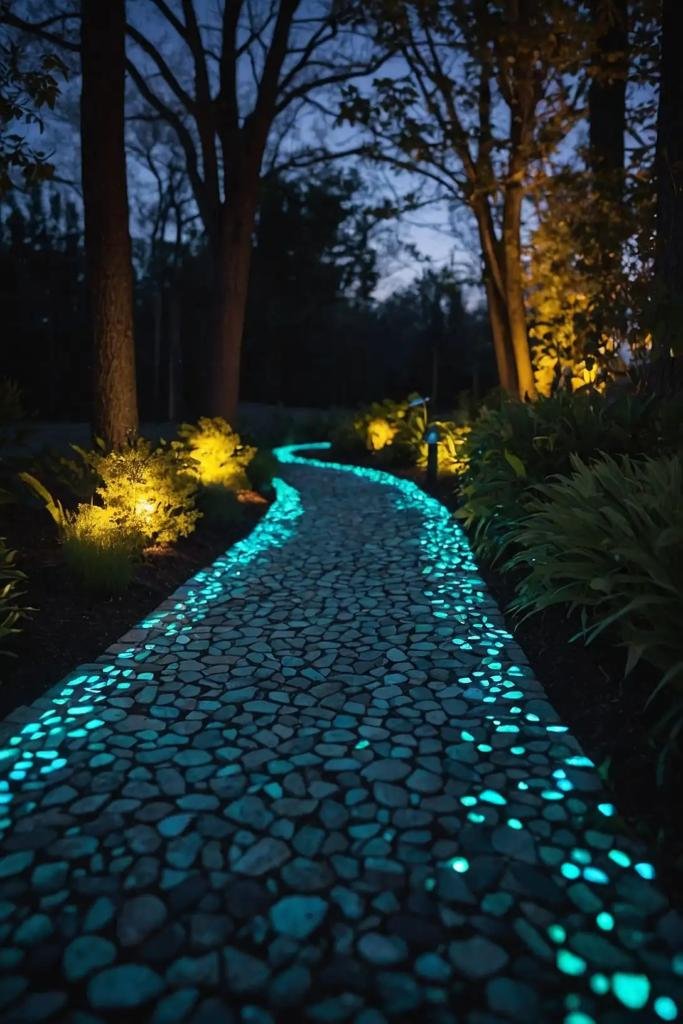
Glow stones are particularly suitable for:
Garden Paths
Low traffic and strong decorative value.
Parks
Landscape walkways and scenic routes.
Resorts
Premium nighttime landscape effects.
Residential Communities
Courtyard and recreation paths.
Decorative Concrete
Luminous exposed aggregate effects.
Resin-Bound Paths
Natural aggregate combined with luminous particles.
Questions to ask before buying outdoor glow stones
Before ordering glow stones for an outdoor project, ask:
-
What particle size is available?
-
What glow colors are available?
-
Is the material suitable for outdoor use?
-
How will it be installed?
-
Will it be used with concrete or resin?
-
How much sunlight does the location receive?
-
What traffic will the pavement experience?
These questions are more useful than simply asking, “How many hours does it glow?”
Plan for afterglow performance and outdoor service life
So, how long do glow stones last outdoors?
There are two separate answers.
Afterglow duration describes how the brightness gradually decreases after charging.
Service life describes how long the installed material remains functional in the pavement.
Both depend on real project conditions.
The most important factors are:
Material Quality + Light Exposure + Installation + UV Resistance + Traffic + Cleaning + Drainage
For outdoor projects, the best approach is to test actual samples under real sunlight and observe them over time before making a large purchase.
FUXIN supplies Outdoor Glow Stones, Photoluminescent Aggregate, Resin-Bound Glow Stones, Long Afterglow Pigments, and Luminous Pavement Materials for gardens, parks, resorts, concrete pathways, and landscape projects.
For samples, particle-size recommendations, quantity calculations, or project material advice, please contact us.