

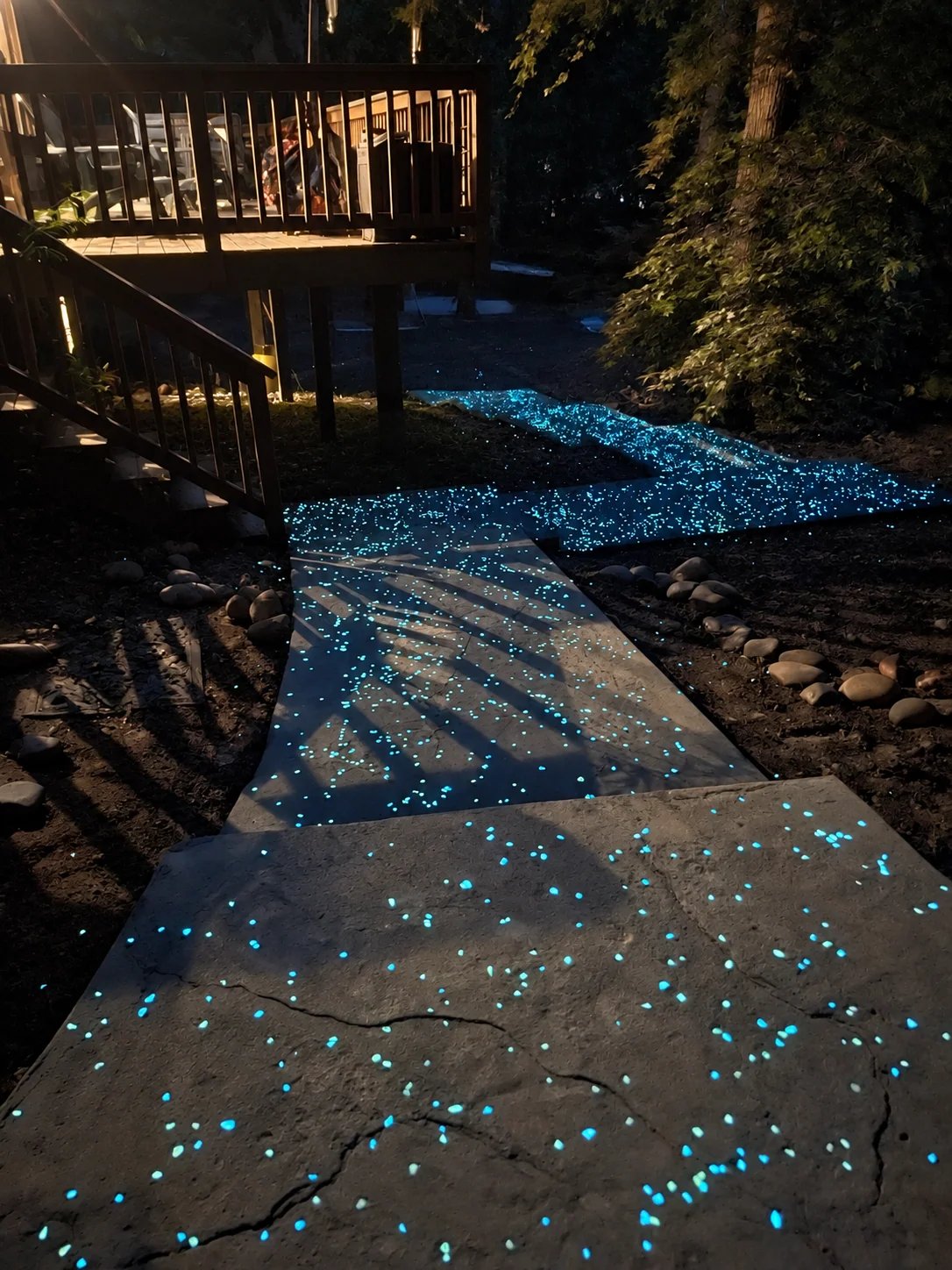
Glow stones can be mixed into concrete or spread over the surface, but the methods do not produce the same result. Mixing can suit decorative concrete that will be ground or exposed; concentrating luminous aggregate near the surface is generally more efficient when nighttime visibility is the priority.
Installation can matter as much as stone quality. Compare how each method balances light exposure and secure embedment, then test particle size, binder transparency, pavement color and installation density as a complete system before a large project.
Method 1: Mixing Glow Stones Into Concrete
The first option is simple: add photoluminescent aggregate into the concrete or decorative mix before placing it.
This sounds convenient because the glow stones become part of the pavement structure.
It can work well for decorative concrete, terrazzo-style surfaces and exposed aggregate finishes.
But there is one important problem.
Most of the Glow Stones May Be Hidden
Glow stones need light exposure during the day in order to charge.
They also need enough exposed surface area to release visible light at night.
If you mix a large quantity of glow stones deep inside the concrete, many of them will never be visible.
You're basically paying for luminous aggregate that stays buried under cement.
For this reason, simply adding more glow aggregate doesn't always make the pavement brighter.
The surface exposure matters more.
Method 2: Broadcasting Glow Stones on the Surface
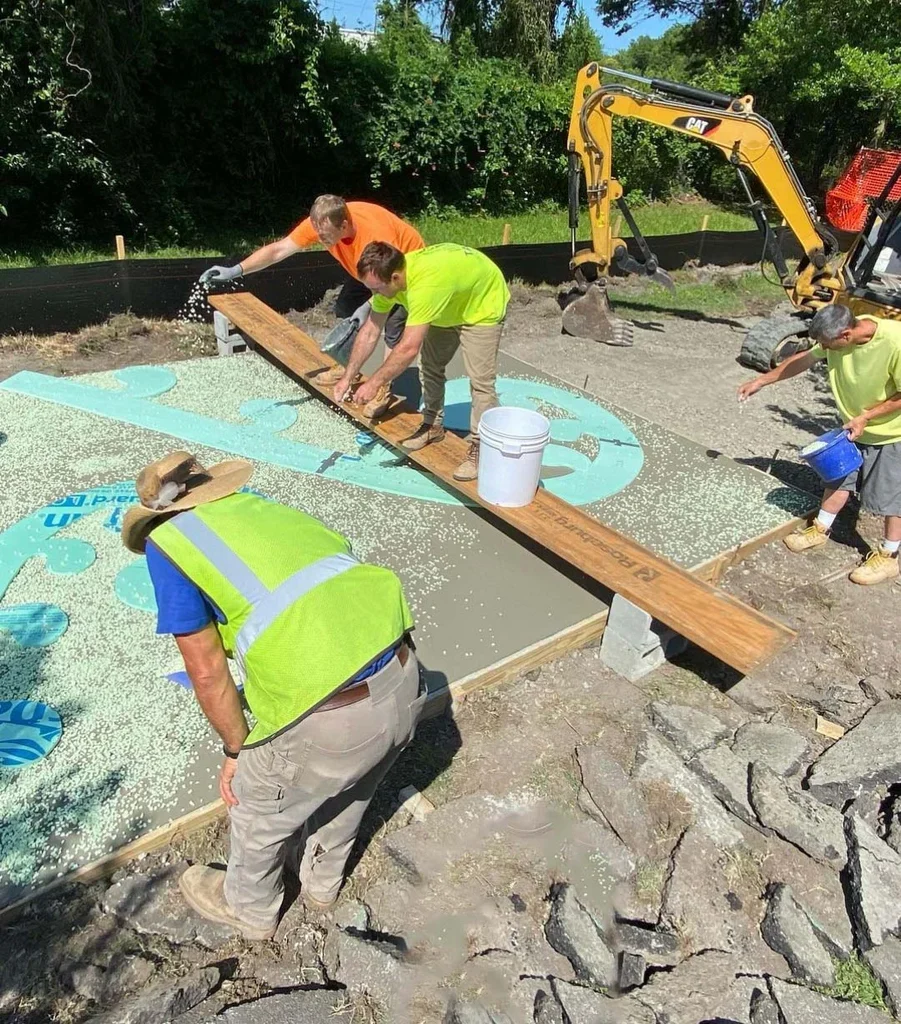
For many outdoor pavement projects, surface broadcasting is the more efficient option.
The basic idea is:
- Prepare the concrete, resin or binder layer.
- Spread the glow stones evenly over the fresh surface.
- Press or embed them partially into the binder.
- Remove loose aggregate after curing.
- Apply a suitable protective treatment if required.
This keeps a larger percentage of the glow stones visible at the surface.
And that usually means better charging during the daytime and stronger visual performance after dark.
Which Method Gives a Brighter Glow?
For the same quantity of glow aggregate, a surface-applied system will normally make better use of the material.
Why?
Because more luminous particles are actually exposed.
Think of it this way:
If you use 5 kg of glow stones, but 70% are buried inside the pavement, only part of your material contributes to the visible effect.
If those same stones are concentrated near the top surface, much more of the luminous area can absorb light.
So when designing a glow in the dark concrete pavement, don't focus only on kilograms per square meter.
You should also think about how much of the glow aggregate remains exposed.
Does That Mean Glow Stones Should Sit Completely on Top?
No.
That's another common mistake.
If the stones are barely attached to the surface, vehicle movement, cleaning, weather and foot traffic may loosen them.
A better installation usually leaves part of the aggregate embedded in the binder while keeping enough of the upper surface exposed.
The goal is a balance:
Enough embedment for strength, enough exposure for light.
Too deep = weaker glow.
Too shallow = weaker bonding.
What About Resin-Bound Glow Stone Pavement?
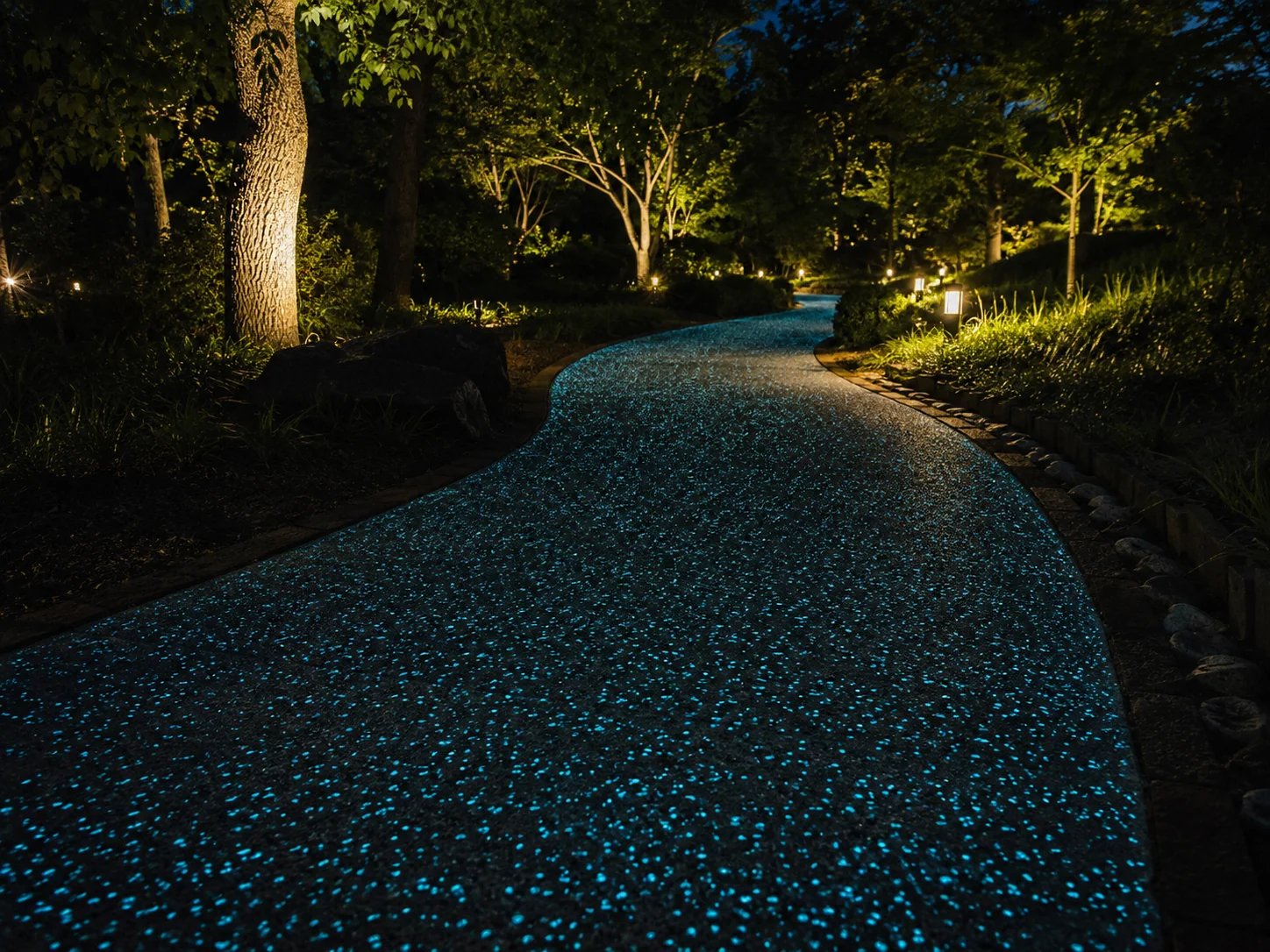
Glow stones can also be used with transparent or light-colored resin systems.
This is especially useful for:
- garden paths
- landscape pavement
- pedestrian areas
- decorative walkways
- plazas
- cycle paths
- pool surroundings
- entrance areas
For this type of system, the transparency and color of the binder matter.
A dark or heavily pigmented binder can reduce the visible glowing area.
A clearer system normally allows the luminous aggregate to remain more visually noticeable.
Should I Use 100% Glow Stones?
Usually, you don't need to.
Glow stones are often combined with normal decorative aggregate.
For example, you can create:
- scattered luminous points
- glowing borders
- stars or patterns
- directional lines
- safety edges
- decorative bands
This often creates a more natural-looking pavement and can also reduce material cost.
The right ratio depends on the effect you want.
A decorative garden path doesn't need the same luminous density as a night-visible pedestrian route.
Test the base color with the glow stone system
This part is easy to overlook.
A light-colored pavement usually gives better visual contrast around luminous aggregate.
White, beige, light gray and other pale backgrounds can make the glow points look clearer.
Very dark pavement can create an interesting design effect, but it may also absorb more ambient light during the day and change the overall appearance.
So before installation, it's worth testing the complete system:
base color + glow stone color + particle size + installation density.
Not just the glow stone by itself.
Can Glow Stones Be Used in Existing Concrete?
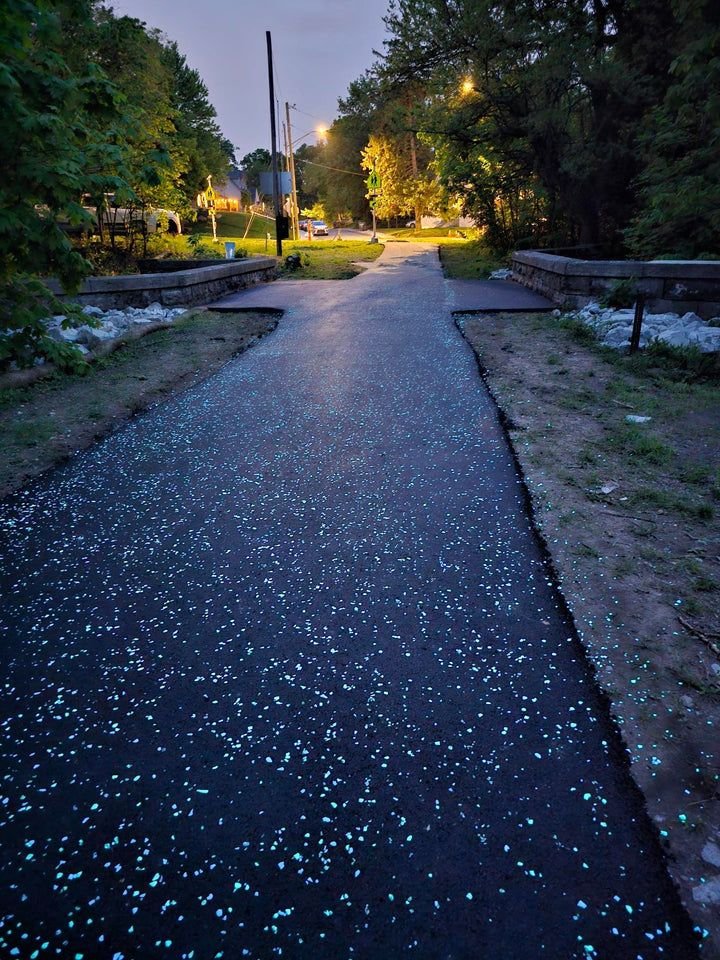
Yes, but the installation method will be different.
Instead of mixing them into the original concrete, an existing pavement normally needs an additional bonding layer or decorative surface system.
Depending on the project, this may involve:
- transparent resin
- polyurethane binder
- epoxy binder
- decorative coating
- thin resurfacing layer
The important part is making sure the existing pavement is clean, stable and properly prepared before the luminous material is applied.
Which Method Should You Choose?
For decorative concrete where the surface will later be ground or exposed, mixing luminous aggregate into the upper concrete layer can work.
For projects where nighttime glow is the priority, concentrating the glow stones near the surface is generally more efficient.
A simple rule is:
Don't bury expensive luminous material where nobody can see it.
The more effectively the glow stones are exposed to daytime light, the better chance they have to produce the visual effect you actually want at night.
Test the complete glow stone pavement before installation
Good glow stone pavement isn't just about buying brighter stones.
Particle size, surface exposure, binder transparency, pavement color and installation method all affect the final result.
Before doing a large project, make a small test section first.
Check it in daylight.
Then check it again after sunset.
That small test can tell you much more than looking at glow stones inside a sample bag.