

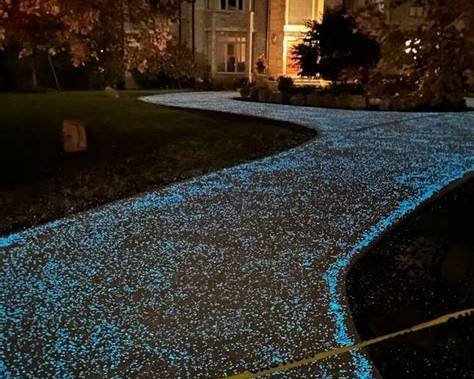
Glow stones can be used on driveways, but the installation method and complete pavement system matter more than the stone alone. Loose stones may move, crack or come away under vehicle traffic. Proper embedment in concrete, resin or another suitable system can create a more durable luminous surface.
Use the guide below to evaluate traffic loads, exposed luminous area, bonding, base preparation and drainage. Selective accents along edges, entrances or parking boundaries may be enough; test the system under actual driving, cleaning, outdoor exposure and nighttime conditions before a larger project.
What Are Glow Stones for Driveways?
Glow stones are photoluminescent particles that absorb light from sunlight or artificial lighting and slowly release that stored energy after dark.
During the day, they may look like ordinary light-colored decorative stones.
At night, they produce a visible glow.
For driveway projects, they are commonly used in:
- concrete surfaces
- exposed aggregate finishes
- resin-bound pavement
- decorative borders
- driveway edges
- parking guidance areas
- entrance paths
The idea isn't necessarily to make the entire driveway shine.
In many projects, the best effect comes from using luminous stones as small visual accents.
Can Cars Drive Over Glow Stones?
Yes, but the glow stones need to be properly fixed into the pavement.
This is the key difference between a garden decoration and a driveway application.
Loose glow stones may move, crack or come away when exposed to:
- vehicle tires
- turning movements
- pressure
- cleaning equipment
- rain
- freeze-thaw cycles
- repeated traffic
For a driveway, the stones should normally be partially embedded into a strong surface system.
The pavement carries the traffic load.
The glow stone provides the luminous effect.
Should Glow Stones Be Mixed Into the Concrete?
They can be, but mixing them throughout the entire concrete layer isn't always the most efficient use of the material.
Imagine putting glow stones 50 mm below the surface.
Those stones cannot receive much light.
They also cannot be seen at night.
So although they are technically inside the driveway, they contribute almost nothing to the visible glow.
For this reason, glow aggregate is usually more useful when concentrated near the top surface of the concrete.
This gives the stones better exposure to daylight and better visibility at night.
Balance surface exposure with mechanical bonding
One practical method is to apply luminous aggregate to the upper surface while the pavement or binder is still workable.
The stones are then pressed or embedded into the surface.
This method can provide a good balance between:
Surface exposure + mechanical bonding
If the stones are buried too deeply, the glowing effect becomes weaker.
If they sit too high above the pavement, they may be more vulnerable to vehicle wear.
The goal is to keep enough of each stone exposed while maintaining sufficient anchoring.
Where Should Glow Stones Be Used on a Driveway?
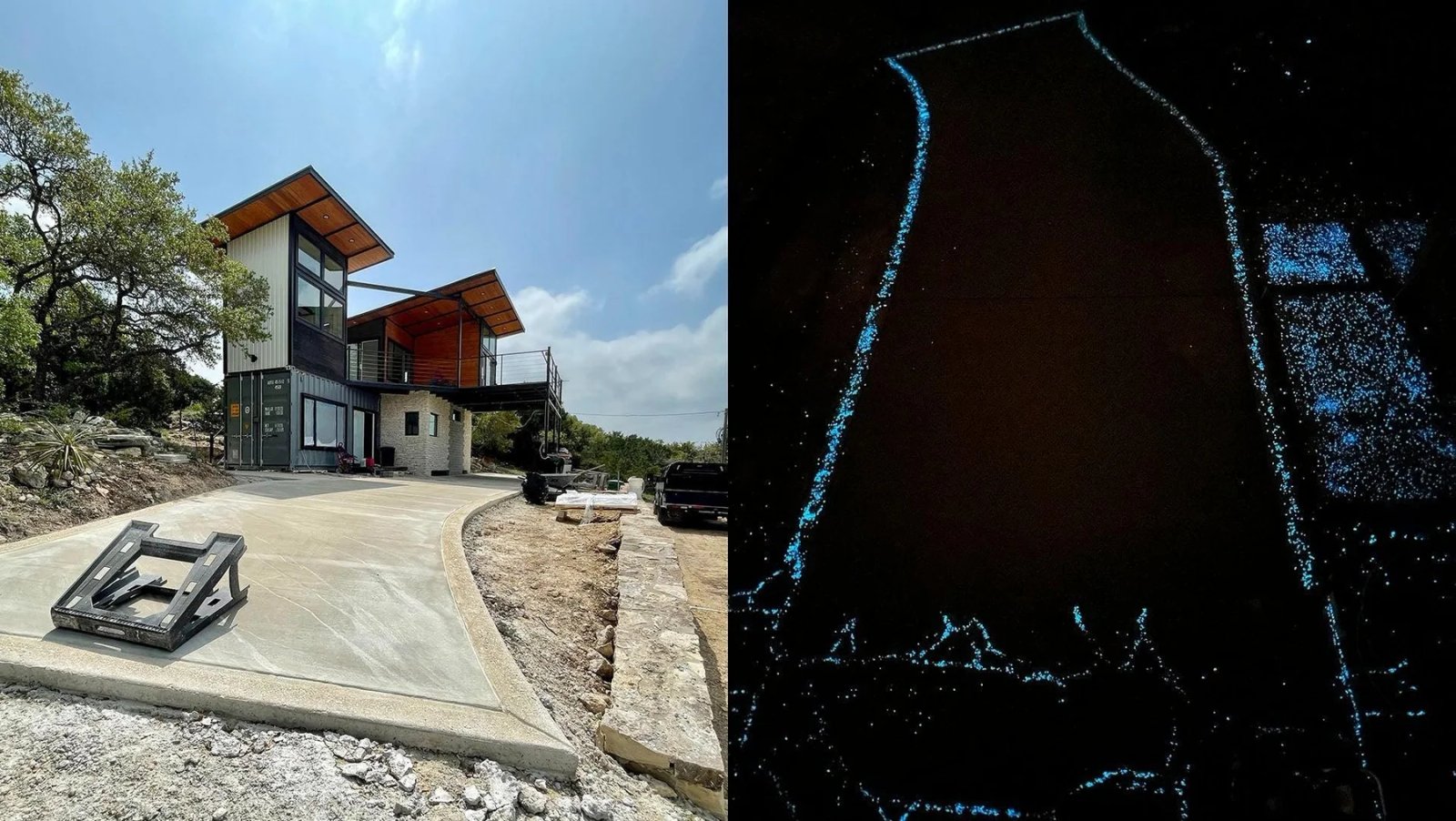
You don't always need to cover the entire driveway.
In fact, selective placement can often look better.
1. Driveway Edges
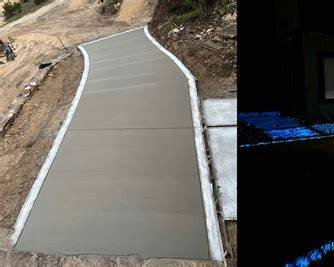
Glow stones along the edges can help define the driving area at night.
This is especially useful for:
- rural homes
- villas
- resorts
- landscaped properties
- driveways without strong street lighting
2. Entrance Areas
A concentration of luminous stones near the entrance can create a decorative nighttime feature.
It can also make the entrance easier to identify after dark.
3. Parking Boundaries
Glow aggregate can be incorporated into decorative lines or borders around parking spaces.
It isn't a replacement for regulated road markings, but it can provide an additional visual feature.
4. Pathway Connections
Many properties have a driveway connected to a garden path or pedestrian walkway.
Using the same photoluminescent aggregate in both areas can create a consistent landscape design.
What Color Glow Works Best?
The most common photoluminescent colors are usually:
- yellow-green
- blue-green
- light blue
Yellow-green normally appears visually brighter to the human eye.
Blue and blue-green effects are often chosen when the project is more focused on decorative landscape appearance.
For a driveway, you should choose color based on both:
nighttime brightness and overall pavement design.
A small sample test is useful before the full installation.
Does the Base Color Matter?
Yes — a lot.
A lighter-colored pavement can help luminous stones appear clearer during the daytime and create stronger visual contrast.
Common backgrounds include:
- light gray
- white
- beige
- natural concrete
- light resin aggregate
Dark surfaces can also look attractive, especially at night, but the overall effect will be different.
For decorative projects, testing the glow stone together with the actual pavement color is much more useful than testing the stone alone.
How Many Glow Stones Should Be Used?
There isn't one universal amount.
It depends on the effect you want.
A driveway with a few glowing points needs much less material than a densely luminous decorative surface.
You can think of three general styles:
Light scatter
Small quantities distributed across the surface.
Medium decorative effect
More visible luminous points, but the normal pavement remains dominant.
High-density glow effect
A much larger concentration of luminous aggregate for stronger nighttime visibility.
More glow stones do not automatically mean a better project.
Distribution and exposure are just as important.
Assess resin-bound systems for the expected vehicle load
Resin glow stones can also be used around driveway areas, particularly for decorative edges, landscape zones and pedestrian sections.
For heavy vehicle traffic, however, the complete resin pavement system needs to be designed for the expected load.
The important question isn't simply:
“Is the glow stone strong enough?”
It should be:
“Is the entire pavement system suitable for vehicle traffic?”
That includes:
- base preparation
- binder strength
- aggregate bonding
- layer thickness
- drainage
- expected traffic load
Will Car Tires Damage the Glow Effect?
Over time, any pavement exposed to vehicle traffic experiences wear.
A correctly installed luminous aggregate system should therefore be designed so that the stones are not simply sitting loosely on top.
Some surface polishing or wear may occur depending on traffic intensity.
For this reason, residential driveways and low-speed decorative areas are generally easier applications than heavily trafficked industrial roads.
Before a large commercial project, a test section is recommended.
Are Glow Stones a Replacement for Driveway Lighting?
Not really.
Photoluminescent stones don't work like electric lamps.
They provide a soft afterglow rather than continuous high-intensity illumination.
Think of them as a passive visual feature, not a complete lighting system.
They can help make edges, patterns and paths more visible, while also creating an attractive nighttime appearance.
For areas requiring strong illumination, conventional lighting may still be necessary.
Are Glow Driveways Worth It?
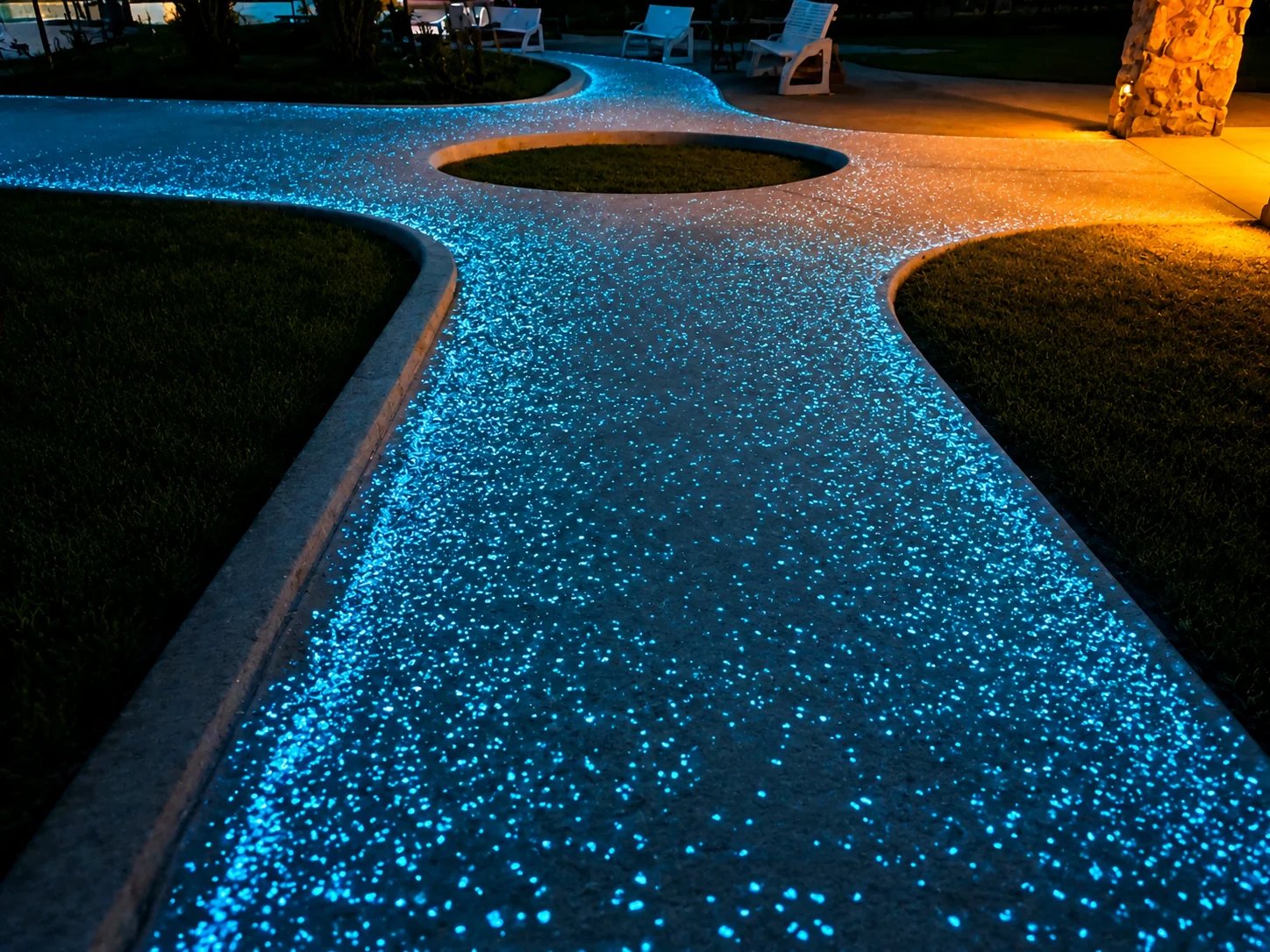
For decorative residential and landscape projects, they can be very interesting.
A glow in the dark driveway can offer:
- decorative nighttime appearance
- better visual definition of edges
- no wiring inside the luminous aggregate
- low-energy passive illumination
- integration with landscape design
- distinctive project appearance
But good results depend heavily on installation.
The same glow stone can look completely different depending on whether it is:
- buried too deep
- exposed correctly
- bonded properly
- installed on a suitable base
Test the driveway system under real use
Glow stones can absolutely be used in driveway projects.
But they shouldn't simply be treated like loose garden decoration.
For vehicle areas, the best results come from combining photoluminescent aggregate with a durable pavement system and keeping enough of the luminous material exposed at the surface.
If you're planning a larger project, make a small test section first.
Drive over it.
Wash it.
Leave it outdoors.
Then check it again at night.
A small real-world test can tell you far more than looking at a bag of glow stones under a lamp.