


For many general landscape pathways, around 5 mm glow stones are a practical starting point. They balance visible glow, distribution, surface texture and material consumption. Fine 1–3 mm aggregate can create a more evenly distributed effect, while stones around 10 mm create larger individual luminous points.
The best glow stone size depends on the pathway and installation method. Garden paths, resin-bound walkways, decorative concrete, parks, resorts and landscape pavement may need different particle sizes and distribution methods. Use the comparisons below to match the desired appearance to the pavement system, then confirm the choice with samples.
Glow stone size comparison: 1–3 mm, 5 mm and 10 mm
For most pathway projects, glow stones can be divided into three practical size ranges:
| Glow Stone Size | Visual Effect | Typical Application |
|---|---|---|
| 1–3 mm | Fine, uniform glow | Resin systems, decorative details |
| Around 5 mm | Balanced glow and texture | Pathways, concrete, landscape paving |
| Around 10 mm | Larger visible glow points | Decorative paths, gardens, feature paving |
For many general landscape pathways, around 5 mm provides a useful balance between visible glow, distribution, and surface appearance.
Larger stones around 10 mm are more suitable when the project requires stronger individual luminous points.
Why Glow Stone Size Matters
Particle size influences several parts of a project:
-
Nighttime appearance
-
Daytime appearance
-
Surface texture
-
Material consumption
-
Installation method
-
Aggregate distribution
-
Walking comfort
Choosing the largest or brightest-looking stone is not automatically the best option.
The material needs to match the pavement system.
1–3 mm glow aggregate: fine, evenly distributed effects
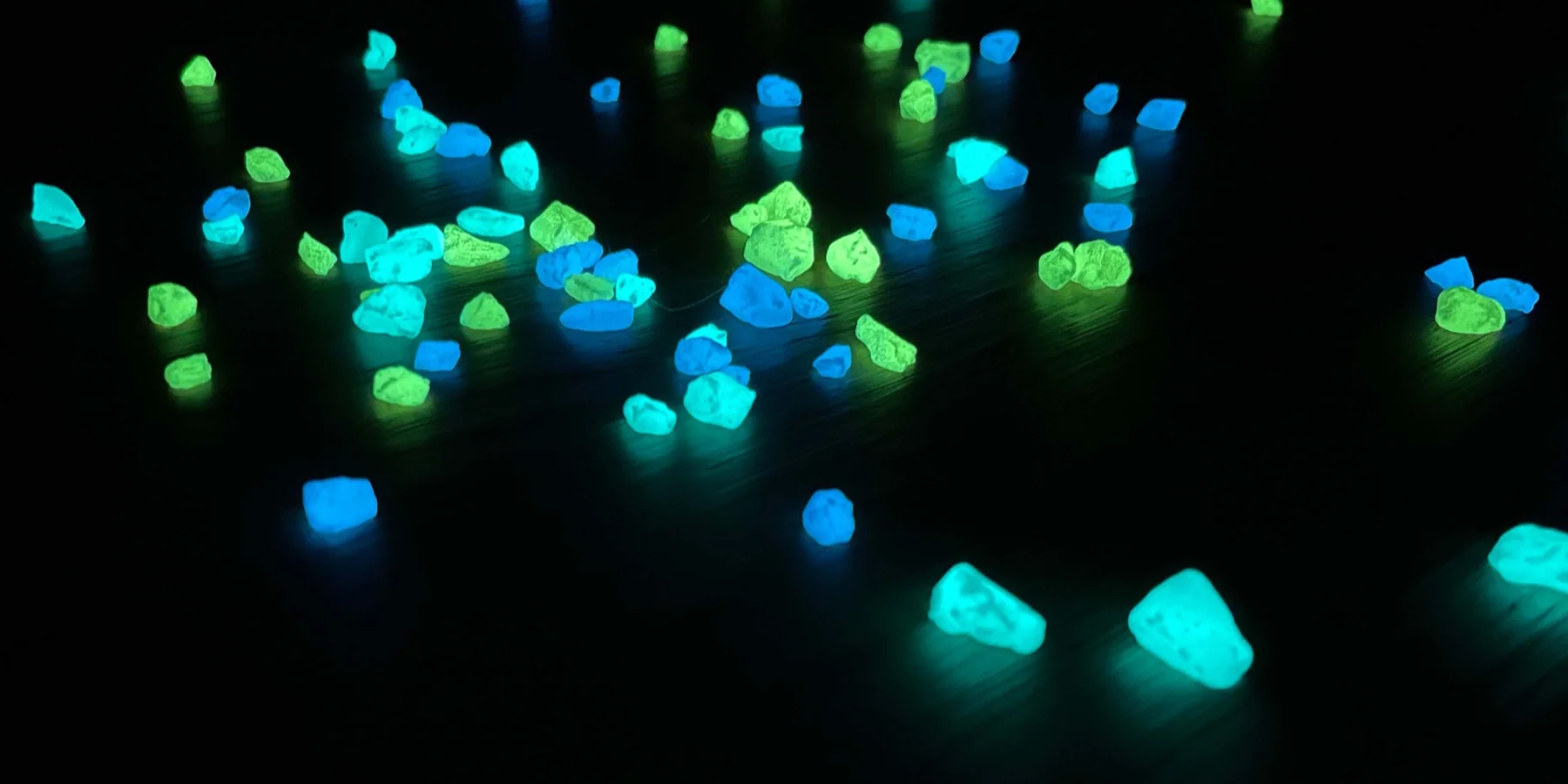
Fine photoluminescent aggregate produces a relatively uniform appearance.
Because there are more particles within the same area, the glow can appear more evenly distributed.
This size range is useful for:
-
Resin-bound decorative surfaces
-
Thin decorative layers
-
Small patterns
-
Luminous borders
-
Detailed pavement designs
Fine particles are also easier to distribute into narrow areas.
Advantages of fine glow aggregate
Smaller aggregate can provide:
-
More uniform distribution
-
Finer surface texture
-
Better detail in patterns
-
Less obvious individual stones
This makes it attractive for modern landscape designs where the goal is a smooth luminous effect.
Limitations of fine glow aggregate
Very small particles may not create the same strong individual glow points as larger stones.
They can also behave differently in resin systems.
The correct binder ratio and surface exposure should therefore be tested.
Around 5 mm glow stones: a balanced pathway option
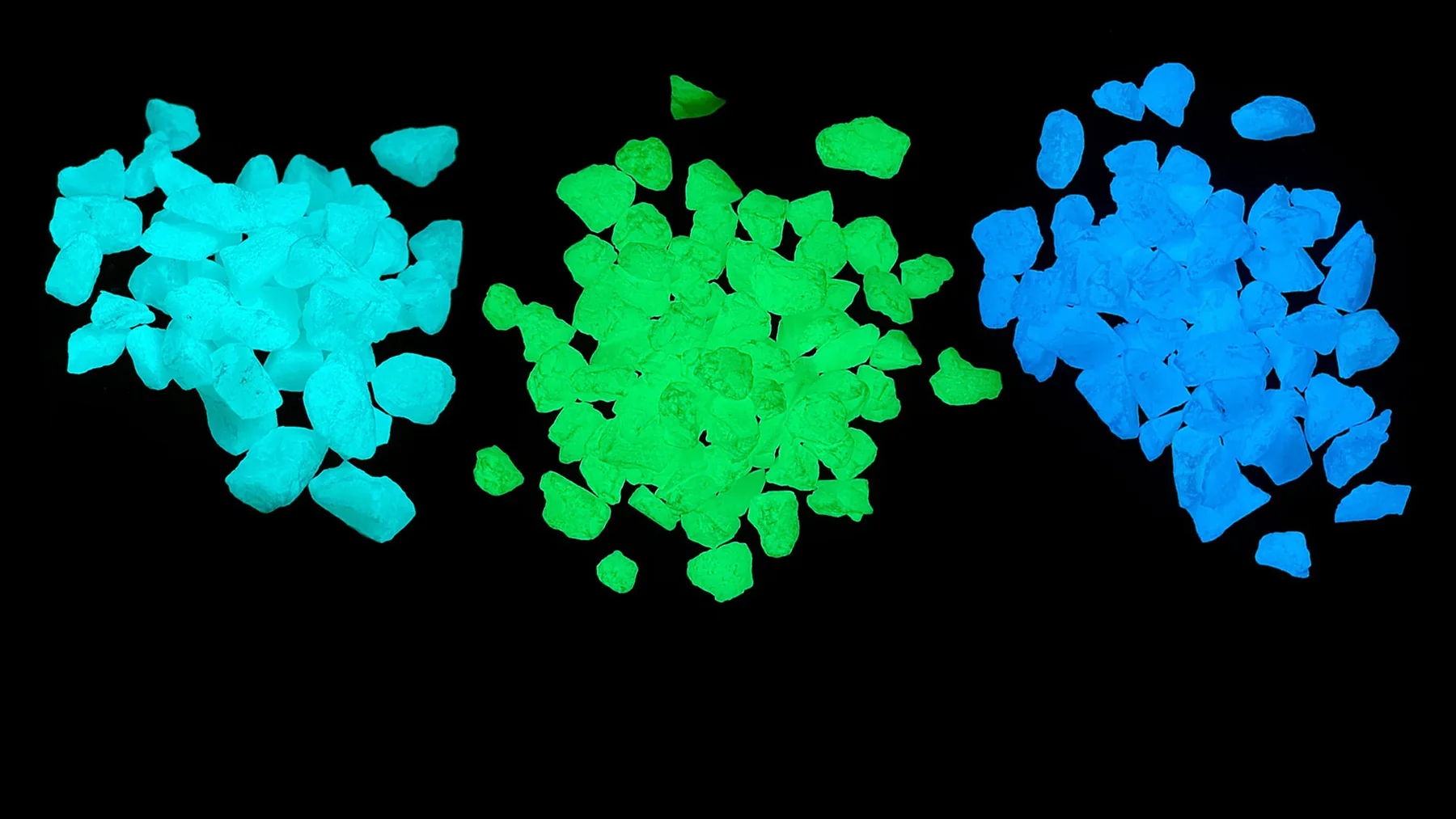
Around 5 mm is one of the most versatile sizes for pathway applications.
It provides a good balance between:
Visible Glow + Distribution + Surface Texture + Material Consumption
Typical applications include:
-
Garden paths
-
Park walkways
-
Resin-bound pavement
-
Decorative concrete
-
Residential landscapes
-
Resort pathways
For dense luminous coverage, a practical reference consumption can be approximately 5 kg/m², depending on the actual stone shape and installation method.
Why around 5 mm works well for pathways
A 5 mm stone is large enough to create clearly visible luminous points but still small enough to distribute relatively evenly.
This makes it suitable for projects where the client wants the entire pathway to have a noticeable glow without creating an excessively coarse surface.
Around 10 mm glow stones: larger decorative points
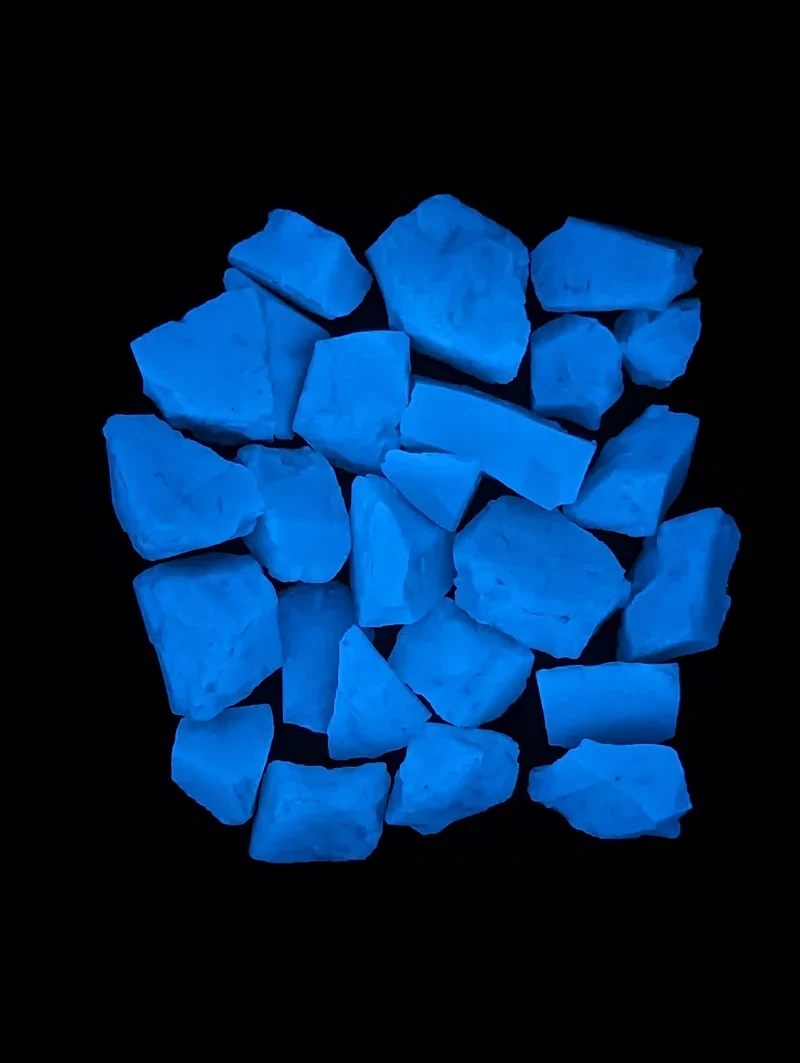
Larger glow stones create more distinct individual points of light.
They can produce a stronger decorative appearance during both day and night.
Typical applications include:
-
Garden paths
-
Feature landscapes
-
Resorts
-
Decorative concrete
-
Landscape borders
For relatively dense coverage, approximately 8 kg/m² can be used as an initial estimating reference.
Actual consumption should always be confirmed with a sample.
When to choose larger glow stones
Consider larger stones when the project requires:
-
Strong individual luminous points
-
Natural stone appearance
-
Decorative landscape effect
-
Greater visual contrast
They work particularly well when scattered among ordinary natural aggregate.
Small vs. large glow stones: compare the visual effect
The difference can be understood simply:
Small Stones → More Uniform Glow
Medium Stones → Balanced Glow
Large Stones → Stronger Individual Glow Points
There is no universally best size.
The best choice depends on the visual effect required.
Glow Stone Size for Garden Paths
Garden paths often benefit from a natural, scattered appearance.
Suitable options include:
-
5 mm stones for relatively uniform distribution
-
10 mm stones for stronger decorative points
-
A mixture of sizes for a more natural appearance
For small private gardens, full-surface coverage is often unnecessary.
Scattered stones or luminous edge strips can provide an attractive effect with less material.
Glow Stone Size for Parks
Public parks usually require a balance between:
-
Visual effect
-
Surface comfort
-
Material cost
-
Maintenance
Around 5 mm is a practical starting point for many pedestrian landscape surfaces.
However, the final selection should consider the installation system.
Glow Stone Size for Resorts
Resorts and hotels often prioritize visual impact.
A combination of medium and larger stones can create a richer nighttime effect.
For example:
5 mm Glow Aggregate + Selected 10 mm Glow Stones
This can create a layered appearance with both background glow and stronger luminous highlights.
Glow Stone Size for Resin-Bound Pavement
Resin-bound pavement requires careful aggregate grading.
The luminous material needs to work with:
-
Natural aggregate
-
Transparent resin
-
Required pavement thickness
Fine and medium glow aggregate are generally easier to integrate into a continuous resin-bound surface.
Large stones should be tested to ensure they do not create an uneven walking surface.
Mixing glow stones with natural aggregate
Glow stones do not need to make up the entire pavement.
A common design approach is:
Natural Aggregate + Selected Glow Stones + Transparent Resin
This can provide:
-
Lower material cost
-
Natural daytime appearance
-
Adjustable nighttime glow
The glow stone size should complement the natural aggregate size.
Match aggregate sizes carefully
If the natural stone is very small and the glow stones are extremely large, the surface may appear inconsistent.
A more balanced grading can improve:
-
Surface appearance
-
Mixing
-
Installation
-
Walking comfort
Prepare samples before deciding on the final combination.
Glow Stones for Concrete Pathways
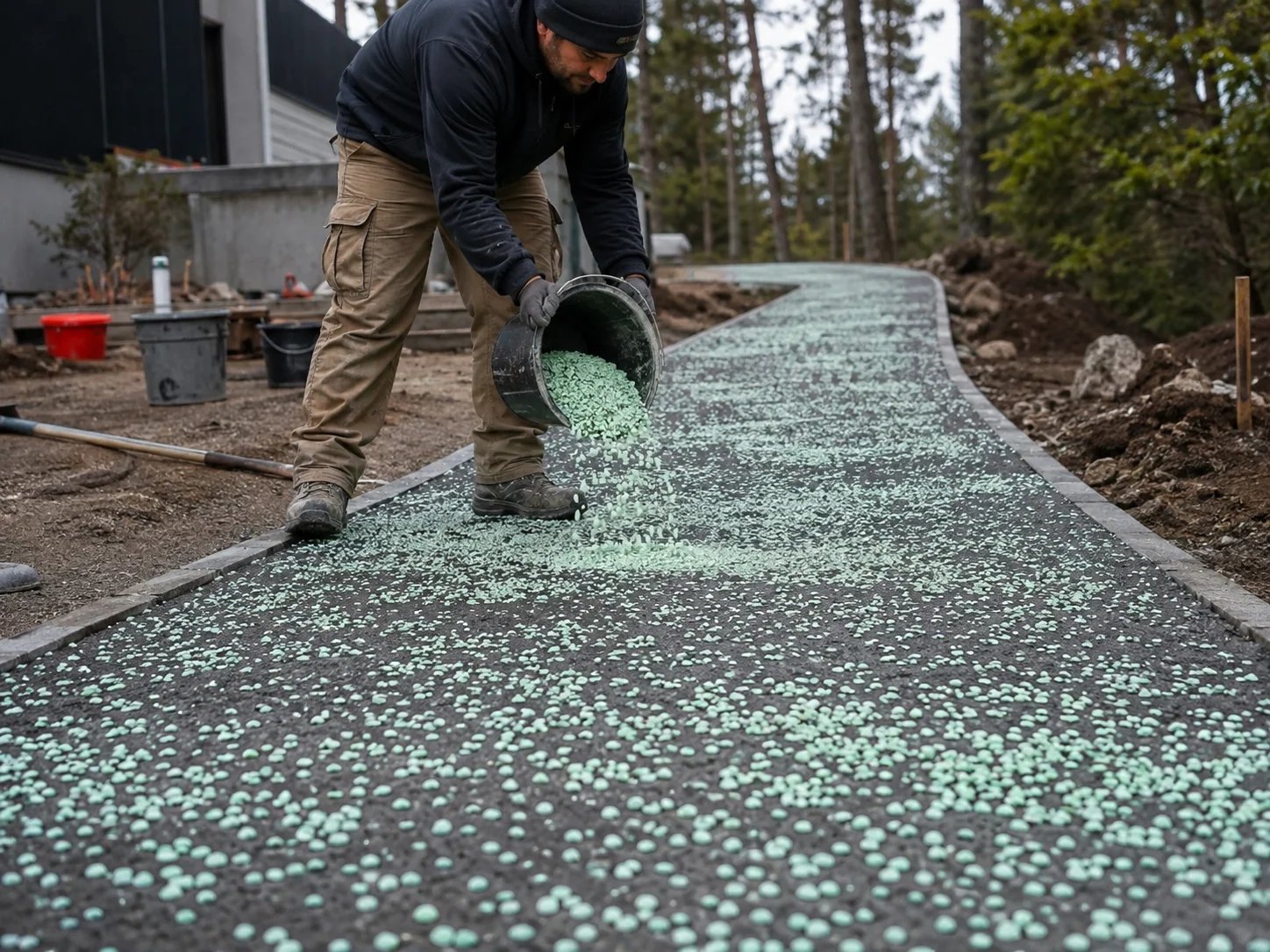
Glow stones can be embedded into fresh concrete.
Medium or larger particles are often easier to see as individual decorative elements.
A typical process is:
-
Pour and level the concrete
-
Distribute glow stones
-
Lightly press them into the surface
-
Keep the luminous surface exposed
-
Allow the concrete to cure
The stones should not be completely buried.
Keep the luminous surface exposed
Photoluminescent materials need light to charge.
If the stone is buried under:
-
Cement paste
-
Opaque resin
-
Surface coating
less light reaches it.
This reduces the useful luminous effect regardless of stone size.
Glow Stone Size for Edge Strips
Path edges do not necessarily need large aggregate.
Fine or medium particles can create continuous luminous lines.
For example:
5 cm Glow Strip | Normal Path | 5 cm Glow Strip
This design can provide clear route definition while significantly reducing total glow stone consumption.
Glow Stone Size for Decorative Patterns
Smaller particles are generally easier to use for:
-
Logos
-
Stars
-
Waves
-
Letters
-
Thin lines
-
Detailed shapes
Larger stones are better suited to less detailed decorative patterns.
Does a Larger Stone Glow Brighter?
Not necessarily.
A larger stone may create a larger visible luminous point, but overall performance depends on:
-
Photoluminescent material quality
-
Charging conditions
-
Glow color
-
Surface exposure
-
Ambient darkness
Stone size alone does not determine afterglow performance.
Yellow-Green vs. Blue-Green Stones
Glow color also affects perceived appearance.
Yellow-Green
Often appears brighter to the human eye.
Suitable for:
-
Guidance
-
Path edges
-
Higher-visibility applications
Blue-Green
Provides a cooler decorative appearance.
Suitable for:
-
Gardens
-
Resorts
-
Landscape pathways
-
Waterfront projects
Compare actual samples before selecting a color.
Does glow stone size affect material consumption?
Yes.
As a practical dense-coverage reference:
Around 5 mm → approximately 5 kg/m²
Around 10 mm → approximately 8 kg/m²
This means larger stones can significantly increase the total weight required for a large project.
For example, a 500 m² pathway could require approximately:
5 mm: 500 × 5 = 2,500 kg
10 mm: 500 × 8 = 4,000 kg
That difference also affects shipping costs.
Allow for shipment weight and export costs
For international projects, selecting stone size affects more than material price.
It also influences:
-
Total shipment weight
-
Freight cost
-
Packaging
-
Installation consumption
A slightly smaller particle size may sometimes provide a more economical solution for large-area projects.
Check walking comfort, skid resistance and cleaning
A pathway is not only a visual surface.
Large exposed stones may create a rougher texture.
For:
-
Public walkways
-
Resorts
-
Residential communities
-
Barefoot areas
surface comfort should be considered.
A test section can help determine whether the selected particle size is appropriate.
Consider skid resistance
A smooth resin surface can become slippery, while an excessively rough surface may be uncomfortable.
The goal is to achieve:
Glow Effect + Surface Texture + Skid Resistance + Walking Comfort
Glow stone size should therefore be selected as part of the complete pavement system.
Consider cleaning
Very rough surfaces may collect:
-
Dirt
-
Mud
-
Organic material
Contamination can cover luminous particles and reduce charging.
For high-maintenance environments, a slightly smoother surface may be easier to clean.
Can Different Sizes Be Mixed?
Yes.
Mixing particle sizes can create a more natural appearance.
For example:
Fine Aggregate → Background Glow
5 mm Stones → Main Luminous Effect
10 mm Stones → Decorative Highlights
This approach can create more visual depth than using only one particle size.
Test glow stone sizes in 1 m² samples
Before a large project, prepare several 1 m² samples.
For example:
Sample A
1–3 mm glow aggregate.
Sample B
5 mm glow stones.
Sample C
10 mm glow stones.
Sample D
Mixed 5 mm + 10 mm.
Charge all samples under the same conditions and compare them after dark.
Compare glow, texture, comfort and consumption
Evaluate:
-
Daytime appearance
-
Initial nighttime glow
-
Glow after 30 minutes
-
Surface texture
-
Walking comfort
-
Material consumption
-
Ease of installation
This gives the project owner a much better basis for choosing a specification.
Confirm project requirements before a bulk order
Before ordering, confirm:
-
Total area
-
Installation method
-
Natural aggregate size
-
Required glow density
-
Glow color
-
Pedestrian traffic
-
Desired surface texture
-
Shipping destination
The supplier can then recommend a more appropriate particle size and quantity.
Quick selection checklist by glow stone size
Choose 1–3 mm when you want:
-
Fine distribution
-
Detailed patterns
-
Smooth decorative effects
Choose around 5 mm when you want:
-
General pathway applications
-
Balanced glow
-
Good distribution
-
Moderate surface texture
Choose around 10 mm when you want:
-
Strong decorative points
-
Larger visible stones
-
Feature landscape effects
Choosing the right glow stone size for your pathway
So, what size glow stones are best for pathways?
For many general landscape projects, around 5 mm is a practical starting point because it provides a good balance between glow visibility, distribution, surface texture, and material consumption.
For stronger decorative effects, around 10 mm can create larger individual luminous points.
For fine patterns and resin systems, 1–3 mm photoluminescent aggregate may be more suitable.
The best choice ultimately depends on:
Pathway Type + Installation Method + Desired Glow Effect + Surface Texture + Budget
For contractors, landscape designers, distributors, and project owners, preparing several small samples before ordering bulk material is the most reliable way to choose the correct glow stone size.
FUXIN supplies Photoluminescent Glow Stones, 1–3 mm Luminous Aggregate, 5 mm Glow Stones, 10 mm Glow Stones, Resin-Bound Glow Aggregate, and Landscape Luminous Pavement Materials for gardens, parks, resorts, residential communities, and decorative pathways.
For samples, size recommendations, quantity calculations, or bulk quotations, please contact us.