

Evaluate a glow road marking manufacturer by how well the complete material system fits your pavement project. Photoluminescent road marking is more than ordinary road paint mixed with glow powder. Performance depends on the pigment, binder, base coat, substrate, protective layer, traffic and available charging light, so price per kilogram is only part of the buying decision.
Define what you need to buy
Depending on its capabilities, a manufacturer may supply photoluminescent pigment, glow-in-the-dark road paint, luminous pavement coating, primer, white base coat, transparent protective coating, anti-slip aggregate or a complete road-marking system. A buyer who manufactures coatings locally may need only pigment; another may prefer a complete system for direct pavement application. Clarify which requirement applies.
Before discussing price, provide the substrate (asphalt or concrete), indoor or outdoor location, pedestrian or vehicle traffic, daylight or artificial charging, climate, glow color, project area and application method. A landscape-walkway material should not automatically be recommended for a heavily trafficked parking entrance.
Review the complete layer system
A typical arrangement may be:
Pavement Surface → Primer → Light-Colored Base Coat → Photoluminescent Coating → Protective Topcoat
Compatible anti-slip aggregate may also be incorporated. The manufacturer should understand how the layers work together.
Evaluate pigment quality and particle size

Compare initial brightness, afterglow, particle size, binder compatibility, outdoor stability and daytime appearance, as well as glow color. Yellow-green and blue-green are common colors, and different pigment grades may suit different coating systems.
Larger particles may give good glow performance but influence surface texture, sprayability, sedimentation and coating smoothness. Smaller particles may be easier to process in some systems but behave differently in luminous performance. Select particle size for the intended coating and application equipment.
Check binder compatibility and the base coat
The binder should ideally provide sufficient transparency, strong adhesion, water and wear resistance, weather resistance and suitable curing properties. If the binder is too opaque, less light reaches the pigment, which can reduce charging and visible afterglow.
Adding glow pigment to conventional colored road paint does not guarantee good results. Existing pigments, fillers or resins may reduce light transmission, causing weak charging, uneven glow, poor coating strength or pigment settlement. Test formulation compatibility before bulk production.
Dark asphalt absorbs light. For many photoluminescent systems, a white or light-colored base can improve visible brightness. Ask whether the project needs one. A laboratory comparison of the same glow coating over a black base versus a white base can reveal a significant difference.
Match durability and traction to the environment
Outdoor systems may face UV radiation, rain, temperature changes, dust, humidity, cleaning and tire contamination. The binder and protective coating must suit exterior conditions; an indoor decorative coating is not automatically suitable for outdoor pavement.
- Pedestrian traffic: walkways, parks and landscape paths are pedestrian applications.
- Bicycle traffic: requires better wear and skid resistance.
- Light vehicle traffic: parking lots and internal roads need stronger coating systems.
- Heavy traffic: frequent turning, braking and industrial traffic can cause severe abrasion.
Brightness should never be the only target. Suitable traction matters particularly on bicycle lanes, pedestrian crossings, parking ramps, curves and wet pavement. Compatible anti-slip aggregate may be incorporated, but too much can affect luminous appearance, so balance the formulation.
Check quality-control procedures
Ask how incoming materials and finished products are checked. Depending on the product, controls may cover appearance, color, particle size, mixing consistency, coating behavior, glow performance and packaging inspection. For repeat orders, batch consistency can matter as much as the first sample's performance.
Test a physical sample under real conditions
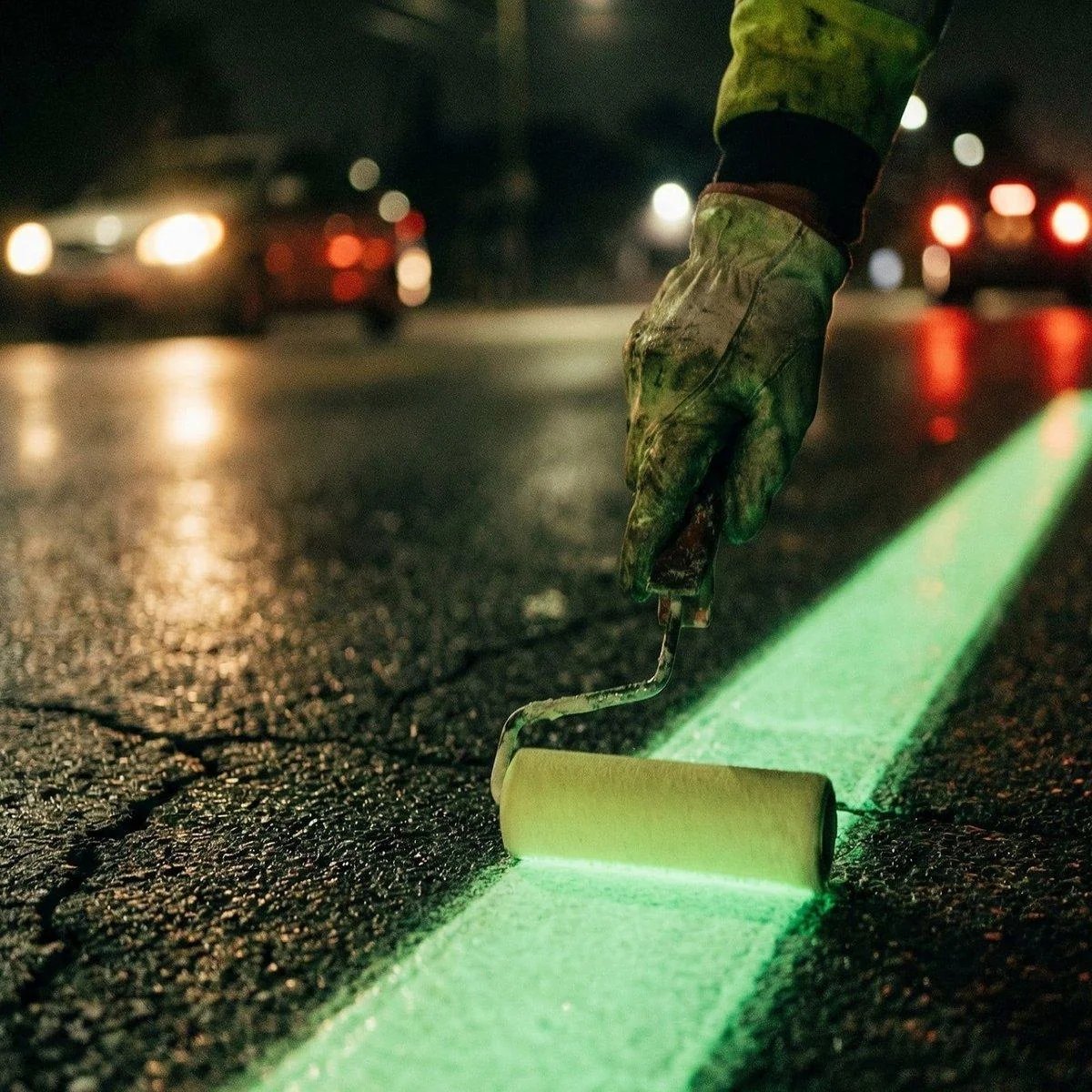
Photos show appearance but cannot confirm adhesion, skid resistance, wear resistance, charging performance or pavement compatibility. Use a physical sample on the actual pavement whenever possible, with the proposed Primer → Base Coat → Glow Layer → Topcoat.
Evaluate daytime color, initial glow, afterglow, adhesion, texture and slip resistance. Leave outdoor samples exposed to real weather. Reproduce the actual charging environment: a sunny bicycle path receives strong daylight, an underground garage depends on ceiling lights, a path under trees may remain shaded, and a warehouse aisle may have uneven artificial lighting. A strong-lamp demonstration in a dark room may not represent these conditions.
Observe fading at several intervals rather than only immediately after charging. For example: 0 minutes → 10 minutes → 30 minutes → 60 minutes.
Confirm production capacity and packaging
A small sample does not demonstrate capacity for a large project. Ask about standard batch size, production lead time, available packaging, minimum order quantity, customization and bulk-order capacity.
Pigment may come in bags or containers, while coatings may come in buckets or component sets. International-shipping packaging should protect against moisture, leakage, contamination and transport damage.
Clarify OEM and custom formulation requirements
Distributors selling under their own brand may request OEM services such as a custom logo, bucket labels, packaging, product names, technical sheets or color labels. Confirm minimum quantities and packaging requirements before ordering.
Project-specific adjustments may involve glow color, pigment grade, particle size, binder, viscosity, application method or packaging. Base customization on the actual application, not only a different product appearance.
Assess technical communication and documents
A useful manufacturer should be able to discuss primer selection, the need for a white base coat, surface preparation, a recommended topcoat, compatible anti-slip aggregate, outdoor use and vehicle-traffic suitability. Clear answers before installation can help prevent problems later.
Depending on the material and destination, international projects may need product specifications, application instructions, safety documentation, packing information and shipping-related documents. Confirm the required documents before ordering.
Use factory and project evidence alongside testing
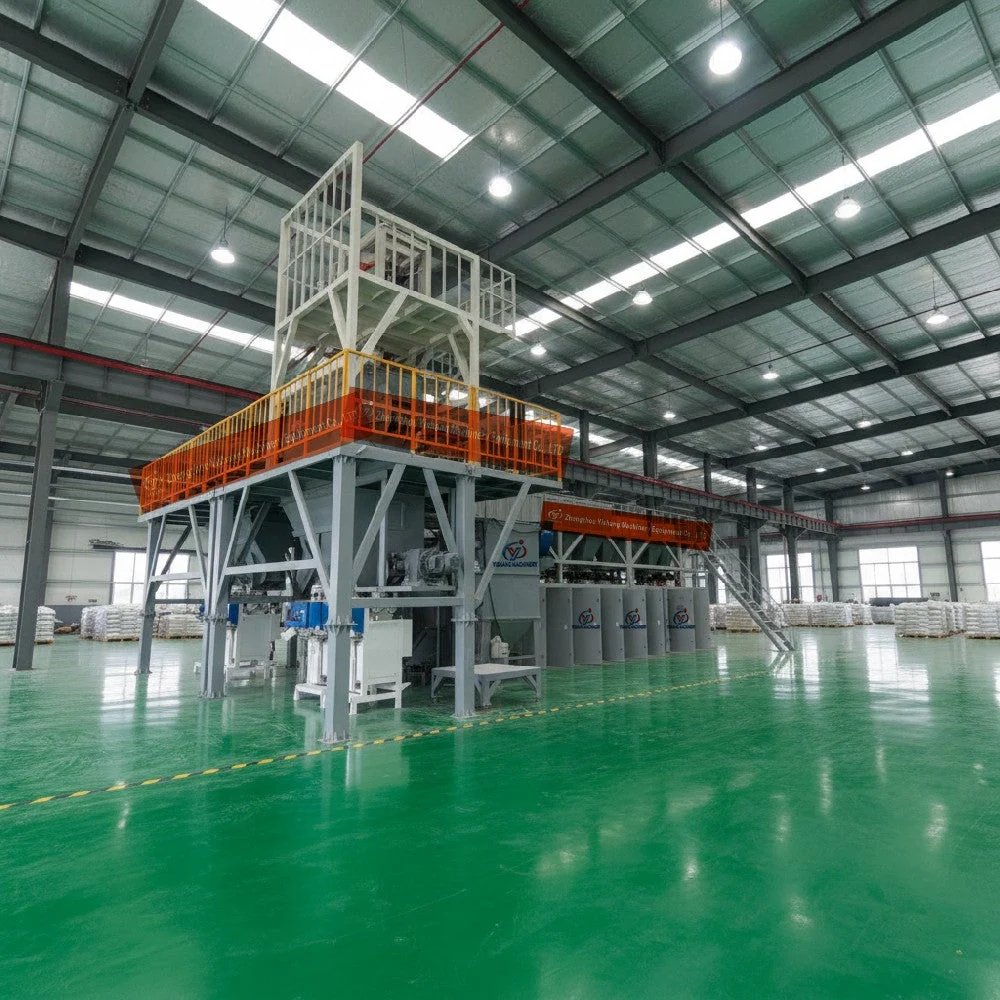
Production-line photos can help explain manufacturing capability, but a professional-looking factory does not prove that a formulation suits the project. Combine Factory Capability + Product Information + Sample Testing + Technical Communication.
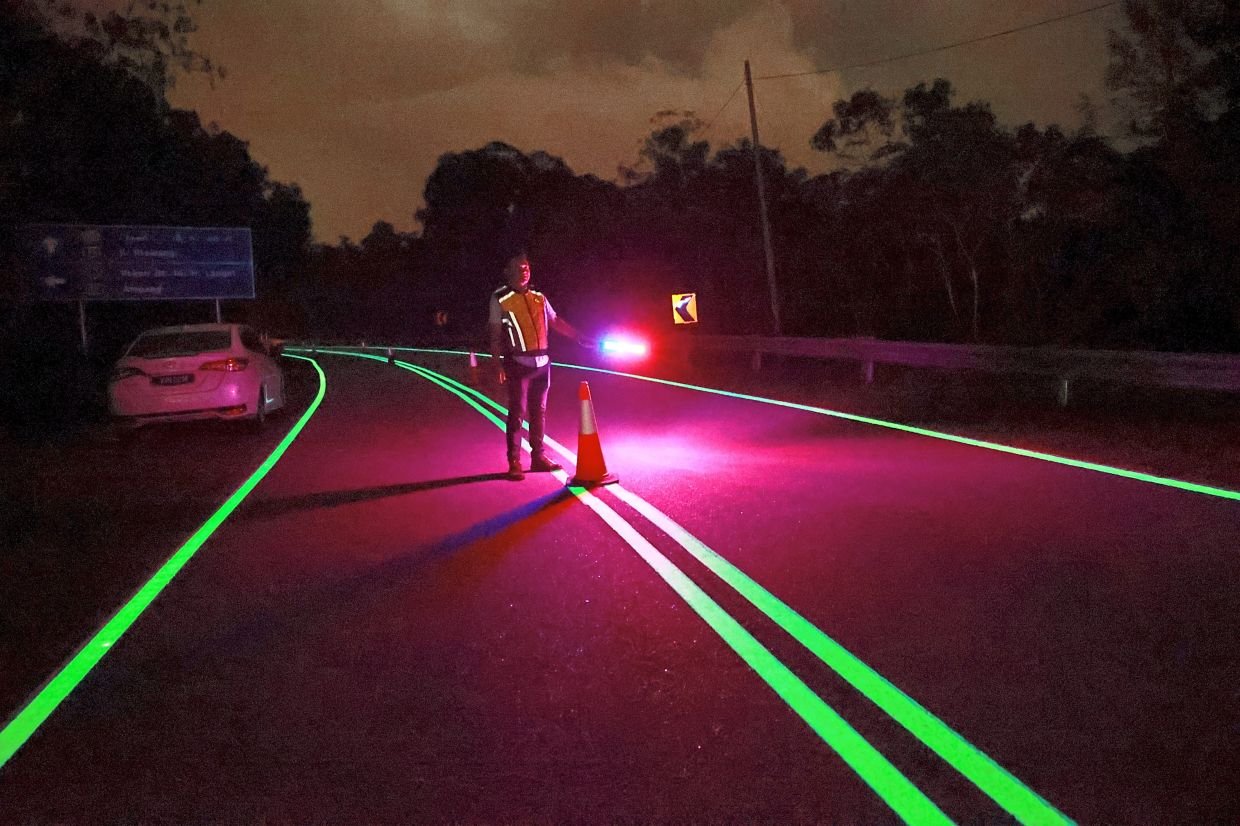
Ask for relevant applications such as bicycle paths, parking areas, pedestrian walkways, landscape pavement, industrial safety routes and internal roads. Where available, inspect both daytime and nighttime project photos.
Compare the supply model and total project cost
A manufacturer normally produces materials directly; a supplier may be a manufacturer, distributor or trading company. Direct manufacture can be useful for custom formulation, OEM, bulk production, technical communication and long-term supply. Product suitability and service should still determine the choice.
Include primer, base coat, material consumption, labor, surface preparation, topcoat and maintenance when comparing costs. A lower-priced paint needing frequent repair may cost more overall. Cost per completed square meter and expected service performance can be more useful than price per kilogram alone.
Questions to settle before ordering
- Does the system suit the substrate, outdoor exposure, charging light and expected traffic level?
- Are a primer, white base coat, protective topcoat or anti-slip aggregate needed?
- Can samples be supplied, and what testing is recommended?
- Is OEM available, what packaging is offered, and what is the production lead time?
These questions are more useful than asking only how long the material glows. Road-marking contractors, pavement-coating companies, landscape contractors, construction-material distributors, parking-facility contractors, bicycle-path contractors, municipal-project suppliers and industrial-flooring companies may each need a different system.
Evaluate Pigment Quality + Binder Compatibility + Pavement Type + Charging Light + Traffic Level + Skid Resistance + Weather Resistance + Maintenance. Whenever possible, test samples before buying in volume. The manufacturer's role should include helping assess the whole coating system for the pavement and environment.
Discuss your supply requirements
FUXIN is a China-based manufacturer and supplier of Photoluminescent Pigments, Glow Road Marking Materials, Glow-in-the-Dark Pavement Coatings, and Luminous Traffic Marking Materials for parking areas, bicycle paths, pedestrian routes, landscape pavement and industrial applications.
We support samples, bulk orders, OEM packaging and project-based material recommendations. Contact us for product specifications, samples, quotations or distributor inquiries.