

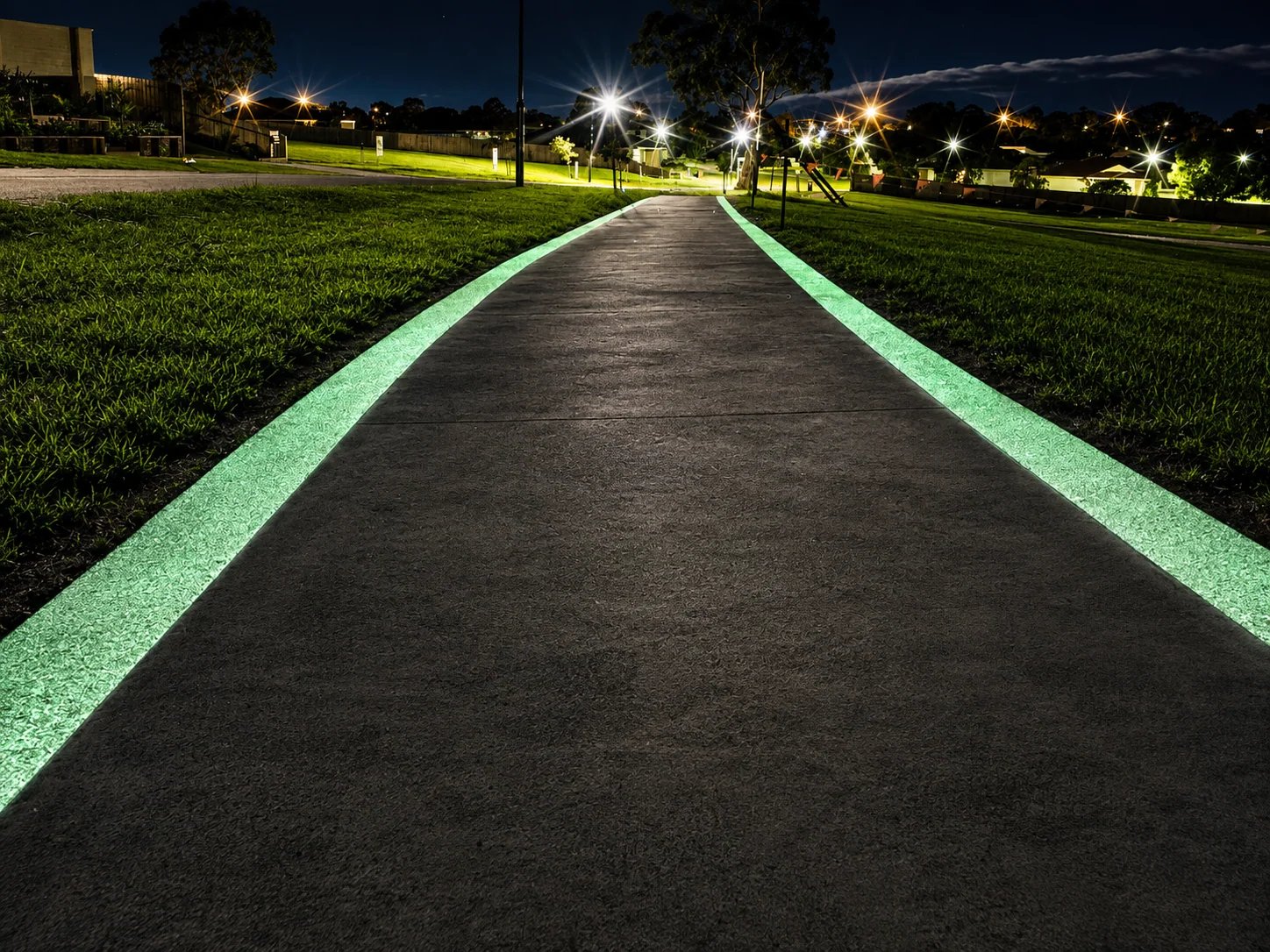
Glow-in-the-dark pavement paint absorbs daylight or suitable artificial light and releases visible afterglow in darker surroundings. It is used in parks, bicycle paths, pedestrian routes, parking areas, landscape pavement, industrial floors and other low-light settings.
Choose the complete coating system for the project, rather than selecting only the brightest glow color. Performance depends on the substrate, binder, base color, traffic, coating thickness, skid resistance, weather exposure and charging conditions.
How glow-in-the-dark pavement paint works
Glow in the dark pavement paint is a coating system containing photoluminescent material. The coating stores energy after exposure to light and gradually releases it as visible afterglow. The basic process is:
Light Exposure → Energy Storage → Afterglow → Recharge
Unlike LED pavement lighting, it does not require continuous electrical power for the afterglow itself.
Match the application to traffic and surroundings
Glow pavement paint can be used in many different environments, including:
- Pedestrian paths
- Bicycle lanes
- Parking lots
- Resorts
- Parks
- Residential communities
- Campuses
- Industrial floors
- Underground garages
- Landscape pavement
However, the coating system should always be matched to the actual traffic and environmental conditions.
Pedestrian Paths
Pedestrian areas are one of the most suitable applications. Glow pavement paint can be used for:
- Path edges
- Direction arrows
- Walking routes
- Crossing areas
- Landscape guidance
Because pedestrian traffic creates relatively low abrasion, these areas are generally less demanding than vehicle routes.
Bicycle Paths
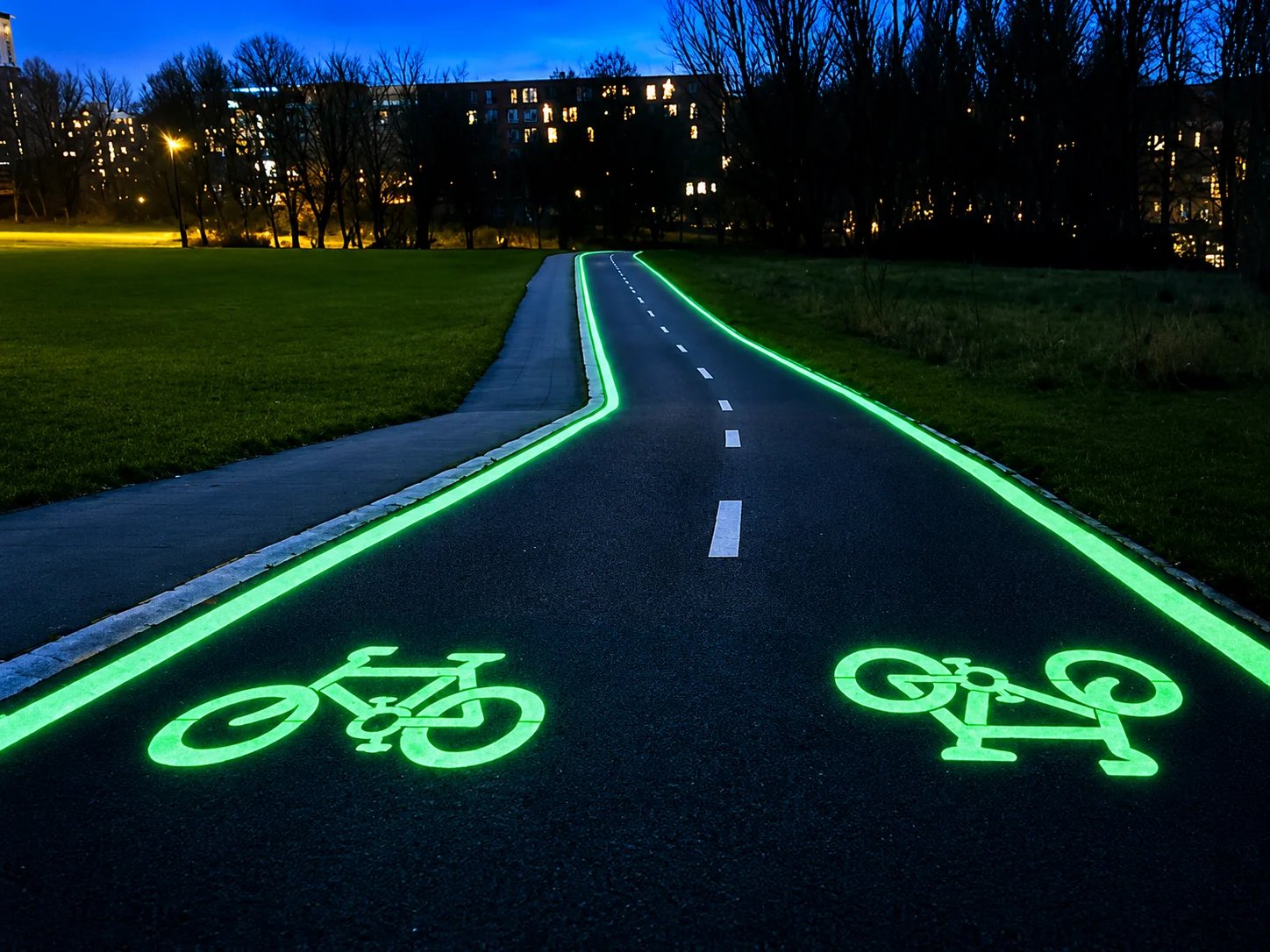
Glow coatings can also be used on bicycle paths. Possible applications include:
- Center lines
- Edge lines
- Bicycle symbols
- Direction arrows
- Intersections
For bicycle applications, skid resistance is especially important. The coating should provide a visible glow without creating a smooth or slippery surface.
Parking Areas
Parking areas can use glow pavement paint for:
- Parking bay lines
- Entry and exit arrows
- Pedestrian routes
- Ramp edges
- Safety zones
Outdoor parking areas can charge naturally from daylight. Underground parking garages usually depend on artificial lighting.
Landscape Pavement
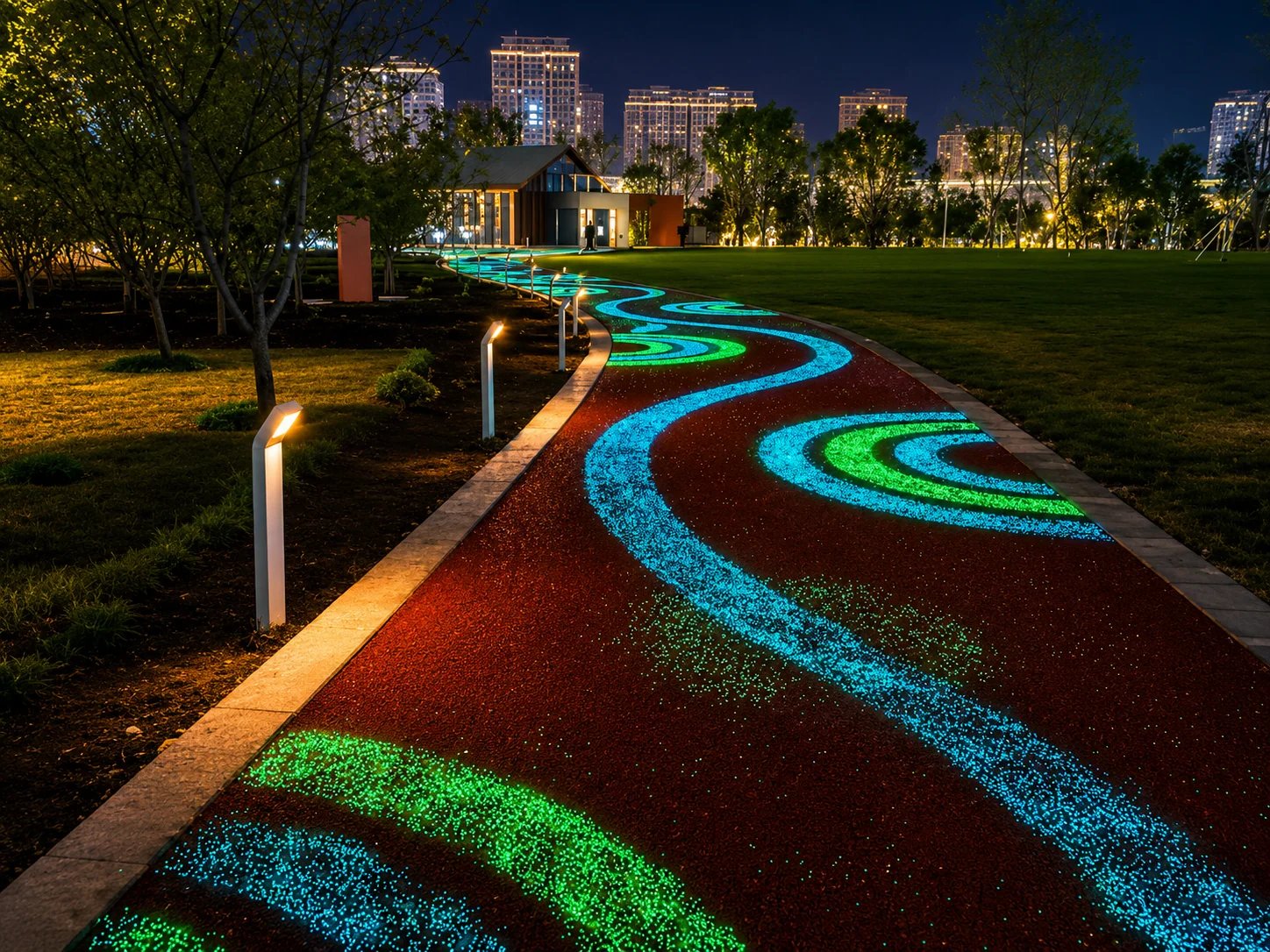
Glow pavement paint is especially popular in landscape projects because it combines function with visual design. Applications may include:
- Garden paths
- Resort walkways
- Scenic routes
- Waterfront paths
- Public landscape areas
Blue-green and yellow-green glow colors are both commonly used.
Industrial Floors
Industrial facilities may use glow coatings for:
- Pedestrian lanes
- Emergency routes
- Equipment boundaries
- Safety lines
- Low-light guidance
In these areas, wear resistance can be more important than decorative appearance.
Check the asphalt or concrete substrate
The substrate has a major influence on coating performance.
Asphalt
Asphalt can contain oils and may move slightly with temperature changes. The surface should be:
- Stable
- Clean
- Dry
- Free from loose aggregate
A compatible primer may be required.
Concrete
Concrete can present different problems, including:
- Dust
- Moisture
- Weak surface layers
- Cracks
- Oil contamination
Surface grinding or cleaning may be necessary before application.
Select the base, glow color and coating formulation
Dark pavement absorbs light. A white or light-colored base can improve the apparent brightness of many photoluminescent coatings. A common layer structure is:
Pavement
↓
Primer
↓
White Base Coat
↓
Glow Pavement Paint
↓
Transparent Protective Coat
The light-colored base helps reflect more light through the luminous layer.
Choosing the Right Glow Color
Common colors include:
Yellow-Green
Usually selected when stronger apparent brightness is preferred.
Blue-Green
Creates a cooler, more modern visual effect.
Blue
Can be used for decorative projects where appearance is more important than maximum brightness. Different colors can have different luminous performance, so color selection should consider both design and visibility.
Binder Transparency
The binder is one of the most important parts of the system. Photoluminescent pigment needs light to enter the coating. A suitable binder should provide:
- Good transparency
- Strong adhesion
- Water resistance
- Wear resistance
- Weather resistance
- Suitable curing
An overly opaque binder can reduce charging efficiency.
Pigment Concentration
Too little pigment can produce weak glow. But too much pigment can create problems such as:
- Poor flow
- Rough surface
- Weak binder strength
- Difficult application
- Pigment settlement
The correct concentration should be established through testing.
Coating Thickness
The luminous layer should be thick enough to provide sufficient active material. If it is too thin, glow performance may be weak. If it is too thick, problems may include:
- Long curing time
- Cracking
- Poor adhesion
- High material cost
The correct thickness depends on the coating system.
Prepare the surface and follow the application sequence
Good surface preparation is essential. Before application, the pavement should normally be:
- Clean
- Dry
- Stable
- Free from oil
- Free from dust
- Free from loose material
Poor preparation is one of the most common causes of coating failure.
Typical Application Process
A basic installation may include:
Step 1: Inspect the Surface
Check for cracks, moisture, oil, dust, and loose areas.
Step 2: Clean the Pavement
Remove contamination and allow the surface to dry.
Step 3: Apply Primer
Choose a primer compatible with the substrate.
Step 4: Apply White Base Coat
Use a light-colored base if stronger glow is required.
Step 5: Apply Glow Pavement Paint
Apply the luminous layer evenly using roller, brush, spray, or suitable equipment.
Step 6: Add Anti-Slip Aggregate
Use compatible anti-slip material where required.
Step 7: Apply Transparent Topcoat
A clear protective layer may improve durability.
Plan for traction, wear and outdoor exposure
Glow pavement paint should not create a slippery surface. This is especially important for:
- Bicycle paths
- Pedestrian areas
- Parking ramps
- Wet outdoor surfaces
- Crossings
Anti-slip aggregate may be added, but the amount should be controlled. Too much aggregate can partially cover the luminous surface and reduce visible glow.
Wear Resistance
Traffic level matters.
Low Wear
- Garden paths
- Landscape walkways
- Decorative areas
Medium Wear
- Bicycle paths
- Commercial pedestrian routes
Higher Wear
- Parking entrances
- Vehicle lanes
- Industrial traffic
The coating system should match the expected abrasion level.
Outdoor Weather Resistance
Outdoor coatings need to withstand:
- UV radiation
- Rain
- Temperature changes
- Humidity
- Dust
The binder and topcoat should be designed for exterior exposure. An indoor decorative glow coating may not perform well outdoors.
Does Rain Affect the Glow?
Rain does not stop the photoluminescent process, but wet pavement can change visual contrast. Water may make the surface more reflective and can reduce the apparent difference between the luminous marking and the surrounding pavement. This is why wet-condition testing is useful.
Evaluate charging and afterglow at the site
Glow pavement paint can be charged by:
- Sunlight
- Natural daylight
- Suitable artificial lighting
Outdoor applications normally benefit from natural daylight. Indoor applications require more careful evaluation of lamp intensity and distance.
Shaded Areas
Not all outdoor areas charge equally. Glow performance may be weaker under:
- Trees
- Roofs
- Building shadows
- Covered walkways
If the project includes shaded locations, test the coating there before full installation.
Underground Garage Applications
Underground garages depend on artificial lighting. The coating should be tested under the actual ceiling lights. Important factors include:
- Lamp type
- Lamp height
- Exposure time
- Shaded areas
- Distance from the light source
One part of the garage may perform differently from another.
How Long Does It Glow?
Glow is usually strongest shortly after darkness begins. Brightness gradually decreases over time. The result depends on:
- Pigment quality
- Charging intensity
- Charging duration
- Coating thickness
- Pigment concentration
- Surface cleanliness
This fading behavior is normal.
Check daytime appearance as well as nighttime glow
The coating should also look acceptable during the day. Depending on the system, the surface may appear:
- Pale green
- Yellow-green
- Blue-green
- Off-white
For commercial and landscape projects, daytime appearance may be just as important as nighttime glow.
Clean, inspect and plan for recoating
Dust and dirt can block incoming light. Common contaminants include:
- Mud
- Oil
- Tire marks
- Dust
- Leaves
Regular cleaning helps the luminous surface recharge more effectively. The coating should also be inspected for:
- Peeling
- Cracking
- Wear
- Loss of adhesion
When Should It Be Recoated?
Recoating may be needed when:
- The luminous layer is worn
- Glow performance has decreased significantly
- The topcoat becomes cloudy
- Surface damage appears
- Cleaning no longer restores performance
The existing coating condition should be checked before repair.
Compare glow paint, reflective paint and LED guidance
Glow Pavement Paint vs. Reflective Paint
These two materials work differently.
Reflective Paint
Requires an external light source such as headlights.
Glow Pavement Paint
Stores light and produces passive afterglow. In some projects, both technologies can be combined.
Glow Pavement Paint vs. LED
LED systems actively produce light. Glow pavement paint does not.
Glow Pavement Paint
- No wiring required for afterglow
- Integrated into pavement
- Passive operation
- Lower system complexity
LED Guidance
- Requires electrical or solar power
- Produces stronger active illumination
- More complex installation
- Can maintain more constant brightness
Can Glow Pavement Paint Replace Lighting?
No. It can make pavement lines, edges, and symbols easier to see, but it does not illuminate the whole environment. It cannot replace lighting needed to see:
- People
- Vehicles
- Obstacles
- Road hazards
It should be used as supplementary guidance or decorative pavement design.
Test the complete system before full installation
Before applying a large area, create a small sample section. Use the actual:
- Pavement
- Primer
- White base coat
- Glow coating
- Anti-slip system
- Topcoat
Then evaluate:
- Daytime appearance
- Nighttime glow
- Charging performance
- Adhesion
- Skid resistance
- Wear resistance
Testing under real conditions helps reduce project risk.
Application examples at a glance
Glow in the dark pavement paint is particularly suitable for:
Parks
Nighttime path guidance.
Resorts
Decorative and functional landscape routes.
Bicycle Paths
Center lines and edge markings.
Parking Areas
Lines, arrows, and pedestrian guidance.
Residential Communities
Internal walkways and landscape pavement.
Industrial Facilities
Safety and emergency guidance.
Choose a complete pavement coating system
Glow in the dark pavement paint can provide both functional nighttime guidance and distinctive visual effects. But successful performance depends on the entire coating system:
Proper Surface Preparation + White Base Coat + Photoluminescent Pigment + Transparent Binder + Skid Resistance + Protective Topcoat
The best product should always be selected according to the actual pavement, traffic level, lighting conditions, and environment.
FUXIN supplies Glow-in-the-Dark Pavement Paint Materials, Photoluminescent Pigments, Luminous Pavement Coatings, and Road Marking Materials for parking areas, bicycle paths, pedestrian routes, industrial floors, and landscape projects.
For samples, quotations, or project material recommendations, please contact us.