

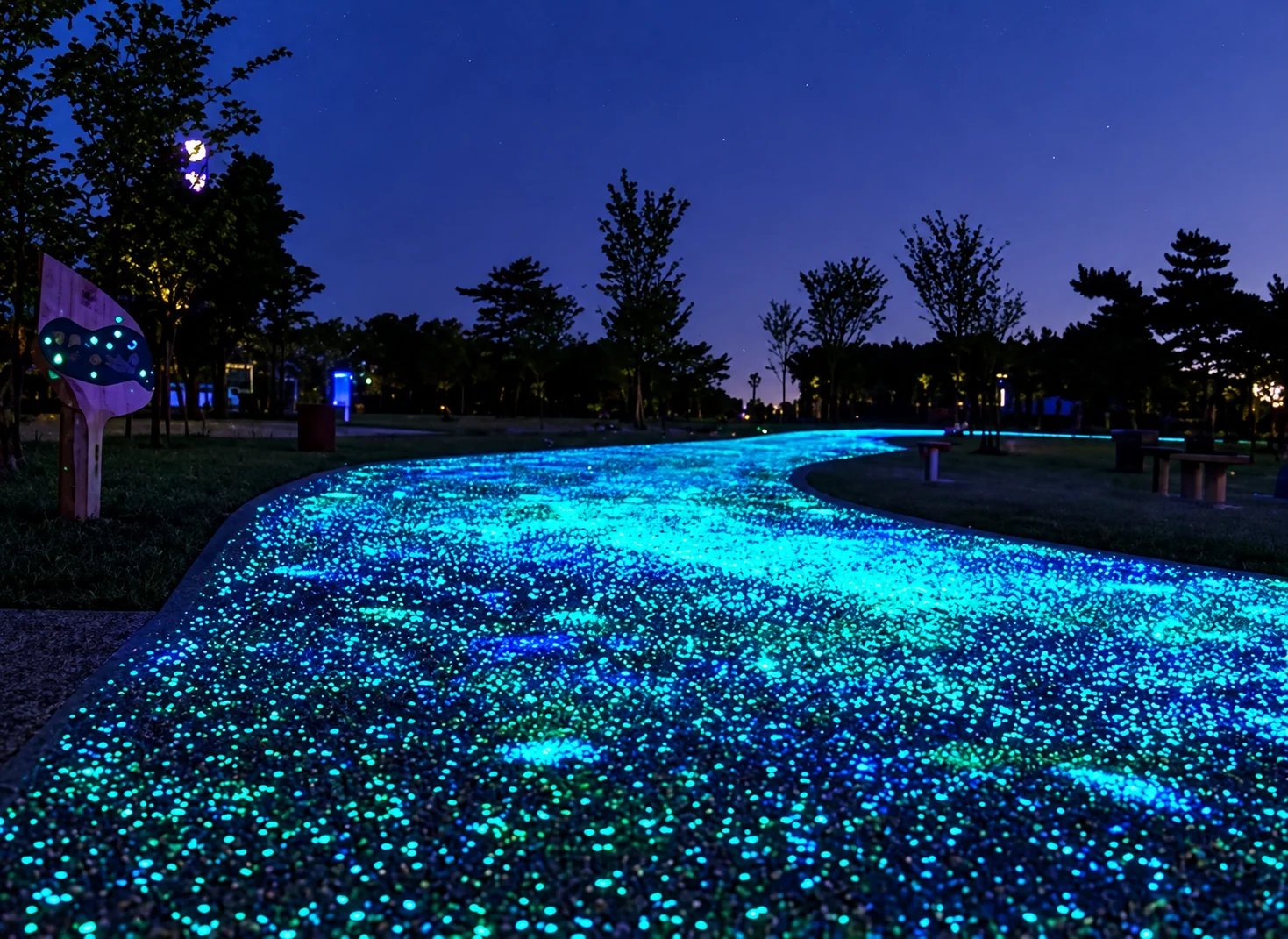
No, glow stones do not always need direct sunlight. They can charge from direct sun, indirect daylight and suitable artificial lighting, then gradually release visible afterglow when the surroundings become dark. The amount and type of light they receive significantly affect nighttime performance; stronger and longer exposure generally provides more energy for the material to store.
For gardens, parks, resorts, covered routes, underground spaces and shaded landscapes, evaluate the light that actually reaches the stones. This guide explains sun and shade, artificial-light charging, surface exposure and practical site tests before installation.
How Do Glow Stones Charge?
Glow stones contain photoluminescent materials that absorb energy from light.
The basic cycle is:
Light Exposure → Energy Absorption → Energy Storage → Afterglow → Recharge
When the surrounding environment becomes dark, the stored energy is gradually released as visible light.
After being exposed to light again, the material can recharge.
Do glow stones need direct sunlight to charge?
Not necessarily.
Glow stones can receive charging energy from several sources:
-
Direct sunlight
-
Indirect daylight
-
Artificial lighting
However, these light sources do not necessarily produce identical results.
A stone exposed to strong outdoor daylight may charge differently from the same stone installed in a heavily shaded garden.
That is why the installation environment matters.
Direct sunlight
Direct sunlight generally provides strong charging conditions for outdoor photoluminescent materials.
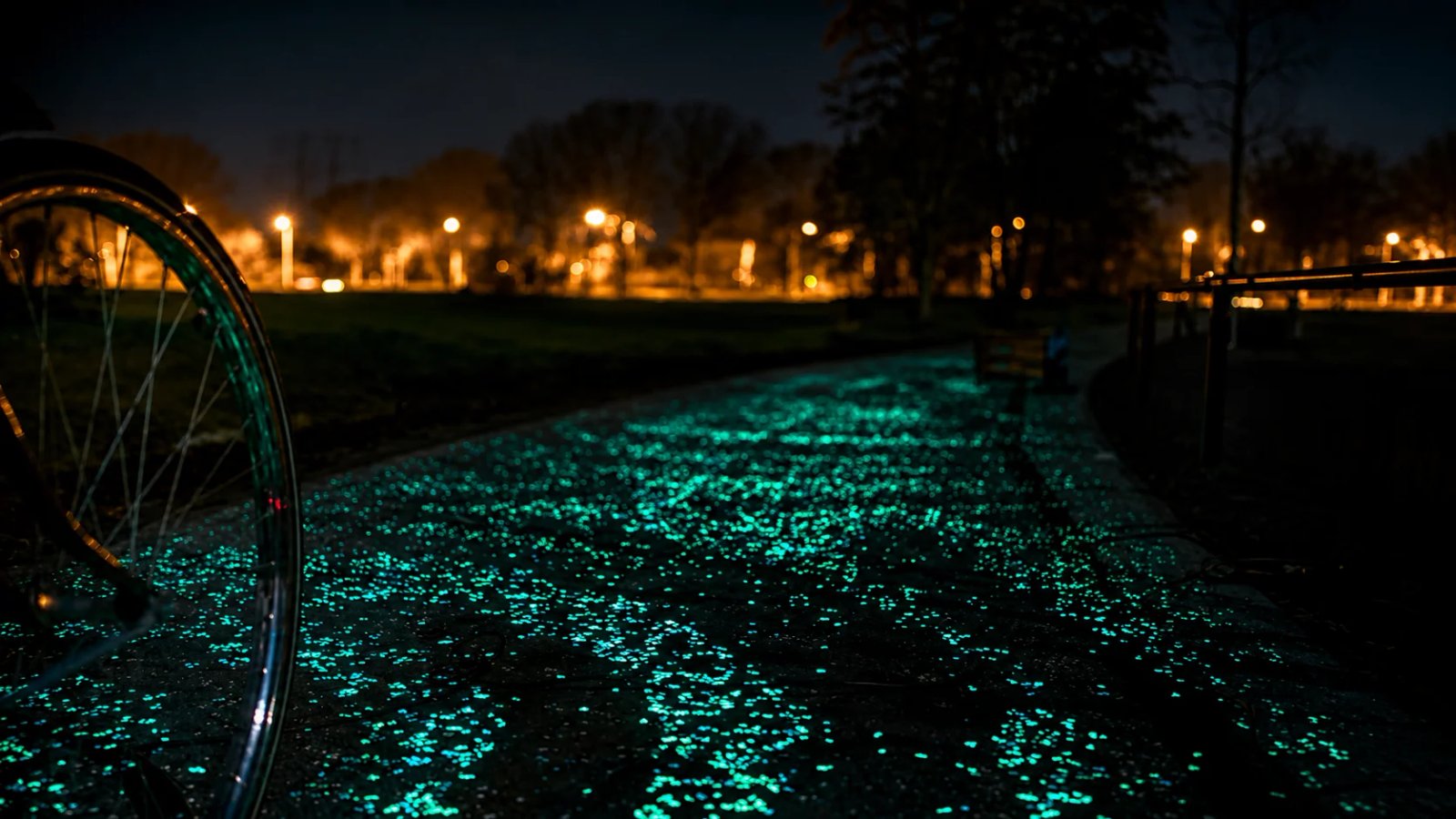
It is particularly suitable for:
-
Open garden paths
-
Parks
-
Outdoor plazas
-
Landscape pavement
-
Bicycle paths
-
Resort walkways
These areas can receive light for many hours during the day.
After sunset, the stored energy is released as afterglow.
Indirect daylight
A pathway does not necessarily need to sit in direct sun all day.
Indirect daylight can also charge photoluminescent material.
Examples include:
-
Paths beside buildings
-
Partially shaded gardens
-
Areas beneath light tree cover
-
Courtyards
The final nighttime performance depends on the actual amount of light reaching the stones.
Heavy shade can reduce charging
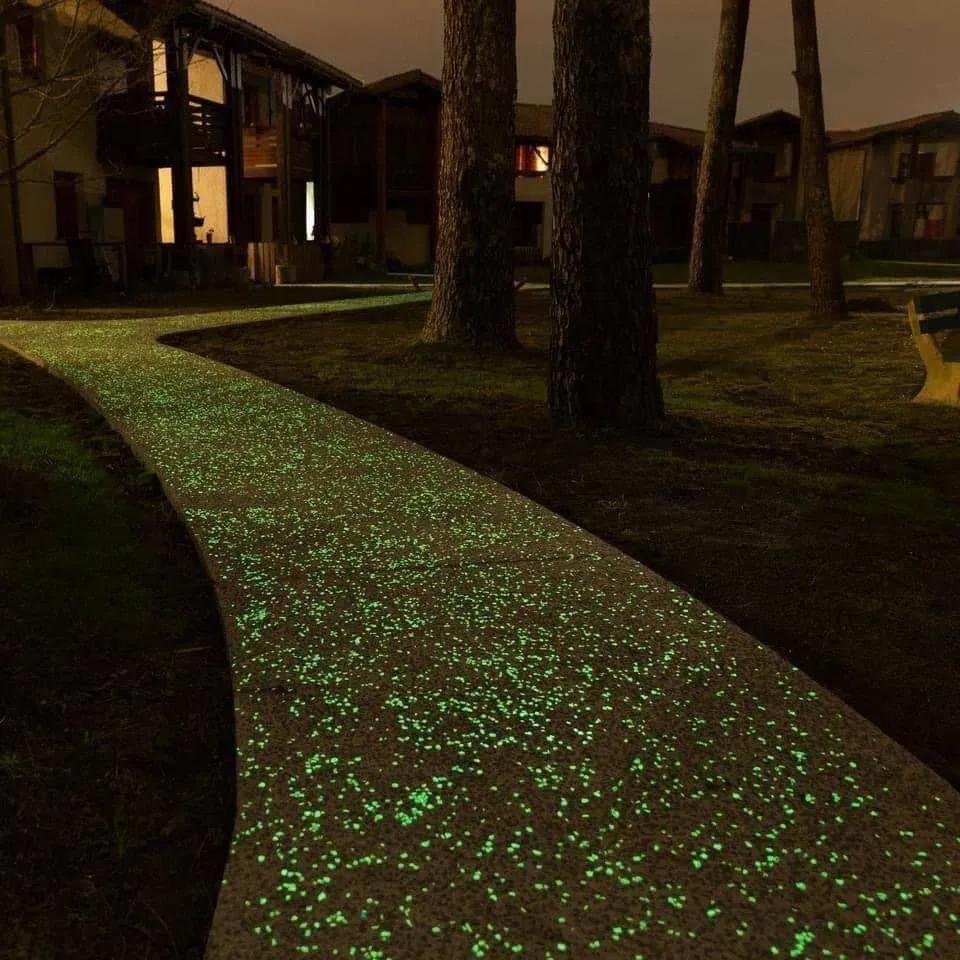
Heavy shade can reduce charging.
Typical examples include:
-
Dense tree canopies
-
Covered walkways
-
Building overhangs
-
Bridges
-
Deep courtyards
If very little light reaches the surface during the day, the nighttime glow may be weaker.
This does not necessarily mean the glow stone is defective.
It may simply be receiving less charging energy.
Trees can create uneven glow along a path
Consider a long garden pathway.
One section receives open daylight.
Another section is under dense trees.
Even if exactly the same glow stones are installed, the two sections may look different after dark.
This can create:
Bright Section → Medium Section → Dim Section
along the same pathway.
For landscape projects, this should be considered during design.
Seasonal changes and growing vegetation
Light conditions can also change throughout the year.
For example:
-
Summer trees may create dense shade.
-
Winter trees may lose leaves.
-
Sun angles change with the seasons.
-
Nearby vegetation may grow over time.
A location that receives good daylight today may become more shaded several years later.
Can Artificial Light Charge Glow Stones?
Yes, suitable artificial lighting can charge photoluminescent materials.
This is particularly useful for:
-
Underground parking areas
-
Indoor pathways
-
Warehouses
-
Covered pedestrian routes
-
Tunnels
-
Interior decorative floors
However, artificial-light performance depends on the lighting conditions.
Artificial-light factors: intensity, spectrum and exposure
Important factors include:
-
Light source
-
Intensity
-
Distance from the surface
-
Exposure duration
-
Spectrum
-
Position of the fixture
A weak lamp located far from the pavement may provide much less charging than strong daylight.
Test the actual lamp distance and operating schedule
Light intensity at the pavement can change significantly with distance.
If a lamp is mounted high above the surface, the amount of useful light reaching the glow material may be lower.
This is why testing should be done using the actual:
-
Lamp
-
Mounting height
-
Pavement location
-
Operating schedule
rather than relying only on a laboratory demonstration.
Does charging time affect glow stone performance?
Yes.
A short burst of light and several hours of exposure are not necessarily equivalent.
Charging performance depends on both:
Light Intensity + Exposure Duration
For outdoor pathways, long daytime exposure can be beneficial.
For indoor environments, lighting schedules should be considered.
Does more charging mean glow stones glow forever?
No.
Photoluminescent materials have practical limits.
After the charging source is removed, the material is usually brightest at first.
Then brightness gradually decreases.
The typical pattern is:
Strong Initial Glow → Gradual Decay → Low-Level Afterglow
This is normal photoluminescent behavior.
Why photographs alone cannot show charging performance
A glow stone may look extremely bright in a photograph.
But nighttime photography is heavily affected by:
-
Exposure time
-
ISO
-
Aperture
-
Image processing
-
Ambient darkness
A long camera exposure can make relatively weak afterglow appear very bright.
For project selection, physical testing is more useful than photographs alone.
Compare glow stones in full sun, partial shade and heavy shade
A simple comparison can be done before installation.
Take identical glow stone samples and place them in three locations:
Sample A: Full Sunlight
Open outdoor area.
Sample B: Partial Shade
Receives daylight but limited direct sun.
Sample C: Heavy Shade
Under dense vegetation or a covered structure.
Leave the samples under normal site conditions.
After sunset, compare them at the same time.
Compare afterglow at multiple times
Do not compare only immediately after dark.
Observe:
-
At sunset / lights off
-
After 10 minutes
-
After 30 minutes
-
After 60 minutes
This provides a better understanding of actual performance.
Keep material comparisons under identical conditions
When comparing different glow materials, use identical conditions.
Keep the same:
-
Stone size
-
Glow color
-
Charging source
-
Charging duration
-
Observation time
-
Background
-
Camera settings
Otherwise, the comparison may not be meaningful.
Surface Cleanliness Affects Charging
Even a sunny location can perform poorly if the glow stones are covered by dirt.
Outdoor pavement can collect:
-
Dust
-
Mud
-
Leaves
-
Moss
-
Organic residue
These materials block incoming light.
Less light reaches the photoluminescent surface, resulting in less effective charging.
Cleaning to keep the luminous surface exposed
Regular cleaning helps keep the luminous material exposed.
For garden and park pathways, maintenance may include:
-
Sweeping leaves
-
Washing mud
-
Removing organic buildup
-
Keeping drainage areas clear
Sometimes reduced glow is a maintenance issue rather than material degradation.
Installation: keep glow stones exposed to charging light
The same principle applies during installation.
Glow stones need to remain sufficiently exposed.
If they are buried too deeply in:
-
Concrete
-
Cement paste
-
Opaque resin
-
Natural aggregate
they receive less light.
This reduces material efficiency.
Surface exposure in concrete
When installing glow stones in fresh concrete, they are often placed near the surface.
The goal is to provide enough embedment for stability while keeping enough luminous surface exposed for charging.
Completely burying expensive photoluminescent aggregate inside an opaque concrete slab is usually inefficient.
Transparent resin in resin-bound pavement
A resin-bound system may combine:
Natural Aggregate + Glow Stones + Transparent Resin
The resin should be sufficiently transparent to allow light transmission.
Outdoor resin systems should also consider:
-
UV resistance
-
Water resistance
-
Adhesion
-
Wear resistance
If the resin becomes cloudy or yellow over time, charging performance may be affected.
Does Glow Stone Color Affect Charging?
Different photoluminescent formulations can behave differently.
Two common visual options are:
Yellow-Green
Often selected when stronger apparent brightness is desired.
Blue-Green
Popular for decorative landscape projects.
Color alone should not be used to judge quality.
Compare actual samples under identical charging conditions.
Does Glow Stone Size Matter?
Particle size mainly affects:
-
Surface appearance
-
Distribution
-
Texture
-
Consumption
But exposure also matters.
A larger stone with more visible surface area may create a stronger individual luminous point, while smaller aggregate can produce a more evenly distributed effect.
For pathway projects, common options include:
-
1–3 mm
-
Around 5 mm
-
Around 10 mm
The correct size depends on the installation method.
Best Locations for Natural Charging
Photoluminescent landscape pavement is particularly suitable for locations with good daylight exposure.
Examples include:
Open Parks
Long daytime exposure and relatively dark nighttime surroundings.
Garden Paths
Good combination of decorative effect and natural charging.
Resorts
Suitable for landscape features and walking routes.
Waterfront Walkways
Often relatively open to daylight.
Residential Communities
Courtyard and recreational paths can work well if not heavily shaded.
Shaded, covered and underground locations need site testing
Some locations need more careful testing.
These include:
-
Dense forests
-
Covered corridors
-
Deep building shadows
-
Underground areas
-
Permanently shaded courtyards
Glow materials may still be possible, but the charging environment needs to be evaluated.
Underground parking: test under the actual garage lighting
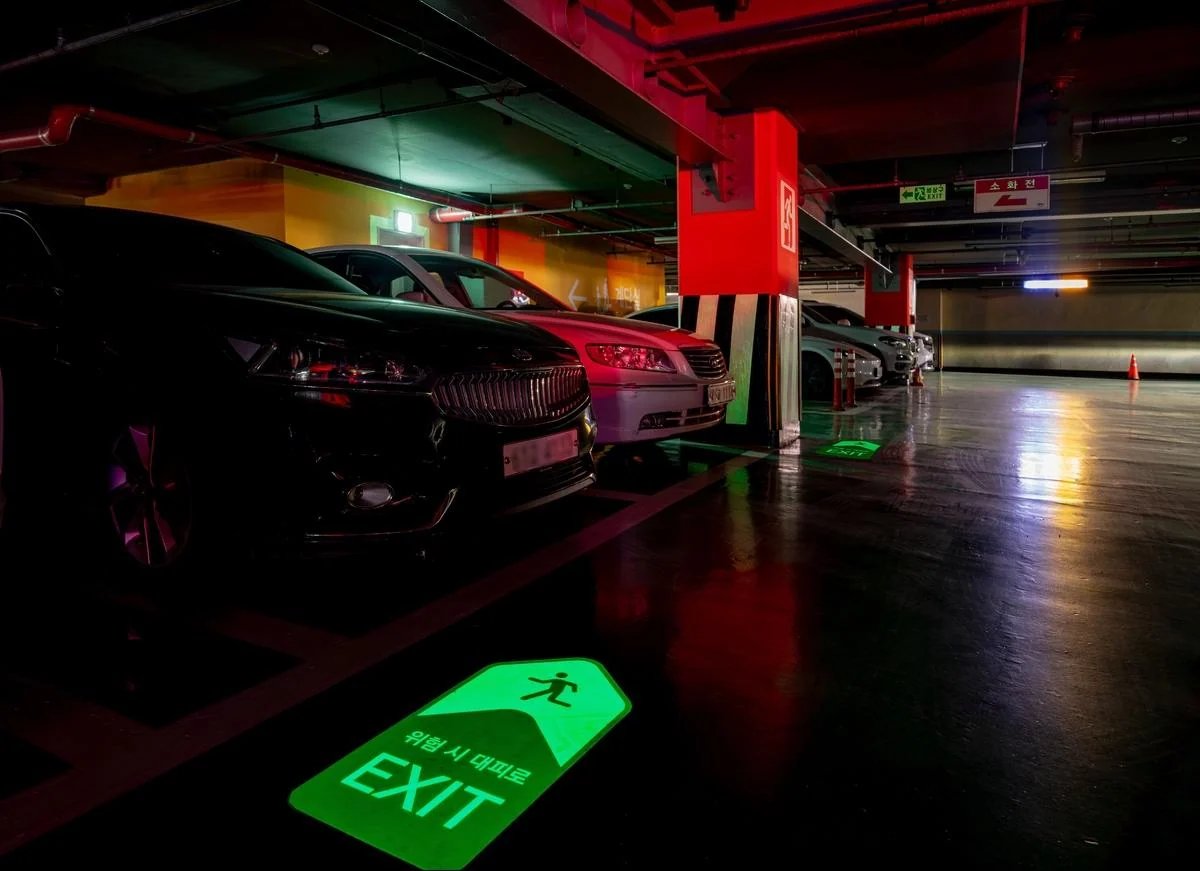
Underground parking areas do not receive sunlight.
Photoluminescent materials therefore depend on artificial lighting.
Potential applications include:
-
Parking lines
-
Pedestrian guidance
-
Direction arrows
-
Edge markings
Before installation, test the material under the actual garage lighting.
Tunnels: charging and safety-related requirements
Tunnels are another artificial-light environment.
The material needs sufficient charging from tunnel lighting before it can provide useful afterglow.
For safety-related applications, applicable engineering standards and project requirements should always be followed.
Consider the design before adding lighting solely for charging
Technically, suitable artificial light can contribute to charging.
But if a project requires installing a large powered lighting system solely to charge the pavement, the overall design should be reconsidered.
Photoluminescent materials are most attractive when they can use light that is already available.
How glow stones differ from solar-powered lights
This distinction is important.
Glow stones do not contain:
-
Solar panels
-
Batteries
-
LEDs
They do not generate electricity.
They store light energy through photoluminescence and release it gradually.
Therefore, their behavior is different from solar-powered pathway lights.
Can glow stones replace required path lighting?
No.
Glow stones can help show:
-
Path boundaries
-
Direction
-
Decorative patterns
But they do not illuminate the surrounding environment like a lamp.
Required lighting should still be used where people need to clearly see:
-
Steps
-
Obstacles
-
Hazards
-
Other pedestrians
-
Changes in elevation
How to Design a Path with Uneven Sunlight
If some areas receive less light, several design strategies can be considered.
Use Glow Stones in the Brighter Sections
Concentrate luminous material where charging conditions are best.
Use Decorative Edge Strips
This reduces material consumption while maintaining route definition.
Combine with Landscape Lighting
Use photoluminescent pavement as a complementary visual element.
Test Before Construction
The most important step.
Build small test sections and observe normal site conditions
Before installing hundreds of square meters, construct a small section in the actual project location.
For example:
1 m² in Full Sun
1 m² in Partial Shade
1 m² in Heavy Shade
Observe the result for several days under normal weather conditions.
This is much more useful than relying only on product specifications.
Questions to answer before ordering glow stones
Before purchasing glow stones, determine:
-
Is the project indoors or outdoors?
-
How many hours of daylight does the area receive?
-
Is there heavy shade?
-
What glow color is required?
-
What particle size is needed?
-
Will the stones be installed in concrete or resin?
-
Is artificial lighting available?
-
What nighttime effect is expected?
These details help determine whether glow stones are appropriate for the project.
Choose glow stones around the light available at your site
So, do glow stones need direct sunlight?
No.
They can charge from direct sunlight, indirect daylight, and suitable artificial lighting.
But the quality of the nighttime effect depends heavily on how much useful light reaches the material.
For outdoor landscape projects, the most important factors are:
Light Intensity + Charging Duration + Surface Exposure + Cleanliness + Installation Method
Open garden paths, parks, resorts, and landscape walkways often provide favorable natural charging conditions.
For heavily shaded or indoor environments, testing under the actual lighting conditions becomes much more important.
FUXIN supplies Photoluminescent Glow Stones, Glow Aggregate, Resin-Bound Glow Stones, Long Afterglow Pigments, and Luminous Pavement Materials for gardens, parks, resorts, concrete pathways, parking areas, and landscape projects.
For samples, particle-size recommendations, quantity calculations, or project material advice, please contact us.