

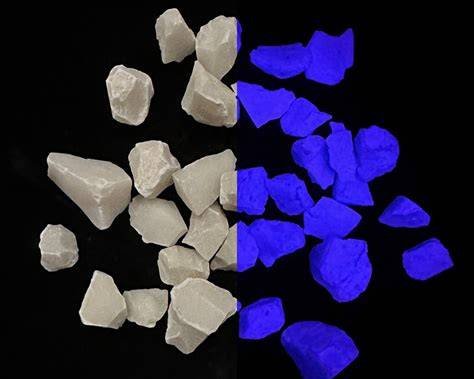
Glow-in-the-dark stones are decorative aggregates or pebbles containing photoluminescent material. Their carrier can be mineral-based, glass, ceramic, synthetic resin, or plastic; natural aggregates can also be combined with luminous materials. These differences affect daytime appearance, particle shape, glow performance, durability, and compatibility with pavement systems.
They are used in garden paths, landscape pavement, resin-bound surfaces, parks, resorts, pool surroundings, and decorative outdoor projects. A product intended for a decorative display should not automatically be treated as paving aggregate. Contractors, landscape designers, and buyers need to check both the material and the complete system before selecting it.
How Glow Stones Work
Glow stones may look like ordinary decorative stones during the day. After absorbing sunlight or suitable artificial light, their photoluminescent component gradually releases part of the stored energy as visible afterglow in darkness:
Absorb Light → Store Energy → Release Afterglow → Recharge
Unlike LED stones, photoluminescent stones do not require electrical wiring or batteries for their afterglow. They can recharge repeatedly when exposed to suitable light.
Common Glow Stone Materials and Their Limits
Inorganic luminous aggregate
Inorganic glow stones use mineral-based or ceramic-type materials combined with photoluminescent components. They are often selected where outdoor stability and a stone-like appearance are important, including resin-bound pavement, landscape walkways, garden paths, decorative concrete, parks, and resort landscapes.
Compared with lightweight decorative plastic pebbles, inorganic luminous aggregate generally feels more like conventional paving aggregate. This can make it easier to combine with natural stone systems, but the product still needs to suit the intended pavement.
Glass-based glow stone
Some luminous aggregates use glass as the main carrier. Glass can provide good light transmission, allowing photoluminescent material inside or around the particle to receive light. Glass-based products may offer a smooth appearance, decorative transparency, strong visual contrast, and modern nighttime effects.
They can be attractive in decorative landscapes, pool surroundings, and resin systems. For walking surfaces, however, consider particle shape and surface texture.
Ceramic-based luminous aggregate
Ceramic-based stones can provide a harder mineral-like structure. They may be available as rounded particles, crushed aggregate, or irregular decorative chips. This type can work well in architectural and landscape paving where a more natural aggregate appearance is required.
Exact performance depends on the product formulation and manufacturing process.
Resin and synthetic glow pebbles
Some glow stones use synthetic resin or plastic containing luminous pigment. These products are often lightweight, smooth, uniform in shape, and available in many colors. Common decorative uses include flower pots, aquariums, small garden decorations, interior displays, and DIY projects.
Lightweight decorative glow pebbles should not automatically be treated as paving aggregate. For outdoor pavement, assess traffic load, UV exposure, wear, and binder compatibility.
Natural aggregate combined with luminous materials is another common glow-stone arrangement. For a paving project, establish whether the product is intended mainly for decoration or for incorporation into a durable outdoor paving system.
Choose Shape, Size, and Daytime Appearance
Crushed stone or rounded pebbles
Crushed luminous aggregate has irregular edges and a more mineral-like appearance. It can suit resin-bound surfaces, decorative paving, landscape paths, and aggregate mixtures; its irregular shape may blend naturally with crushed stone and other paving aggregates.
Rounded stones create a softer decorative appearance and may be used in garden borders, decorative pathways, pool landscapes, and resort projects. Choose the shape to suit the design and paving system.
Particle size
Glow stones come in different particle sizes, with smaller or medium decorative aggregates commonly used according to the required finish. Smaller particles can create more distributed glowing points, a finer surface texture, more detailed patterns, and a more uniform visual effect. They are useful when the design calls for many small points of light across the pavement.
Larger stones create more obvious individual luminous points and may suit decorative borders, feature areas, garden designs, and larger aggregate systems. Match particle size to the pavement thickness and surrounding aggregate.
Daytime color
Pavement is usually seen for more hours in daylight than in darkness, so daytime appearance matters alongside nighttime glow. Available appearances may include white, off-white, pale yellow-green, light blue, and natural stone tones.
Pale luminous stones, for example, can blend with white or beige aggregate during the day and become visible after sunset. Consider both views when choosing the material.
Glow Colors and Nighttime Performance
Green and blue-green glow
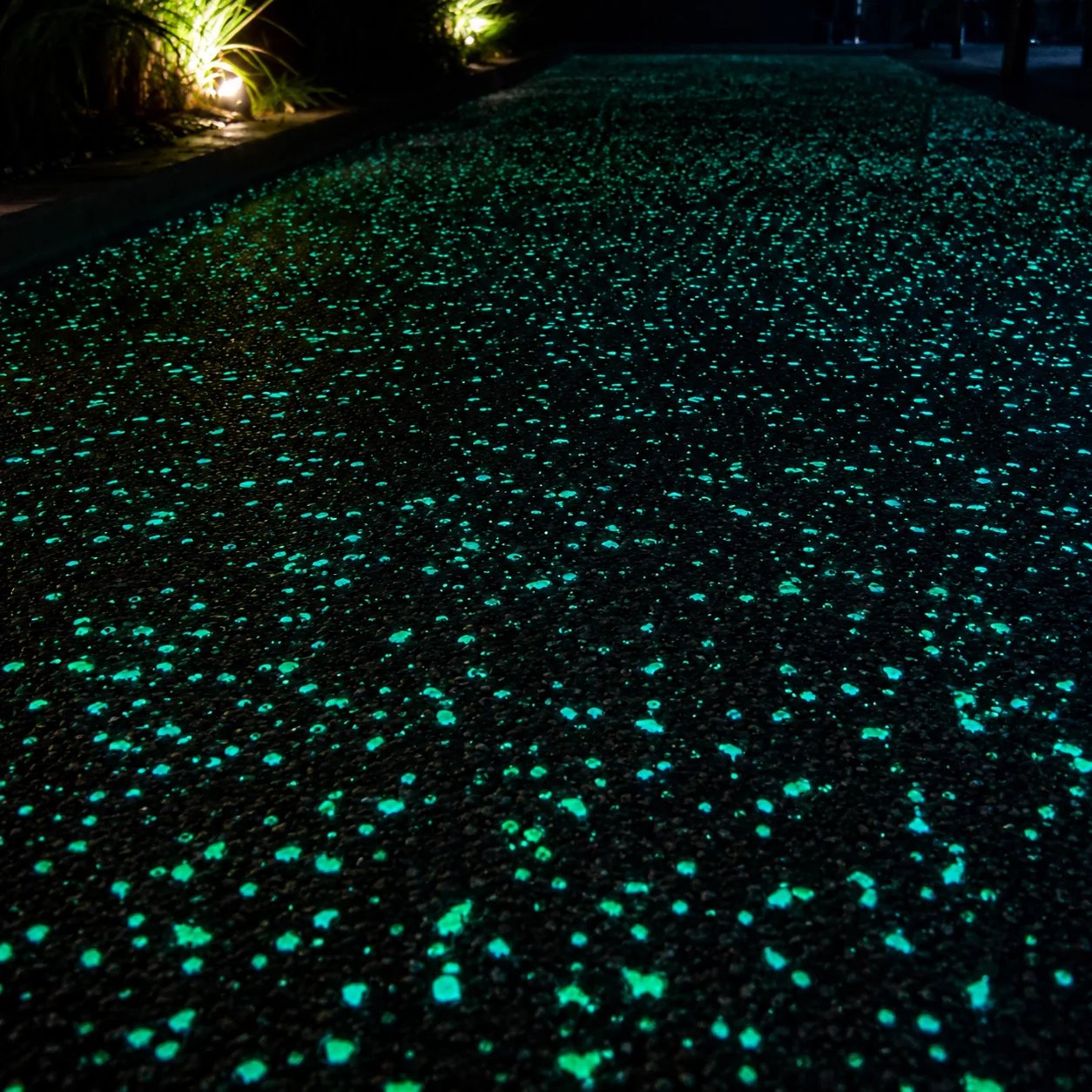
Green and blue-green are widely used glow colors. Green usually provides a strong, recognizable luminous appearance and is often used for garden pathways, parks, landscape routes, and decorative pavement.
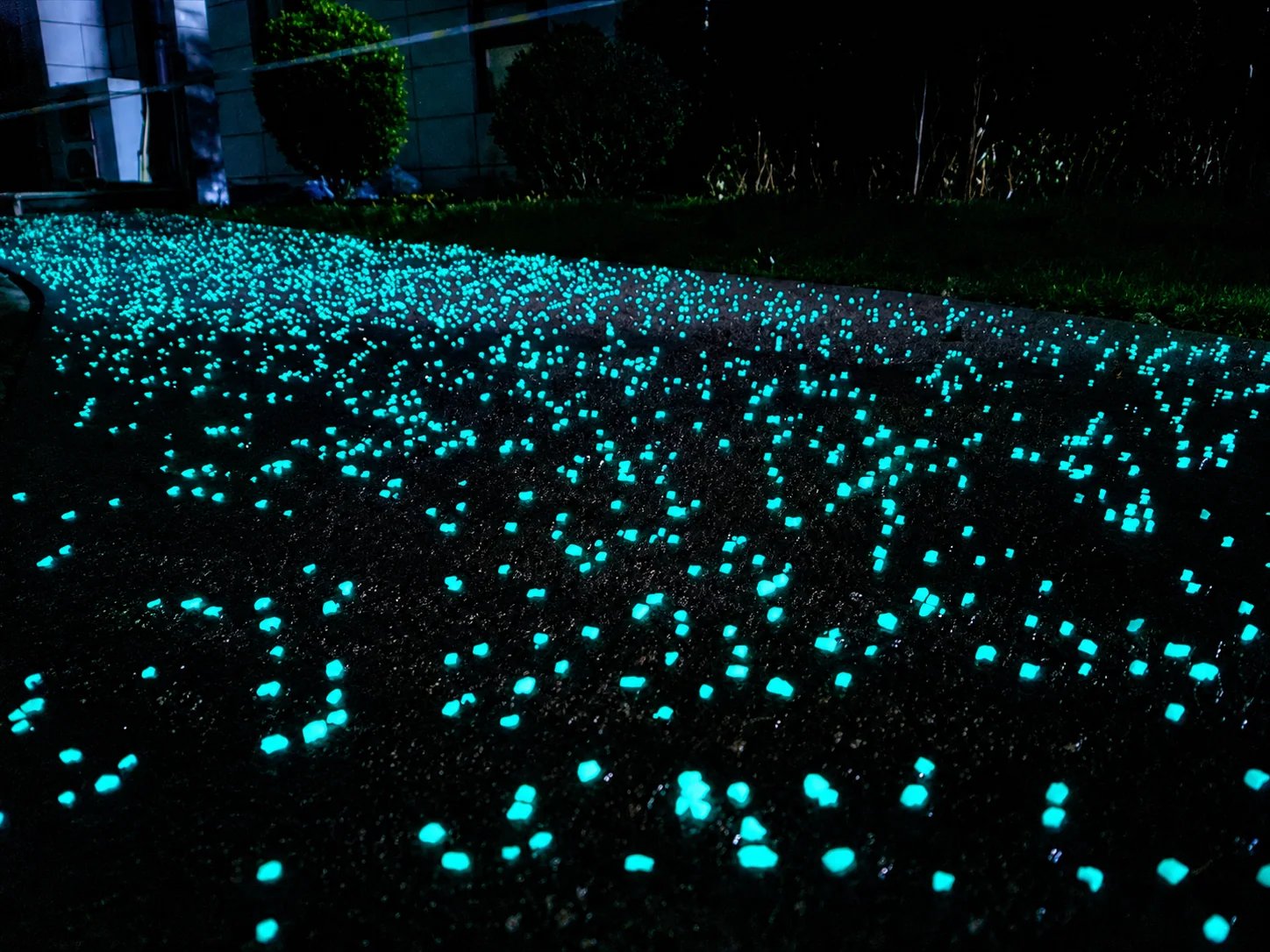
Blue-green creates a cooler, more modern appearance and can work especially well around resorts, pools, waterfront landscapes, and modern gardens. Other colors may be available, but actual brightness and afterglow characteristics can differ. Select by both appearance and performance.
What affects the glow?
Stone shape alone does not determine nighttime performance. Important factors include:
- Photoluminescent material: Its quality and amount can influence initial brightness, afterglow, charging behavior, and color consistency.
- Light exposure: Glow stones need sufficient light before darkness. Outdoor surfaces with good daylight exposure generally provide better charging conditions.
- Surface exposure: If stones are buried too deeply in an opaque pavement system, less light reaches them. Enough luminous surface must remain exposed.
- Surrounding lighting: Glow usually appears more noticeable in darker environments. Strong landscape or street lighting can reduce visual contrast.
Make Sure the Material Fits the Pavement System
Dark-room glow is only one part of the assessment. The physical material must also work within the pavement. Check particle strength, surface texture, shape, size consistency, binder compatibility, and resistance to normal outdoor exposure. A material that looks attractive in a decorative bowl may not suit a pedestrian pavement.
Resin-bound pavement
A typical decorative resin-bound system may combine:
Natural Aggregate + Glow Stones + Compatible Resin Binder
Distributing luminous stones through the surface can create glowing points after dark. Design options include light scattered glow, medium luminous coverage, decorative borders, patterned sections, and mixed-color aggregate designs. Test the stone and resin together before large-scale installation.
A transparent or sufficiently clear resin helps light reach the luminous material. If the binder becomes very yellow, cloudy, or opaque, it may affect the stone's appearance. For outdoor resin-bound projects, it must also suit UV exposure, rain, temperature changes, pedestrian traffic, and the project environment. Luminous aggregate is only one part of the complete pavement system.
Decorative concrete
Luminous aggregates may be incorporated into decorative concrete, but the stones need to remain visible near the surface. Completely buried stones cannot absorb enough light to create an effective visible glow. Methods may involve positioning luminous particles in the exposed decorative layer; the exact process depends on the concrete system and required finish.
Application-Specific Design Considerations
Swimming pool surroundings
Poolside projects are a popular decorative use. Green or blue-green luminous stones can complement water and landscape lighting, but the paving system must also address slip resistance, drainage, moisture exposure, cleaning, and surface durability. Glow appearance should never be the only design consideration.
Garden paths
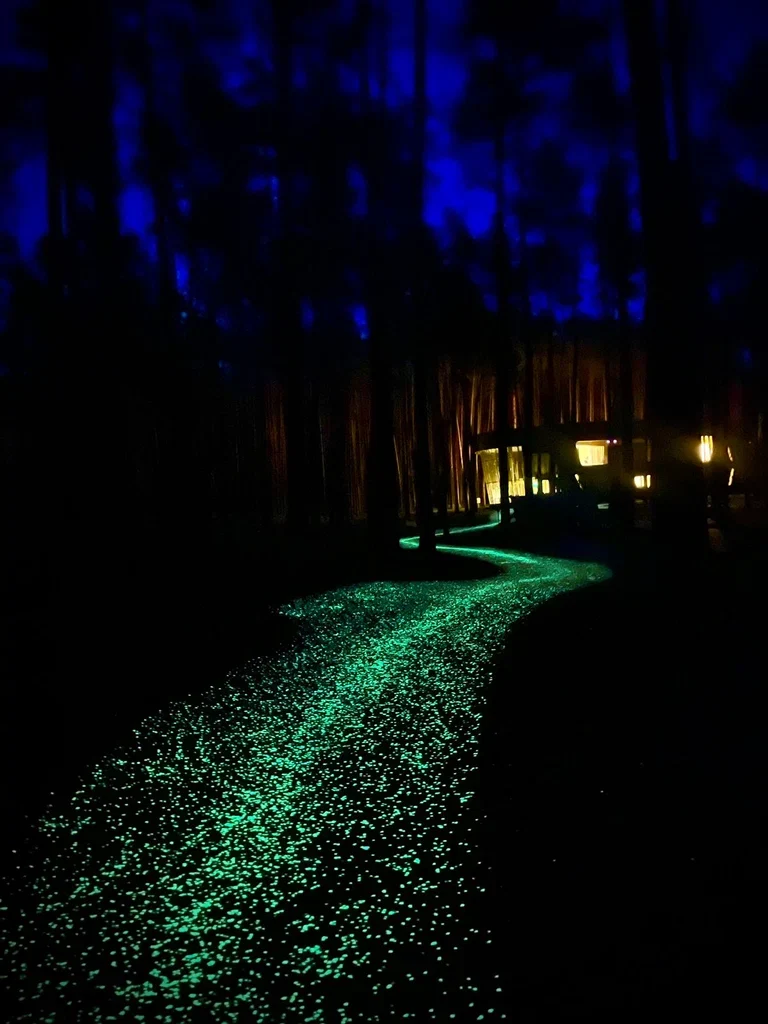
Garden paths are one of the easiest places to create an attractive luminous aggregate effect. Glow stones can be mixed with beige aggregate, white stone, grey aggregate, natural pebbles, or resin-bound stone.
A relatively small amount of luminous material can create scattered points similar to stars. This often produces a more natural effect than making the entire pavement glow.
When to use stones, pigment, or both
Glow stones and photoluminescent pigment serve different purposes. Choose stones for visible luminous particles and a decorative aggregate appearance in resin-bound paving, garden paths, landscape surfaces, or poolside decoration.
Choose photoluminescent pigment for continuous luminous coatings, road markings, symbols, arrows, patterns, and resin products. Some projects can combine both materials.
A Practical Sample-Testing Sequence
Judge quality by more than immediate brightness. Review daytime appearance, particle size consistency, glow color, initial brightness, afterglow behavior, material structure, outdoor suitability, and binder compatibility. For pavement projects, test samples in the actual paving system where possible.
- Check daylight charging. Do not evaluate stones only under UV lamps. For outdoor projects, expose a sample to normal daylight and observe it after sunset to understand how it may perform in real conditions.
- Observe the afterglow over time. Glow is normally strongest shortly after darkness and then gradually becomes softer. Compare immediately after charging, after several minutes, and later in darkness rather than judging only initial brightness.
- Use the actual natural aggregate. For resin-bound paving, make a small sample to assess daytime color combinations, luminous distribution, particle size, surface texture, and nighttime contrast. The same glow stone can look very different with beige, grey, black, or white aggregate.
- Use the actual binder. Check compatibility and whether the resin changes daytime color, stone visibility, surface appearance, or nighttime glow. Testing before installation is especially important for large commercial projects.
Buying Checklist: Assess the Complete System
Glow stones vary in material structure and luminous performance. Choosing only the lowest-priced product can cause problems if it does not match the application. Consider the total system:
Glow Stone + Natural Aggregate + Binder + Base + Installation + Environment
A suitable material can reduce the risk of inconsistent appearance later. Before choosing, ask:
- What is the stone's base material?
- Is it intended for pavement or only decoration?
- What particle sizes and glow colors are available?
- What does it look like during the day?
- Will it be mixed with resin, and what natural aggregate will be used?
- Is the project indoor or outdoor?
- How much sunlight will the area receive?
- Can a paving sample be tested first?
Material type, particle size, daytime color, luminous composition, surface structure, and paving-system compatibility all influence the result. For resin-bound pavement, gardens, parks, resorts, pool surroundings, and landscape walkways, choose a material that suits both the daytime design and nighttime effect. Test realistic conditions and the actual pavement system rather than relying on a bright UV-lamp display.
FUXIN supplies Glow-in-the-Dark Stones, Luminous Aggregate, and Photoluminescent Pigment for resin-bound paving, landscape surfaces, decorative pavement, and luminous applications. Product information, samples, quotations, particle-size options, and project material recommendations are available for different requirements.
Contact us to discuss the right glow stone material for your project.