

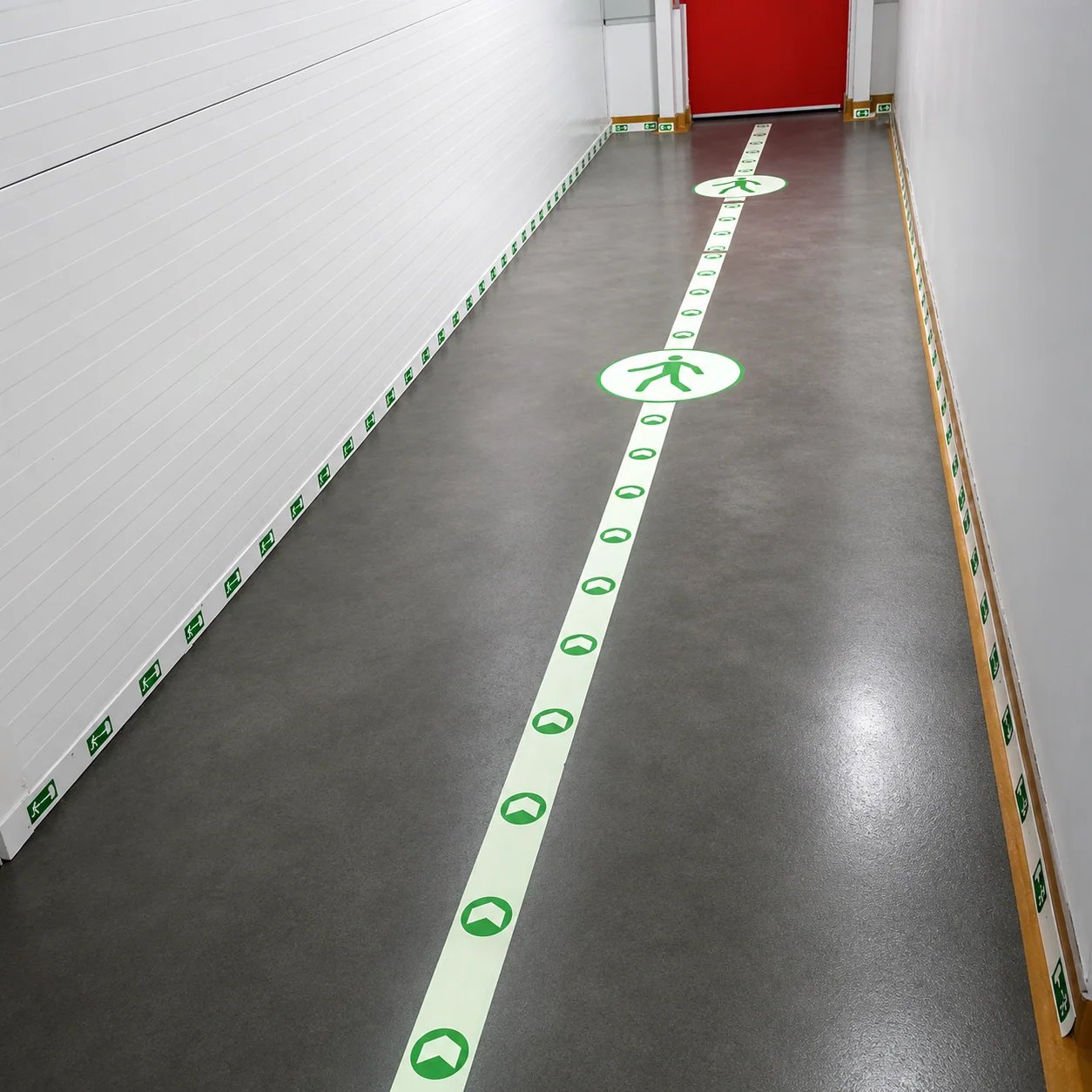
A photoluminescent safety line is a floor or pavement marking that stores energy from daylight or suitable artificial light and releases it as a visible afterglow. It can add passive, low-level guidance for walking routes, boundaries, stairs, exits, and pedestrian areas when surrounding light levels fall.
These markings can support wayfinding in buildings, factories, parking garages, warehouses, tunnels, public spaces, and outdoor facilities. They provide supplementary guidance; they do not illuminate the surrounding space or replace required emergency lighting, certified exit signage, or other building safety systems.
How photoluminescent safety lines work
The marking contains light-storing luminous material, usually photoluminescent pigment incorporated into a compatible coating. Its operating cycle is:
Absorb light → Store energy → Glow in darkness → Recharge
No electrical power is needed for the afterglow itself, and the marking does not need wiring. Unlike an LED system, it does not actively produce continuous light. The glow is normally strongest shortly after darkness begins and gradually fades.
Where safety lines can add low-level guidance
Potential uses include route identification, boundary marking, and supplementary emergency wayfinding. Suitability depends on the lighting, floor condition, traffic, and applicable safety requirements at each site.
Floor-level guidance and emergency exit routes
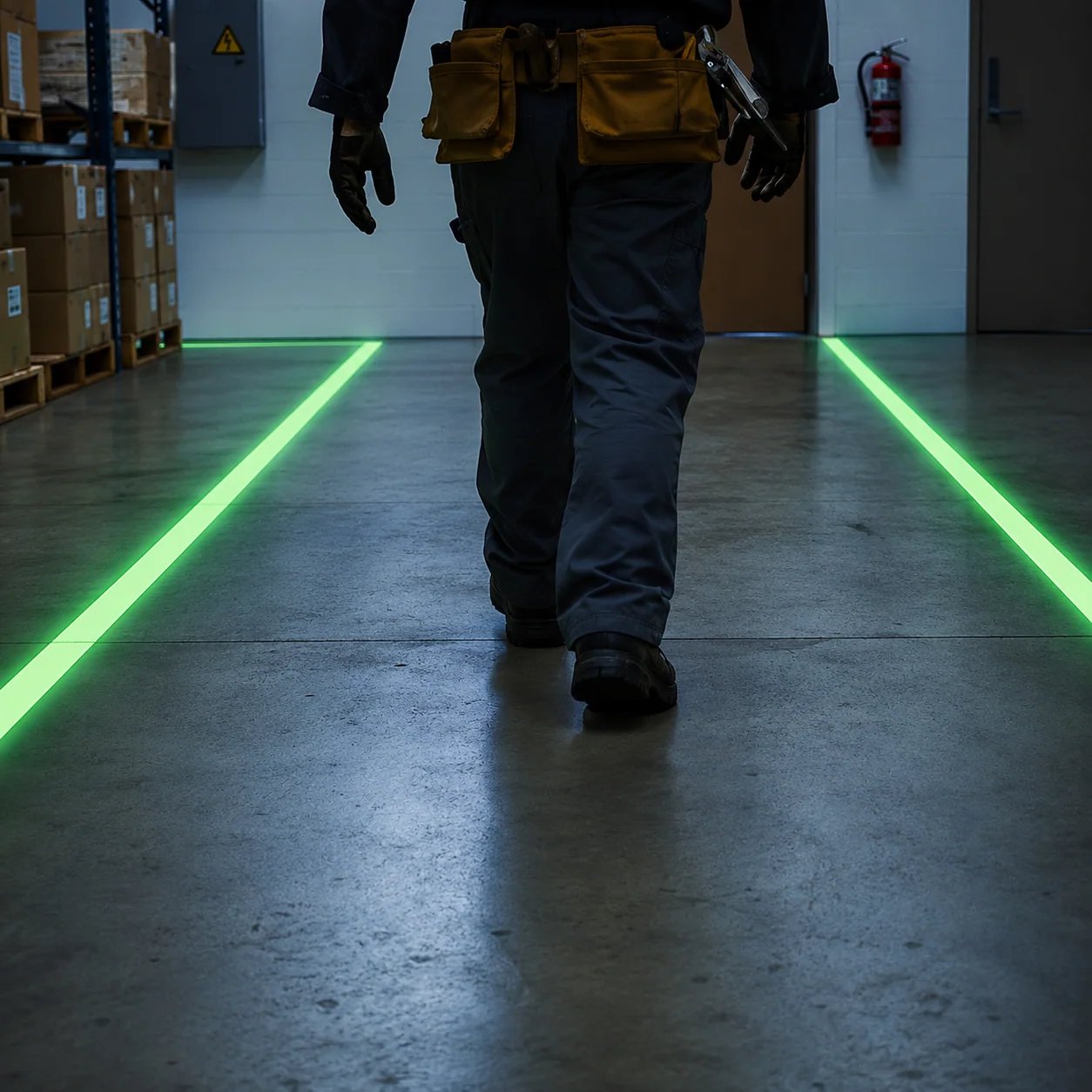
A charged line close to the walking surface can remain visible for a period after lighting is reduced. It can identify walking routes, exit directions, safe passage zones, corridor boundaries, and equipment clearance areas.
For emergency routes, possible positions include corridor edges, stair routes, exit paths, door approach areas, and emergency passageways. The line can reinforce the direction of travel as lighting conditions change.
Smoke, darkness, or visual obstruction can reduce the usefulness of overhead signs, making floor-level guidance a design consideration. This is not a guarantee of visibility through smoke. Emergency-route markings must be used in accordance with applicable building, fire, and safety regulations.
Underground parking garages
In garages, luminous lines may define pedestrian routes and paths between parking areas, exit guidance, ramp edges, direction arrows, and column safety zones. Artificial lighting during normal operation can charge the material, but the resulting afterglow depends on the lamp type and light intensity.
Factories, workshops, and warehouses
Factories and industrial facilities may use lines for pedestrian walkways, machine clearance zones, emergency routes, loading areas, restricted zones, and equipment boundaries. Workshops, equipment zones, and utility rooms are also possible settings.
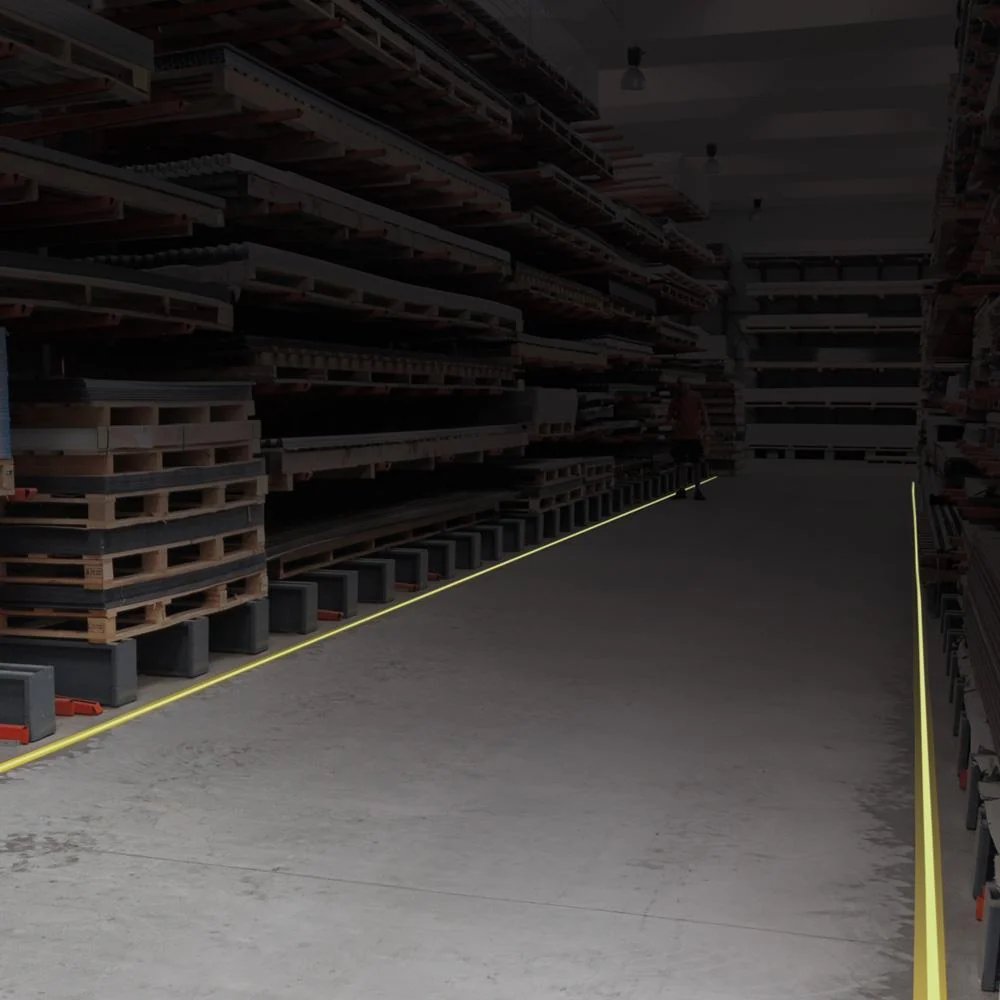
Warehouses combine pedestrian and vehicle movement. Markings can define walking lanes, storage boundaries, emergency exits, loading zones, and restricted areas. Test the actual warehouse lighting because lamp types do not all charge photoluminescent materials equally.
Choose the system for the floor condition and traffic level. Forklifts, carts, machinery, and industrial cleaning can cause significant wear.
Stairways
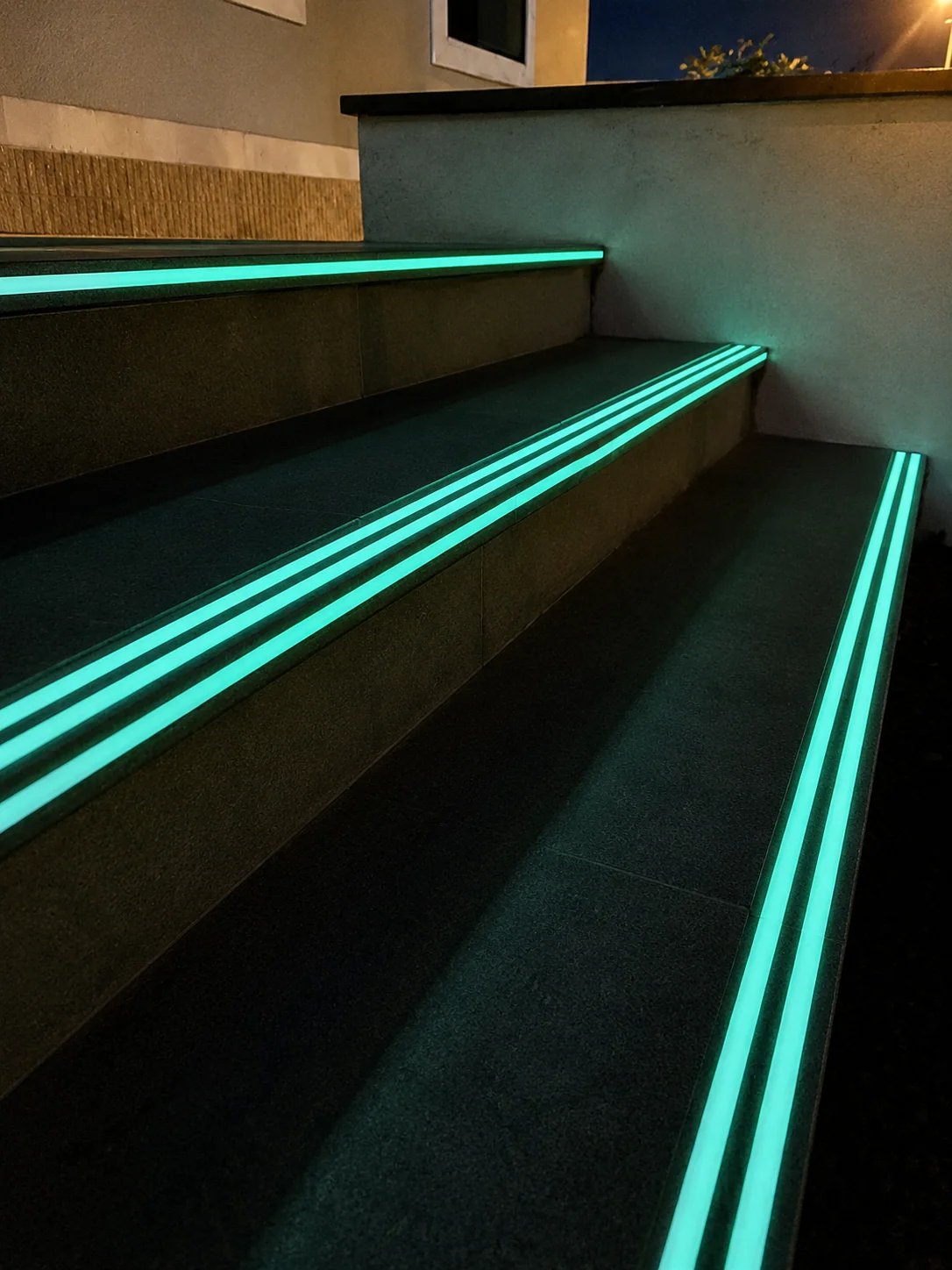
Possible stair applications include edge lines, landing boundaries, direction indicators, and exit route markings. A luminous stair line must not create a slippery or excessively raised surface; skid resistance remains important.
Tunnels, corridors, and enclosed passages
Tunnels and enclosed corridors may receive little natural light and rely more on artificial charging. Evaluate the lamp type, light intensity, distance from the marking, exposure duration, and required afterglow performance. A sample under the actual tunnel lighting is highly recommended. Corridors may also use low-level directional lines.
Outdoor paths
Park walkways, campground routes, resort paths, landscape pedestrian routes, and waterfront access paths are potential uses for supplementary nighttime guidance. Daylight can recharge outdoor markings, but rain, UV exposure, temperature changes, and surface wear must inform the choice of binder and protective coating.
Choose a compatible coating system
A typical system may include a surface primer, base coating, photoluminescent coating, anti-slip aggregate, and transparent protective layer. The exact structure depends on the floor or pavement and the required performance.
The binder needs good adhesion, sufficient transparency, wear and water resistance, suitable curing performance, and UV resistance where needed. An overly opaque binder can prevent enough light from reaching the luminous particles and reduce charging.
Plan the surface, layout, and color
Prepare the floor or pavement
The surface should normally be clean, dry, stable, and free from oil, dust, loose coating, and other contamination. Industrial floors may need extra cleaning to remove grease, tire residue, or old coatings. Poor preparation can reduce adhesion and durability.
Set out a clear route
Before installation, determine line width, route direction, boundary position, arrow placement, stair edges, and exit connection points. A clear layout helps people understand the route; excessive luminous marking can create visual clutter.
Select the glow color
Green and blue-green are common choices. Green often provides strong visual recognition in darkness, while blue-green gives a cooler appearance. Consider the floor color, surrounding lighting, desired contrast, safety requirements, and project standards. Required colors and specifications take priority over decorative preference in regulated safety systems.
Evaluate charging, brightness, and afterglow
Visible brightness depends on pigment quality, charging time, light intensity, pigment concentration, coating thickness, surface cleanliness, and surrounding darkness. A line that looks bright in a dark room may appear softer in a partially lit space.
Afterglow duration depends on material quality, charging conditions, the amount of luminous material, and ambient lighting. Gradual fading is normal, so a photoluminescent line should not be compared directly with an electrical light source that maintains constant brightness. Evaluate performance at the actual site.
Balance skid resistance and traffic wear
Skid resistance
Floor and pavement markings should not create a new hazard. Skid resistance is particularly important on stairways, ramps, wet corridors, parking garages, and industrial walkways. Suitable anti-slip aggregate may be incorporated into the coating system.
The complete system should balance visibility, adhesion, wear resistance, and skid resistance.
Wear resistance by traffic level
- Low traffic: Emergency corridors, restricted access rooms, and some stairways may experience relatively little abrasion.
- Medium traffic: Pedestrian routes, warehouses, and commercial buildings require resistance to regular foot traffic and cleaning.
- High traffic: Industrial floors, parking areas, and forklift routes require a more durable marking system.
A decorative luminous coating designed for low traffic may not be suitable for heavy industrial use.
Maintain a clean, exposed luminous surface
Maintenance can be relatively simple, but the lines must remain visible and exposed to charging light. Dust, oil, dirt, and other contamination reduce charging. Routine care may include sweeping, washing, removing oil, cleaning tire marks, and inspecting worn areas. Keeping the surface clean helps maintain more consistent performance.
Photoluminescent lines compared with reflective and LED guidance
- Reflective lines: Require an external light source and reflect light back toward the viewer.
- Photoluminescent lines: Absorb light beforehand and release passive afterglow, allowing visibility without direct illumination for a period. No electricity or wiring is needed for the afterglow, but brightness gradually decreases.
- LED guidance: Actively produces light, requires power and electrical infrastructure, and can provide stronger illumination with consistent brightness.
Reflective and photoluminescent systems can be combined in some environments. LED and photoluminescent systems serve different purposes, so selection should reflect the site's requirements.
Keep required lighting and compliant safety markings
Photoluminescent safety lines cannot provide the same function as emergency lighting, exit signs, electrical escape lighting, or required building safety systems. Where emergency lighting is required, it must still be installed. A visible line does not illuminate the surrounding space.
Nor does a luminous material automatically replace a standard safety marking. Requirements may cover color, contrast, dimensions, location, slip resistance, fire safety, and building codes. Integrate the marking into the overall safety system and retain required emergency lighting and certified exit signage. This guide does not establish approval or certification for a particular product or installation.
Test a sample before full installation
Create a test section using the actual floor material, binder, pigment, line thickness, and lighting conditions. Evaluate:
- Daytime appearance
- Charging performance and afterglow
- Adhesion and surface texture
- Visibility after lighting changes
This is particularly important for indoor projects. Successful installation depends on the complete combination of photoluminescent pigment, compatible binder, proper surface preparation, clear layout, skid resistance, adequate charging, and maintenance.
Discuss your photoluminescent safety line project
FUXIN supplies Photoluminescent Pigment, Luminous Safety Marking Materials, and Glow-in-the-Dark Pavement Materials for parking garages, industrial facilities, warehouses, pedestrian routes, and outdoor applications.
Contact us for product information, samples, quotations, and project material recommendations suited to your requirements.