

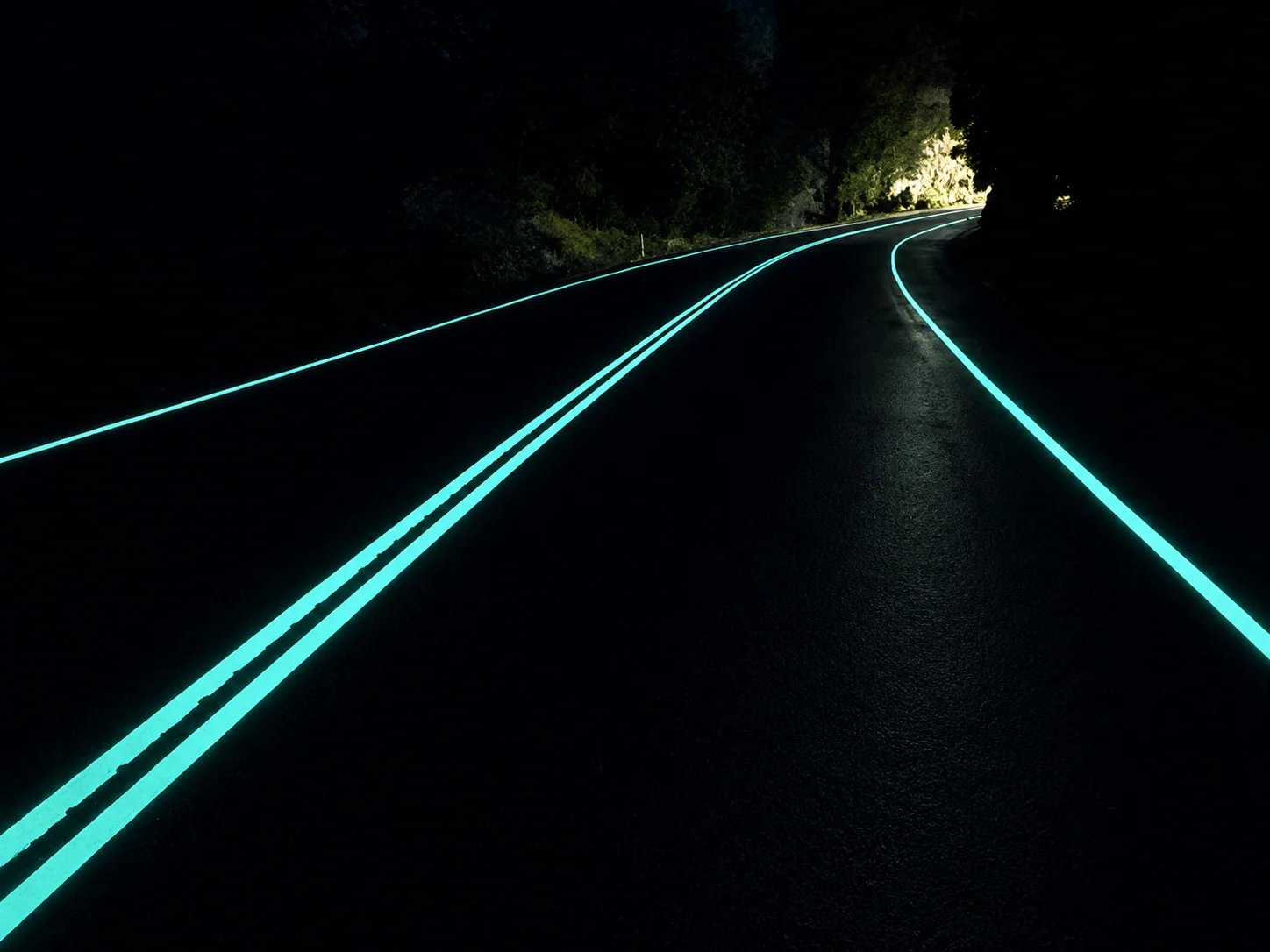
Photoluminescent road marking is a pavement marking system designed to absorb light and gradually release it in darkness.
Unlike conventional reflective markings, which need light from vehicle headlights or another external source to become highly visible, photoluminescent materials can produce an afterglow after they have been exposed to sunlight or artificial light.
This makes them an interesting option for pedestrian areas, bicycle paths, parks, campuses, parking areas, landscape roads, and other projects where nighttime visual guidance is important.
However, photoluminescent markings should generally be considered a supplementary or decorative visibility solution, not an automatic replacement for regulated traffic markings, street lighting, or required reflective systems.
What Is Photoluminescent Road Marking?
Photoluminescent road marking uses luminous materials that can absorb and store light energy.
The marking may contain:
-
Photoluminescent pigment
-
Compatible resin or binder
-
Pavement coating materials
-
Additional protective or functional layers depending on the system
During the day, the luminous material absorbs energy from sunlight or artificial lighting.
When the surrounding environment becomes darker, the stored energy is gradually released as visible light.
This creates a glowing effect on the pavement surface.
How Does Photoluminescent Road Marking Work?
The process can be divided into three simple stages.
Light Absorption
During daylight or under artificial lighting, the photoluminescent pigment absorbs energy.
The effectiveness of this charging process depends on the intensity and duration of the light source.
Energy Storage
Part of the absorbed light energy is stored inside the photoluminescent material.
The material does not need batteries or electrical wiring to store this energy.
Afterglow
When the surrounding light level decreases, the stored energy is gradually released.
The marking begins to glow and becomes visible in darkness.
The brightness is normally strongest shortly after the environment becomes dark and gradually becomes weaker over time.
This is a normal characteristic of photoluminescent materials.
What Materials Are Commonly Used?
Photoluminescent road marking systems can vary depending on the application.
A typical system may include photoluminescent pigment mixed with a compatible binder or coating.
Photoluminescent Pigment
The pigment is the main luminous component.
It affects:
-
Glow color
-
Initial brightness
-
Afterglow performance
-
Appearance
-
Material concentration
Binder or Coating
The binder holds the pigment on the pavement surface.
The selected binder should be suitable for the intended environment and compatible with the luminous pigment.
For outdoor applications, factors such as UV exposure, moisture, wear, and temperature changes should be considered.
Base Surface
The pavement condition also matters.
A clean, stable, and properly prepared surface usually provides better adhesion and more consistent results.
Where Can Photoluminescent Road Markings Be Used?
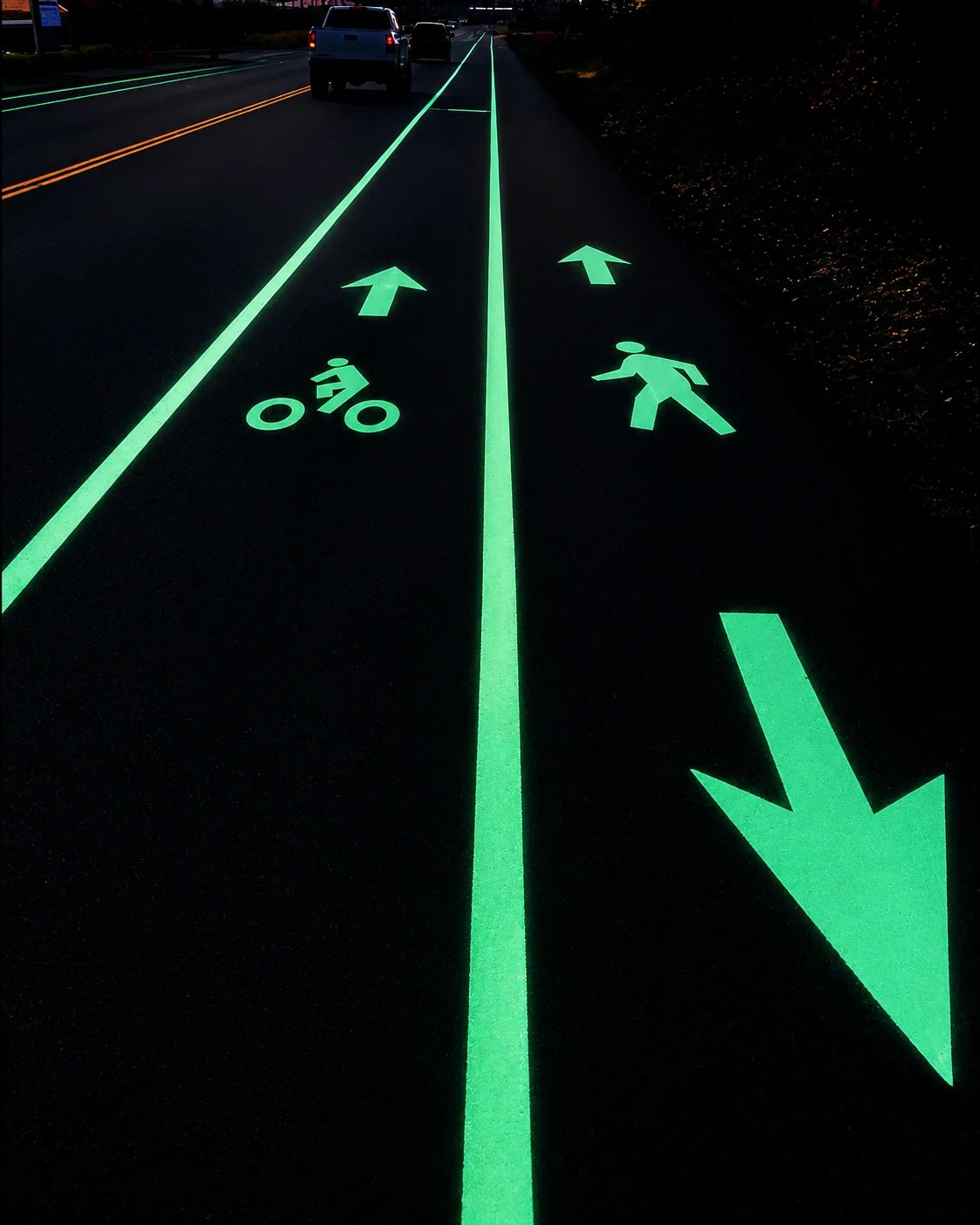
Photoluminescent markings can be used in many decorative and supplementary guidance applications.
Bicycle Paths
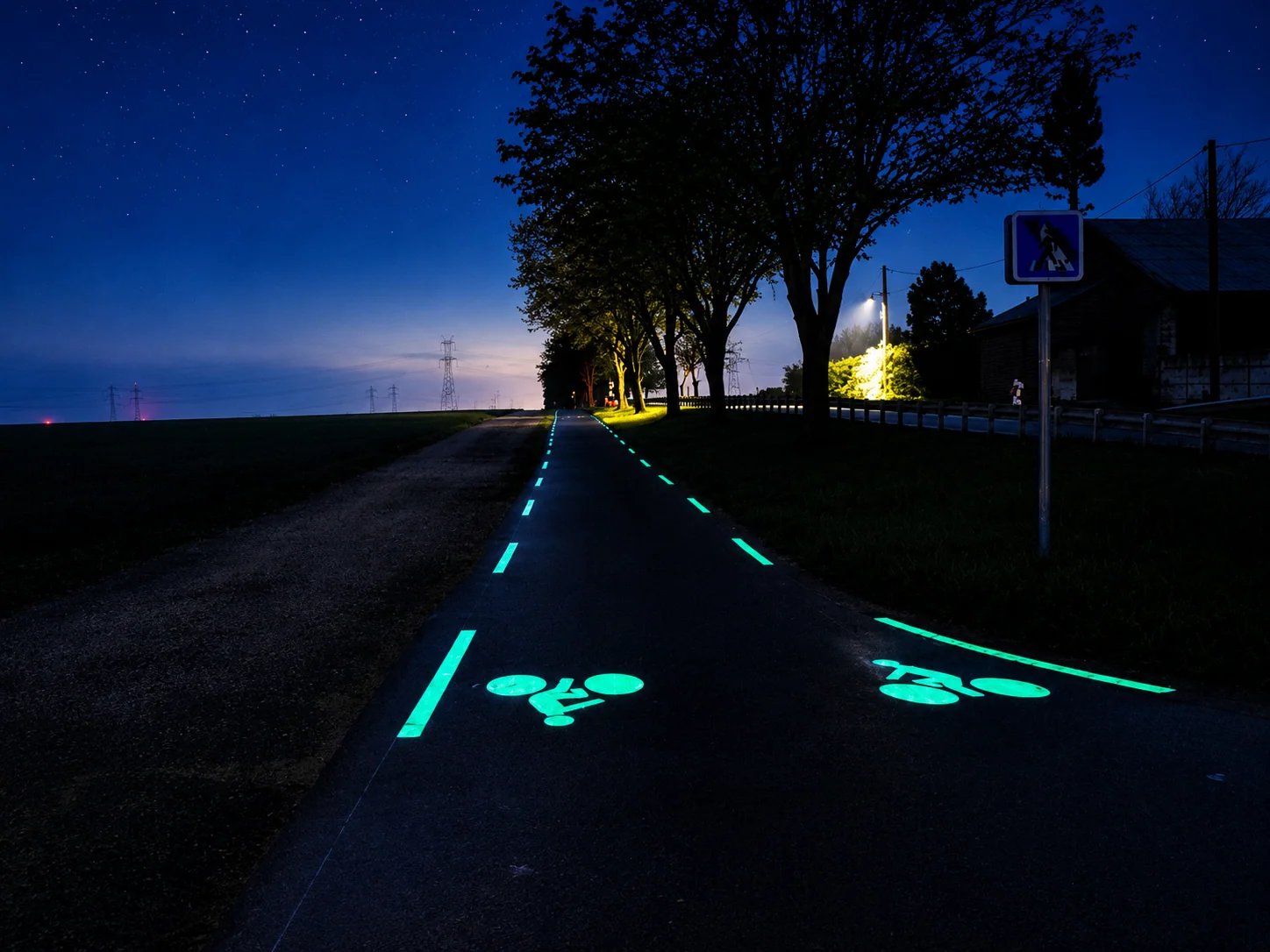
Bicycle paths are one of the most suitable areas for luminous pavement designs.
Photoluminescent materials can be used for:
-
Edge lines
-
Direction arrows
-
Bicycle symbols
-
Decorative center lines
-
Highlighted sections
In low-light environments, the glow can make the route visually distinctive after sunset.
Pedestrian Walkways
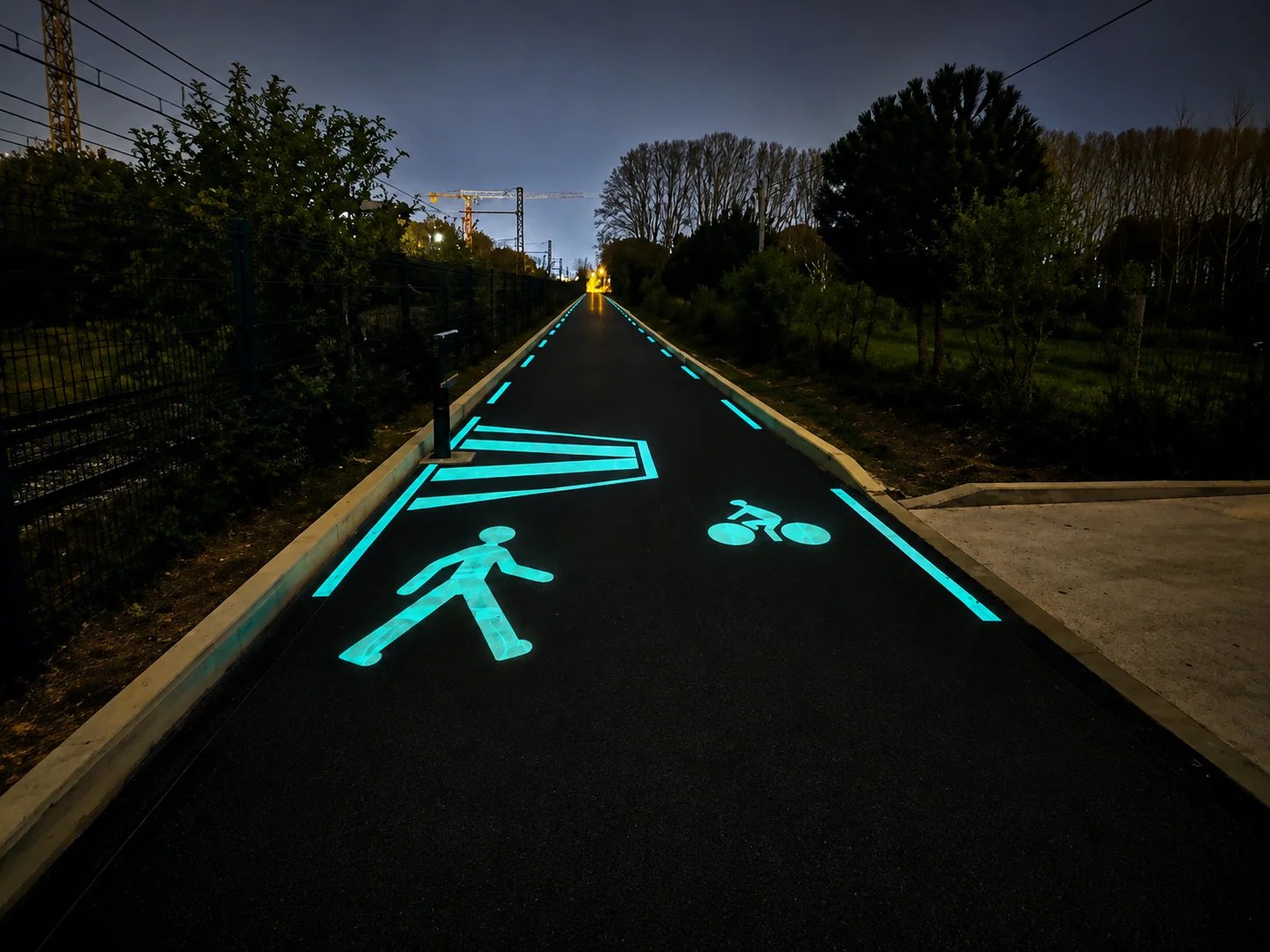
Walkways in parks, communities, campuses, resorts, and landscape projects can also use photoluminescent markings.
Possible designs include:
-
Direction indicators
-
Pathway borders
-
Arrows
-
Decorative lines
-
Special patterns
These markings can add nighttime visual interest without changing the entire pavement surface.
Parking Areas
Photoluminescent materials may be used for supplementary visual features in parking environments.
Examples include:
-
Direction arrows
-
Pedestrian guidance areas
-
Decorative parking lines
-
Entrance and exit markings
-
Highlighted walking routes
For regulated parking markings, local standards and required reflective or lighting systems should still be followed.
Parks and Landscape Roads
Photoluminescent marking works especially well in landscape environments where decorative appearance is important.
It can be used to highlight:
-
Walking routes
-
Scenic paths
-
Curves
-
Borders
-
Landscape symbols
-
Rest areas
The material can create a more noticeable effect in environments with lower surrounding light levels.
Resorts and Hotels
Hotels and resorts often use pavement as part of the overall landscape design.
Photoluminescent markings can be incorporated around:
-
Garden paths
-
Pool areas
-
Villa entrances
-
Courtyards
-
Outdoor leisure areas
-
Internal pedestrian routes
In these applications, the goal is often atmosphere and visual design rather than traffic regulation.
Campuses and Commercial Landscapes
Schools, universities, business parks, and commercial properties may also use luminous markings for decorative route guidance.
They can help define:
-
Walking zones
-
Bicycle areas
-
Landscape circulation routes
-
Special design features
Photoluminescent Marking vs. Reflective Marking
These two systems work differently.
Reflective markings return light toward the viewer when illuminated by headlights or another light source.
Photoluminescent markings absorb light first and then release stored energy in darkness.
This means reflective markings are highly dependent on external illumination at the moment they are viewed.
Photoluminescent markings can remain visible for a period after charging, even when the light source is no longer present.
However, their brightness gradually decreases over time.
Because the two technologies work differently, they may serve different purposes or even be combined in some projects.
What Affects the Glow Performance?
Several factors can affect the final nighttime appearance.
Light Exposure
The luminous material needs sufficient light before darkness.
Areas with good daylight exposure usually provide better charging conditions.
Pigment Quality
Different photoluminescent pigments can have different brightness and afterglow characteristics.
Pigment Concentration
The amount of luminous pigment used can affect the visual intensity of the marking.
Too little material may create a weak effect.
Binder Transparency
If the pigment is covered by a highly opaque material, less light may reach the luminous particles.
This can reduce charging performance.
Surface Cleanliness
Dust, mud, oil, and other contamination can block light and reduce visibility.
Surrounding Lighting
Glow markings often appear stronger in darker environments.
Bright streetlights or commercial lighting can reduce visual contrast.
How Is Photoluminescent Road Marking Installed?
The exact installation method depends on the coating system, but the general process usually includes the following steps.
Prepare the Surface
The pavement should be:
-
Clean
-
Dry
-
Stable
-
Free from loose dust
-
Free from oil and contamination
Damaged areas should be repaired before installation.
Prepare the Luminous Material
Photoluminescent pigment is mixed with a compatible binder or coating system.
The material should be mixed evenly to prevent differences in brightness or color.
Apply the Marking
The coating can be applied according to the required shape, line, symbol, or pattern.
Uniform thickness is important for a consistent appearance.
Allow the Surface to Cure
The marking should be allowed to cure according to the binder system requirements.
Charge and Test
After curing, expose the surface to light and inspect the glow under dark conditions.
A small test section is recommended before large-scale application.
Common Problems to Avoid
Insufficient Charging
A marking located in permanent shade may not receive enough light.
Uneven Pigment Distribution
Poor mixing can create bright and dark areas.
Excessively Opaque Coating
If the pigment is completely covered, the glow performance may be reduced.
Poor Base Preparation
Dust, moisture, or contamination can affect adhesion.
Unrealistic Brightness Expectations
Photoluminescent road marking is not the same as LED lighting.
The glow gradually decreases as stored energy is released.
Can Photoluminescent Road Marking Replace Conventional Road Marking?
In most cases, it should not automatically be treated as a direct replacement.
Road marking requirements vary by location and application.
Reflectivity, color, dimensions, skid resistance, visibility, and other technical requirements may be regulated by local standards.
Photoluminescent materials are usually more suitable as:
-
Supplementary visibility features
-
Decorative pavement markings
-
Landscape guidance systems
-
Special design elements
-
Nighttime visual accents
For public roads and regulated traffic areas, the relevant local standards should always be confirmed before use.
Why Use Photoluminescent Road Marking?
The main advantages are related to design flexibility and nighttime visual effect.
Potential benefits include:
-
No electrical wiring required for the afterglow effect
-
Rechargeable through light exposure
-
Suitable for customized shapes and patterns
-
Useful for decorative pavement design
-
Can be combined with other pavement marking systems
-
Creates a distinctive nighttime appearance
For landscape and pedestrian projects, this can provide designers with more creative options than ordinary pavement markings alone.
Final Thoughts
Photoluminescent road marking uses light-storing materials to create a visible afterglow on pavement surfaces.
It can be used in bicycle paths, pedestrian walkways, parking areas, parks, resorts, campuses, and other landscape or decorative applications.
Its performance depends on the quality of the photoluminescent pigment, light exposure, material concentration, binder system, surface preparation, and surrounding environment.
Rather than viewing it simply as a replacement for conventional road marking, it is better to consider photoluminescent marking as another design tool that can add supplementary visibility and a distinctive nighttime effect.
FUXIN supplies Photoluminescent Pigment, Glow-in-the-Dark Stones, and Luminous Pavement Materials for decorative pavement, landscape, and road marking applications.
Contact us for product information, samples, quotations, and project material recommendations.