
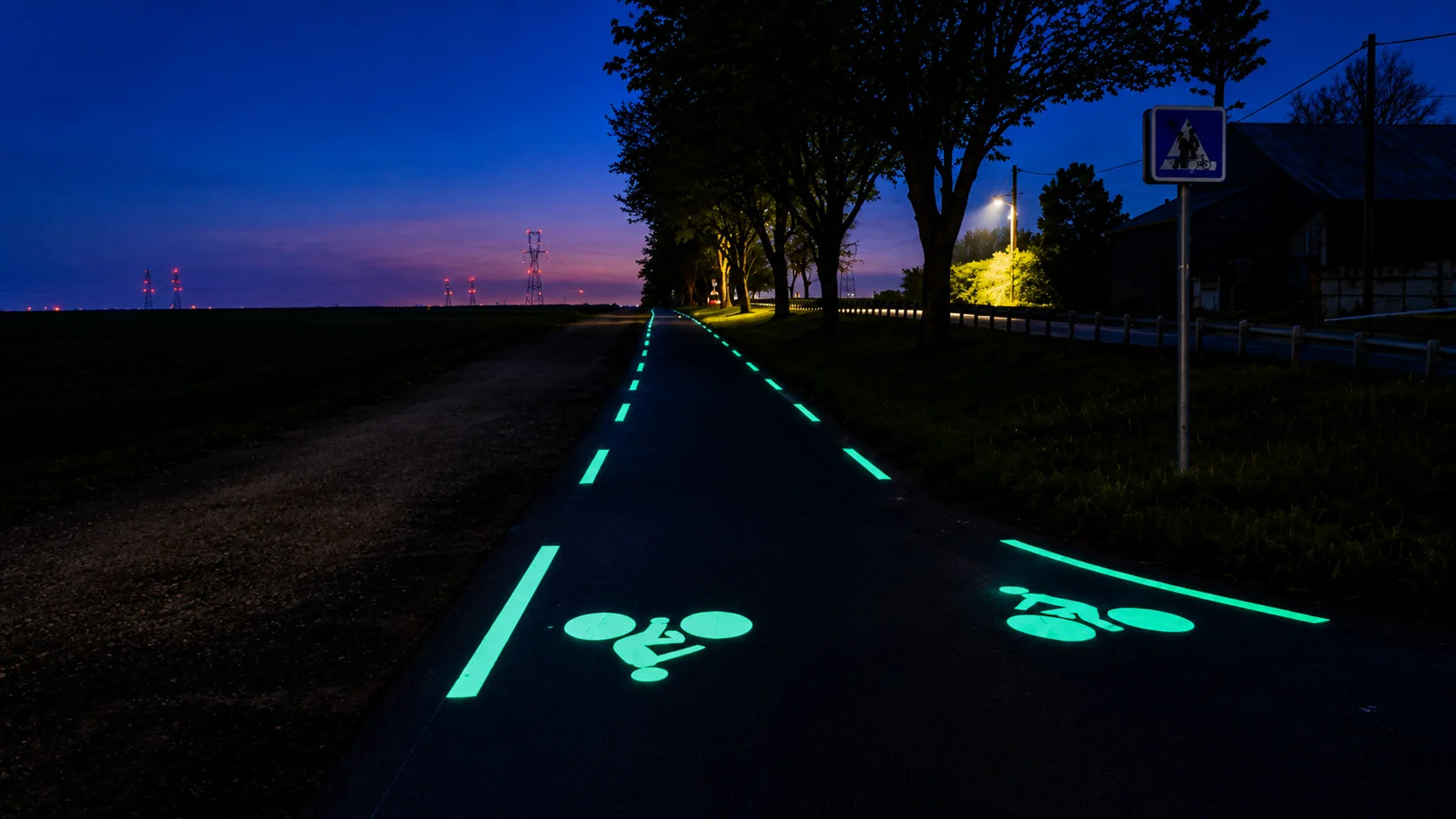
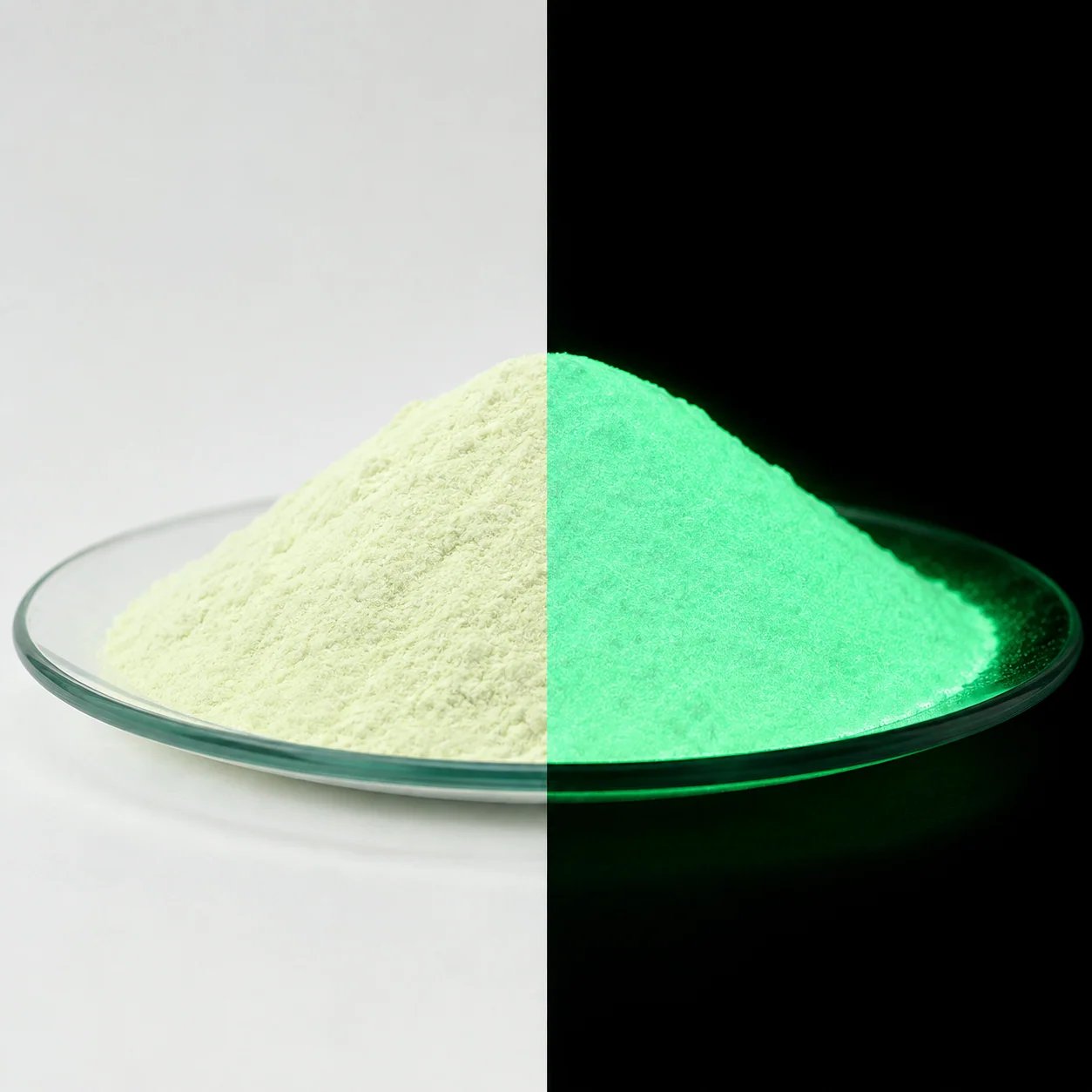
Photoluminescent pigment is the key material behind many glow-in-the-dark products.
From luminous pavement markings and decorative coatings to resin products, landscape surfaces, and safety graphics, this special pigment can absorb light and gradually release the stored energy after dark.
Unlike fluorescent colorants, which normally require an active light source to remain bright, photoluminescent pigment can continue glowing for a period after the light source is removed.
This makes it particularly useful for projects that need a passive nighttime visual effect without electricity.
What Is Photoluminescent Pigment?
Photoluminescent pigment is a light-storing powder designed to absorb energy from sunlight or suitable artificial light.
After the surrounding environment becomes dark, the pigment gradually releases the stored energy as visible light.
The basic process is:
Absorb Light → Store Energy → Release Afterglow → Recharge
This cycle can repeat whenever the pigment is exposed to light again.
Photoluminescent pigment is commonly available as a fine powder and can be incorporated into compatible resins, coatings, paints, and other transparent or light-transmitting systems.
How Is It Different From Fluorescent Pigment?
Photoluminescent and fluorescent pigments are often confused, but they behave differently.
Fluorescent Pigment
Fluorescent pigment appears very bright under ultraviolet or strong visible light.
However, when the light source is removed, the effect usually stops almost immediately.
Photoluminescent Pigment
Photoluminescent pigment stores part of the absorbed light energy.
After the light source disappears, it continues to release that energy as a visible glow.
This afterglow is the main reason photoluminescent pigment is used in glow-in-the-dark applications.
What Colors Are Common?
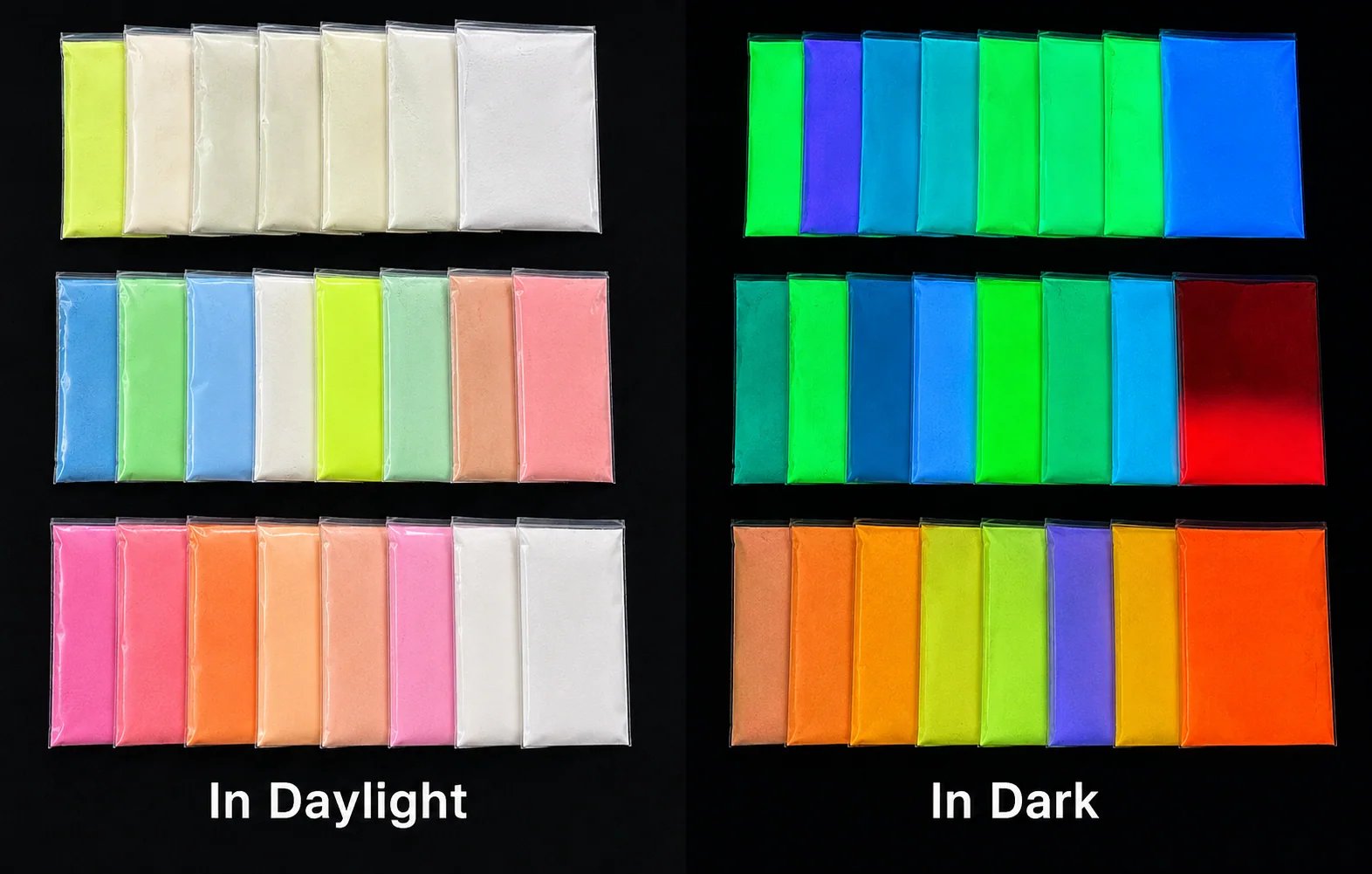
Green and blue-green are among the most common photoluminescent glow colors.
These colors are widely used because they can create a strong visual effect in darker environments.
Different pigments may also produce different daytime appearances.
For example, some pigments may look:
-
Pale yellow-green
-
Off-white
-
Light green
-
Light blue-green
The final daytime color can also be influenced by the binder, coating thickness, and background surface.
For commercial projects, both daytime and nighttime appearance should be evaluated.
What Affects Glow Brightness?
The brightness of photoluminescent pigment depends on several factors.
Pigment Quality
Different grades can vary in:
-
Initial brightness
-
Afterglow
-
Charging behavior
-
Particle consistency
-
Color stability
A pigment that appears extremely bright immediately after charging may not necessarily provide the best long-term afterglow.
Pigment Concentration
Increasing pigment concentration can improve luminous coverage, but more pigment is not always better.
Too much pigment may affect:
-
Coating viscosity
-
Flow
-
Adhesion
-
Surface strength
-
Application behavior
The formulation must balance luminous performance with physical performance.
Light Exposure
Photoluminescent pigment needs sufficient light before it can glow.
Sunlight is an effective charging source for outdoor applications.
Artificial light can also charge the pigment, depending on:
-
Light intensity
-
Light type
-
Exposure time
-
Distance from the source
Surrounding Darkness
The same pigment can look very different in two environments.
In a dark park or garden, the glow may appear strong.
Under bright streetlights or commercial lighting, the same glow may appear softer because the visual contrast is lower.
Why Binder Compatibility Is Important
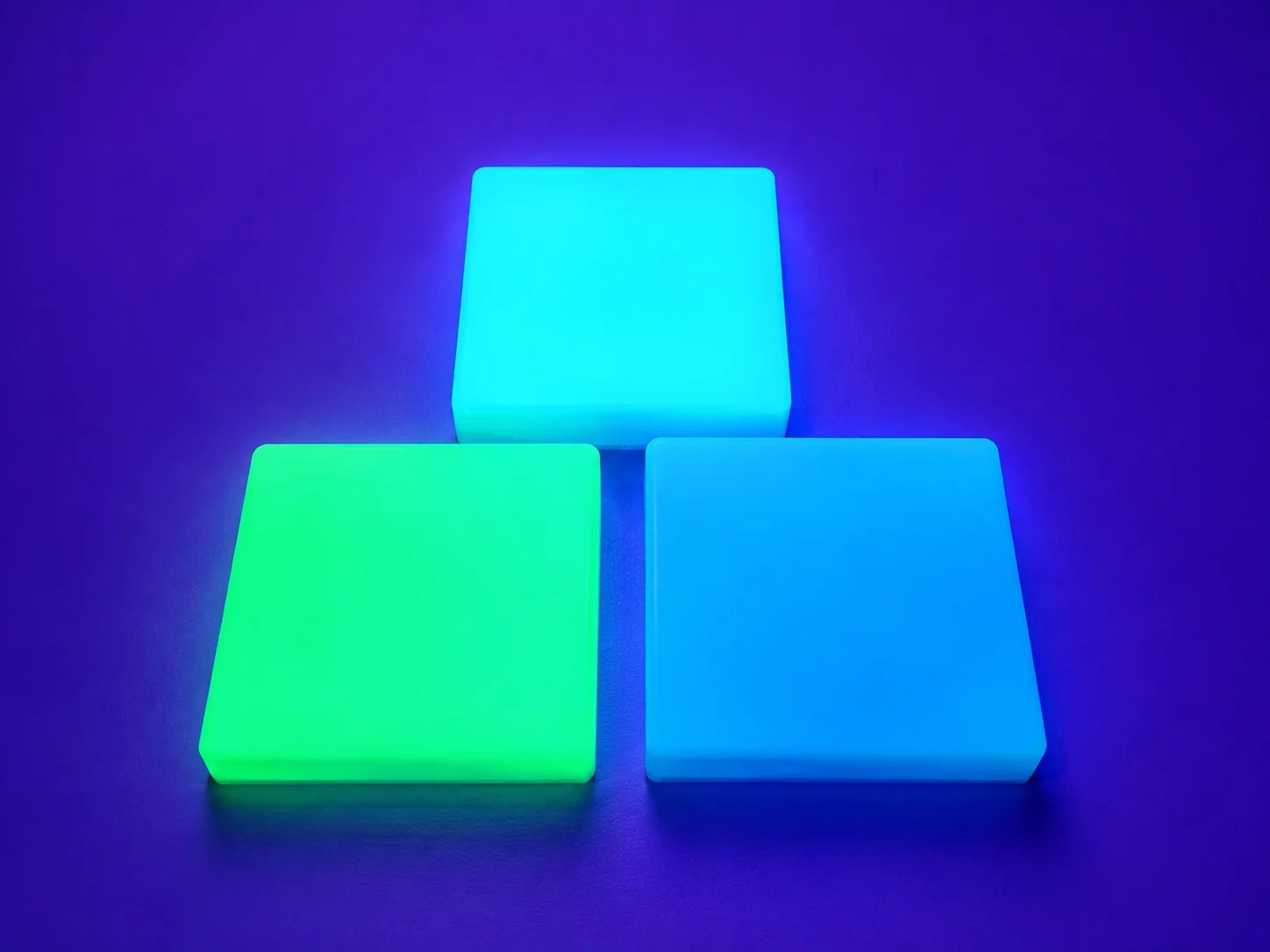
The binder plays a major role in luminous performance.
Photoluminescent pigment should usually be incorporated into a transparent or sufficiently light-transmitting material.
Possible binders may include compatible:
-
Resins
-
Clear coatings
-
Acrylic systems
-
Polyurethane systems
-
Epoxy systems
-
Specialty pavement binders
The exact choice depends on the application.
An opaque binder can block light from reaching the pigment.
If the pigment cannot absorb enough light, its nighttime performance will be reduced.
This is why pigment and binder should always be tested together.
Does Particle Size Matter?
Yes.
Particle size can influence both luminous performance and the appearance of the finished product.
Finer Pigment
Finer particles can be easier to incorporate into thin coatings and detailed designs.
They may be useful for:
-
Fine graphics
-
Thin coating systems
-
Small decorative parts
Larger Particles
Larger particles may provide a stronger luminous effect in some applications but can also influence:
-
Surface texture
-
Dispersion
-
Coating smoothness
-
Application thickness
The correct particle size depends on the final product and coating structure.
Common Applications of Photoluminescent Pigment
Photoluminescent pigment can be used in many different systems.
Luminous Road Marking
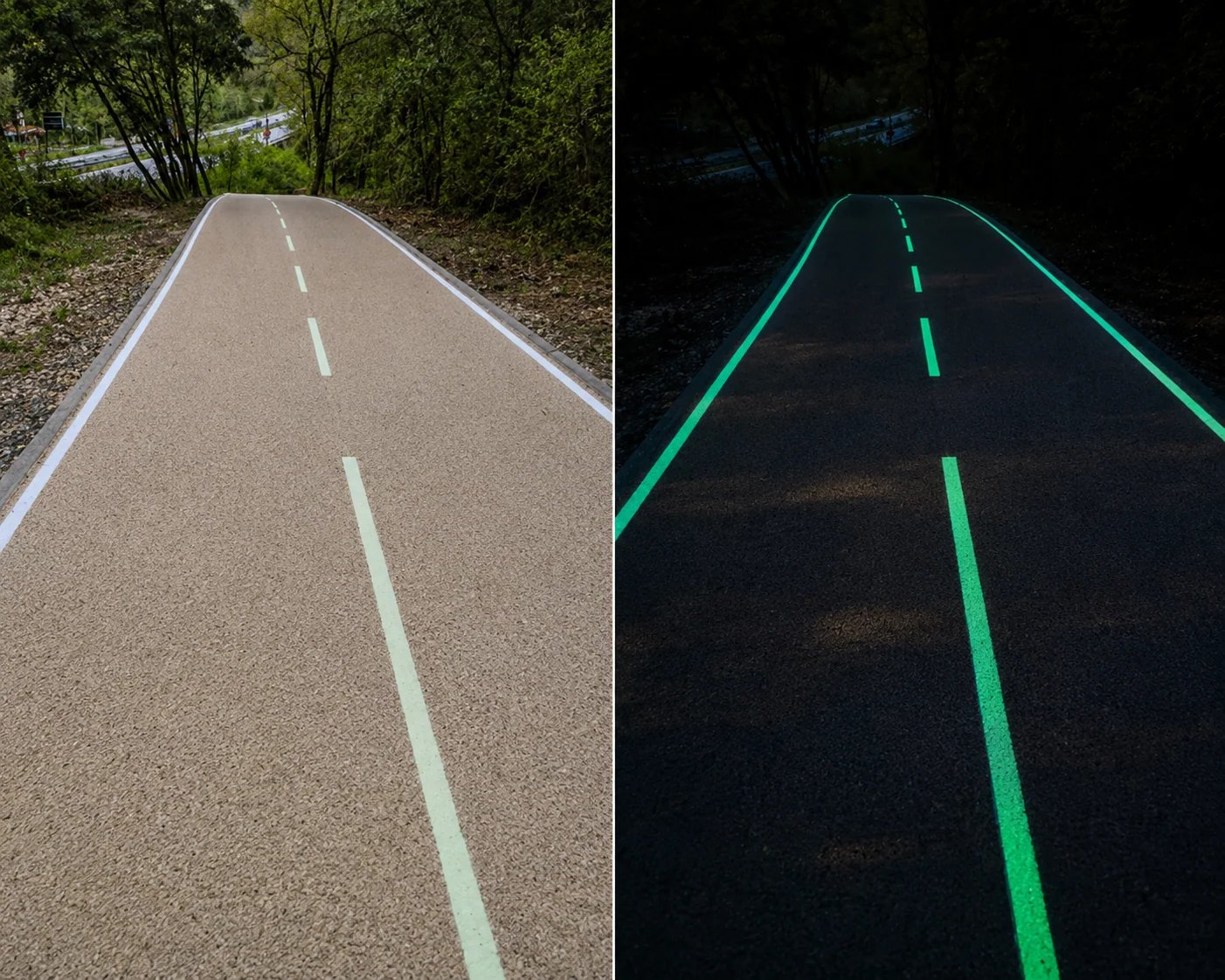
The pigment can be incorporated into compatible road-marking or pavement-coating systems.
Applications may include:
-
Edge lines
-
Arrows
-
Bicycle symbols
-
Pedestrian symbols
-
Decorative route markings
For public roads, the complete marking system should meet applicable local standards and traffic requirements.
Bicycle Paths
Dedicated cycling routes can use photoluminescent markings for:
-
Path edges
-
Direction arrows
-
Center lines
-
Bicycle graphics
Dark recreational or park environments can provide strong visual contrast.
Pedestrian Walkways
Photoluminescent pigment can also be used for walking routes in:
-
Parks
-
Resorts
-
Campuses
-
Residential communities
-
Scenic areas
The luminous coating can form lines, symbols, or decorative patterns.
Landscape Pavement
Landscape designers can use luminous pigment to create:
-
Curves
-
Stars
-
Waves
-
Decorative strips
-
Customized patterns
This makes the pavement part of the nighttime visual design.
Resin Products
Photoluminescent pigment can be incorporated into compatible transparent resin products.
Possible uses include:
-
Decorative panels
-
Resin crafts
-
Signs
-
Inlays
-
Outdoor decorative elements
The resin should allow enough light to reach the pigment.
Decorative Coatings
Luminous coating can be applied to selected surfaces to create a continuous glowing effect.
This is different from glow stones, which create individual luminous points.
Photoluminescent pigment is therefore more suitable when the project requires:
-
Larger glowing areas
-
Lines
-
Patterns
-
Symbols
-
More continuous coverage
Photoluminescent Pigment vs. Glow Stones
Both materials can create glow-in-the-dark effects, but they are used differently.
Photoluminescent Pigment
Best suited for:
-
Coatings
-
Road markings
-
Patterns
-
Symbols
-
Resin products
-
Continuous luminous areas
Glow-in-the-Dark Stones
Best suited for:
-
Resin-bound paving
-
Garden paths
-
Landscape aggregates
-
Pool surroundings
-
Decorative stone surfaces
Glow stones create visible luminous particles.
Pigment provides more flexibility for coatings and graphic designs.
Mixing Considerations
Uniform mixing is important when using photoluminescent pigment.
Poor dispersion can create:
-
Bright patches
-
Dark patches
-
Pigment clusters
-
Uneven coating thickness
The pigment should be added gradually and mixed according to the binder system.
For larger projects, small-scale formulation testing should be completed before full production.
Avoid Excessive Grinding
Photoluminescent pigment should generally be handled carefully during formulation.
Excessive mechanical grinding may damage particle structure or change performance depending on the pigment type.
Mixing should focus on even dispersion rather than unnecessarily aggressive processing.
Always follow the technical recommendations for the specific pigment grade being used.
Protective Topcoats
Some projects use a transparent protective coating over the luminous layer.
This may help protect the surface from:
-
Dirt
-
Wear
-
Moisture
-
Cleaning
However, the topcoat should allow light to pass through.
A cloudy, yellowing, or opaque protective layer can reduce both charging and visible afterglow.
Outdoor projects should also consider UV resistance.
Surface Color Matters
The background color under the luminous coating can affect visual performance.
A light-colored base may help reflect light back through the luminous layer.
A dark pavement can provide strong visual contrast at night.
The ideal system depends on the intended design.
Sample testing is useful before selecting the final background and pigment combination.
Outdoor Use
Photoluminescent pigment can be used in outdoor systems when the complete formulation is suitable for the environment.
Outdoor projects should consider:
-
UV exposure
-
Rain
-
Humidity
-
Temperature changes
-
Surface wear
-
Cleaning
-
Traffic
The pigment itself is only one component.
The binder and protective system are equally important for long-term performance.
Maintenance
Photoluminescent surfaces need to remain exposed to light.
Dust, mud, oil, leaves, and surface contamination can reduce charging.
Routine maintenance may include:
-
Sweeping
-
Washing
-
Removing mud
-
Removing oil contamination
-
Inspecting worn areas
A clean surface usually provides more consistent charging conditions.
How Should Photoluminescent Pigment Be Stored?
Storage conditions can affect powder quality and handling.
The material should generally be kept:
-
Dry
-
Sealed
-
Away from excessive moisture
-
Protected from contamination
Moisture can cause powder agglomeration and make mixing more difficult.
Always follow the product-specific storage recommendations provided by the supplier.
Why Sample Testing Is Important
Before using luminous pigment in a large project, create a sample.
A good sample test can help evaluate:
-
Pigment concentration
-
Glow color
-
Daytime appearance
-
Afterglow
-
Binder compatibility
-
Surface texture
-
Coating thickness
-
Outdoor appearance
The sample should ideally be tested under realistic charging and nighttime conditions.
A pigment that looks extremely bright inside a completely dark room may appear different under outdoor lighting.
Questions to Ask Before Choosing a Photoluminescent Pigment
Before purchasing, consider:
-
What glow color is required?
-
What particle size is suitable?
-
What binder will be used?
-
Is the application indoor or outdoor?
-
Will the pigment be used in a coating, resin, or pavement marking?
-
What surface color will be underneath?
-
How much light will the area receive?
-
What level of nighttime glow is expected?
-
Does the application require skid resistance?
-
Can a sample be tested first?
Answering these questions can make product selection much easier.
Common Mistakes to Avoid
Several common mistakes can reduce luminous performance.
Using an Opaque Binder
If light cannot reach the pigment, charging will be limited.
Using Too Little Pigment
The glow may appear weak or uneven.
Adding Too Much Pigment
The coating or resin may become difficult to process.
Ignoring Surface Preparation
Poor adhesion can cause premature coating failure.
Testing Only in Complete Darkness
Real outdoor lighting conditions may produce a different visual result.
Expecting Constant Brightness
Photoluminescent materials gradually fade after darkness.
This is normal behavior.
Is Photoluminescent Pigment a Light Source?
Not in the same way as an LED lamp or streetlight.
Photoluminescent pigment stores and releases light energy.
It is best suited to:
-
Decorative glow effects
-
Passive luminous guidance
-
Nighttime pavement design
-
Luminous graphics
-
Supplementary visibility
Where regulated illumination is required, conventional lighting systems should still be used.
Final Thoughts
Photoluminescent pigment is a versatile material that can bring nighttime visibility and decorative effects directly into coatings, markings, resins, and pavement systems.
Its performance depends on more than the pigment itself.
A successful application should consider:
Pigment quality + Particle size + Concentration + Binder compatibility + Light exposure + Surface design + Maintenance
For road marking, bicycle paths, pedestrian walkways, landscape pavement, decorative coatings, and resin applications, testing the complete system before large-scale use is one of the most important steps.
FUXIN supplies Photoluminescent Pigment and Glow-in-the-Dark Stones for luminous pavement, road marking, landscape, resin, and decorative applications.
Product information, samples, quotations, and material recommendations are available for different project requirements.
Contact us to discuss your photoluminescent material project.