

Tourism spaces are changing.
Visitors no longer only experience destinations during the daytime.
Many attractions are extending activities into:
- evening tours
- night markets
- outdoor entertainment
- resort experiences
- cultural events
This creates a new challenge for landscape designers:
How can outdoor spaces remain attractive and easy to navigate after dark?
Traditional lighting can provide visibility, but modern projects are also looking for more creative solutions.
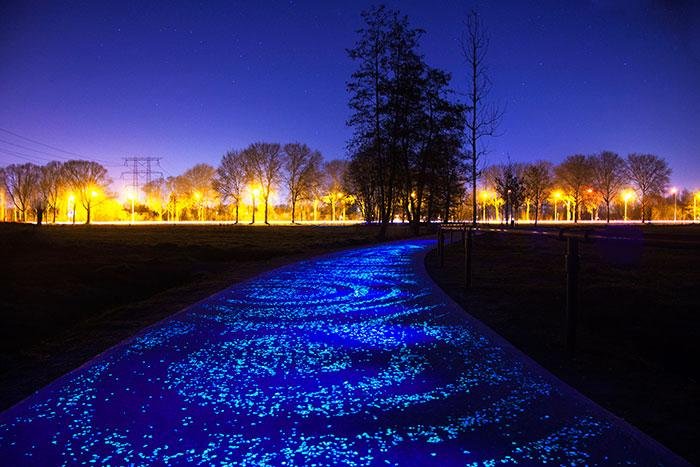
Photoluminescent pavement offers another design possibility.
By integrating luminous materials into pathways and landscapes, surfaces can transform after sunset and create a unique nighttime experience.
Why Nighttime Experience Matters for Tourism Projects
A successful tourism destination is not only about function.
It is also about emotion and memory.
Visitors remember:
- unique environments
- interesting visual effects
- interactive experiences
- beautiful landscapes
A pathway that looks ordinary during the day but changes after dark can create a surprising moment.
This transformation can become part of the attraction itself.
From Simple Pathways to Experience Design
Traditional pathways mainly solve movement problems.
They connect:
- entrances
- buildings
- gardens
- attractions
- viewpoints
However, tourism projects often need more.
A pathway can become:
- a photo opportunity
- a storytelling element
- a design feature
- a memorable experience
Photoluminescent pavement allows designers to treat the ground surface as part of the visitor journey.
Application 1: Resort Walkways
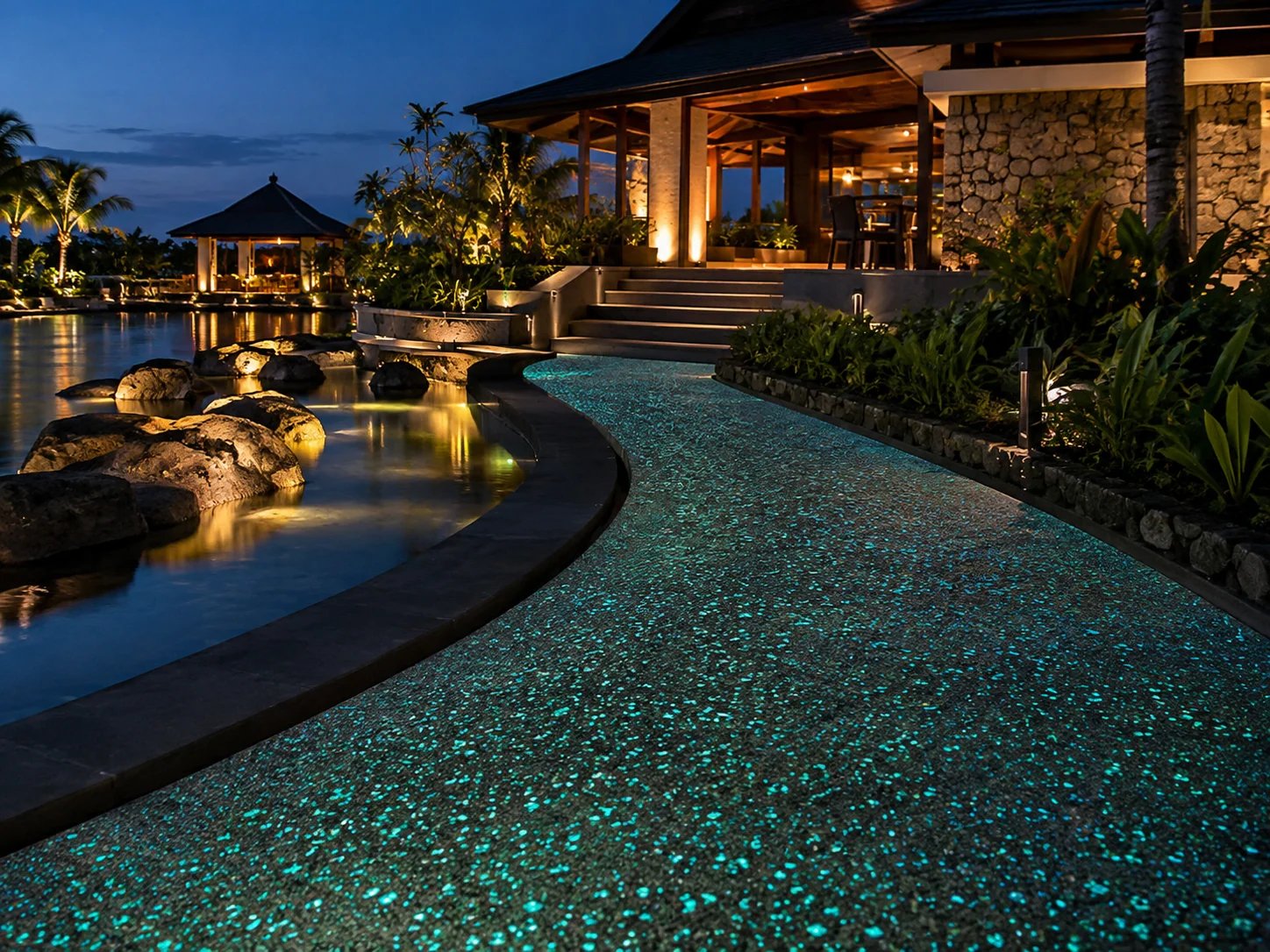
Resorts often invest heavily in landscape design.
Guests experience outdoor spaces throughout the day:
Morning:
- gardens
- pools
- restaurants
Evening:
- outdoor dining
- entertainment
- scenic walks
A glowing pathway can enhance the transition from day to night.
Applications include:
- villa walkways
- poolside paths
- garden routes
- beachfront trails
The goal is usually not bright illumination.
The goal is creating a comfortable and memorable atmosphere.
Application 2: Scenic Area Trails
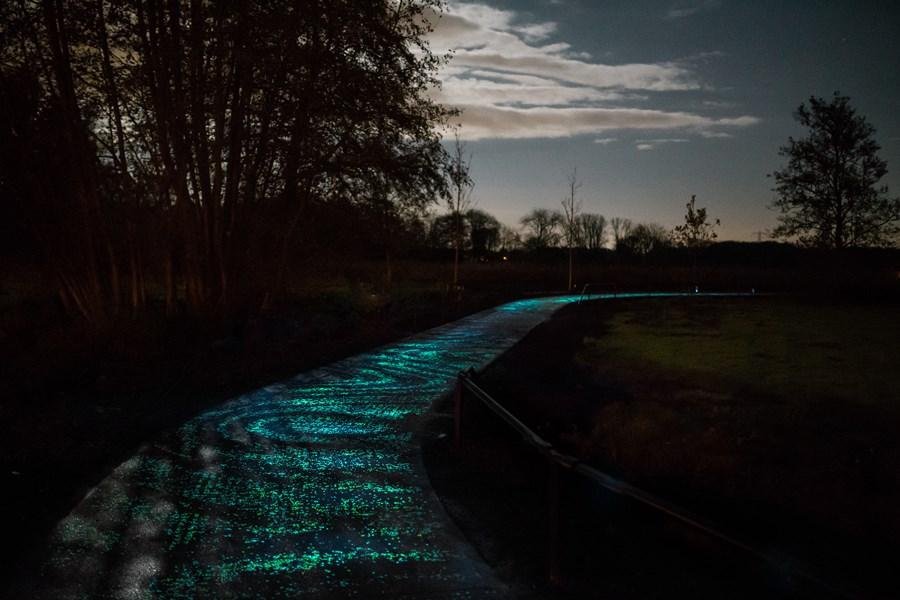
Large scenic areas often contain long walking routes.
Examples:
- mountain attractions
- botanical gardens
- waterfront parks
- ecological tourism areas
Traditional lighting across an entire route may change the natural feeling of the environment.
Photoluminescent pavement can provide a softer approach.
It can highlight:
- pathway edges
- curves
- viewpoints
- important locations
while maintaining the surrounding atmosphere.
Application 3: Cultural and Theme Attractions
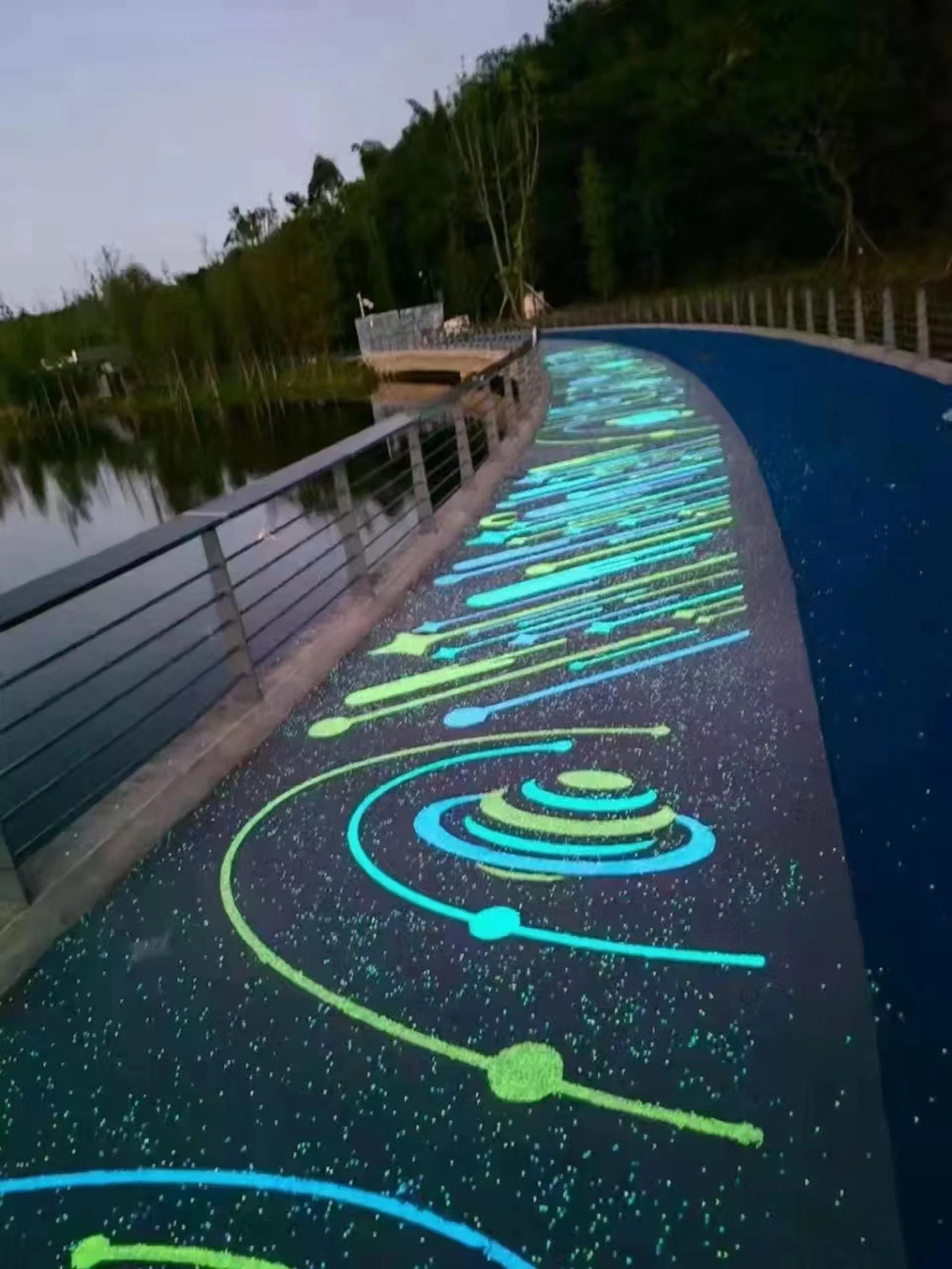
Many tourism projects use storytelling.
A pathway can become part of the theme.
Examples:
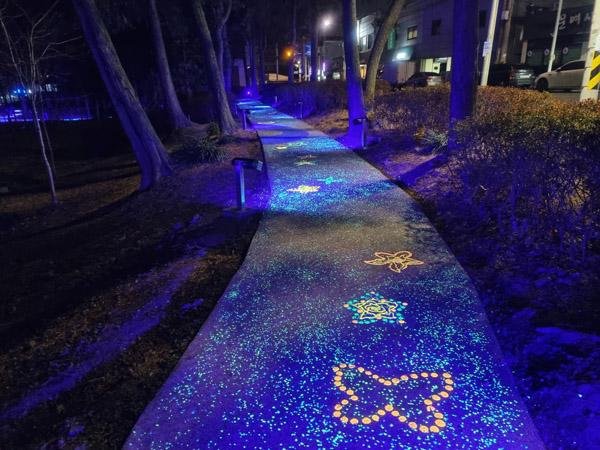
- flower patterns
- star designs
- cultural symbols
- artistic graphics
During the day:
Visitors see the decorative pavement.
At night:
The luminous elements create another layer of the design.
This creates a day-to-night transformation.
Application 4: Waterfront and Night Landscape Projects
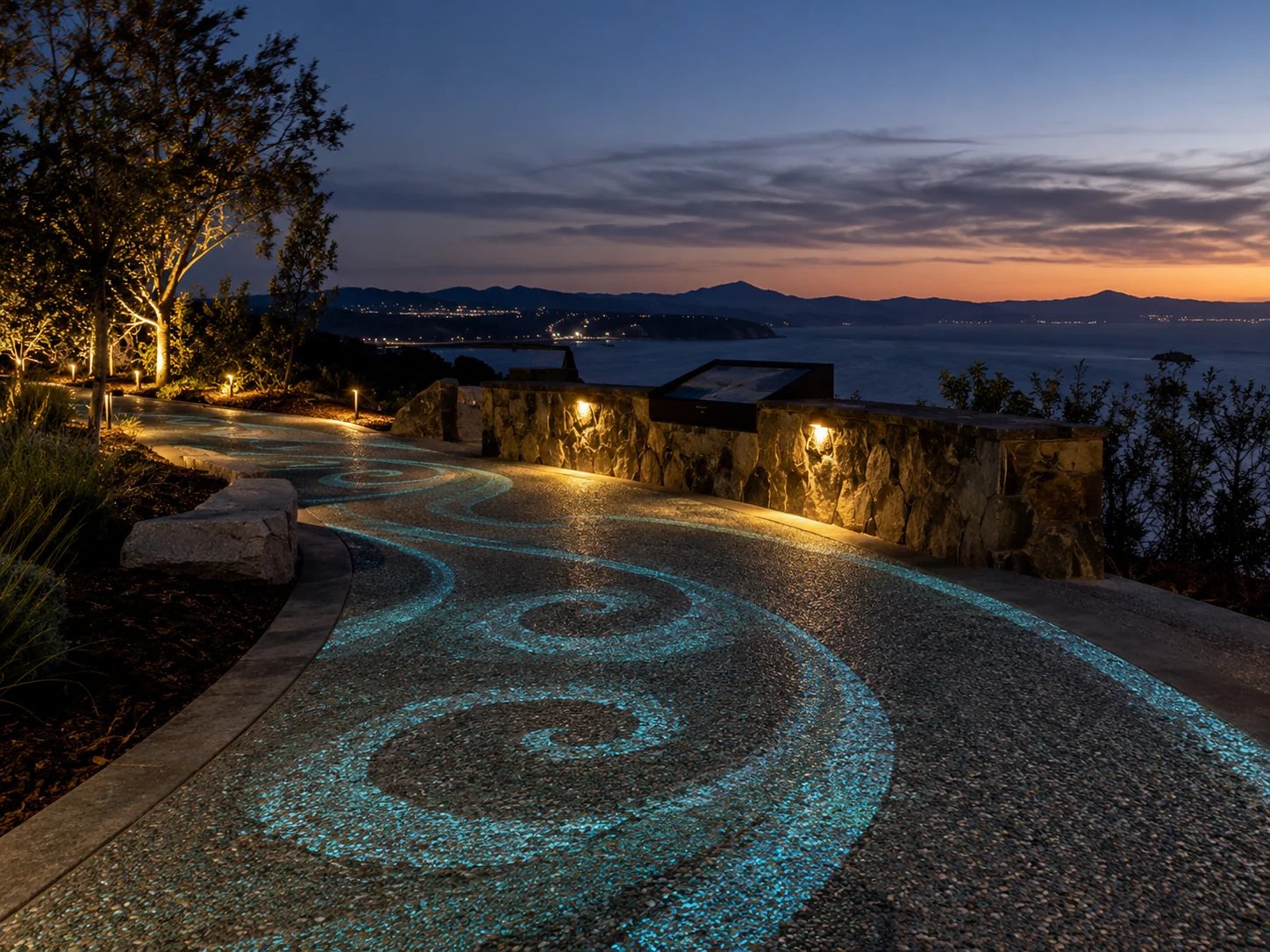
Waterfront areas are especially suitable for nighttime landscape design.
Examples:
- lakeside paths
- coastal walkways
- riverside parks
Blue and blue-green luminous effects often work well with water environments.
The combination of:
- water reflections
- landscape lighting
- luminous pavement
can create a calm nighttime atmosphere.
Application 5: Theme Parks and Family Attractions
Theme parks need memorable visual experiences.
Nighttime environments are especially important because many visitors stay after sunset.
Photoluminescent pavement can be used for:
- entrance areas
- themed pathways
- interactive zones
- decorative landscapes
It provides another design element without requiring complex electronic systems.
Why Photoluminescent Pavement Is Different From Traditional Lighting
Traditional lighting focuses on illuminating space.
Examples:
- lamps
- poles
- fixtures
Photoluminescent pavement focuses on the surface itself.
The pavement becomes:
- visible
- decorative
- directional
This creates a different relationship between visitors and the environment.
Instead of looking at lights above them, visitors experience the pathway beneath them.
Creating Instagram-Worthy Landscape Experiences
Modern tourism projects also consider social sharing.
Visitors often photograph:
- unique architecture
- special landscapes
- nighttime attractions
A glowing pathway can become a visual feature that encourages sharing.
Examples:
- glowing garden routes
- artistic pavement patterns
- waterfront luminous trails
The design itself becomes part of the visitor experience.
Design Principles for Tourism Projects
A successful luminous tourism project should consider several factors.
Match the Landscape Theme
The glow effect should support the environment.
Examples:
Natural park:
- softer colors
- organic patterns
Modern resort:
- clean lines
- geometric designs
Cultural attraction:
- custom symbols and patterns
Avoid Overusing Glow Effects
More glow is not always better.
A premium design often uses:
- selective areas
- special zones
- feature points
This creates contrast.
Consider Daytime Appearance
Visitors will see the pathway during the day.
The surface should look attractive before the glow appears.
Good design works in both conditions.
Choosing the Right Glow Color
Different colors create different moods.
Blue-Green
Suitable for:
- waterfront
- modern landscapes
- relaxing environments
Yellow-Green
Suitable for:
- stronger route visibility
- darker environments
Blue
Suitable for:
- futuristic designs
- creative attractions
Color selection should match:
- architecture
- vegetation
- lighting environment
Combining Glow Pavement With Other Landscape Elements
Photoluminescent pavement works well together with:
Landscape Lighting
Use traditional lighting where stronger visibility is required.
Use glow materials for atmosphere.
Colored Pavement
Create daytime identity and nighttime continuity.
Water Features
Enhance reflections and visual effects.
Garden Design
Create immersive walking experiences.
Sample Testing Is Important for Tourism Projects
Tourism projects usually involve strong visual expectations.
Before large-scale installation, test:
- color
- pattern
- density
- nighttime appearance
- visitor viewing distance
A small sample area helps designers and owners confirm the final experience.
Maintenance Planning for Tourist Locations
High-traffic tourism areas require planning.
Consider:
- cleaning frequency
- surface protection
- replacement methods
- seasonal conditions
A good nighttime design should remain attractive over time.
Frequently Asked Questions
Can photoluminescent pavement be used in resorts?
Yes. Resorts are one of the common applications because they focus on landscape atmosphere and guest experience.
Does it replace all pathway lighting?
No. It is usually used as a complementary design element.
Can patterns and logos be created?
Yes. Custom patterns can be designed using different materials and layouts.
Is it suitable for outdoor tourism areas?
Yes. It can be used in gardens, scenic routes, parks and waterfront landscapes.
Does the pathway glow forever?
Performance depends on material quality, exposure conditions and maintenance.
Final Thoughts
Tourism destinations are no longer limited to daytime experiences.
Nighttime landscapes are becoming an important part of visitor attraction.
Photoluminescent pavement provides a way to transform ordinary pathways into memorable spaces.
It combines:
landscape design
visitor experience
material innovation
nighttime atmosphere
For resorts, scenic areas and cultural attractions, the pathway is no longer just a connection between places.
It can become part of the destination itself.