


Photoluminescent pathway cost depends on the complete installed pavement system, not just the price of glow stones per kilogram. There is no single reliable price per square meter: a 100 m² decorative garden path and a 2,000 m² public bike trail can have very different budgets.
To estimate your project, consider pavement type, glow aggregate coverage, particle size, surface preparation, concrete or asphalt construction, labor, installation method, testing, transport and maintenance.
This guide explains how those costs fit together, how sample panels help establish material requirements, and what information contractors and project buyers should provide when requesting a quotation.
What Determines Photoluminescent Pathway Cost?
A photoluminescent pathway budget can usually be divided into several parts.
The most important are:
base pavement
photoluminescent aggregate
installation labor
surface finishing
sample testing
transport and logistics
future maintenance
The proportion of each cost depends heavily on the project.
For some decorative projects, glow aggregate may be a relatively small part of the total budget.
For other projects with high luminous coverage, it can become one of the main material costs.
Start With the Base Pavement Cost
Before calculating the glow material, first ask:
What type of pavement are we building?
Photoluminescent aggregate is normally added to a larger pavement system.
Common options include:
-
concrete
-
exposed aggregate concrete
-
asphalt
-
resin-bound paving
-
decorative topping systems
Each has a different cost structure.
Concrete Pathways
Concrete projects may include:
-
subbase preparation
-
formwork
-
reinforcement if required
-
concrete supply
-
placing
-
finishing
-
curing
The glow aggregate is added on top of those normal construction costs.
Asphalt Paths
Asphalt projects may include:
-
base preparation
-
asphalt mix
-
paving equipment
-
rolling
-
edge treatment
If glow aggregate is surface-seeded and rolled into the top layer, the installation sequence must be coordinated with the asphalt contractor.
Resin-Bound Systems
Resin-based luminous surfaces can involve:
-
substrate preparation
-
binder
-
decorative aggregate
-
photoluminescent aggregate
-
mixing
-
application labor
This is why comparing glow pathway prices without first identifying the pavement type is usually misleading.
How Glow Aggregate Coverage Affects Cost

The amount of glow aggregate used per square meter can vary significantly.
A project can be designed with:
light scatter
medium luminous density
or
high-density luminous coverage
These three designs may use very different quantities of material.
A subtle decorative pathway may only need scattered luminous points.
A highly visible feature path may use much more photoluminescent aggregate.
So before calculating cost, the client should define the visual goal.
Ask:
Do you want a subtle decorative glow or a strong luminous surface?
That decision affects the budget immediately.
Full-Surface Glow Is Usually More Expensive
One of the most expensive approaches is trying to make the entire pavement surface glow densely.
This requires much more material.
It may also require more careful installation to achieve even coverage.
For many projects, full-surface luminous coverage is not necessary.
A more efficient design may use glow aggregate only in:
-
pathway edges
-
curves
-
entrances
-
decorative bands
-
symbols
-
selected feature zones
This can reduce material consumption while still creating a strong nighttime visual effect.
From a project-design perspective, where you place the glow material can matter more than simply using more of it.
Particle Size Can Change Material Consumption
Photoluminescent aggregate particle size affects both appearance and quantity.
1–5mm
Smaller particles create many fine luminous points.
They are useful for dense decorative effects.
Because the particles are small, distribution can appear more uniform.
5–10mm
This size gives a balance between individual stone visibility and surface coverage.
It is practical for many pedestrian and landscape applications.
10–20mm
Larger aggregate creates stronger individual visual points.
Fewer particles may be required to create a decorative effect, but the finished surface texture becomes more pronounced.
The cheapest particle size is not automatically the cheapest project solution.
The important factor is the quantity required to achieve the desired visual result.
Installation Methods and Material Waste
This is one of the most important cost-control points.
If expensive glow aggregate is mixed throughout the full thickness of concrete, much of the material may end up buried.
Buried particles contribute little to the visible nighttime effect.
That means part of the material cost produces almost no visual return.
A more efficient design often concentrates luminous aggregate near the surface.
The objective is:
maximum useful visible surface from the required quantity of material.
This is why proper installation can reduce total project cost.
A contractor who understands surface exposure may achieve a stronger result with less material than a contractor who simply adds more glow aggregate.
Surface Exposure Affects Cost Efficiency
Consider two projects.
Project A uses a large amount of photoluminescent aggregate, but much of the material is buried under cement paste.
Project B uses less aggregate, but the particles remain evenly distributed and properly exposed.
Project B may actually appear brighter.
This is a key cost lesson:
material quantity and visible luminous area are not the same thing.
Before increasing the material budget, check whether installation quality can be improved.
Labor Costs Depend on the Installation Method
A simple broadcast application may require less labor than a complex decorative pattern.
Labor may increase when the project includes:
-
templates
-
custom patterns
-
multiple colors
-
detailed borders
-
manual aggregate placement
-
exposed aggregate washing
-
special finishing
-
multiple test areas
A large open pathway with simple distribution can usually be installed faster than a small but highly customized decorative plaza.
This is why labor should be estimated from the actual design, not only from square meters.
Decorative Patterns Can Increase Both Labor and Waste
Patterns can create strong visual impact.
But they require more planning.
For example:
-
stars
-
logos
-
directional symbols
-
waves
-
custom borders
may require templates or controlled hand broadcasting.
This can increase:
-
labor time
-
layout work
-
supervision
-
material handling
However, a well-designed pattern may use less total glow aggregate than full-surface coverage.
So a higher labor cost can sometimes reduce material cost.
The best solution depends on the project objective.
Sample Panels Add Cost — But Can Save Much More
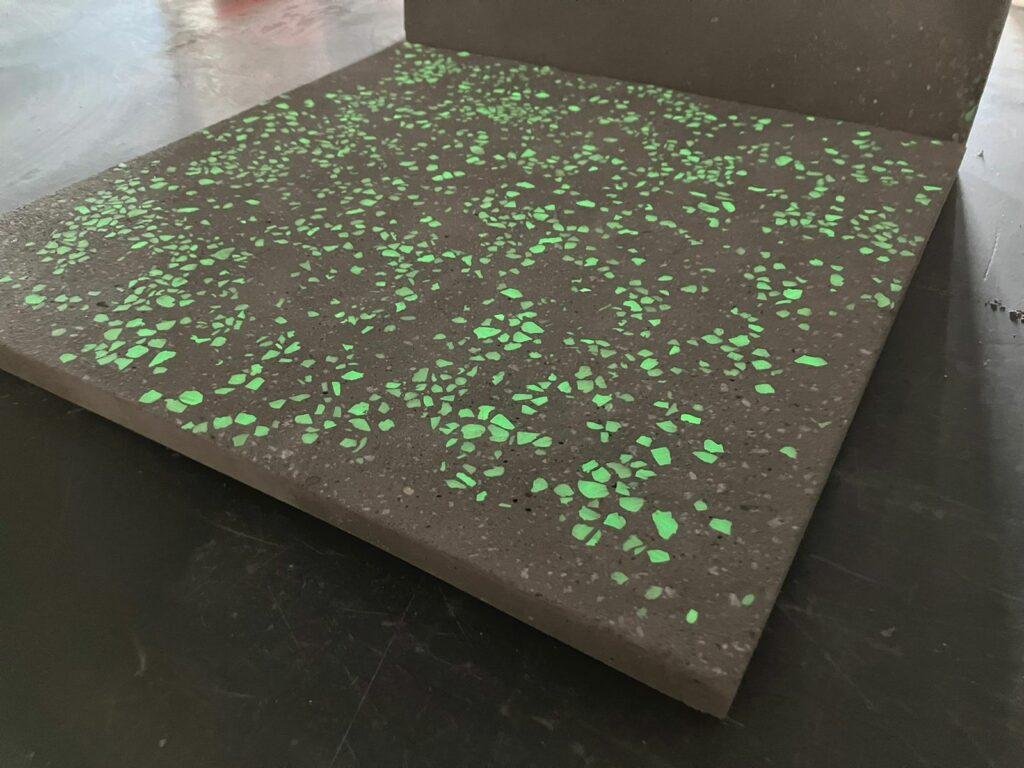
For larger projects, a sample panel should be part of the budget.
At first, some buyers see testing as an extra expense.
In reality, it can prevent much larger mistakes.
A test panel helps confirm:
-
glow color
-
particle size
-
distribution density
-
concrete or asphalt color
-
surface exposure
-
texture
-
nighttime appearance
Imagine installing 1,000 m² before discovering that the glow stones were embedded too deeply.
The cost of correcting that problem would be far greater than making a few small samples first.
For commercial projects, testing should be treated as a cost-control measure.
Daytime Appearance Should Be Approved Too
Photoluminescent pathways are usually photographed at night.
But project owners will see them during the day much more often.
The daytime surface should also be evaluated.
A sample should confirm:
-
aggregate appearance
-
pavement color
-
surface texture
-
distribution
-
architectural style
If the client dislikes the daytime appearance, the project can fail even if the nighttime glow is excellent.
Approving both day and night conditions reduces the risk of costly changes later.
Site Conditions Can Increase the Budget
Not every project is installed on a flat, accessible site.
Costs can increase when the site has:
-
difficult access
-
steep slopes
-
limited equipment access
-
existing pavement removal
-
drainage problems
-
weak subgrade
-
complex geometry
For remote landscape projects, transportation and labor logistics can become significant.
This is why an accurate quotation should include site conditions, not only material quantities.
Freight and Import Costs for International Projects
For overseas buyers, material price at the factory is only one part of the final cost.
Depending on the project, buyers may also need to consider:
-
export packaging
-
inland transport
-
international freight
-
customs
-
duties
-
local taxes
-
delivery from port to project site
Heavy construction materials can be sensitive to freight cost.
For this reason, it is often useful to calculate material quantity first and then optimize packaging and shipping around the final project requirement.
Ordering Too Little Can Also Increase Cost
Buying too much material creates unnecessary inventory.
But buying too little can also be expensive.
If a project runs short near completion, an additional small shipment may have a much higher freight cost per kilogram.
There may also be:
-
production delays
-
color-batch differences
-
site delays
-
extra customs costs
For larger projects, a reasonable contingency quantity should be considered.
The correct allowance depends on the installation method and project complexity.
Maintenance Costs Are Usually Different From Electric Lighting
One reason some projects consider photoluminescent materials is that the luminous aggregate itself does not require wiring to glow.
There are no individual electrical connections inside each glow stone.
However, this does not mean the pavement requires zero maintenance.
The surface may still need:
-
cleaning
-
pavement repair
-
sealer renewal if used
-
crack repair
-
normal landscape maintenance
The key point is that maintenance should be evaluated as part of the whole pavement, not only the luminous aggregate.
Dirt Can Reduce Visible Glow

A photoluminescent surface needs light exposure.
If dirt, dust, leaves or surface contamination covers the aggregate, the visible nighttime effect may decrease.
This means routine cleaning can help maintain performance.
For parks and garden paths, maintenance requirements may vary depending on:
-
surrounding vegetation
-
rainfall
-
soil
-
pedestrian traffic
A pathway under dense trees may need more frequent cleaning than an open plaza.
Electric Lighting and Photoluminescent Paving Have Different Cost Structures
A photoluminescent pathway and an electrically illuminated pathway should not be compared only by initial material price.
Electric lighting may require:
-
fixtures
-
wiring
-
trenching
-
power supply
-
control systems
-
electrical installation
-
future electricity use
-
fixture replacement
Photoluminescent paving has a different cost structure.
Its cost is more concentrated in:
-
pavement materials
-
luminous aggregate
-
installation
The correct comparison depends on the project.
Photoluminescent aggregate should not automatically be treated as a replacement for required safety lighting, but in decorative or low-light applications it can provide a passive visual feature without individual powered light sources.
When Photoluminescent Paving Can Be Cost-Effective
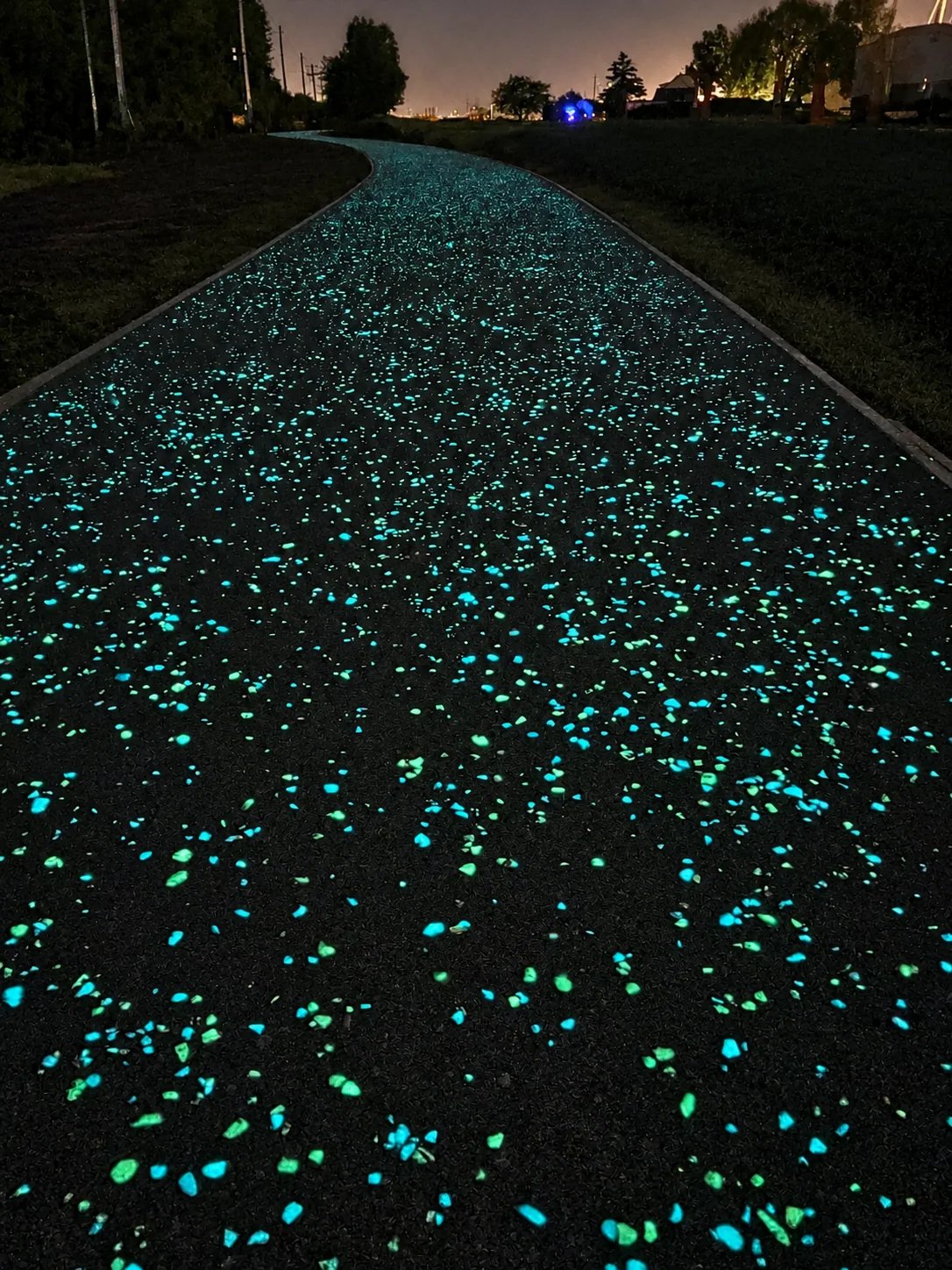
Glow aggregate can be especially interesting when the project already requires a new pavement.
For example, if a new concrete pathway is already being constructed, adding photoluminescent aggregate may be easier than installing a completely separate lighting system later.
Potentially suitable projects include:
-
parks
-
resorts
-
gardens
-
pedestrian trails
-
bike paths
-
courtyards
-
waterfront landscapes
-
scenic routes
The economics depend on the design and local construction costs.
The Cheapest Glow Stone Is Not Always the Lowest-Cost Option
This is particularly important for buyers comparing suppliers.
Suppose Supplier A offers a cheaper material but requires much more aggregate to achieve the desired visual effect.
Supplier B offers a higher-priced material but requires less quantity or provides better visible performance after installation.
The lowest price per kilogram may not produce the lowest project cost.
Buyers should compare:
price + required consumption + installation behavior + visible performance
rather than price alone.
A Better Way to Request a Quotation
Instead of sending a supplier only:
“What is your price per kg?”
send project information.
A useful RFQ should include:
-
project country
-
application
-
pavement type
-
total area
-
desired color
-
preferred particle size
-
desired luminous density
-
site photos
-
expected installation method
For example:
Project: Public landscape pathway
Area: 800 m²
Base: Concrete
Glow Color: Blue-Green
Desired Effect: Medium-density scattered glow
Particle Size: 5–10mm
Location: Outdoor park
This allows the supplier to estimate the material requirement much more accurately.
How to Estimate a Glow Pathway Project Budget
For early budgeting, divide the project into separate items.
Base Pavement
Calculate the normal pavement construction cost.
Glow Aggregate
Estimate the required quantity based on the desired surface density.
Installation Labor
Include additional work required for spreading, embedding, patterns or surface exposure.
Sample Section
Include the cost of testing before full construction.
Freight and Import
For international projects, add transportation and local import expenses.
Contingency
Allow for installation loss, design changes and additional material requirements.
This gives a much more realistic budget than simply multiplying kilograms by the material price.
A Practical Cost-Control Strategy
For many projects, the most effective way to control cost is not to choose the cheapest aggregate.
Instead:
define the visual target first.
Then test:
color + particle size + coverage + installation method.
After the client approves the sample, calculate the material consumption.
This prevents the project from ordering based on assumptions.
It also makes it easier to compare supplier quotations on the same design basis.
Common Budgeting Mistakes
Asking Only for Price per Kilogram
This ignores consumption and installation.
Choosing Full Coverage Without Testing
The project may use far more material than necessary.
Ignoring Surface Exposure
More aggregate may be purchased to compensate for poor installation.
Skipping the Sample Panel
A mistake in the full project becomes much more expensive.
Forgetting Freight
International logistics can significantly change landed cost.
Ignoring Maintenance
All pavements require some level of long-term care.
Frequently Asked Questions
How much does a glow pathway cost per square meter?
There is no universal price. It depends on pavement type, glow aggregate coverage, particle size, labor, site conditions and project location.
Is a high-density glow surface much more expensive?
Usually yes, because it requires more photoluminescent aggregate and may require more careful installation.
Can I reduce cost by using glow stones only on the edges?
Yes. Edge lines, bands and selected patterns can create strong visual impact while using less material than full-surface coverage.
Is concrete or asphalt cheaper?
This depends on local material and labor prices. The base pavement should be priced independently before calculating the luminous component.
Should I buy extra glow aggregate?
For large projects, a reasonable contingency can help avoid delays or expensive small repeat shipments.
Does photoluminescent pavement require maintenance?
Yes, but maintenance usually relates to the pavement surface, cleaning and any protective treatment rather than electrical components inside the luminous aggregate.
A Useful Rule for Project Buyers
When evaluating a glow pathway quotation, compare these three things together:
material quantity
visible surface result
installed project cost
A quotation with the lowest aggregate price may not be the lowest-cost project.
Likewise, a design that uses the most glow material may not produce the best value.
The goal is to achieve the required nighttime effect with an efficient, durable pavement system.
Final Thoughts
The cost of a photoluminescent pathway is not determined by glow stone price alone.
A realistic budget should consider:
pavement + photoluminescent aggregate + installation + testing + logistics + maintenance.
For large projects, start with a small test section.
Once the client approves the daytime appearance and nighttime glow, the actual material consumption can be estimated much more accurately.
That is usually the best point to request a final project quotation.
For a material estimate, prepare:
project area + pavement type + glow color + particle size + desired luminous effect.
With those details, the required photoluminescent aggregate quantity can be calculated far more reliably.