

Photoluminescent aggregate can create attractive nighttime pathways and pavement surfaces.
However, the final appearance does not depend only on the material itself.
The installation method has a major influence on:
- brightness
- particle visibility
- surface texture
- durability
- overall appearance
The same glow aggregate may produce completely different results when installed using different techniques.
Understanding the installation system is essential before starting a project.
Why Installation Method Matters
Photoluminescent particles need two conditions:
First:
They must be securely fixed inside the pavement system.
Second:
Enough surface area must remain visible to receive light and release glow.
If the particles are:
- buried too deeply
- covered by opaque materials
- unevenly distributed
the nighttime effect may become weaker.
A successful installation balances:
strong attachment + sufficient light exposure
Method 1: Surface Seeding Installation
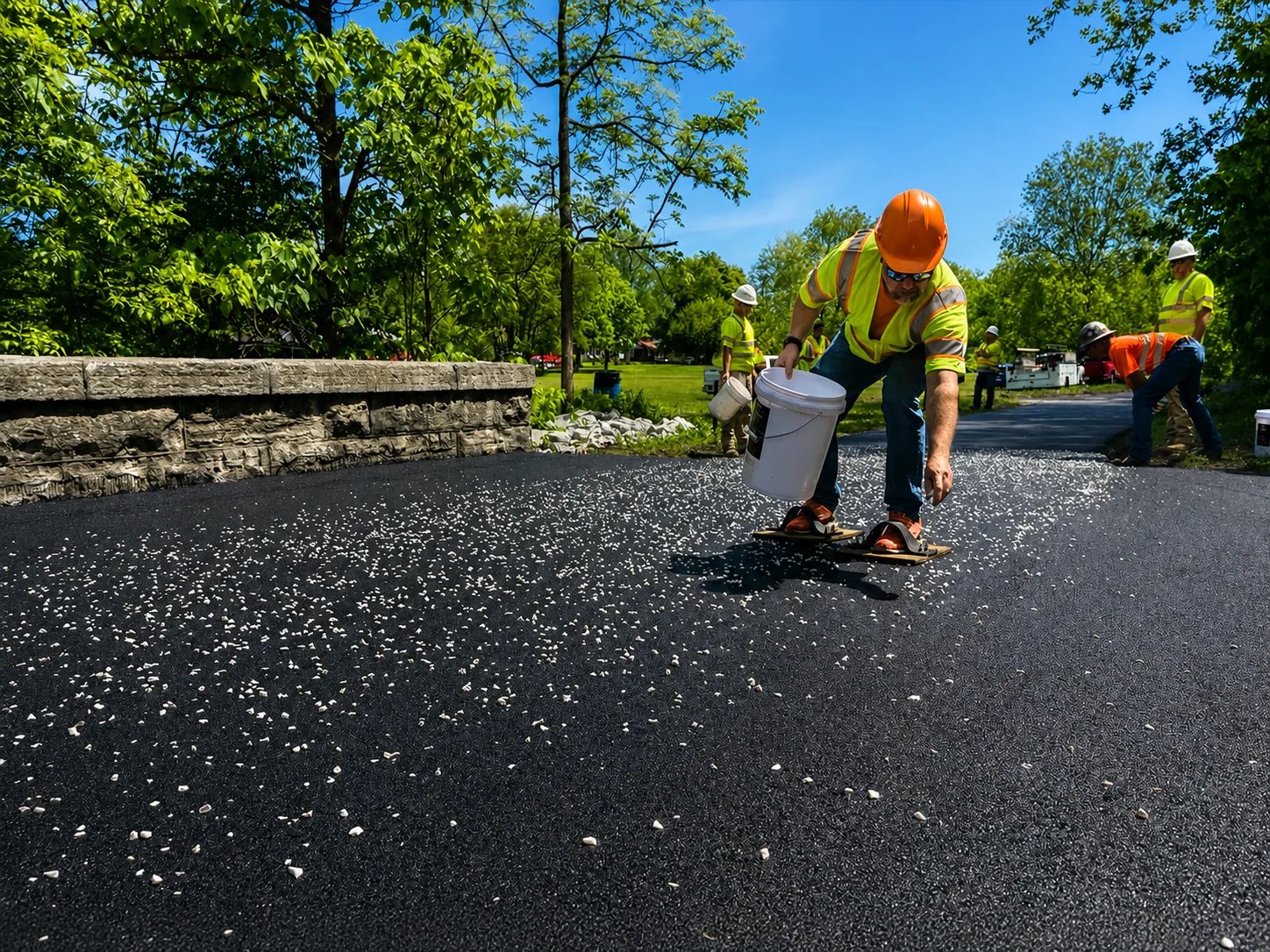
Surface seeding is one of the most common methods for decorative pavement applications.
The luminous aggregate is placed onto the fresh surface before final finishing.
The process usually includes:
-
Prepare the pavement surface
-
Spread photoluminescent aggregate evenly
-
Press particles into the surface
-
Finish and cure the pavement
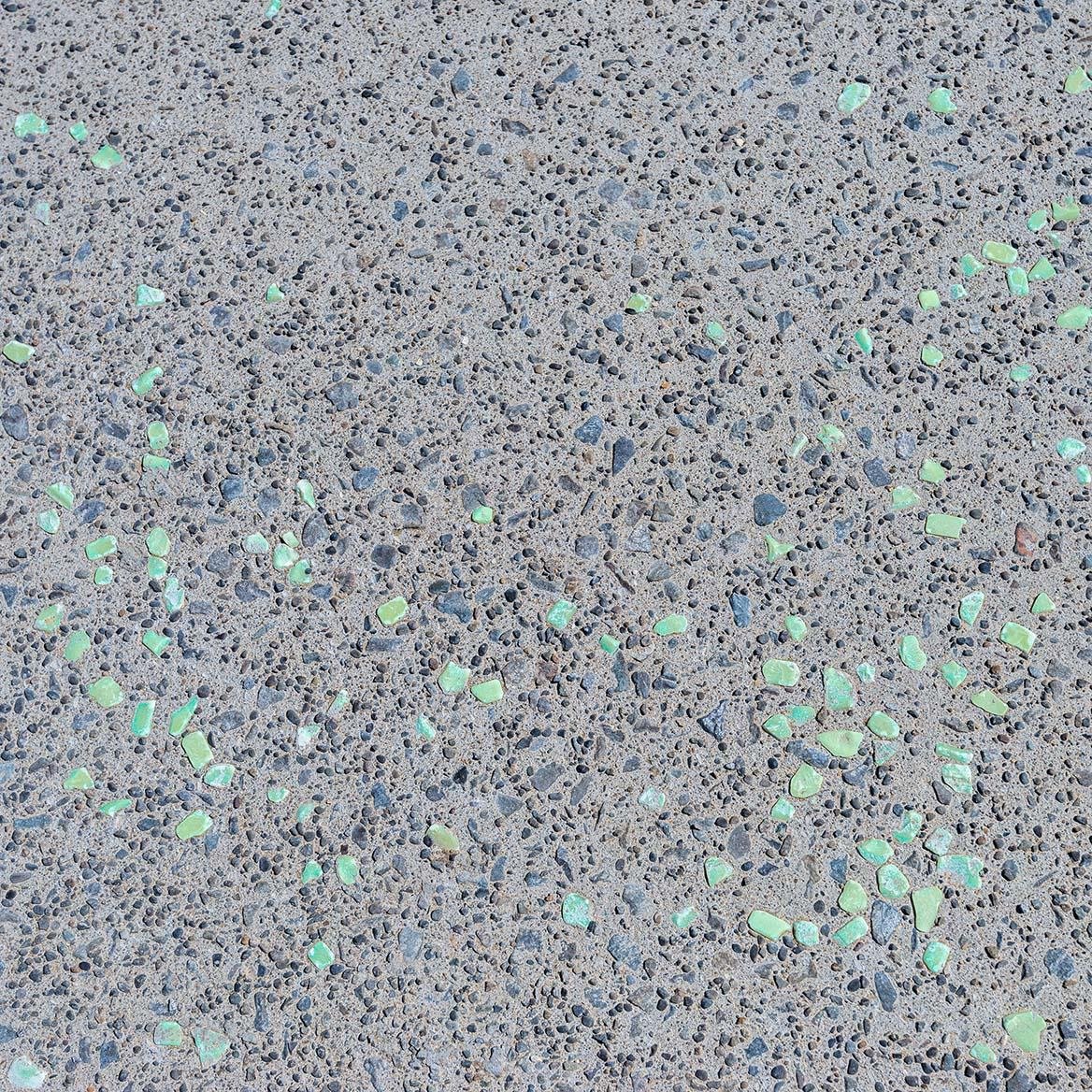
This method allows the particles to remain visible at the surface.
Advantages of Surface Seeding
Strong Visual Effect
Because particles remain exposed, the glow effect is usually more visible.
Flexible Design
Different patterns can be created:
- lines
- borders
- symbols
- decorative areas
Suitable Applications
Common uses include:
- garden paths
- parks
- scenic areas
- landscape pavement
Considerations for Surface Seeding
The installation depth is important.
If particles are pressed too deeply:
- less light reaches the material
- fewer particles are visible
If particles are not fixed properly:
- movement
- loss of aggregate
- uneven appearance
may occur.
Proper finishing is essential.
Method 2: Mixing Photoluminescent Aggregate Into Concrete
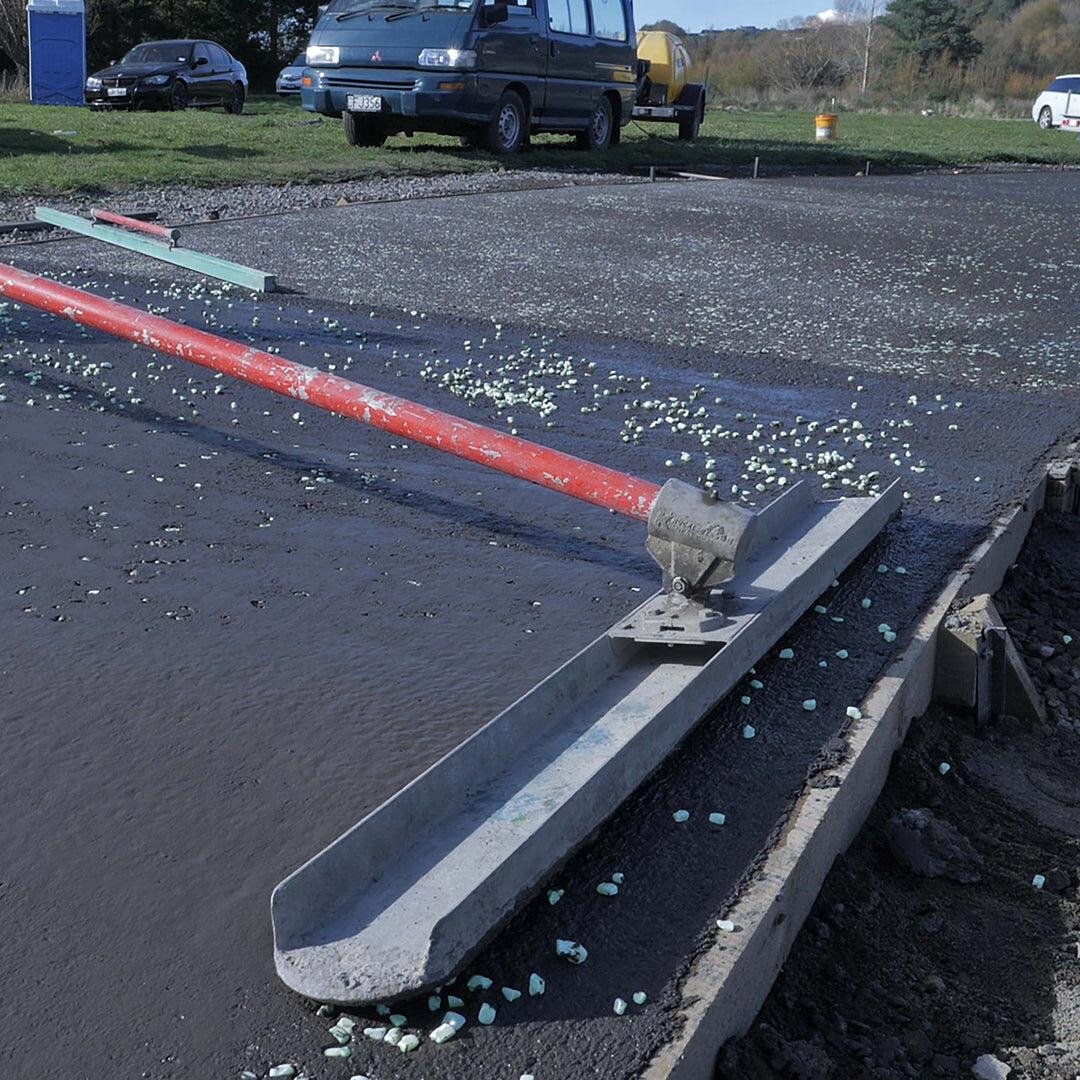
Another method is mixing luminous aggregate directly into concrete.
The particles become part of the pavement structure.
This approach can provide:
- strong integration
- stable installation
- long-term durability
Applications include:
- concrete pathways
- decorative slabs
- landscape elements
Advantages of Concrete Mixing
Strong Bonding
The aggregate is surrounded by the concrete matrix.
Stable Structure
Suitable for areas requiring stronger pavement performance.
Design Flexibility
Can be used for:
- precast products
- decorative concrete
- custom landscape elements
Challenges of Concrete Mixing
The main consideration is visibility.
If the luminous particles are completely covered by cement paste, the glow effect may decrease.
Surface finishing becomes very important.
Methods such as:
- polishing
- washing
- surface exposure
may help reveal more luminous particles.
Method 3: Resin-Bound Photoluminescent Aggregate
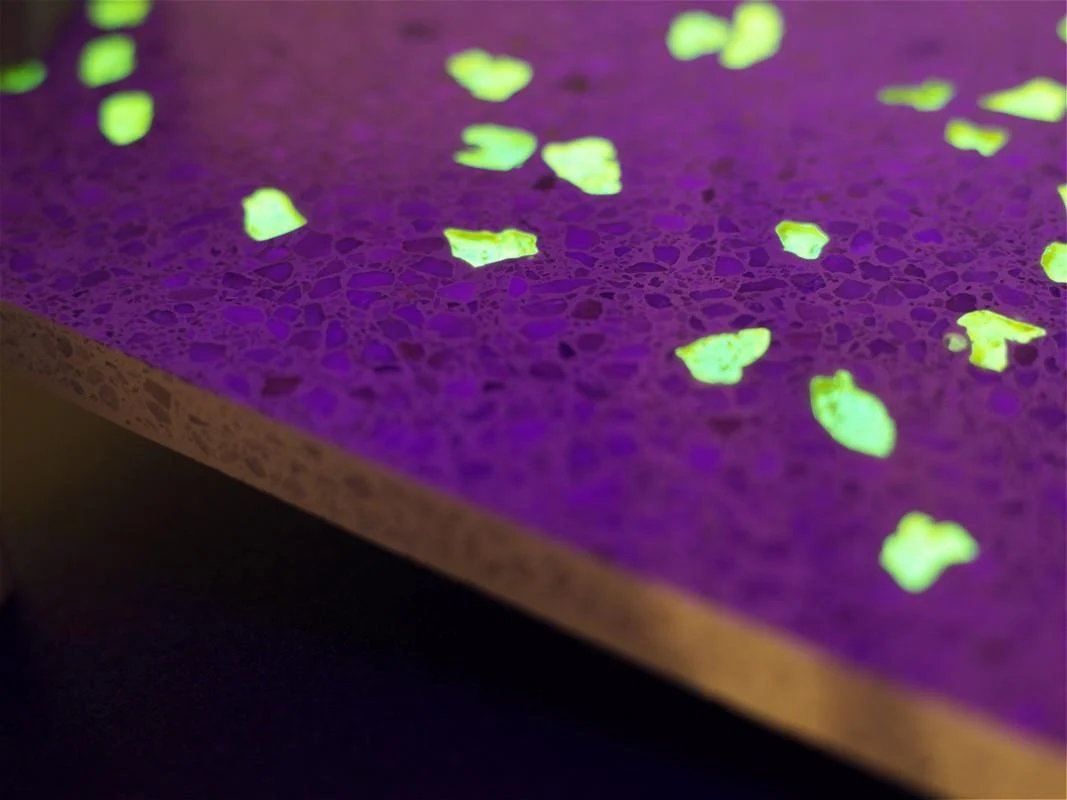
Resin-bound systems are popular for decorative landscape projects.
In this system:
- transparent resin acts as the binder
- luminous aggregate remains visible
- the finished surface has a decorative appearance
Applications include:
- walkways
- garden paths
- resorts
- commercial landscapes
Advantages of Resin-Bound Systems
Excellent Appearance
Transparent resin allows better visibility of luminous particles.
Smooth Surface
Suitable for pedestrian areas.
Decorative Possibilities
Designers can combine:
- different colors
- different particle sizes
- patterns
Why Resin Transparency Matters
A transparent binder allows light to pass through more easily.
This helps:
During daytime:
light reaches the particles
During nighttime:
stored energy can escape as visible glow
A cloudy or dark binder may reduce the effect.
Method 4: Coating Systems
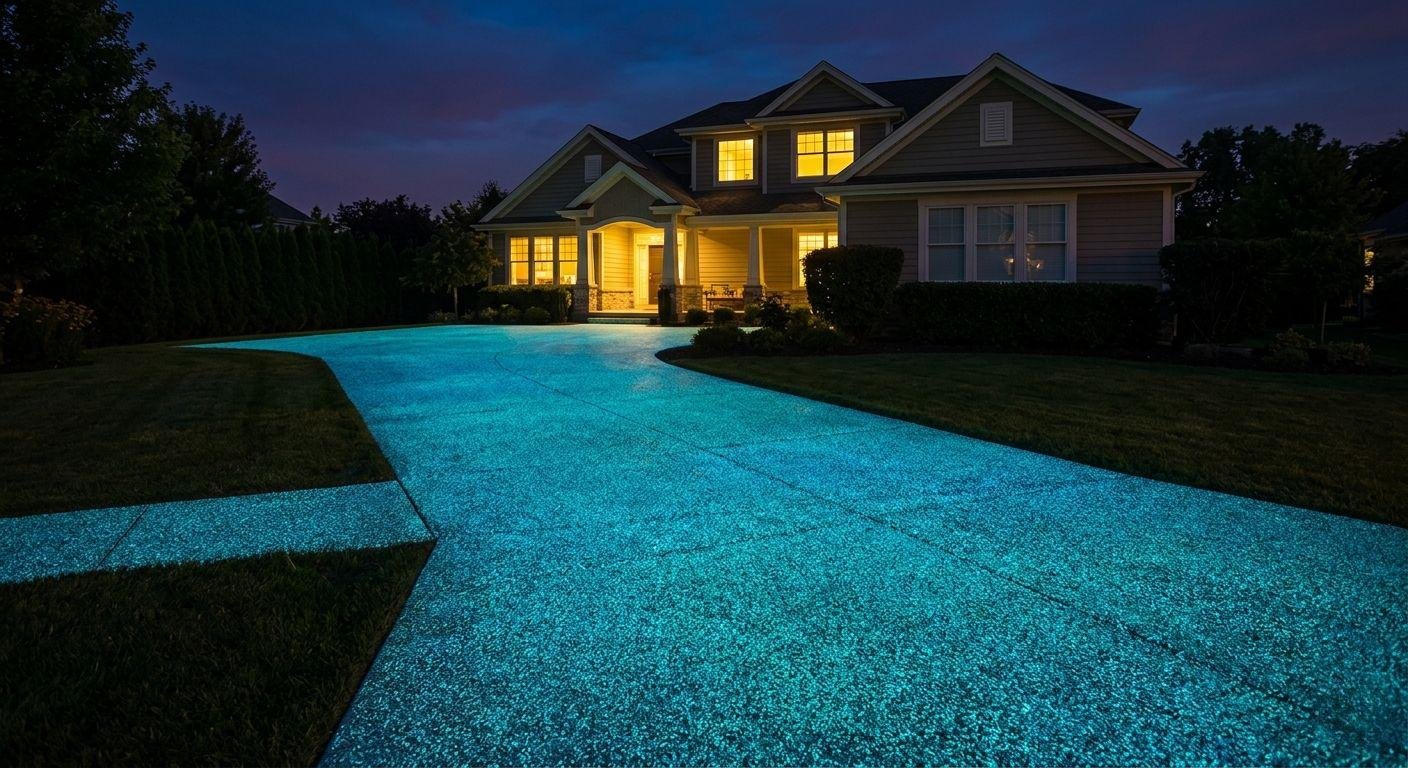
Some projects use photoluminescent particles in surface coatings.
This method is suitable for:
- existing pavement renovation
- decorative surfaces
- special areas
Advantages:
- easier application
- suitable for existing surfaces
- flexible design
However, coating durability should be carefully considered for outdoor applications.
Choosing the Right Installation Method
Different projects require different approaches.
Garden Pathways
Recommended:
Surface seeding or resin-bound systems
Reason:
- decorative appearance
- comfortable walking surface
Public Parks
Recommended:
Concrete or resin systems
Reason:
- durability
- maintenance requirements
Scenic Tourism Areas
Recommended:
Resin-bound or decorative systems
Reason:
- visitor experience
- visual impact
Road-Related Applications
Recommended:
Professional pavement systems
Reason:
- traffic conditions
- abrasion resistance
Installation Mistakes to Avoid
Covering Particles Too Deeply
This reduces light exposure.
Using Dark Opaque Binders
This can reduce visible glow.
Ignoring Surface Texture
The final finish affects particle visibility.
Installing Without Testing
Small sample panels help avoid large mistakes.
Sample Testing Before Installation
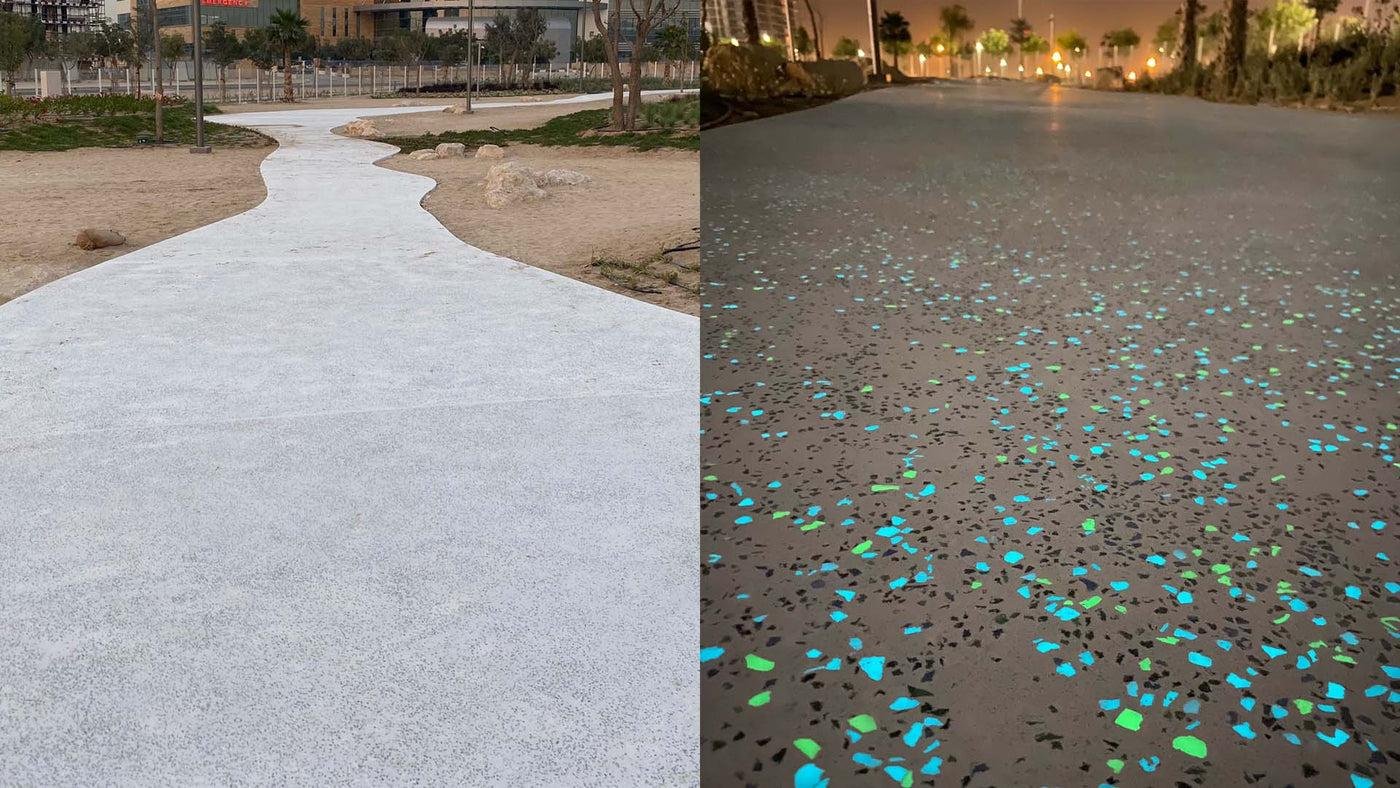
Before full construction, create a test section.
Evaluate:
- daytime appearance
- nighttime glow
- surface texture
- walking comfort
- particle distribution
The approved sample should become the installation standard.
Combining Installation Methods
Some advanced projects combine different approaches.
For example:
Main pathway:
resin-bound luminous surface
Edge decoration:
larger glow stones
Safety areas:
higher luminous density
This creates both function and visual interest.
How Installation Affects Long-Term Performance
A good material can perform poorly if installed incorrectly.
Long-term performance depends on:
- correct particle exposure
- proper bonding
- suitable substrate
- appropriate maintenance
Installation quality is part of product performance.
Frequently Asked Questions
Can photoluminescent aggregate be mixed with concrete?
Yes. It can be incorporated into concrete systems, but surface exposure should be considered.
Is resin-bound installation brighter?
Often it provides strong visual effects because transparent resin allows better particle visibility.
Which method is best for garden paths?
Resin-bound and surface seeding methods are commonly suitable depending on design requirements.
Can existing pavement be renovated with glow materials?
Yes, coating systems can be considered for suitable existing surfaces.
Should I test before installation?
Yes. A sample area helps confirm the expected result.
Final Thoughts
Photoluminescent aggregate is not only a material choice.
It is also an installation system choice.
The best results come from matching:
aggregate size + binder system + installation method + project environment
With proper installation, luminous materials can transform ordinary pavement into functional and memorable nighttime landscapes.