

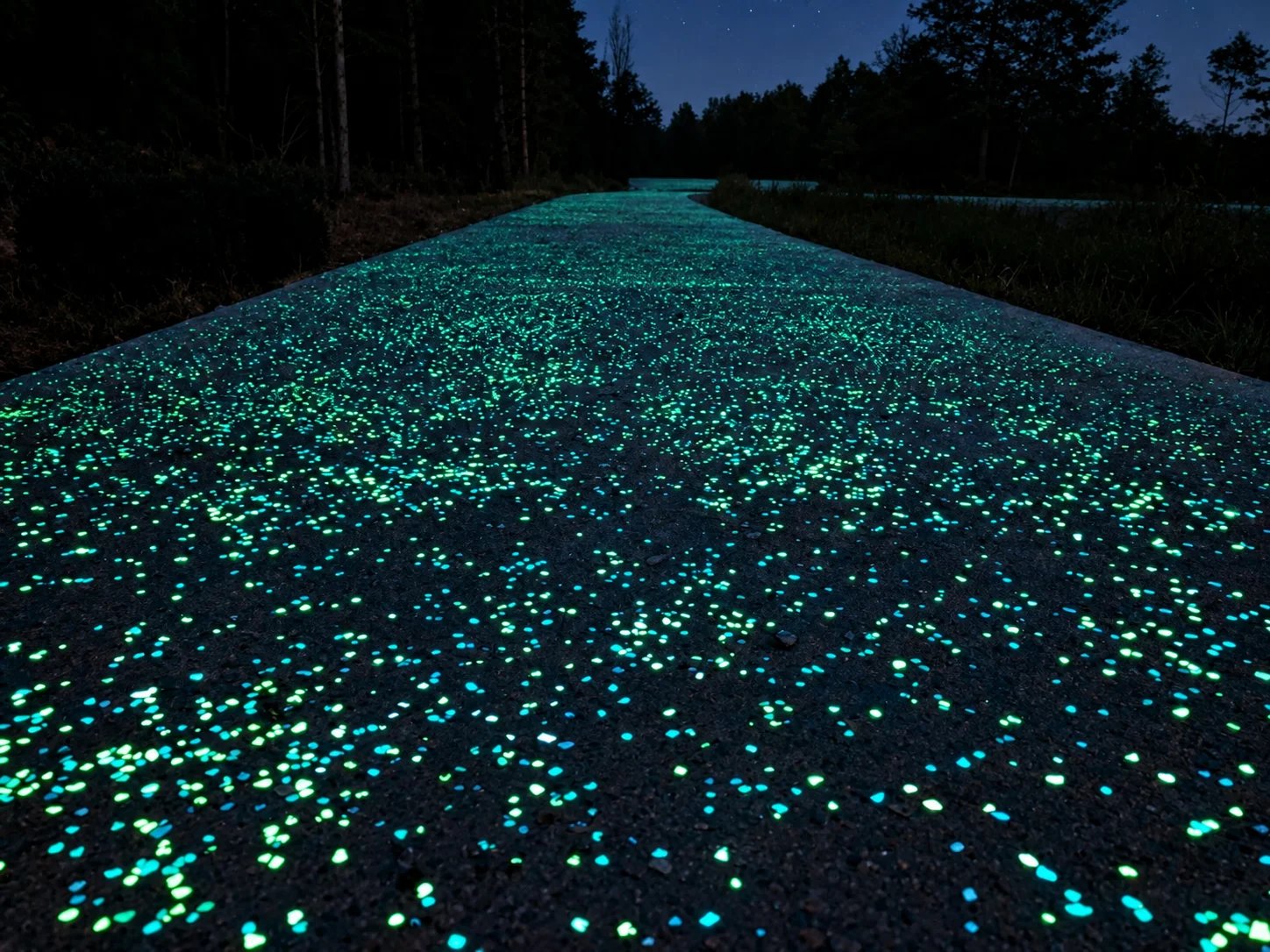
Photoluminescent aggregate can be used in many outdoor paving applications, including:
-
pedestrian pathways
-
bicycle trails
-
landscape plazas
-
parks
-
resorts
-
decorative roads
-
garden walkways
However, the same glow aggregate does not perform in exactly the same way in every pavement system.
A material that works well in concrete may require a different installation approach in asphalt or resin-bound paving.
For designers, contractors and project buyers, the important question is not only:
“Which glow stone should I buy?”
It is:
“Which paving system is the best match for my project?”
This guide compares three common applications:
-
photoluminescent aggregate in concrete
-
photoluminescent aggregate in asphalt
-
photoluminescent aggregate in resin paving
Photoluminescent Aggregate in Concrete

Concrete is one of the most common substrates for glow aggregate applications.
It is widely used for:
-
park trails
-
garden paths
-
sidewalks
-
plazas
-
resort walkways
-
decorative landscape paving
The main advantage of concrete is flexibility.
The surface can be designed in different finishes, including:
-
exposed aggregate
-
stamped concrete
-
broom finish
-
polished concrete
-
decorative concrete
How Glow Aggregate Is Installed in Concrete
A common method is:
-
Place fresh concrete.
-
Broadcast photoluminescent aggregate onto the surface.
-
Embed the particles into the upper layer.
-
Allow curing.
-
Expose the particles through suitable finishing methods.
The key point is balance.
The aggregate needs to be:
-
secure enough to remain attached
-
exposed enough to receive light and create visible glow
If the particles are buried too deeply, the visible effect may decrease.
If they remain loose on the surface, durability may become a problem.
Why Concrete Works Well for Glow Pathways
Concrete provides a stable surface for decorative designs.
Advantages include:
Design flexibility
Concrete can support:
-
patterns
-
logos
-
symbols
-
borders
-
custom shapes
Easy sample approval
Before full construction, contractors can create a small test panel.
This allows evaluation of:
-
glow color
-
particle density
-
surface exposure
-
daytime appearance
Suitable for landscape projects
Concrete pathways are common in:
-
parks
-
gardens
-
scenic areas
-
resorts
These are environments where decorative nighttime effects are often valuable.
Considerations for Concrete Projects
Concrete projects should consider:
Surface color
A dark concrete background may create stronger contrast.
A light concrete surface may produce a softer appearance.
Finishing method
Different finishes expose the aggregate differently.
Maintenance
Leaves, dirt and surface residue can reduce visible glow by covering the exposed particles.
Photoluminescent Aggregate in Asphalt
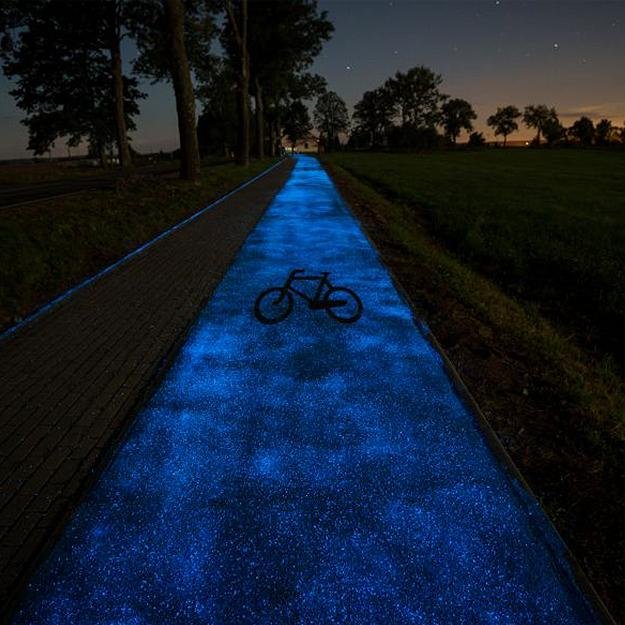
Asphalt is another interesting substrate for luminous pavement.
It is especially suitable for:
-
bike paths
-
pedestrian trails
-
greenways
-
recreational roads
-
landscape routes
The dark color of asphalt can create strong contrast with luminous particles.
How Glow Aggregate Is Installed in Asphalt
A typical process involves:
-
Prepare the asphalt surface.
-
Apply aggregate onto fresh asphalt.
-
Roll the surface.
-
Allow the pavement to cool and stabilize.
The aggregate becomes part of the asphalt surface.
The installation needs careful control because:
-
too deep embedding reduces exposure
-
insufficient embedding may affect retention
Advantages of Asphalt for Glow Applications
Strong contrast
Dark asphalt creates a strong background.
Blue, blue-green and yellow-green glow particles can become highly visible.
Suitable for long trails
Many bicycle paths and public trails already use asphalt.
Adding a luminous surface feature can be integrated into existing pavement planning.
Large-area applications
Asphalt is often economical for:
-
longer routes
-
public paths
-
multi-use trails
Asphalt Design Options
Photoluminescent aggregate does not always need to cover the entire asphalt surface.
Possible designs include:
Edge guidance bands
Useful for:
-
bike paths
-
scenic trails
-
curves
Center lines
Useful for:
-
route guidance
-
decorative design
Feature zones
Useful for:
-
entrances
-
intersections
-
viewing areas
Full-surface scatter
Useful for:
-
special landscape projects
Photoluminescent Aggregate in Resin-Bound Paving
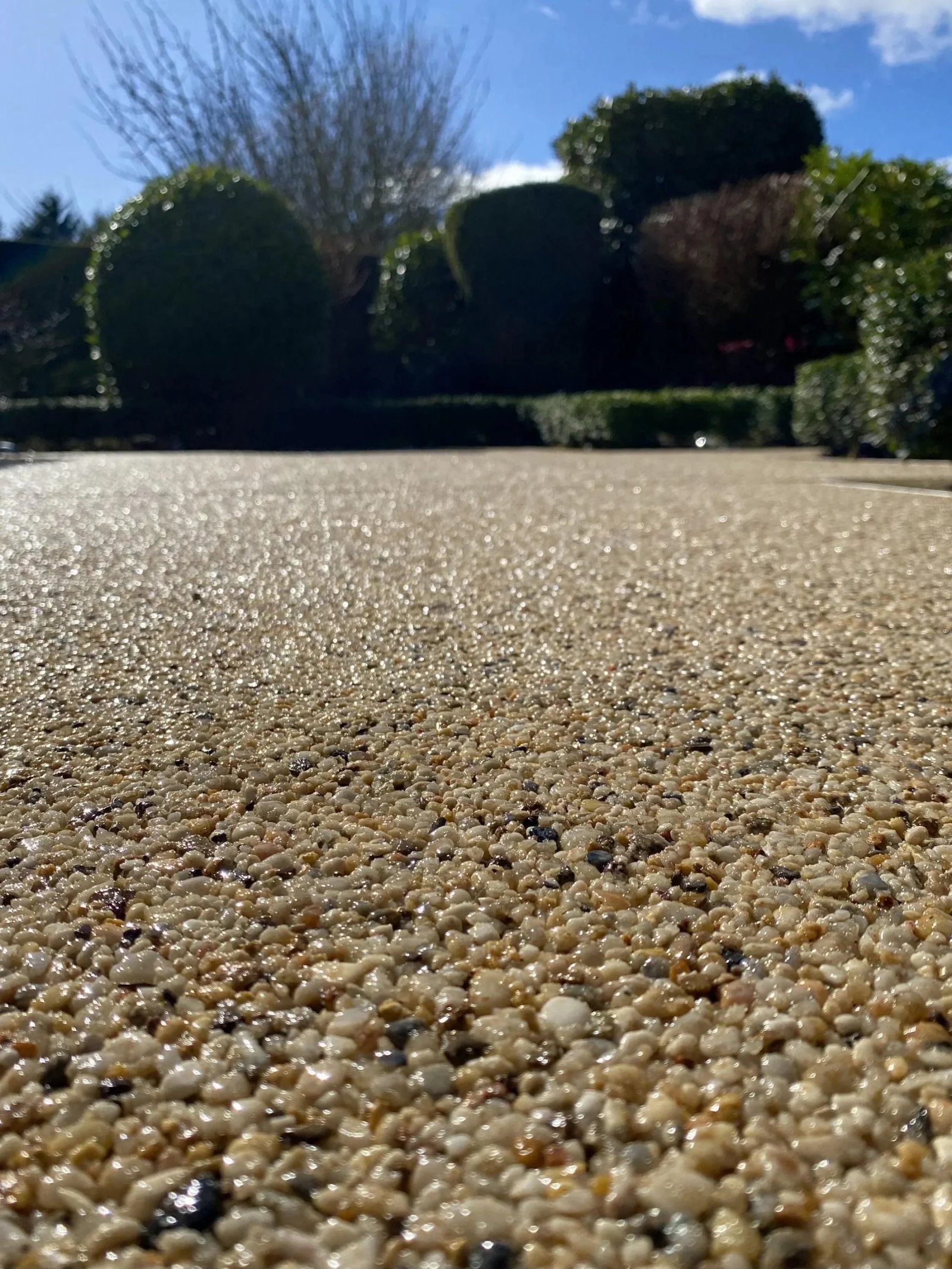
Resin-bound systems combine:
-
aggregate
-
resin binder
to create decorative permeable surfaces.
They are commonly used for:
-
gardens
-
courtyards
-
driveways
-
resorts
-
premium landscape projects
Adding photoluminescent aggregate can create a unique nighttime surface.
How Glow Aggregate Works in Resin Systems
The luminous particles become part of the resin-bound structure.
Important factors include:
-
resin transparency
-
particle exposure
-
UV resistance
-
binder quality
-
surface texture
A clear resin system is especially important because the glow effect depends on light reaching the luminous material.
Advantages of Resin-Bound Glow Surfaces
Premium appearance
Resin-bound surfaces can create a clean decorative finish.
Design flexibility
Projects can combine:
-
different aggregate colors
-
patterns
-
borders
-
decorative zones
Permeable paving option
Many resin-bound systems allow water drainage through the surface.
This can be attractive for landscape applications.
Common Resin Problems to Watch For
Unlike concrete and asphalt, resin systems depend heavily on binder performance.
Possible issues include:
-
yellowing
-
cracking
-
debonding
-
loose stones
-
surface wear
If the resin fails, simply adding more glow aggregate will not solve the problem.
The complete system needs inspection.
Comparing the Three Systems
| System | Best Applications | Main Advantage |
|---|---|---|
| Concrete | Parks, gardens, plazas | Highest design flexibility |
| Asphalt | Bike paths, trails, long routes | Strong contrast and large areas |
| Resin-bound | Premium landscapes, decorative paving | High-end appearance |
How to Choose the Right System
Before selecting the material, consider:
What is the project type?
A garden path and a public bike trail have different requirements.
Ask:
-
pedestrian?
-
bicycle?
-
vehicle?
-
decorative only?
What is the expected traffic level?
Light pedestrian areas may use different solutions than:
-
public trails
-
cycling routes
-
vehicle-access areas
What visual effect is required?
Do you want:
-
subtle decorative glow?
-
clear route guidance?
-
strong feature area?
The answer affects:
-
particle size
-
density
-
color selection
What is the surrounding environment?
Consider:
-
darkness level
-
nearby lighting
-
vegetation
-
landscape style
A dark rural trail may require a different approach from an urban plaza.
Particle Size Selection
Particle size affects both appearance and installation.
Small particles
Advantages:
-
smoother appearance
-
dense glowing points
-
decorative effect
Suitable for:
-
detailed designs
-
fine patterns
Medium particles
Advantages:
-
balanced visibility
-
good general performance
Suitable for:
-
pathways
-
parks
-
bike trails
Large particles
Advantages:
-
stronger individual glow points
Suitable for:
-
borders
-
feature zones
Why Sample Testing Is Important
Product photos cannot show everything.
A sample panel can reveal:
-
real surface appearance
-
glow intensity
-
particle exposure
-
texture
-
color matching
For larger projects, testing the actual pavement system is recommended.
A glow stone sample alone cannot show the final installed result.
Common Mistakes in Glow Pavement Projects
Choosing material before defining the application
The same product may not suit every pavement.
Using too much material instead of improving exposure
More aggregate does not always mean better visible glow.
Ignoring daytime appearance
The pavement will be viewed during the day most of the time.
Skipping sample testing
A small test section can prevent large project mistakes.
Treating glow aggregate as lighting replacement
It creates passive visual guidance, not necessarily full illumination.
Frequently Asked Questions
Can photoluminescent aggregate be used in asphalt?
Yes. It can be incorporated into suitable asphalt surfaces using an appropriate installation method.
Is concrete better than asphalt for glow pathways?
Neither is always better. The choice depends on project requirements, design goals and construction conditions.
Can glow aggregate be mixed into resin?
Yes, compatible resin systems can incorporate luminous aggregate, but binder transparency and performance are important.
Which system has the strongest glow effect?
The visible effect depends on many factors, including exposure, density, particle size, background color and lighting conditions.
Should I test before a large order?
Yes. A sample panel is one of the best ways to confirm the final appearance.
Final Thoughts
Photoluminescent aggregate is not a single pavement solution.
It is a design component that must work together with:
-
concrete
-
asphalt
-
resin
-
installation method
-
maintenance plan
-
surrounding environment
The best results come from choosing the complete pavement system first, then selecting the appropriate glow aggregate.
For any major project, test the actual combination of:
substrate + aggregate + installation method
before moving into full construction.
A successful luminous pathway is not only about glowing materials.
It is about creating a durable pavement system that performs well both day and night.