
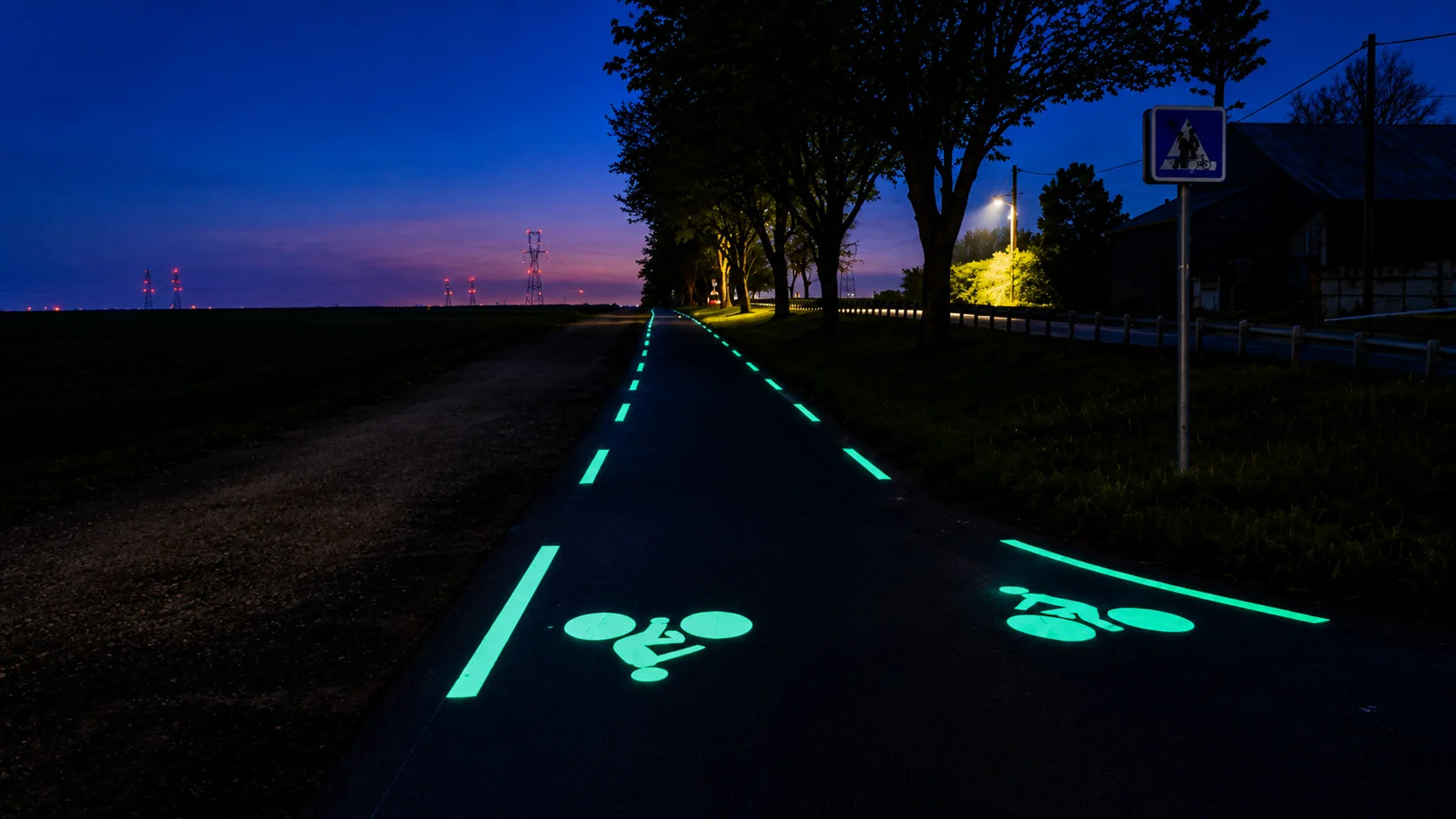
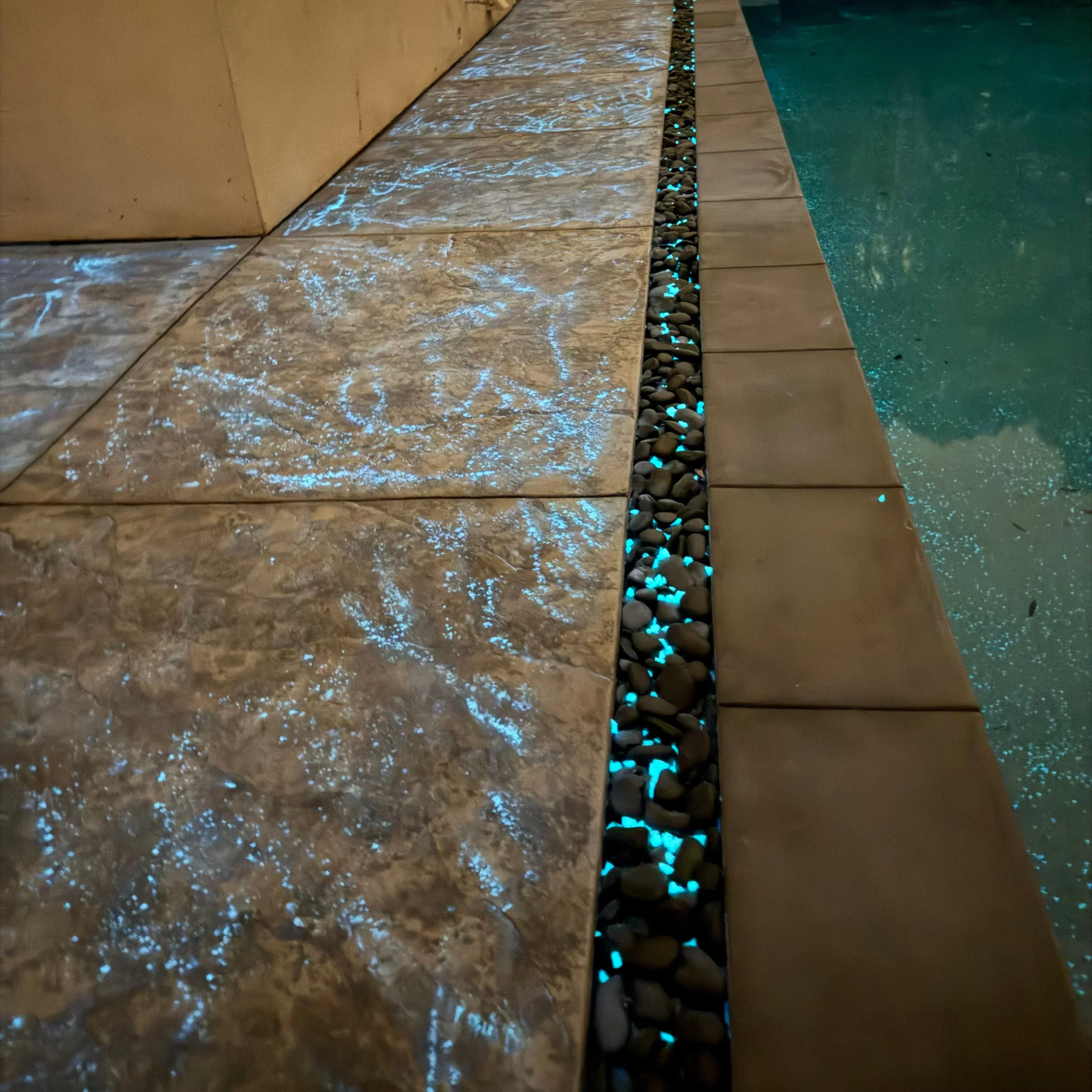
Glow stones can be used around swimming pools when the complete paving system is designed for the conditions. Photoluminescent aggregate adds soft luminous points to pool decks, paths and garden areas, creating a decorative nighttime atmosphere rather than intense illumination.
Plan more than brightness: the finished surface must retain appropriate pedestrian grip, drainage and outdoor durability. Compare placement, colors, particle sizes and concrete or resin systems, then test samples wet and dry. Glow stones do not replace required pool or safety lighting.
What Are Glow Stones?
Glow stones are made with photoluminescent materials that absorb light from sunlight or artificial lighting.
After the surroundings become dark, they slowly release that stored light as a visible glow.
They do not need:
- electrical wiring
- batteries
- underground cables
- direct power connections
This makes them interesting for decorative landscape projects where designers want a passive nighttime effect.
Around swimming pools, they are commonly used in:
- pool decks
- garden paths
- stepping areas
- decorative borders
- landscape paving
- patio surfaces
- entrance walkways
Why Use Glow Stones Around a Pool?
The biggest reason is visual atmosphere.
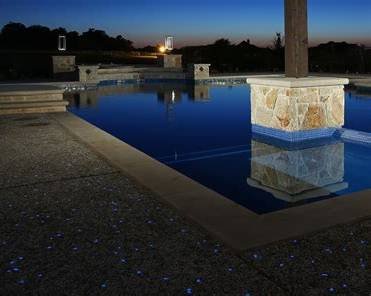
During the day, the stones can blend into the surrounding pavement.
At night, they create a completely different appearance.
Instead of installing bright lights everywhere, glow aggregate can create small luminous points across the surface.
This works especially well in:
- villas
- resorts
- hotels
- private gardens
- outdoor spas
- landscape courtyards
The effect is decorative rather than intensely bright.
Are Glow Stones Waterproof?
The glow material itself is generally used in outdoor environments, but the important question is not only whether the stone can get wet.
You also need to look at the complete paving system.
Around a pool, the pavement will be exposed to:
- water
- cleaning chemicals
- sunlight
- temperature changes
- foot traffic
- repeated wet and dry cycles
So the binder, concrete, resin or coating system used with the glow aggregate needs to be suitable for wet outdoor conditions.
The performance of the whole system matters more than the glow stone alone.
Assess wet-surface grip and pool-deck safety requirements
This is one of the most important points.
A pool deck should never be designed only for appearance.
Wet surfaces can become slippery.
If glow stones are used around a swimming pool, the finished pavement needs enough texture and grip for pedestrian use.
That means the designer should consider:
- aggregate texture
- surface roughness
- binder type
- drainage
- installation method
- local pool-deck safety requirements
Glow stones can be decorative, but they should not reduce the slip resistance of the surface.
Where Should Glow Stones Be Installed?
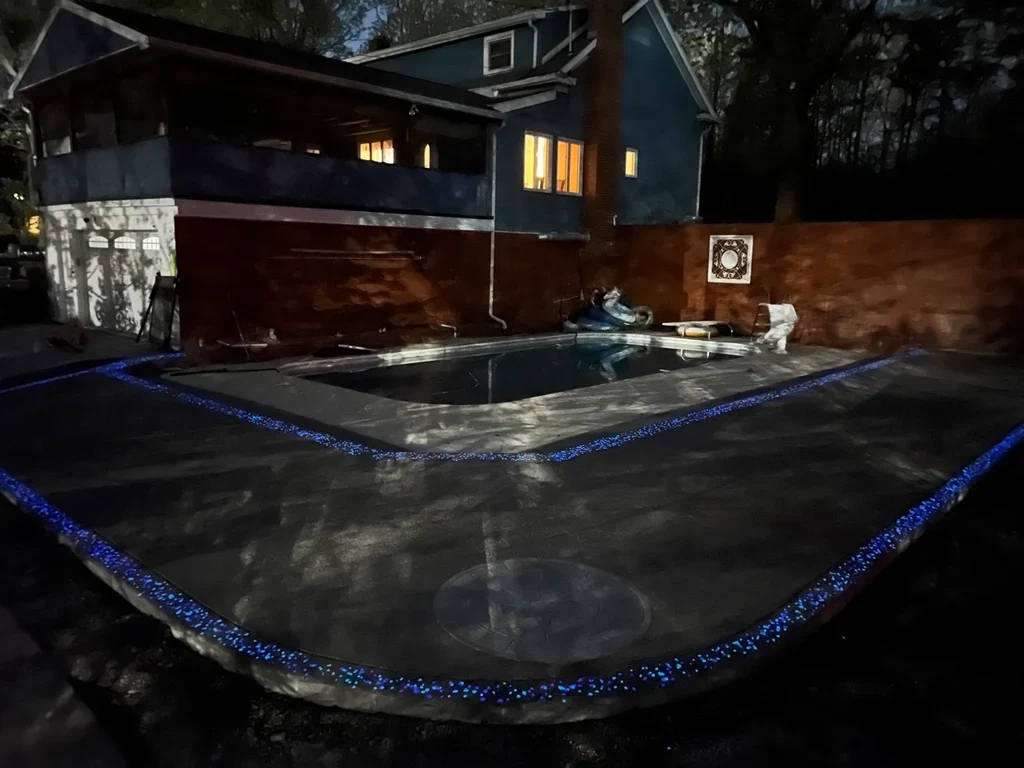
You do not need to cover the entire pool deck.
Selective placement usually looks better.
1. Pool Deck Borders
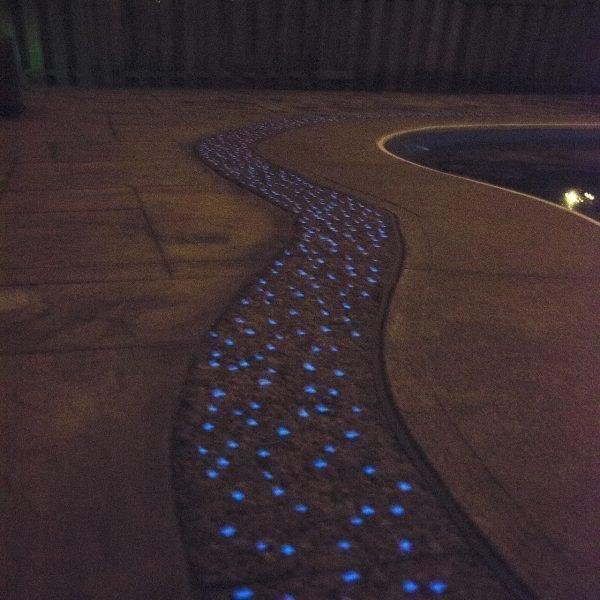
Glow stones can be installed around the outer edge of the pool deck.
This creates a subtle luminous outline after dark.
It is especially attractive when combined with darker surroundings.
2. Walkways to the Pool
A pathway leading from a house, hotel or garden toward the swimming pool is a natural place to use photoluminescent aggregate.
The glowing points help define the route visually at night.
3. Decorative Landscape Areas
Glow stones can also be used in:
- garden beds
- stepping paths
- planting borders
- landscape gravel areas
This creates a consistent nighttime design around the entire pool environment.
4. Feature Patterns
Some projects use glow aggregate to create:
- stars
- lines
- waves
- borders
- directional patterns
These can make the pool area feel much more customized.
Which Glow Color Works Best Around Pools?
Blue is one of the most popular choices.
It naturally matches water and creates a cooler nighttime appearance.
Blue glow stones are often used for:
- modern pool decks
- luxury villas
- resort landscapes
- spa areas
Blue-green glow stones create a slightly brighter effect while still keeping a water-inspired appearance.
Yellow-green glow stones usually look more visible in darker surroundings.
So a simple way to choose is:
Blue — calm and modern
Blue-Green — balanced and versatile
Yellow-Green — stronger nighttime visibility
What Particle Size Is Best?

Particle size changes the overall appearance.
1–5mm
Creates many small glowing points.
Best for:
- fine decorative surfaces
- dense luminous effects
- resin or concrete applications
5–10mm
Provides a balanced decorative texture.
Suitable for:
- pathways
- poolside paving
- landscape surfaces
10–20mm
Creates larger, more noticeable luminous pieces.
Better for:
- landscape borders
- decorative gravel areas
- feature zones
For smooth pedestrian areas, smaller or medium-sized particles are usually easier to integrate into the surface.
Can Glow Stones Be Used With Concrete?
Yes.
Photoluminescent aggregate can be incorporated into decorative concrete systems.
However, putting all the glow stones deep inside the concrete wastes material.
Only the stones that remain visible near the surface can absorb enough light and provide a visible nighttime effect.
For this reason, many projects concentrate glow aggregate close to the upper surface.
Can Glow Stones Be Used With Resin?
Yes.
Transparent or light-colored resin systems can work particularly well with glow stones.
The resin helps hold the aggregate in place while allowing the luminous surface to remain visible.
For poolside applications, the resin system should be suitable for:
- outdoor exposure
- UV exposure
- moisture
- pedestrian traffic
- wet conditions
Do not choose the resin only because it is transparent.
The full performance of the system matters.
Should the Entire Pool Deck Glow?
Usually not.
A completely glowing surface can look impressive in photos, but it is not always necessary in real projects.
A more refined design often uses glow stones selectively.
For example:
- 20–30% decorative glow coverage
- glowing borders
- scattered luminous points
- patterned areas
- pathway guidance
This can create a more natural and premium appearance.
Can Glow Stones Replace Pool Lighting?
No.
Glow stones are not a replacement for required lighting.
Photoluminescent materials create a soft afterglow.
They are best used as:
decorative nighttime features and passive visual guidance.
Where strong illumination is required for safety, normal lighting should still be used.
What Affects the Glow Around a Pool?
Several factors influence the final effect:
- amount of daylight received
- charging time
- nearby artificial lighting
- glow color
- particle size
- installation density
- surface exposure
- surrounding darkness
A brightly lit pool area may actually make the glow appear less dramatic because the surrounding environment is not dark enough.
The glow is most noticeable when ambient lighting is lower.
Should You Test Before Installation?
Definitely.
Pool projects are often expensive, so a small test panel is worth doing first.
Test:
- glow color
- particle size
- base color
- binder
- surface texture
- slip resistance
- nighttime appearance
Then look at the sample both wet and dry.
That gives you a much more realistic idea of the final result.
Plan the complete poolside paving system
Glow stones can be a very attractive addition to swimming pool landscapes.
They work especially well in pathways, decorative borders, pool decks and garden areas where designers want a soft nighttime glow without complicated electrical systems.
But good design is about more than brightness.
For poolside projects, always consider:
slip resistance, drainage, outdoor durability and the complete pavement system.
When those factors are handled properly, photoluminescent aggregate can turn an ordinary pool area into a much more distinctive nighttime landscape.