

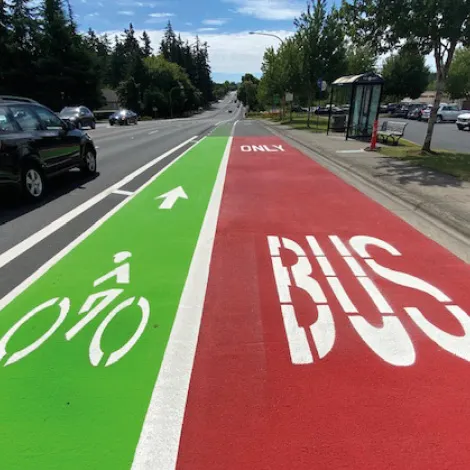
Colored road marking helps organize traffic, separate road users, highlight special zones and improve pavement visibility. Compared with standard white or yellow lines, colored areas can be easier to recognize at a glance.
Common applications include bicycle lanes, bus lanes, parking zones, pedestrian crossings, school zones, industrial traffic areas, safety zones, and commercial and residential roads. Choose the complete system for adhesion, skid resistance, weather resistance, color stability and wear resistance, rather than color alone.
What Is Colored Road Marking?
Colored road marking refers to a pavement marking or coating system used to create clearly visible colored traffic zones. It may be applied as:
- Full-lane coatings
- Lines
- Blocks
- Arrows
- Symbols
- Crossings
- Parking areas
The purpose is usually to visually separate one road function from another.
Match the colored marking to road and site uses
Why Use Colored Road Marking?
Color can help users identify road functions more quickly. For example, colored markings may help distinguish:
- Bicycle space from vehicle lanes
- Bus lanes from general traffic lanes
- Pedestrian zones from vehicle areas
- Parking spaces from circulation lanes
- Safety areas from normal pavement
The color itself does not replace signs or standard traffic markings. It works as an additional visual layer.
Colored Bike Lanes
Bike lanes are one of the most common applications. Green, red, or blue colored surfaces may be used depending on local standards. Colored bike lanes can be especially useful at:
- Intersections
- Conflict zones
- Driveway crossings
- Turning areas
- Continuous cycling routes
For bicycle traffic, skid resistance is very important, especially in wet weather.
Colored Bus Lanes
Bus lanes often need to remain clearly separated from general traffic. A colored surface can make the dedicated lane easier to identify. These areas usually experience:
- Heavy traffic
- Frequent braking
- Tire wear
- Repeated turning
For this reason, bus-lane coatings need stronger durability than decorative pedestrian coatings.
Colored Pedestrian Crossings

Colored pavement can also be used around pedestrian crossings. Applications may include:
- School crossings
- Raised crossings
- Pedestrian plazas
- Commercial entrances
Bright colors can improve visual contrast, but the surface should still provide suitable slip resistance.
Parking Areas
Colored road marking can help organize parking facilities. Different colors may identify:
- Standard parking spaces
- Accessible parking
- Electric vehicle charging spaces
- Motorcycle parking
- Loading zones
- Reserved spaces
Color coding can make large parking areas easier to understand.
School Zones
Colored pavement is often used near schools because it creates strong visual contrast. It may be applied around:
- School entrances
- Drop-off areas
- Crosswalks
- Speed reduction zones
The design should remain simple and consistent.
Industrial Areas
Factories and logistics facilities also use colored pavement marking. It may define:
- Forklift routes
- Pedestrian walkways
- Loading zones
- Restricted areas
- Equipment zones
Industrial traffic can create heavy abrasion, so the coating system should match the traffic level.
Compare colored road marking materials
Different materials can be used depending on the application.
Water-Based Colored Coating
Water-based systems can be suitable for:
- Bike lanes
- Parking areas
- Pedestrian zones
- Landscape pavement
They are commonly selected for larger areas and a wide range of colors.
MMA Colored Coating
MMA systems are often chosen when fast curing and high durability are important. Typical applications include:
- Intersections
- Bike lanes
- Bus lanes
- High-traffic zones
Fast curing can reduce road closure time.
Polyurethane Coating
Polyurethane systems may provide:
- Good weather resistance
- Good color retention
- Flexibility
- Outdoor durability
They can be useful for long outdoor applications.
Epoxy Coating
Epoxy is more commonly used on:
- Concrete
- Parking garages
- Industrial floors
For outdoor use, UV stability should be considered carefully.
Thermoplastic Marking
Colored thermoplastic materials may be used for:
- Symbols
- Lines
- Blocks
- Durable traffic markings
The correct system depends on traffic and climate conditions.
Choose a color for function and local requirements
Color selection should be based on project requirements and local traffic regulations.
Green
Often associated with bicycle lanes and low-speed routes.
Red
May be used for bus lanes, warning zones, or bicycle facilities in some countries.
Blue
Often used for special parking or designated areas.
Yellow
Can be used for warnings, boundaries, and safety zones. The traffic meaning of each color varies by location.
Prepare asphalt, concrete and compatible primers
Asphalt Surfaces
Colored markings can be applied to asphalt when the surface is stable and properly prepared. Before application, check for:
- Loose aggregate
- Oil
- Dust
- Moisture
- Fresh asphalt condition
A compatible primer may be required.
Concrete Surfaces
Concrete can also be coated, but preparation is critical. Potential problems include:
- Dust
- Moisture
- Weak surface laitance
- Oil contamination
- Old sealers
Grinding or mechanical preparation may be necessary.
Surface Preparation
Poor preparation is one of the main causes of coating failure. The surface should generally be:
- Clean
- Dry
- Stable
- Free from oil
- Free from loose material
Good preparation helps improve adhesion and service life.
Primer Selection
Some systems require a primer. The correct primer depends on:
- Asphalt
- Concrete
- Existing coatings
- Resin flooring
The primer and colored coating should be compatible.
Assess traction, weather exposure and traffic wear
Skid Resistance
Colored pavement should not become slippery. This is especially important on:
- Bicycle lanes
- Crosswalks
- Curves
- Parking ramps
- School zones
Anti-slip aggregate may be added to the coating system. The ideal system should balance:
Color Visibility + Surface Grip + Durability
Wet Weather Performance
Rain can reduce road contrast and affect surface traction. Outdoor colored markings should be evaluated for:
- Wet skid resistance
- Water resistance
- Color visibility
- Surface texture
Wet-condition testing is especially important for bicycle and pedestrian areas.
UV Resistance
Outdoor colored coatings receive constant sunlight. Poor UV resistance may cause:
- Fading
- Yellowing
- Color shift
- Surface degradation
For long-term outdoor projects, choose a system with suitable UV stability.
Traffic Wear
Different areas experience different levels of abrasion.
Low Wear
- Pedestrian paths
- Landscape zones
Medium Wear
- Bicycle lanes
- Parking areas
High Wear
- Bus lanes
- Intersections
- Turning zones
- Industrial traffic
Material selection should match the expected traffic.
Turning Areas Need Extra Durability
Vehicle turning creates strong lateral forces. High-wear locations include:
- Bus stops
- Parking ramps
- Intersections
- Loading areas
These zones may require a more durable material system.
Color Consistency
Large projects need consistent color across the entire area. Differences can occur because of:
- Uneven coating thickness
- Poor mixing
- Different batches
- Substrate color
Consistent application and batch control can reduce variation.
Plan cleaning, inspections and recoating
Colored road markings gradually collect:
- Dirt
- Tire marks
- Oil
- Dust
Regular cleaning helps maintain visibility. Periodic inspection should check for:
- Fading
- Peeling
- Cracking
- Surface wear
When Should It Be Recoated?
Recoating may be required when:
- Color has faded significantly
- Large worn areas appear
- Surface traction decreases
- The pavement function becomes difficult to identify
Loose or unstable old coating should be removed before recoating.
Colored Road Marking vs. Colored Asphalt
These are two different systems.
Colored Road Marking
A coating applied to an existing pavement. Advantages include:
- Easier retrofit
- Suitable for smaller areas
- Faster installation
- Easier maintenance
Colored Asphalt
Color is integrated into the pavement material itself. It may be suitable for:
- New construction
- Large areas
- Permanent pavement design
The correct option depends on project size and budget.
Colored Road Marking vs. Standard White Lines
White and yellow markings are still essential for normal traffic control. Colored pavement is usually used to emphasize a specific functional zone. For example:
Green Bike Lane + White Edge Line
or
Red Bus Lane + White Arrow
This combination creates stronger visual organization.
Test Before Full Installation
Before applying a large area, create a small test section. Evaluate:
- Color
- Adhesion
- Skid resistance
- Drying time
- Wet performance
- Wear resistance
This is especially important for high-traffic areas.
Best Applications

Colored road marking is particularly useful for:
Bicycle Lanes
Clear route identification and conflict-zone highlighting.
Bus Lanes
Dedicated transit corridors.
Parking Areas
Space and zone organization.
Pedestrian Crossings
Improved visual awareness.
School Zones
High-visibility safety areas.
Industrial Facilities
Traffic and pedestrian separation.
Choose the complete road marking system
Colored road marking is not only about appearance. A good system should provide:
Clear Color + Strong Adhesion + Skid Resistance + Weather Resistance + Traffic Durability
The correct material depends on the substrate, traffic level, climate, and local regulations. For bike lanes, bus lanes, parking areas, school zones, pedestrian areas, and industrial facilities, colored pavement markings can improve both visual organization and road functionality.
FUXIN supplies Colored Road Marking Materials, Colored Anti-Slip Pavement Coatings, MMA Colored Coatings, Water-Based Colored Pavement Materials, and Traffic Marking Systems for roads, parking areas, bicycle lanes, pedestrian zones, and industrial projects.
For samples, quotations, or project recommendations, please contact us.