

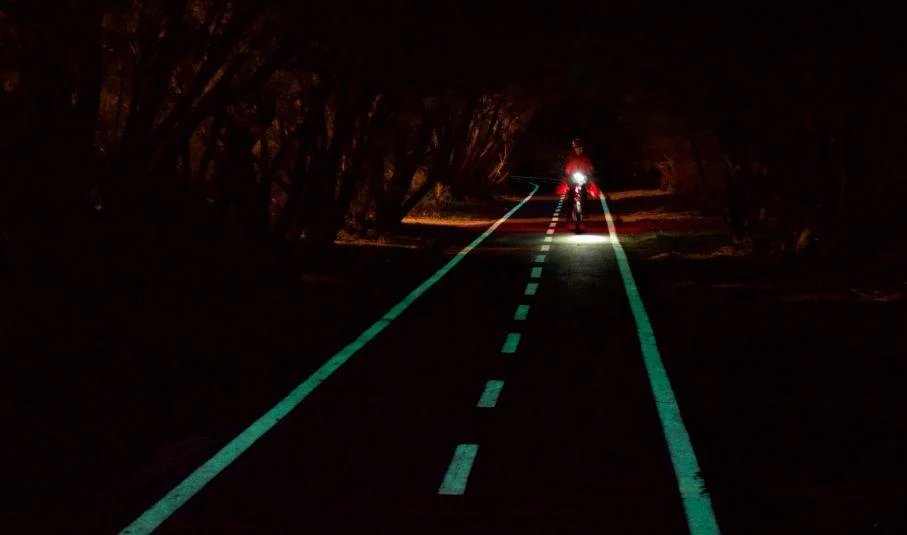
Cities are changing.
Modern urban design is no longer only focused on buildings and roads.
More attention is being given to:
- pedestrian experience
- environmental impact
- public spaces
- energy efficiency
- nighttime safety
- landscape identity
As cities become smarter, infrastructure materials are also evolving.
One example is photoluminescent pavement.
By using materials that absorb light during the day and release a soft glow after dark, pavement surfaces can become an active part of nighttime landscape design.
The goal is not to replace every lighting system.
The goal is to create smarter, more integrated public spaces.
What Makes a Smart City Material?

A smart city material does not necessarily need electronic components.
A material can be considered “smart” when it responds to environmental conditions and improves the user experience.
Examples include:
- self-cleaning surfaces
- permeable pavement
- heat-reflective materials
- recycled construction materials
- energy-efficient lighting systems
Photoluminescent pavement follows a similar idea.
It uses natural or artificial light exposure as an energy source and creates a visible nighttime effect without continuous electricity consumption.
Moving From Lighting Infrastructure to Material-Based Design

Traditional nighttime infrastructure usually depends on external equipment:
- lamps
- cables
- poles
- power systems
Photoluminescent pavement takes a different approach.
Instead of adding more equipment above the ground, the pavement itself becomes part of the visual system.
This creates a different design possibility.
The surface can provide:
- route guidance
- decorative effects
- landscape identity
- visual continuity
The infrastructure becomes less dependent on separate lighting elements.
Why Cities Are Looking for New Pathway Solutions
Public spaces are expected to do more than simply connect locations.
A modern pathway may need to support:
- walking
- cycling
- recreation
- tourism
- social activities
At the same time, cities want to consider:
- energy consumption
- maintenance costs
- environmental impact
- visual quality
This creates demand for materials that combine function and design.
Photoluminescent pavement is one example of this new approach.
Application 1: Smart Parks and Greenways
Parks are one of the most suitable environments for luminous pavement.
A park pathway usually does not need strong road-style lighting everywhere.
Instead, designers may want:
- gentle route guidance
- landscape atmosphere
- minimal visual disturbance
Photoluminescent aggregate can be used for:
- pathway edges
- walking routes
- scenic areas
- rest zones
This allows designers to create nighttime experiences while maintaining the natural feeling of the park.
Application 2: Bicycle Infrastructure
Cities around the world are investing in cycling infrastructure.
A bicycle path has unique requirements.
Cyclists move faster than pedestrians, meaning route recognition needs to happen from a greater distance.
Photoluminescent pavement can support bicycle path design through:
- edge guidance
- curve highlighting
- intersection marking
- route identification
Combined with colored pavement, it can create a clear day-and-night cycling environment.
Application 3: Tourist Attractions and Cultural Areas
Many tourist destinations focus on nighttime experiences.
Examples include:
- scenic areas
- cultural parks
- waterfront routes
- historical districts
A glowing pathway can become part of the attraction itself.
Instead of simply lighting a route, the pavement becomes an interactive landscape feature.
The surface tells a story after dark.
Application 4: Resort and Hospitality Projects
Hotels and resorts often invest heavily in landscape design.
Guests experience outdoor spaces at different times:
- morning
- sunset
- evening
- night
A pathway that changes appearance after dark can create a memorable experience.
Applications include:
- garden walkways
- pool areas
- villa paths
- outdoor restaurants
Photoluminescent pavement works especially well when the goal is atmosphere rather than strong illumination.
Application 5: Low-Light and Dark-Sky Environments
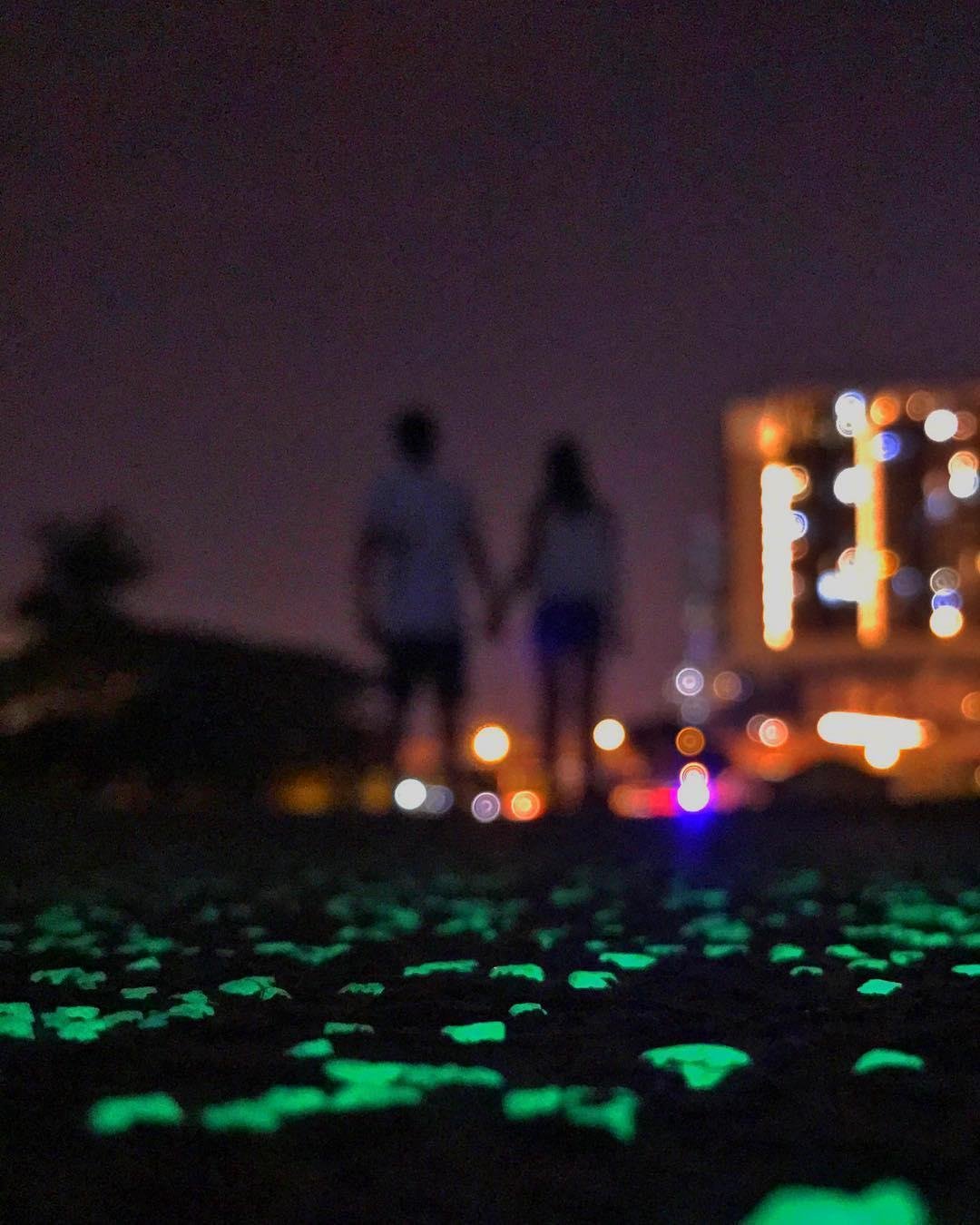
Some locations want to reduce unnecessary artificial lighting.
Examples:
- nature parks
- ecological tourism areas
- rural scenic routes
In these environments, excessive lighting may affect the surrounding atmosphere.
Photoluminescent pavement provides a softer alternative because the glow remains close to the surface.
It helps users recognize the route while maintaining a darker environment around the pathway.
How Photoluminescent Pavement Supports Sustainable Design
One reason designers are interested in luminous materials is their relationship with energy use.
Unlike traditional lighting systems:
- no continuous electrical supply is needed for the glow effect
- no underground wiring is required for the luminous material itself
- the pavement integrates the visual function directly into the surface
However, performance still depends on:
- daylight exposure
- installation quality
- material selection
- maintenance
Sustainable design is not only about using less energy.
It is also about creating systems that perform effectively over time.
Combining Photoluminescent Pavement With Other Smart Materials
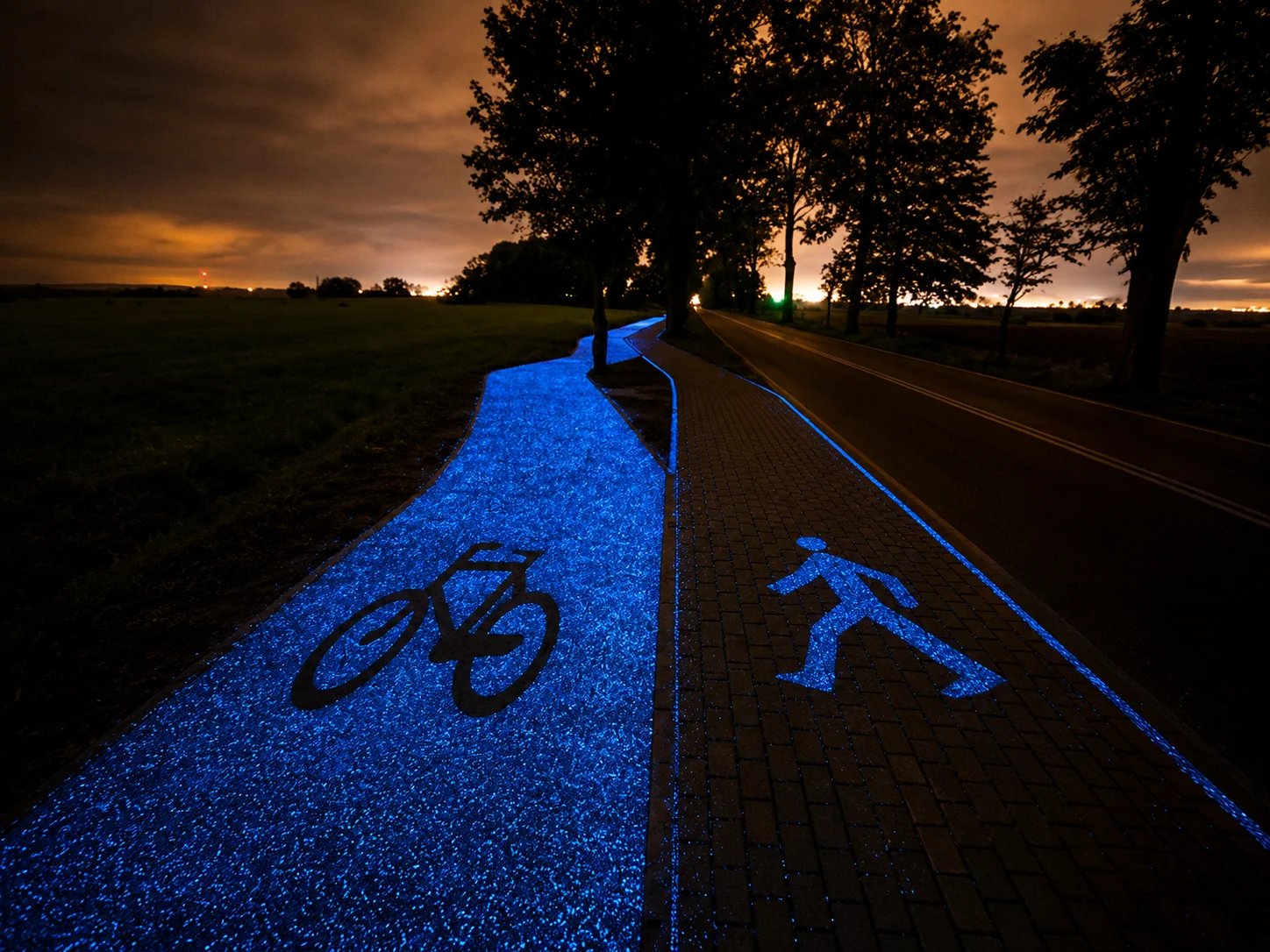
Future urban design will likely combine different technologies.
Photoluminescent pavement can work together with:
Colored Pavement
Creates daytime organization.
Examples:
- bike lanes
- pedestrian zones
- activity areas
Permeable Pavement
Supports stormwater management.
Solar Lighting
Provides stronger illumination where needed.
Reflective Materials
Improves visibility for vehicles and pedestrians.
The future pathway may not depend on one single material.
It may combine multiple functions.
Design Challenges Need to Be Considered
Although photoluminescent pavement offers interesting possibilities, good design still requires planning.
Important factors include:
Ambient Lighting
Nearby lights affect how visible the glow appears.
Surface Exposure
The luminous particles need sufficient exposure.
Maintenance
Dirt and debris can reduce visible performance.
User Requirements
Public pathways still need to meet safety expectations.
Smart materials work best when integrated into a complete design strategy.
The Importance of Testing Before Large Projects
A smart city project usually involves many stakeholders:
- designers
- engineers
- contractors
- government departments
- users
A sample section helps everyone evaluate:
- daytime appearance
- nighttime effect
- material compatibility
- design acceptance
For large projects, testing is an important part of the decision process.
The Future of Nighttime Landscape Design
Future public spaces may become more interactive.
Instead of viewing pavement as a passive surface, designers can use it as part of the environment.
A pathway can:
- guide movement
- create atmosphere
- support sustainability goals
- improve public experience
Photoluminescent pavement represents one step toward this direction.
Frequently Asked Questions
Is photoluminescent pavement a smart city technology?
It can be considered a smart material approach because it responds to environmental light and provides a functional surface effect.
Does it replace all street lighting?
No. It is better used as a complementary design element together with appropriate lighting systems.
Where is it most suitable?
Common applications include parks, trails, resorts, gardens, campuses and landscape projects.
Does it need electricity?
The luminous effect does not require continuous electrical power after installation.
Can it be combined with colored pavement?
Yes. Colored pavement can organize daytime routes while photoluminescent materials enhance nighttime visibility.
Final Thoughts
Smart cities are not only about digital technology.
They are also about creating better physical environments.
Materials that combine performance, design and sustainability will become increasingly important in future urban spaces.
Photoluminescent pavement provides a new way to think about pathways:
not simply as surfaces people walk on,
but as active elements that connect people, landscape and nighttime environments.