
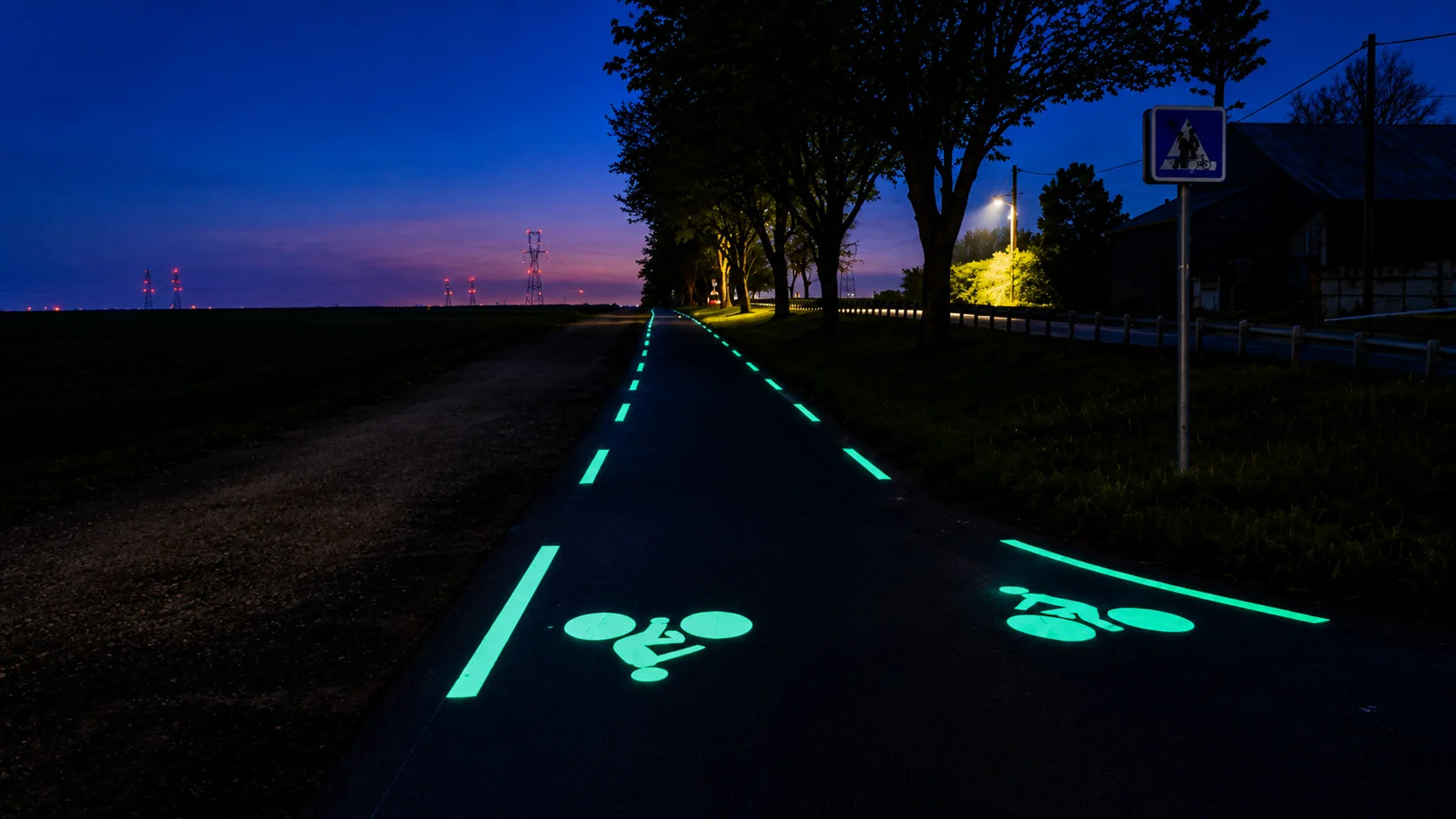
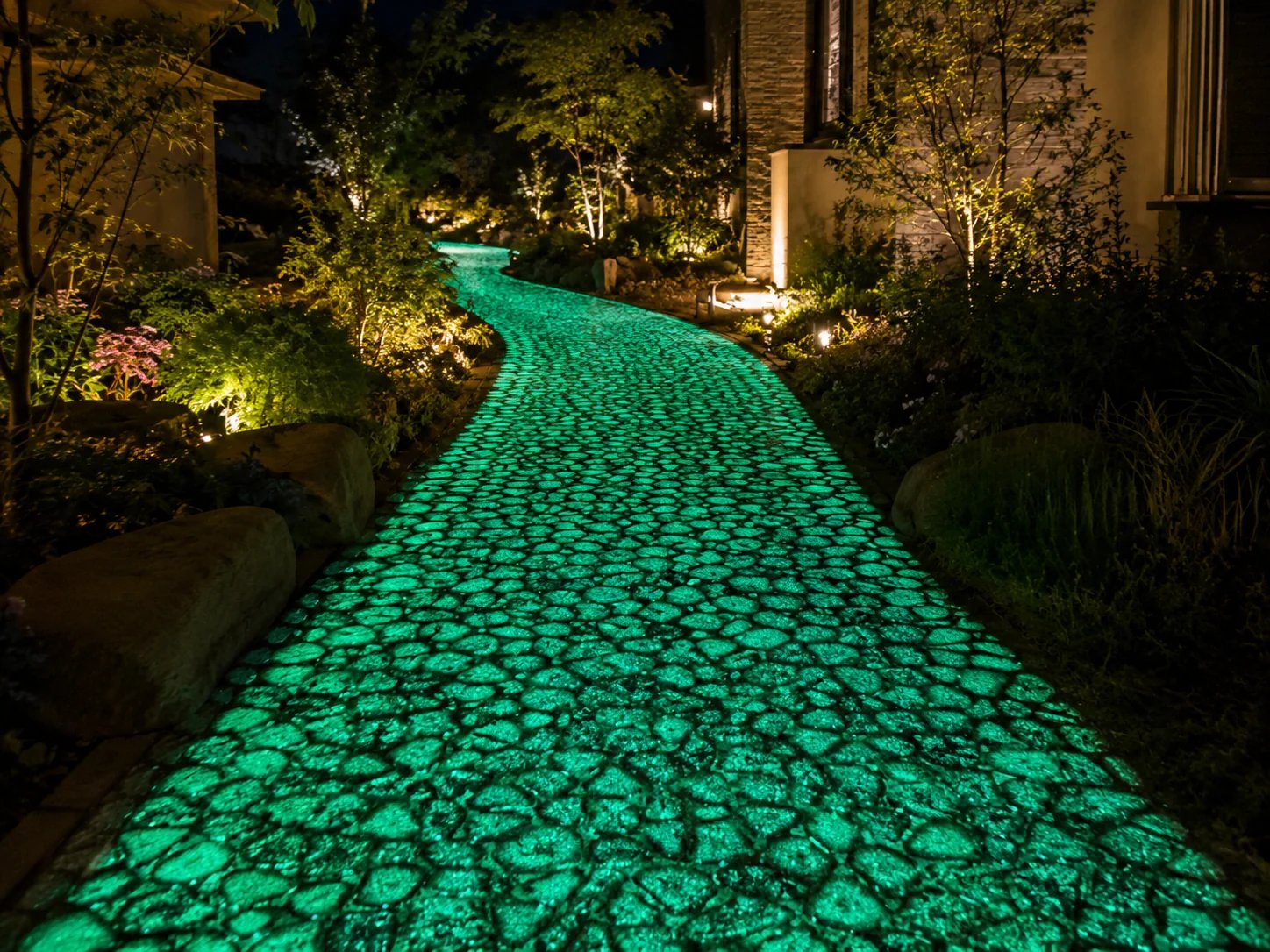
Yes, glow-in-the-dark pavement can be used outdoors, and in fact, outdoor landscape areas are one of the most common places where photoluminescent materials can show their visual value.
Garden paths, parks, pedestrian walkways, resorts, pool surroundings, courtyards, and bicycle paths can all use glow-in-the-dark stones or photoluminescent materials to create a different appearance after sunset.
But outdoor use is not simply about placing luminous stones on the ground.
Sunlight exposure, weather, traffic, surface design, and the paving system all influence the final result.
Here are some of the main things to consider before using glow-in-the-dark pavement outdoors.
How Does Outdoor Glow-in-the-Dark Pavement Work?
Glow-in-the-dark pavement uses photoluminescent materials that absorb light energy and release it gradually in darkness.
During the day, sunlight charges the luminous material.
After sunset, the stored energy is released as visible light.
The process can be repeated again when the material is exposed to light the following day.
This means outdoor areas with regular daylight exposure are naturally suitable for photoluminescent pavement.
Is Sunlight Good for Glow Stones?
Yes.
Sunlight is an effective charging source for glow-in-the-dark stones.
A pathway exposed to daylight during the day can absorb energy and become visible after dark.
However, different locations receive different amounts of light.
For example, a path in an open garden may charge better than one located:
- Under dense trees
- Between tall buildings
- Under permanent shade structures
- Inside covered corridors
If a project has very limited daylight, the nighttime effect should be tested before installation.
Can Glow Stones Handle Rain?
Glow stones themselves can be used in outdoor environments, but the complete pavement system is what determines long-term performance.
For example, when glow stones are incorporated into resin-bound pavement, the quality of the resin binder, drainage design, base structure, and installation all matter.
Outdoor pavement should be designed to deal with:
- Rain
- Moisture
- Temperature changes
- UV exposure
- Surface contamination
- Pedestrian traffic
That is why luminous stone should be treated as one part of the paving system rather than the entire solution.
What About UV Exposure?
Outdoor pavement is exposed to sunlight for long periods, so UV resistance is an important consideration.
The luminous material, resin, and surrounding aggregates should all be suitable for the intended outdoor environment.
For resin-bound applications, a suitable outdoor-grade binder can help maintain the appearance and stability of the surface.
The exact material selection should depend on the project conditions.
Where Does Outdoor Glow Pavement Work Best?
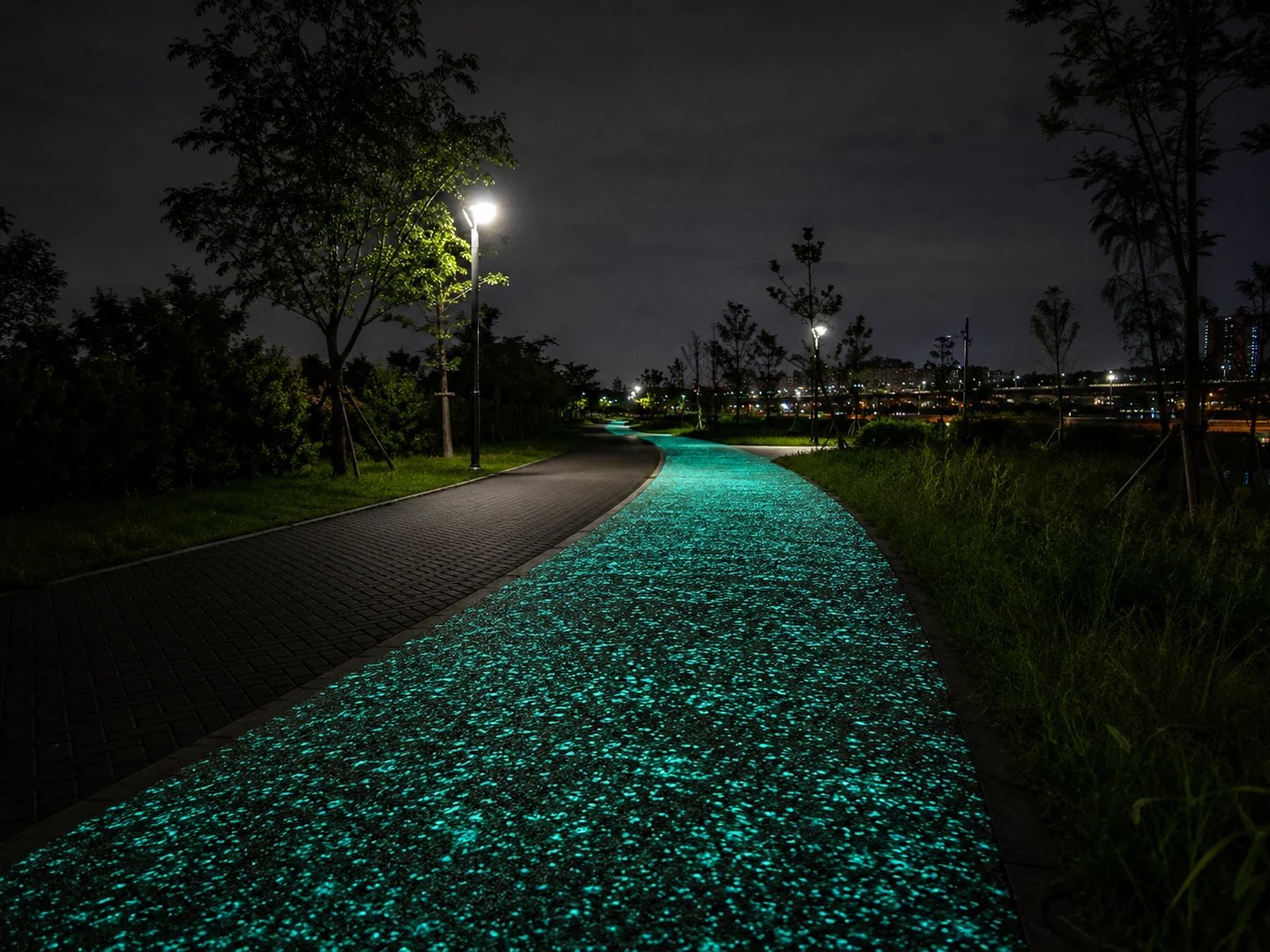
Glow pavement is particularly suitable for projects where nighttime appearance is important.
Garden Paths
Garden paths are one of the easiest places to use glow stones.
A small amount of luminous aggregate can be mixed with natural decorative stones to create scattered glowing points.
During the day, the pathway still maintains a natural appearance.
At night, the glowing particles add visual interest to the landscape.
Parks
Public and private parks can use luminous materials in walkways, landscape areas, decorative borders, and leisure spaces.
Instead of making the entire area brightly illuminated, glow stones can create a softer visual effect.
Pedestrian Walkways
Glow-in-the-dark materials can help make walking paths visually distinctive after dark.
They can be installed throughout the pavement or concentrated along the edges.
Bicycle Paths
Photoluminescent materials can also be used as decorative elements in bicycle paths.
Glow stones may be added to the surface, while photoluminescent pigment can be used in compatible coatings or markings.
Resorts and Hotels
Resorts often place strong emphasis on nighttime landscape design.
Glow pavement can be used around:
- Gardens
- Villas
- Courtyards
- Outdoor leisure areas
- Swimming pools
- Walking routes
The result can be especially attractive when luminous pavement is combined with landscape lighting.
Swimming Pool Surroundings
Glow stones can create a distinctive visual effect around pools and water features.
Reflections from surrounding lighting and water can make the luminous aggregate even more noticeable.
The paving system should still meet the slip-resistance and drainage requirements of the project.
Glow Stones or Photoluminescent Pigment for Outdoor Pavement?
Both materials can be used, but they are suitable for different designs.
Glow-in-the-Dark Stones
Glow stones are suitable when you want:
- Decorative glowing points
- Natural aggregate appearance
- Garden paths
- Resin-bound pavement
- Poolside landscapes
- Park walkways
- Resort projects
They work especially well when mixed with natural decorative aggregate.
Photoluminescent Pigment
Photoluminescent pigment offers more flexibility for:
- Luminous coatings
- Decorative patterns
- Pavement markings
- Lines and symbols
- Larger glowing areas
The pigment normally needs to be incorporated into a compatible binder or coating system.
Does the Entire Pavement Need to Glow?
No.
In many projects, using less luminous material can actually create a more natural appearance.
There are several possible designs.
Scattered Glow
Glow stones are distributed among ordinary aggregates.
This creates a star-like effect.
Edge Glow
Luminous stones are concentrated along both sides of a walkway.
This creates a visible path outline.
Pattern Design
Glow stones or pigments can be used to create curves, symbols, waves, stars, or other decorative designs.
Full-Surface Effect
A higher concentration of luminous material can be used when a stronger visual impact is required.
The best design depends on the surrounding landscape and project budget.
What Can Reduce Outdoor Glow Performance?
Several factors can make a luminous pavement appear weaker.
Too Much Shade
Insufficient daylight means less energy is absorbed before nightfall.
Dirt on the Surface
Dust, soil, leaves, and other contamination can block light from reaching the luminous material.
Glow Stones Buried Too Deeply
If the stones are hidden under opaque resin, coating, or aggregate, they cannot receive enough light.
Poor Material Distribution
An uneven distribution may create bright areas and dark areas across the pavement.
Excessive Surrounding Lighting
Interestingly, luminous pavement often appears more impressive in darker environments.
Strong streetlights or landscape lighting can reduce the visual contrast of the glow.
Is Glow-in-the-Dark Pavement a Replacement for Street Lighting?
Generally, no.
Photoluminescent pavement should be considered a decorative or supplementary visibility material.
It does not provide the same illumination as electrical streetlights.
For areas that require regulated lighting, emergency lighting, or continuous high visibility, conventional lighting systems should still be used.
Glow pavement works best as an additional visual feature.
How to Get Better Results Outdoors
For a more attractive nighttime effect, consider the following:
- Choose areas with good daylight exposure
- Use suitable outdoor paving materials
- Keep luminous stones visible at the surface
- Distribute glow stones evenly
- Keep the surface reasonably clean
- Test the material before large-scale installation
- Match the glow concentration to the landscape design
Good project design is often more important than simply using a large amount of luminous material.
Final Thoughts
Glow-in-the-dark pavement can be used successfully outdoors when the luminous material is combined with a suitable pavement structure and installed correctly.
Gardens, parks, walkways, bicycle paths, hotels, resorts, courtyards, and pool areas can all benefit from the unique nighttime appearance of photoluminescent materials.
The key is to consider the complete environment:
Daylight exposure, weather, pavement structure, material compatibility, traffic conditions, and the desired nighttime effect.
For many landscape projects, glow pavement does not need to be extremely bright.
A well-designed distribution of luminous stones can create a subtle and attractive surface that looks natural during the day and becomes completely different after sunset.
Looking for Glow-in-the-Dark Pavement Materials?
FUXIN supplies Glow-in-the-Dark Stones and Photoluminescent Pigment for landscape, decorative pavement, resin-bound stone, and luminous surface applications.
Product information, samples, quotations, and project material recommendations are available for contractors, distributors, landscape companies, and project developers.
Contact us to discuss your outdoor glow pavement project.