

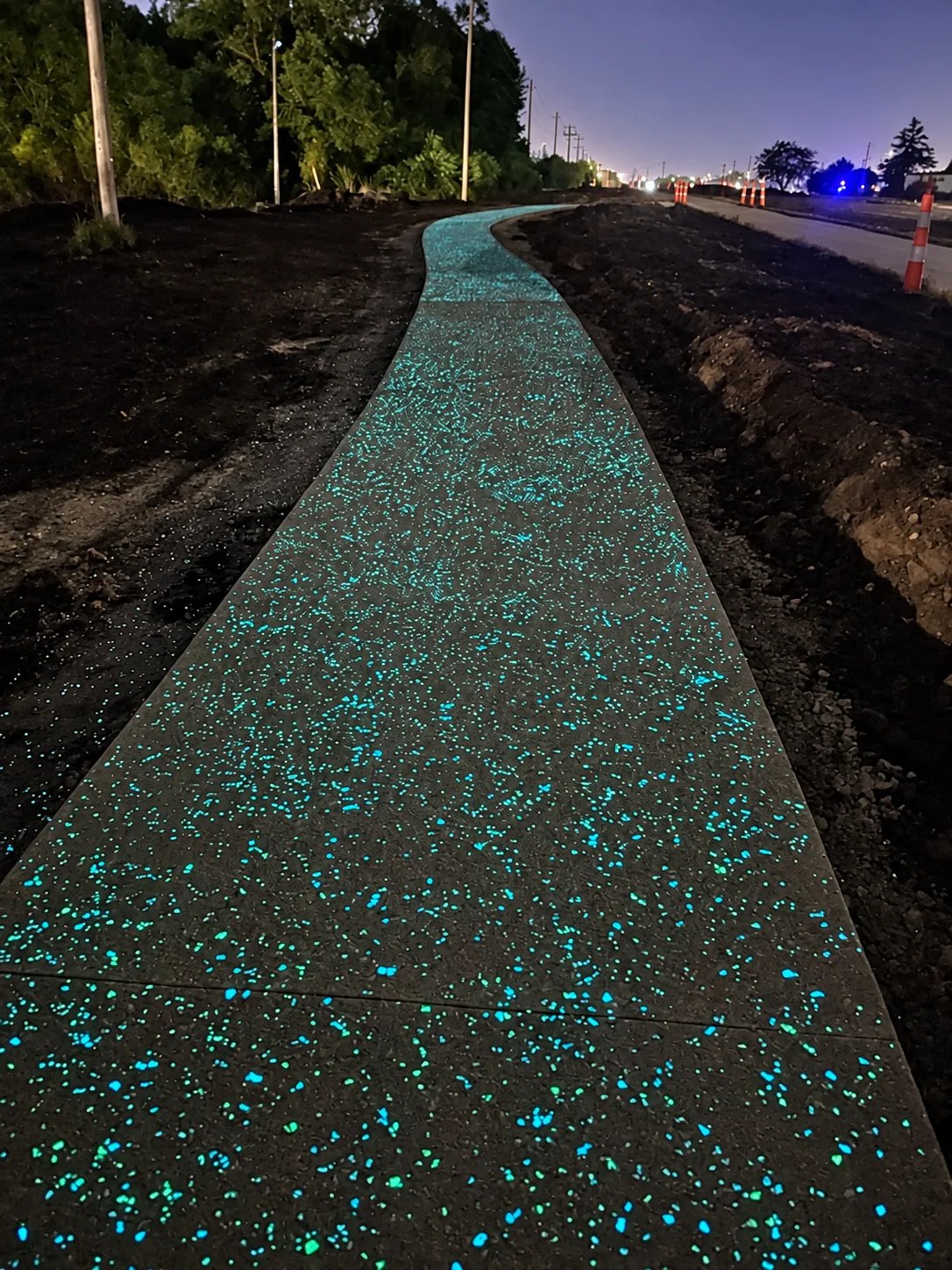
Blue, blue-green and yellow-green glow stones create different nighttime effects. Blue is often selected for a cool decorative atmosphere, blue-green for a balance of appearance and visibility, and yellow-green when stronger visual recognition is important. There is no universal best color.
Photoluminescent aggregate may look pale or neutral in daylight, while its glow becomes more noticeable after dark. Choose color together with particle size, pavement background, charging conditions and the intended use, rather than relying on product photographs alone.
Why Do Glow Stones Come in Different Colors?
Photoluminescent materials absorb energy from sunlight or artificial light and gradually release that energy after dark.
Different luminous formulations can produce different visible colors.
For outdoor paving and landscape applications, the most common options include:
- Blue
- Blue-green
- Yellow-green
The daytime appearance may be relatively pale or neutral, while the nighttime glow is much more noticeable.
That's one reason glow aggregate can be used without making the pavement look overly bright during the day.
Blue Glow Stones
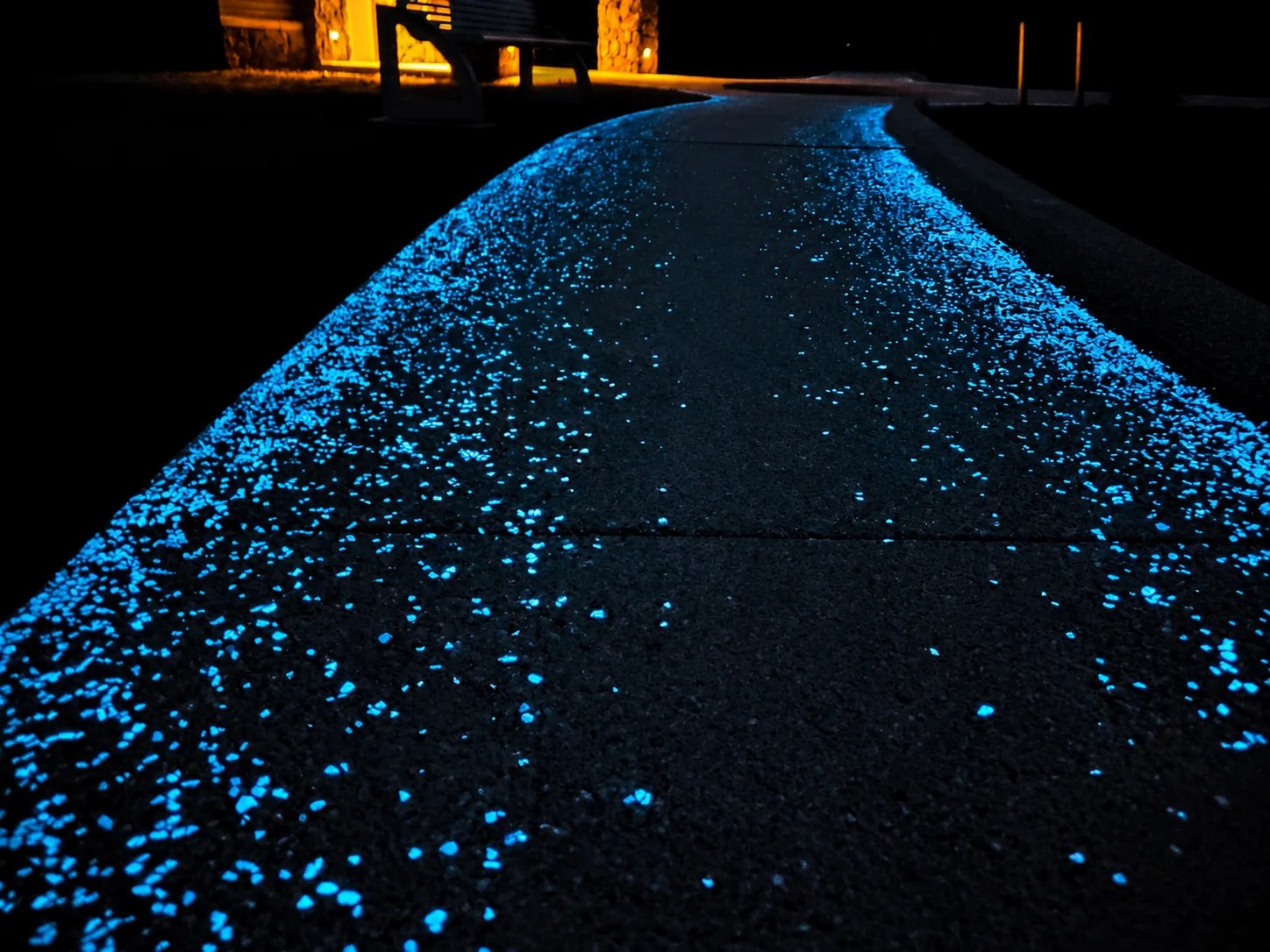
Blue glow stones create a cooler, more modern nighttime appearance.
They are often chosen for projects where the design is more decorative than functional.
Blue can work especially well in:
- garden paths
- poolside areas
- modern courtyards
- decorative concrete
- resort landscapes
- waterfront projects
At night, blue glow stones can create a clean, calm visual effect.
They tend to look particularly attractive when used against gray, white or darker pavement backgrounds.
When blue suits the design
If you want the pavement to feel modern, atmospheric or decorative, blue photoluminescent aggregate is a strong option.
Blue-Green Glow Stones
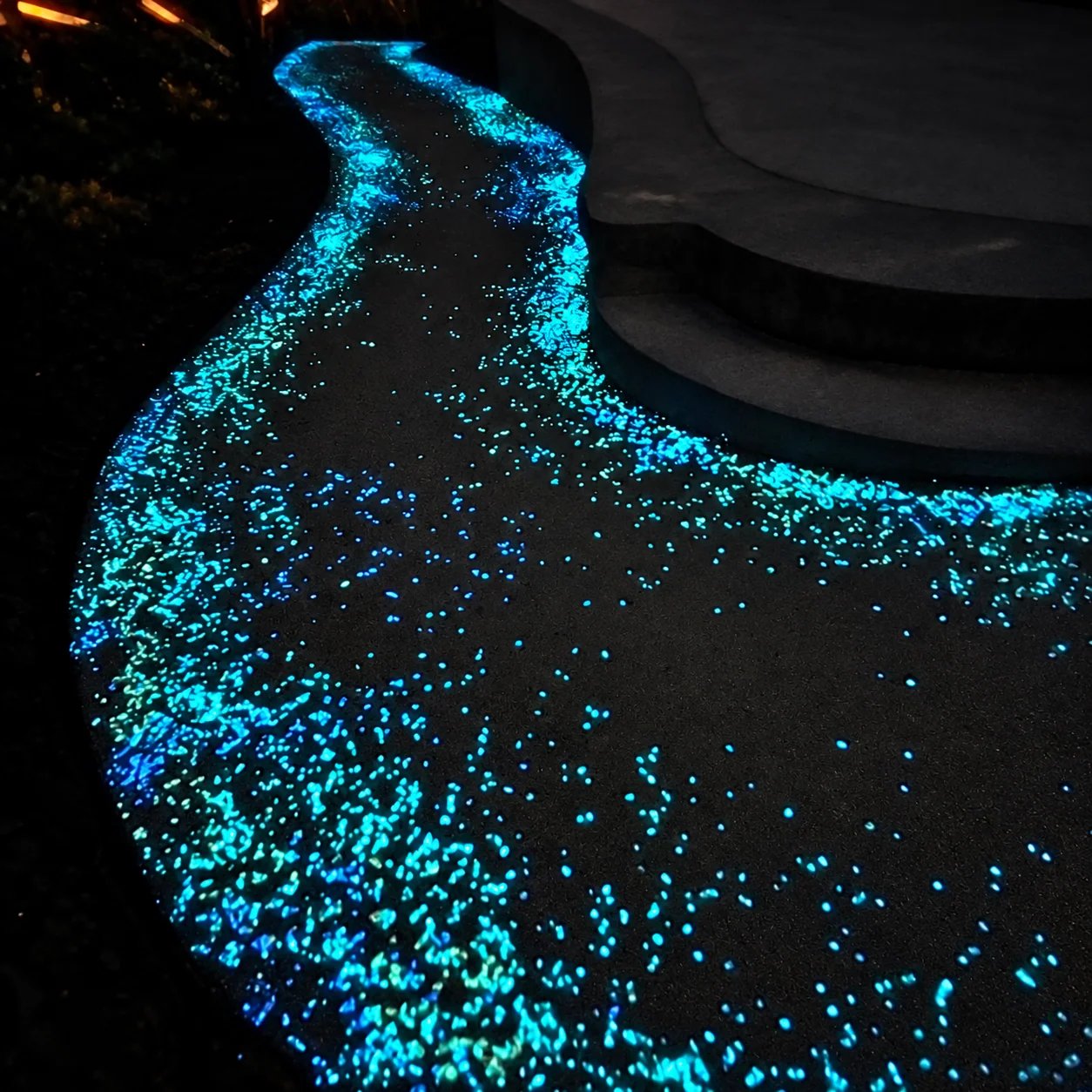
Blue-green sits somewhere between the cool appearance of blue and the stronger visual presence of green.
For many landscape projects, this makes it one of the most versatile choices.
It can work well for:
- pedestrian paths
- landscape paving
- garden walkways
- courtyards
- decorative borders
- public-space features
Blue-green glow can feel more natural than pure blue while still keeping a modern appearance.
This makes it useful when the pavement needs to stand out at night without looking overly artificial.
Yellow-Green Glow Stones
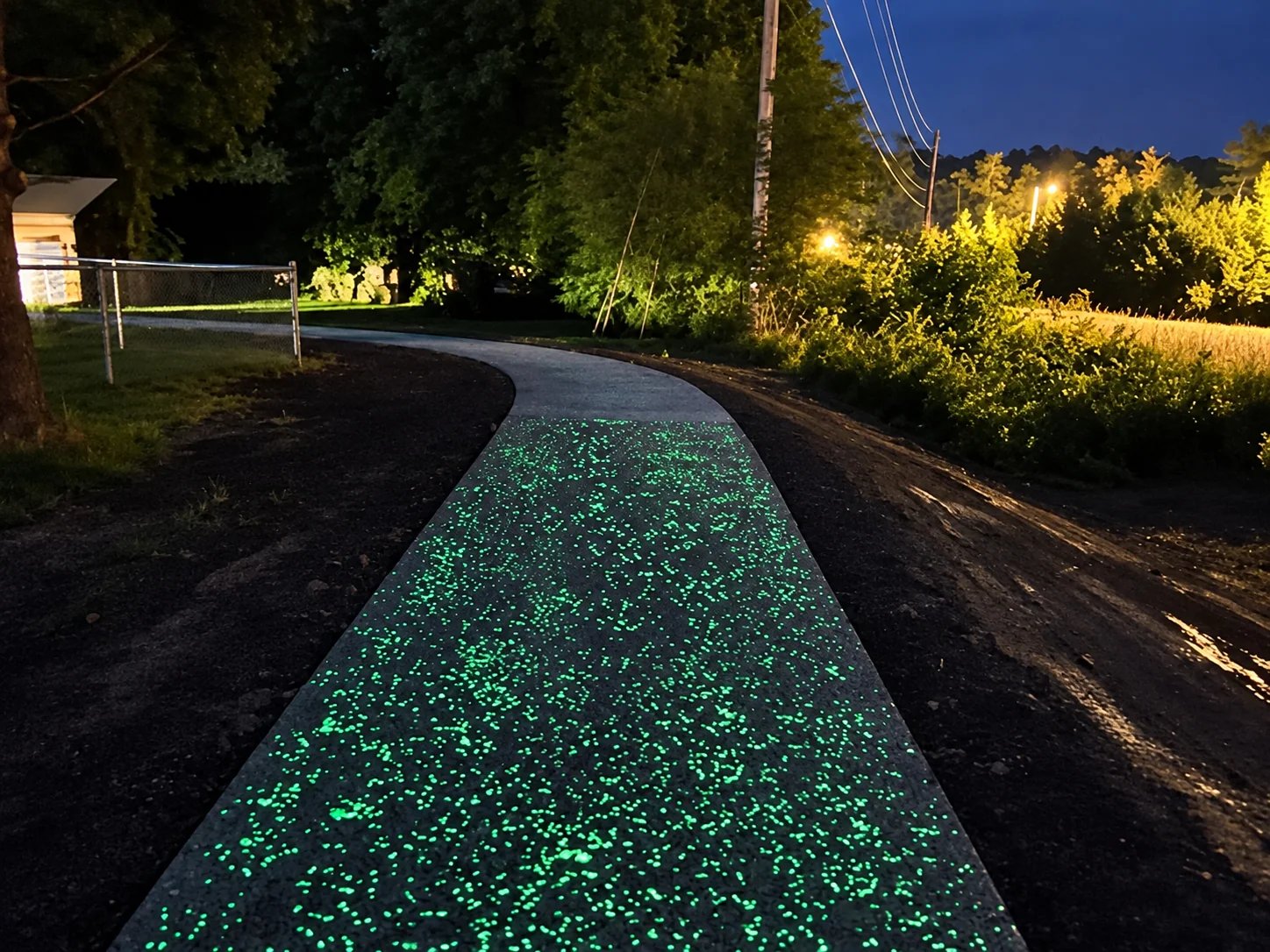
Yellow-green is often chosen when nighttime visibility is more important.
Human vision is generally very sensitive to green and yellow-green wavelengths, so this color can often appear more noticeable in dark surroundings.
That makes yellow-green photoluminescent aggregate a good choice for:
- pathway edges
- garden routes
- pedestrian areas
- outdoor guidance
- landscape borders
- decorative safety features
It doesn't mean yellow-green is automatically the best choice for every project.
But when visibility matters more than mood, it is usually one of the first colors worth testing.
Which Color Looks Brightest?
In many applications, yellow-green will appear brighter to the eye than blue.
Blue-green usually falls somewhere between the two.
But the actual glow performance depends on much more than color.
It can also be affected by:
- photoluminescent material quality
- charging time
- strength of the light source
- particle size
- installation depth
- surface exposure
- surrounding darkness
- background color
So you shouldn't compare glow colors only by looking at product photos.
A real sample test is much more useful.
Does Particle Size Change the Color Effect?
Yes.
Even if the material formulation is the same, 1–5mm, 5–10mm and 10–20mm aggregate can create very different visual effects.
1–5mm
Smaller particles create more luminous points across the surface.
The effect looks finer and denser.
This size is suitable for:
- decorative concrete
- thin surface treatments
- fine landscape paving
- dense glow patterns
5–10mm
This is a more balanced size.
Each stone is easier to see, while the surface still looks relatively uniform.
It works well for:
- garden paths
- walkways
- courtyards
- general landscape paving
10–20mm
Larger pieces create fewer but more noticeable glowing points.
They can produce a stronger decorative effect in:
- garden features
- landscape borders
- larger pathways
- decorative stone areas
So when choosing a glow color, think about color and particle size together.
What Color Works Best With Concrete?
For standard gray concrete, all three colors can work.
But they create different effects.
Blue
Creates a cooler contrast against gray concrete.
Blue-Green
Feels slightly brighter and more natural.
Yellow-Green
Usually provides stronger visual separation from the concrete surface.
If you're working with very light concrete, the daytime stones may blend more naturally into the pavement.
At night, the glow becomes the main visual feature.
What About Dark Pavement?
Dark pavement can create a dramatic nighttime contrast.
Blue and blue-green can look especially attractive against dark gray or black backgrounds.
However, the entire system should be tested before installation.
A dark pavement can affect how the luminous aggregate looks during both daytime and nighttime conditions.
For large projects, make a sample panel first.
Should You Mix Different Glow Colors?
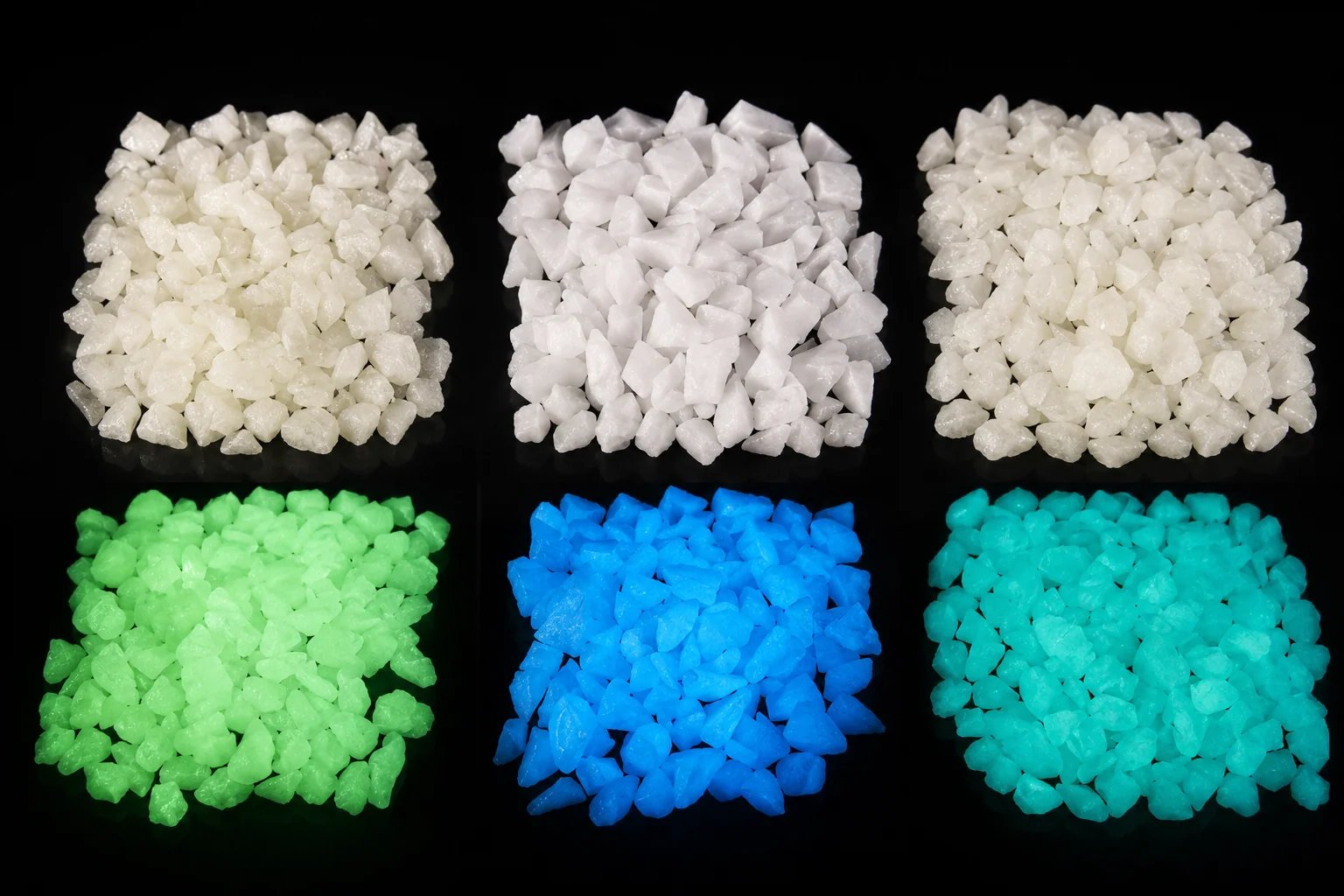
You can.
Mixing colors can create a more decorative effect.
For example:
Blue + Blue-Green
Creates a cool-toned pathway with subtle color variation.
Blue-Green + Yellow-Green
Creates a brighter effect while still keeping some color depth.
Blue + Yellow-Green
Creates stronger contrast between individual glowing points.
But don't mix too many colors without a clear design plan.
For most commercial and landscape projects, one main glow color usually creates a cleaner result.
Which Color Is Best for Garden Paths?
For decorative garden paths:
Blue or blue-green are usually very attractive.
They create a softer nighttime atmosphere and work well with plants, stone and landscape lighting.
If the pathway also needs stronger visual guidance, yellow-green may be the better choice.
Which Color Is Best for Luminous Pavement?
For pavement projects where nighttime visibility is the main goal, yellow-green or blue-green can be practical choices.
For projects where appearance and atmosphere matter more, blue may be preferred.
There isn't one universal best color.
The right choice depends on the project.
Match the glow color to the intended result
Think about the result you want.
If you want:
Cool and modern: choose Blue.
Balanced and versatile: choose Blue-Green.
More visible at night: choose Yellow-Green.
Then choose the particle size based on how dense or bold you want the glow effect to appear.
Compare physical samples under the same conditions
This is important.
Glow stone photos can look very different depending on:
- camera exposure
- editing
- lighting conditions
- charging time
- phone screen brightness
So don't make a large purchasing decision based only on a nighttime photo.
Ask for samples if possible.
Charge them under the same light source.
Then compare them in the same dark environment.
That gives you a much more realistic idea of how each color will perform.
Test color, size and pavement background together
Blue, blue-green and yellow-green glow stones all have their own advantages.
The best choice isn't simply the brightest one.
It depends on whether your project prioritizes:
design, atmosphere, visibility or nighttime guidance.
For decorative landscapes, blue and blue-green can create an attractive nighttime effect.
For applications where stronger visual recognition is important, yellow-green may be more noticeable.
And for any large project, the safest approach is simple:
Test the color, size and pavement background together before full installation.
That small test can save a lot of guesswork later.