

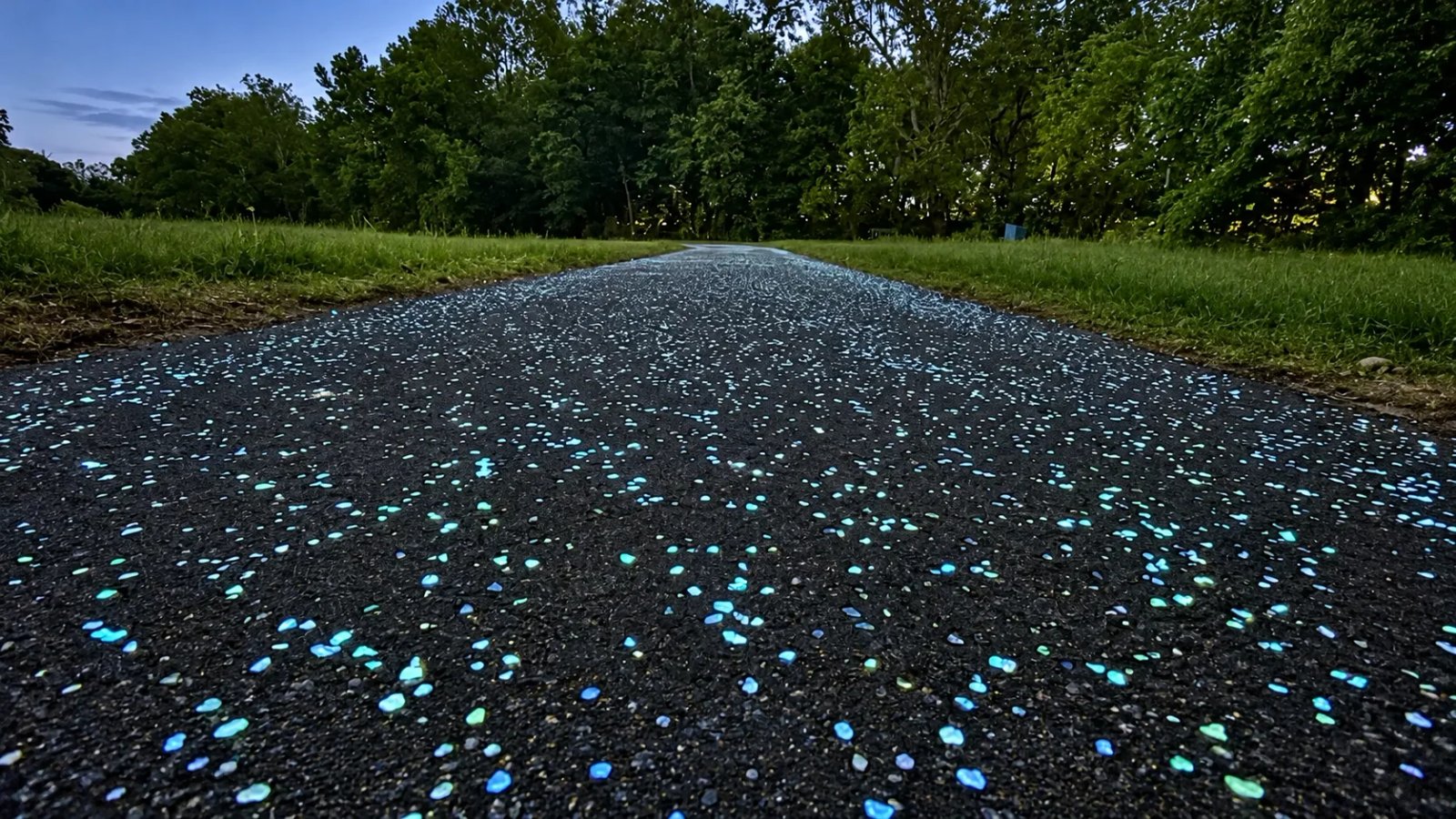
Glow stones can look weaker under street lights because surrounding illumination reduces their visual contrast with the pavement. A sample that looks bright in a dark room may stand out less near landscape lights, illuminated buildings, vehicle headlights or commercial signs. This does not necessarily mean the material has stopped glowing.
Material problems are possible, but designers, contractors and buyers should also assess the real viewing conditions. Review how available light charges the aggregate and how nighttime lighting, pavement background, glow color and viewing distance affect visibility, then test samples at the actual project site before approving the design.
Photoluminescent Materials Need Contrast, Not Just Brightness

Glow stones work by absorbing light and gradually releasing that stored energy after dark.
But visible performance is not determined by glow intensity alone.
It also depends on the difference between:
the brightness of the glow material
and
the brightness of the surrounding environment
This difference is what creates visual contrast.
Imagine a small green glow stone in two locations.
In the first location, the surrounding area is completely dark.
The stone appears bright and easy to see.
In the second location, the same stone sits underneath a strong white street lamp.
The stone is still glowing, but it no longer stands out as clearly.
The material has not necessarily changed.
The viewing conditions have.
Why Dark-Room Photos Can Be Misleading
Many glow stone product photos are taken in very dark environments.
That makes sense because the glow effect is easier to demonstrate.
But a completely dark room does not always represent a real outdoor project.
A park may have:
-
pathway lights
-
nearby road lighting
-
illuminated buildings
-
security lights
A hotel or resort may have:
-
landscape lamps
-
pool lighting
-
decorative wall lights
-
restaurant lighting
A public walkway may have:
-
street lamps
-
traffic signals
-
vehicle headlights
-
shopfront lighting
So a buyer should never assume that a product will look exactly the same outdoors as it does in a black-room photograph.
The better question is:
How will this material look under the actual nighttime conditions of my site?
Distinguish charging light from nighttime contrast
This sounds contradictory, but ambient light can play two different roles.
During the charging period, light is useful.
The photoluminescent aggregate needs light energy.
But after sunset, strong surrounding illumination can make the visible glow appear weaker.
So we need to separate two things:
Charging light
and
competing nighttime light
A pathway that receives strong daylight but remains relatively dark at night may produce a very visible glow effect.
A pathway that receives excellent daylight but is surrounded by bright floodlights at night may look less dramatic.
Both sites may use exactly the same photoluminescent aggregate.
Match the glow effect to the surrounding lighting
This is an important distinction.
The presence of street lighting does not automatically mean photoluminescent aggregate should not be used.
It means the design needs to be realistic.
In a brightly lit environment, glow aggregate may work better as:
-
a decorative surface feature
-
pathway edge detail
-
accent pattern
-
backup visual cue
-
landscape element
rather than as the main source of visible nighttime guidance.
In a darker environment, the same aggregate may become much more visually dominant.
Understanding the intended role of the material helps prevent unrealistic expectations.
Look at the Site Before Choosing the Glow Color
Glow color affects how visible the material appears.
Yellow-Green
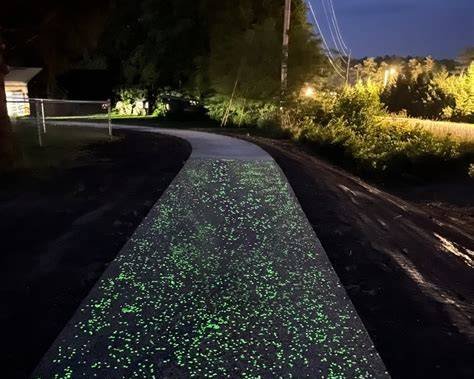
Yellow-green is generally very noticeable to the human eye in dark conditions.
It can be a strong choice when nighttime recognition is important.
Suitable applications may include:
-
pathway borders
-
pedestrian routes
-
garden edges
-
landscape guidance
Blue-Green
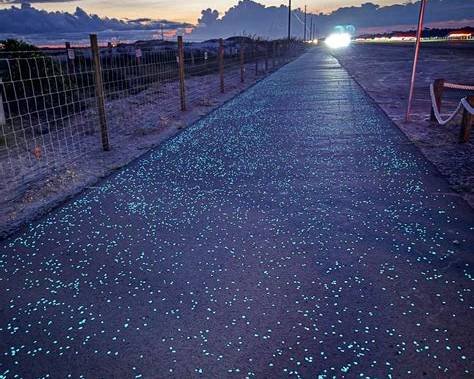
Blue-green offers a useful balance between visibility and decorative appearance.
It works well in:
-
parks
-
pedestrian pathways
-
resorts
-
public landscapes
Blue
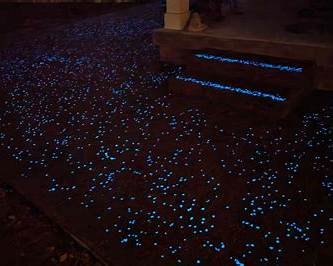
Blue can look very attractive in dark environments, especially around:
-
pools
-
villas
-
decorative gardens
-
landscape features
But if the area already contains a lot of cool white or blue lighting, the glow may visually blend into the surroundings more than expected.
That is why color should be evaluated together with the site's nighttime lighting.
The Pavement Background Also Affects Visibility
Ambient lighting is only one part of the contrast equation.
The surface color underneath the glow aggregate also matters.
A glow stone installed on very light pavement may look different from the same stone installed on dark concrete.
Light Pavement
During the daytime, light pavement can create a clean appearance.
At night, however, strong surrounding lighting may keep the background relatively bright.
That can reduce the perceived difference between the pavement and the glow stone.
Dark Pavement
Dark pavement can sometimes create stronger nighttime visual contrast.
The glowing particles stand out against the darker background.
But dark surfaces also change daytime appearance and thermal behavior, so they should not be selected purely for glow performance.
Again, the complete pavement design matters.
A Simple Field Test Before Installation
One of the easiest ways to evaluate a project is to visit the site at night before installation.
Do not only inspect it during the day.
Look at:
-
existing street lights
-
nearby building lights
-
vehicle traffic
-
landscape lighting
-
illuminated signs
-
shadows
-
dark zones
Then ask:
Where would the glow aggregate actually be easiest to see?
This simple observation can change the entire design.
For example, instead of covering the full pathway, you may decide to place glow aggregate:
-
along the edges
-
in darker zones
-
around curves
-
near intersections
-
in decorative patterns
This often creates a more efficient use of material.
Test Samples at the Actual Project Site
A dark-room test is useful for comparing materials.
But for a real project, the next step should be a site test.
A practical test can be done like this:
Prepare several samples
For example:
-
Blue 5–10mm
-
Blue-Green 5–10mm
-
Yellow-Green 5–10mm
Expose them to the same charging conditions.
Then take them to the project site at night.
Place them on or next to the actual pavement.
Observe the samples from:
-
1 meter
-
5 meters
-
10 meters
You may discover that the color that looks brightest at close range is not necessarily the easiest to recognize from farther away.
That is valuable information before a large installation.
Distance Changes What People See
Photoluminescent pavement is often photographed from very close range.
But real users may see it from much farther away.
A pedestrian might first notice the path from 10 meters away.
A cyclist may approach it at speed.
A driver may only see an edge feature briefly.
That means you should evaluate more than the brightness of individual stones.
You should also consider:
-
aggregate density
-
pattern size
-
color contrast
-
viewing distance
-
movement speed
A dense pattern of small 1–5mm particles may look excellent up close.
A larger 5–10mm or 10–20mm pattern may be more recognizable from farther away.
The correct choice depends on the project.
Review site design before adding more glow aggregate
When a test looks weak under surrounding lights, a common reaction is:
“Let's just add more glow stones.”
Sometimes increasing density helps.
But it is not always the most efficient solution.
If the real problem is strong competing lighting, doubling the material quantity may not double the perceived visibility.
You may achieve a better result by changing:
-
pattern placement
-
particle size
-
glow color
-
pavement background
-
location within the site
This is why project design is just as important as material consumption.
Use Concentrated Patterns Where Visibility Matters
Instead of spreading a small quantity of glow aggregate everywhere, some projects can benefit from concentrating the material in specific areas.
For example:
Pathway Edges
A concentrated luminous edge may be easier to recognize than weak glow scattered across the entire surface.
Curves
Glow aggregate can emphasize changes in direction.
Entrances
A concentrated luminous feature can help define the beginning of a pathway.
Decorative Bands
Bands or patterned zones create stronger local contrast.
Landscape Features
Glow aggregate can highlight selected areas without competing with every surrounding light source.
This approach can improve both design and material efficiency.
Avoid Placing Strong Lights Directly Above the Glow Surface
If photoluminescent appearance is important, the relationship between normal lighting and glow aggregate should be planned carefully.
A powerful lamp placed directly above the glowing surface may reduce the perceived glow effect.
This does not mean standard lighting should be removed where safety regulations require it.
Instead, the lighting design can sometimes be adjusted so that:
-
required illumination is maintained
-
excessive glare is reduced
-
luminous features remain visually noticeable
The final design should always prioritize safety and applicable local requirements.
Photoluminescent material should complement required lighting, not replace it where conventional illumination is necessary.
Nearby Light Color Matters Too
Different artificial light sources have different color temperatures.
Warm landscape lighting may visually interact differently with blue-green glow than cool white LED street lights.
For example:
Warm lighting + blue glow
can create strong visual color contrast.
Cool blue-white lighting + blue glow
may reduce that contrast.
This does not mean one combination is always better.
It means designers should look at the complete nighttime color environment.
For premium landscape projects, this can make a significant visual difference.
A Realistic Way to Present Glow Performance to Buyers
When showing customers product performance, we recommend avoiding only one type of photo.
A better presentation includes:
Daytime photo
Shows the normal appearance.
Dark-room glow photo
Shows the material's luminous capability.
Real project nighttime photo
Shows performance under actual ambient lighting.
30–60 minute afterglow photo
Shows brightness retention over time.
This gives buyers a much more realistic understanding of what the product can do.
It also reduces disputes caused by unrealistic expectations from heavily exposed nighttime photographs.
Camera Exposure Can Hide the Effect of Ambient Light
Another factor is photography.
Modern phones can automatically brighten very dark scenes.
As a result, a night photo may make both:
-
the glow stones
-
and the surrounding environment
look much brighter than they appeared to the human eye.
When comparing project photos, use consistent camera settings whenever possible.
For technical documentation, the best approach is to photograph:
-
the same location
-
from the same position
-
with the same device
-
at similar times after charging
Consistency matters more than making the image look dramatic.
What Projects Benefit Most From Low Ambient Light?
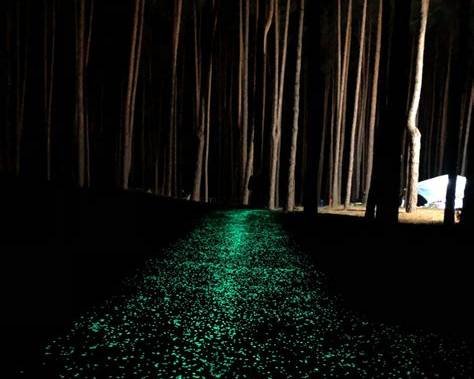
Photoluminescent pavement can be especially visually effective in:
-
parks with limited lighting
-
garden paths
-
dark-sky areas
-
resort landscapes
-
waterfront paths
-
private courtyards
-
scenic trails
-
landscape feature zones
These environments allow the luminous material to create stronger visual contrast.
In very bright commercial areas, the same material may still work, but the design goal should be different.
What Should Buyers Tell the Supplier?
Before asking for a material recommendation, it helps to provide:
-
project type
-
total area
-
pavement material
-
daytime light exposure
-
nighttime lighting conditions
-
desired glow color
-
desired particle size
-
required visual effect
Photos of the project site during both day and night are especially useful.
A supplier can make a better recommendation when they understand the environment rather than just the square meters.
Frequently Asked Questions
Do street lights stop photoluminescent aggregate from glowing?
No. The material can still release stored light, but strong surrounding illumination can make the glow less visually noticeable.
Will glow stones look brighter if the street lights are turned off?
Usually the glow will appear more visible because the surrounding environment becomes darker and visual contrast increases.
Which glow color is better under ambient light?
There is no universal answer, but yellow-green often appears more noticeable, while blue and blue-green are frequently selected for decorative designs.
Should I increase the glow stone quantity in bright areas?
Not automatically. First test whether density, particle size, pattern placement or color can improve visibility more efficiently.
Can photoluminescent aggregate replace street lights?
It should not be treated as a replacement for required safety lighting. Photoluminescent material is best used as a passive luminous feature or supplemental visual cue.
How can I test my project site?
Prepare small samples, charge them under equal conditions and observe them at the actual site under normal nighttime lighting.
Evaluate the material together with the site environment
One of the most useful lessons in photoluminescent paving is:
The brightest material does not always create the most visible pavement.
A high-performance glow aggregate installed in the wrong lighting environment can appear weaker than expected.
Meanwhile, a carefully designed pattern using the same material in a darker area can look much more impressive.
That is why successful luminous pavement design should consider:
material performance + surface exposure + background color + ambient lighting + viewing distance
not just one laboratory brightness value.
Test glow visibility under actual site lighting
If glow stones look weaker under street lights, do not immediately assume the material is defective.
First examine the environment.
Strong ambient lighting can significantly change how our eyes perceive photoluminescent pavement.
Before a large project, evaluate the site at night, test actual material samples and compare different colors, sizes and placement patterns.
A well-designed luminous surface is not simply about producing more light.
It is about creating enough contrast for the glow to be seen where it matters.